Last Updated on
Sunday, 11 September, 2022 04:14:46 PM
INDEX >
Damselflies of Borneo >
Family Coenagrionidae >
Ischnura senegalensis 水田嬰(青紋細蟌) >
Ischnura senegalensis emerging from Nymph
Ischnura senegalensis emerging from
Nymph
Developed in water but not hatch in the water, a damselflies nymph crawl
out of the water — climbing up weed stalks, bushes, or even a floating PVC —
before emerging from the nymphal shell.
During transformation to adulthood, the veins fill with hemolymph, (insect
blood), causing the wings to unfurl. Most of the hemolymph is drawn back into
the body after the wings have been fully expanded. The empty tubes and the
membranes dry, leaving crisp, tough wings.
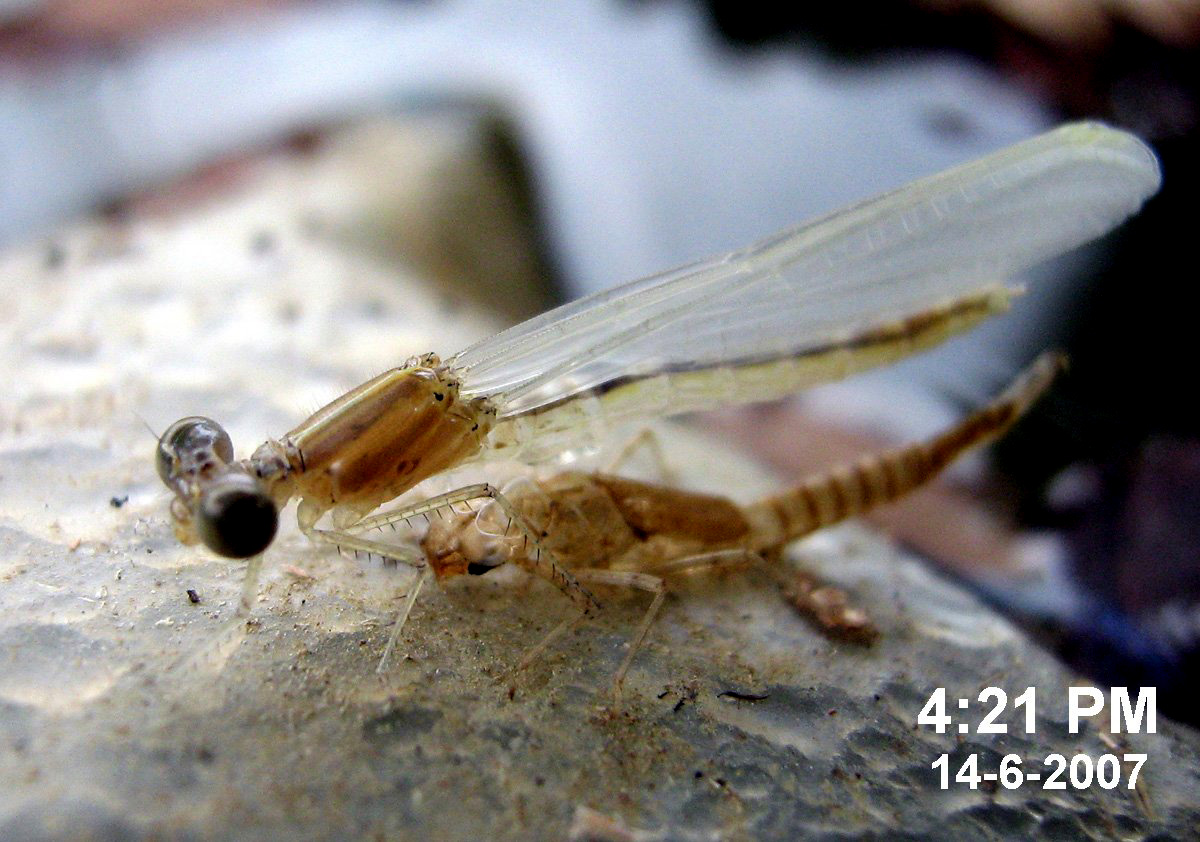
Picture 1 : Alongside a pond -- emerging of a damselfly from its excuvia.
The nymphs was clinging to surface of a floating plastic beg. The baby damselfly
has already wholly emerged from the excuvia and the wing reached its full
length. Except the abdomen which was still in the process of extending.

Picture 2 : The abdomen gradually extending, a drop (or two) of clear liquid
discharged from the tip.
From the shape of this last segment we know it is a Male.
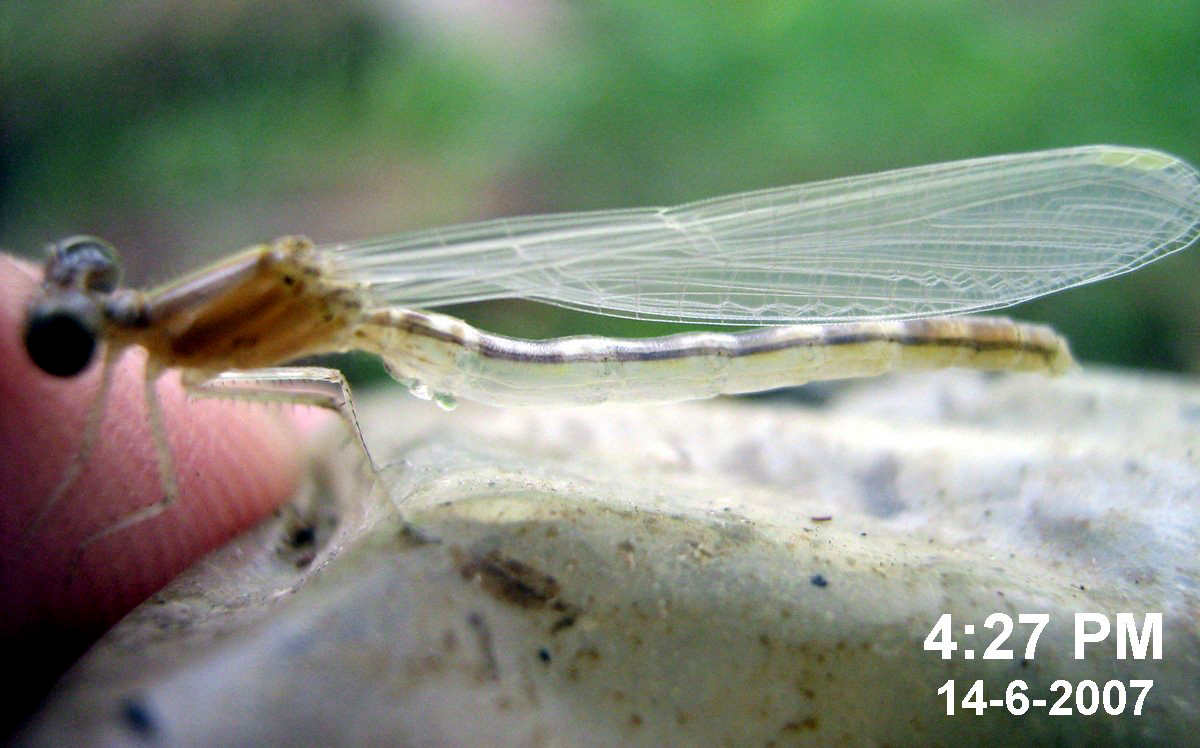
Picture 3 : Because the emerging (on a floating PVC beg) was 1/3 meter below my
feet, an inconvenient angle for camera to reach, I decided to use my left hand
to lift up the PVC beg for batter angle of the camera.
This disturbed the poor insect's growing which needs a quiet and calm
environment for emerging process. Within seconds it started walking toward and
up to my thumb.

Picture 4 : My very precious moment of close encounter with natural life.
On the back of my thumb, this new Ischnura senegalensis spend 4 minutes for his
final stage of extension and hardening of the body and wings.
At 4:31 pm he flop his tender wings and helicopter straight skyward and
disappeared into dark shade in tree top. “Good Bye !...... welcome to the world
!”
Here are index to damselflies sorted according to colour for our quick
identification:
1- GREEN damselflies of Sabah, Borneo
2- BLUE damselflies
3- RED damselflies
4- ORANGE damselflies
Out of the global 10 families of damselflies, the following 7 families
are found in Borneo Island :
RELATED TOPICS

HEAD of Damselflies
Damselfly head include :
1- compound eyes,
2- ocelli,
3- antennae,
4- mouth structures

Dragonflies of Borneo
"With 275 named species so far recorded in Borneo, the island has one of the
richest and most exciting dragonfly faunas in the world. More than 40% of
species occur nowhere else, making it the most distinctive sub-region of
Sundaland." A Guide to the Dragonflies of Borneo by Albert G. Orr
|
GO FURTHER

Dragonflies of Peninsular Malaysia and
Singapore
Dragonflies are among the most
beautiful of insects. Peninsular Malaysia and Singapore are home to
more than 230 species (twice the number found in Europe). They
include some of the most exquisite forms found anywhere in the
World.
FLORA

Fig trees of Sabah
Borneo has 150 species of
wild fig trees. Most of them are found in forests of Sabah.
FISHERIES

Tiger Prawn Farms in Tawau
Prawn farming is a main
commercial activities in Tawau. Spawners from Tawau are graded the
best in Malaysia. For decades, Tawau has been exporting high-grade
tiger prawns to several countries such as Korea, Japan, Taiwan,
China, Vietnam, Singapore, Egypt and Australia.

A Guide to Common Spiders in BORNEO ISLAND
|