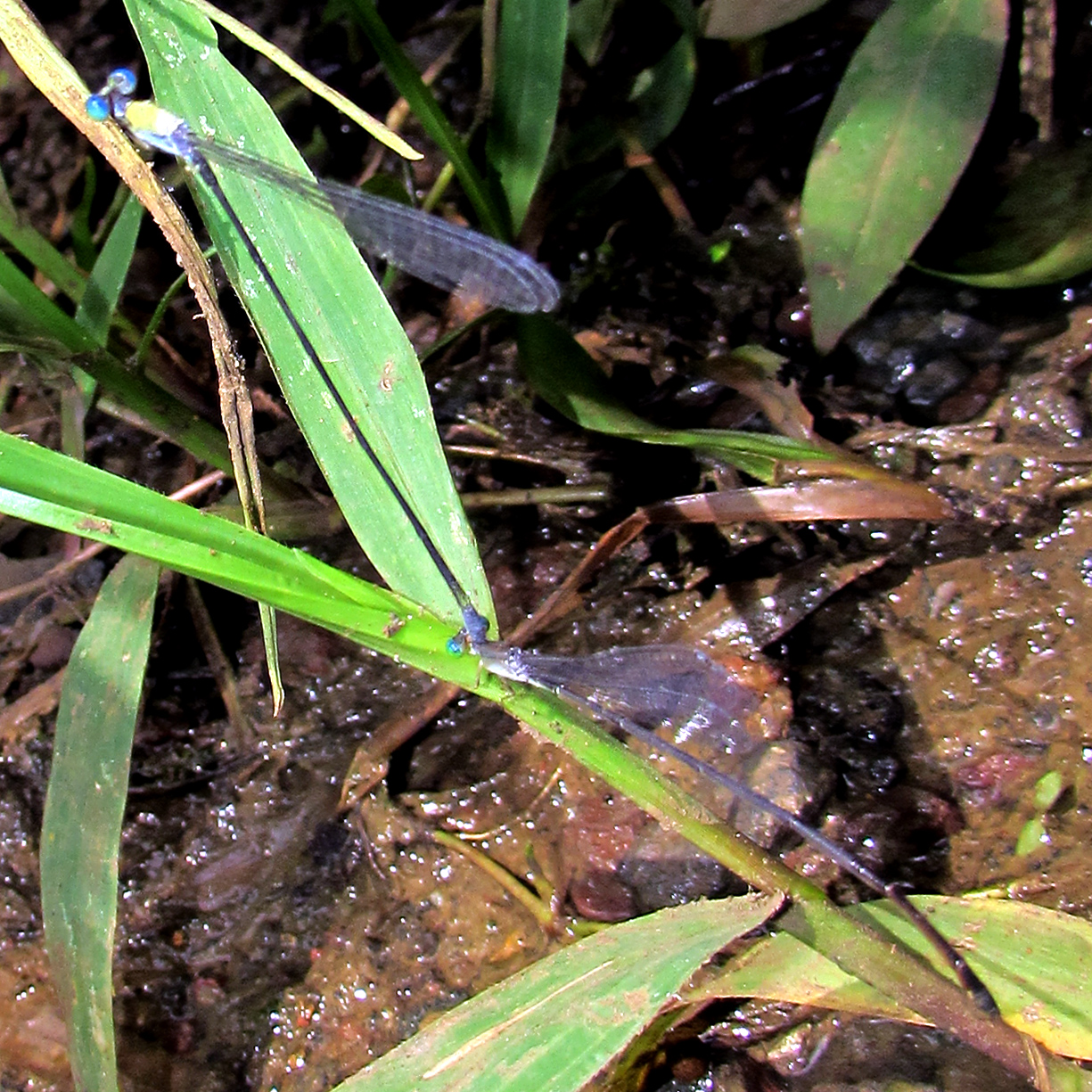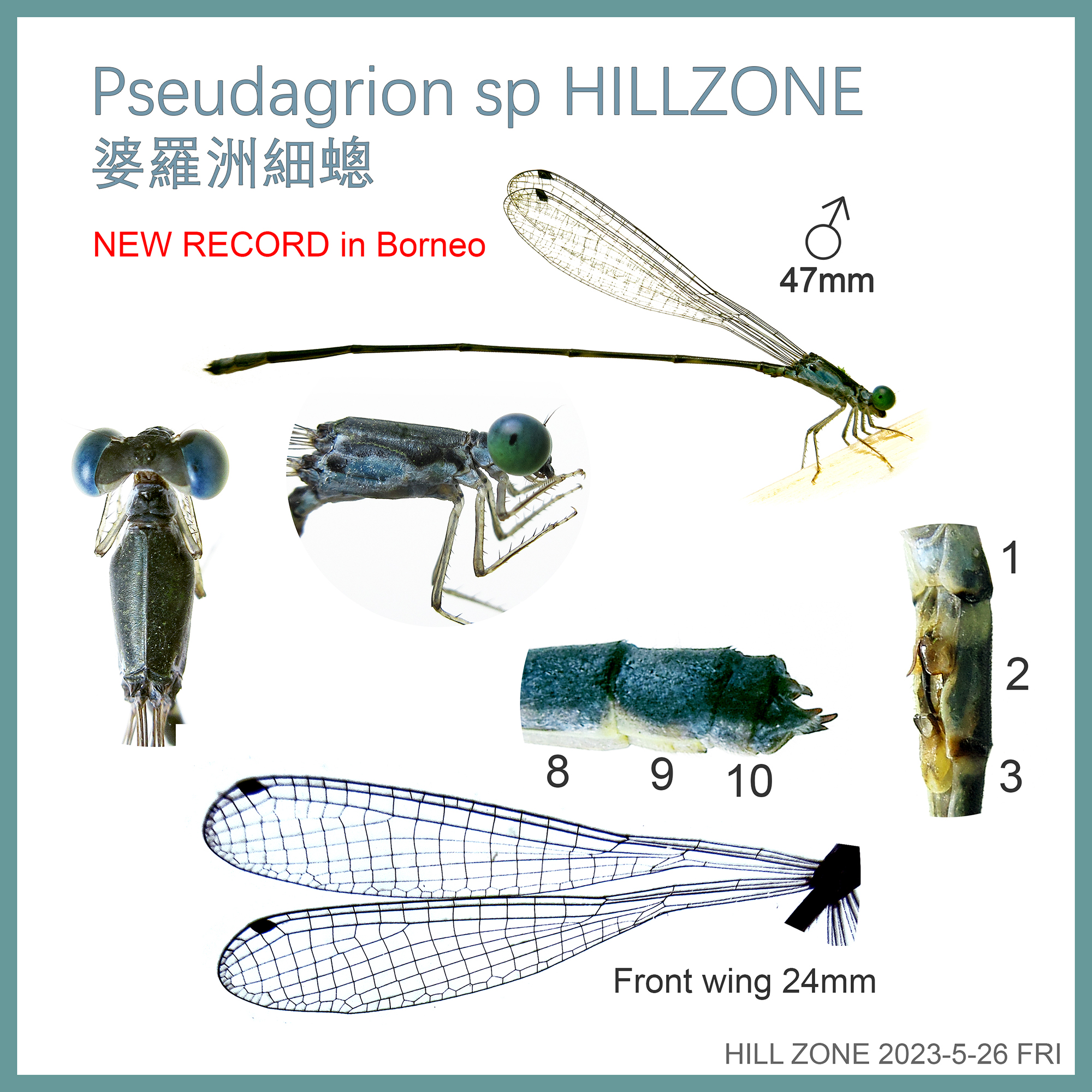
Pseudagrion sp HILLZONE
婆羅洲細蟌
細蟌科
Family Coenagrionidae
Genus : Pseudagrion
NEW RECORD in Borneo
This Pseudagrion sp HILLZONE is a new record for Borneo in 2017 and
need scientists further verification. No scientific name yet.
|
Pseudagrion sp
HILLZONE 婆羅洲細蟌 new record in Borneo |
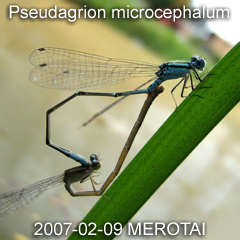
Pseudagrion
microcephalum 瘦面細蟌 |
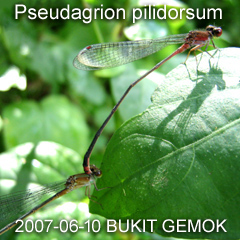
Pseudagrion
pilidorsum 弓背細蟌 new record in Borneo |
|
|
|
|
|
♂45mm 44mm♀ |
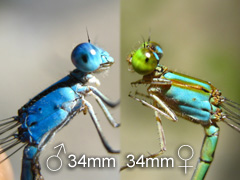 ♂34mm 34mm♀ |
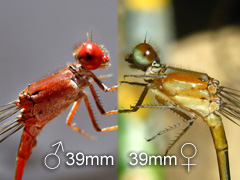 ♂39mm 39mm♀ |
|
Pseudagrion sp
HILLZONE Male anal appendages 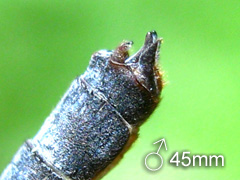 |
Pseudagrion
microcephalum Male anal appendages 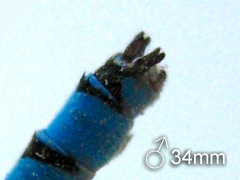 |
Pseudagrion
pilidorsum Male anal appendages 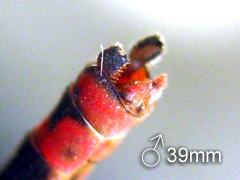 |
Male secondary
genitalia on segments 2–3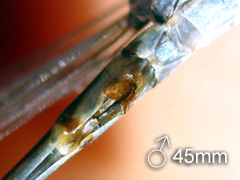 |
Male secondary
genitalia on segments 2–3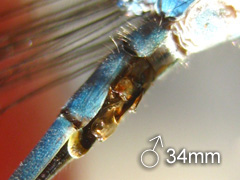 |
Male secondary
genitalia on segments 2–3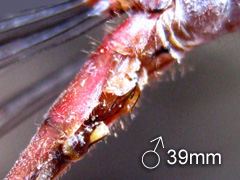 |
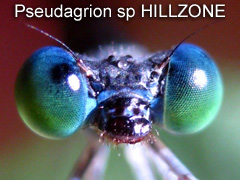 |
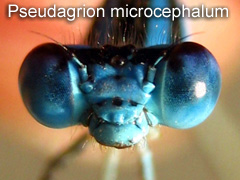 |
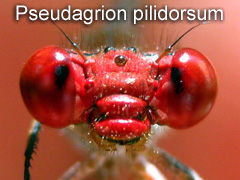 |
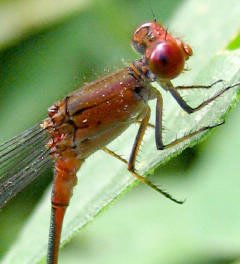
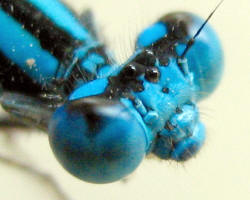
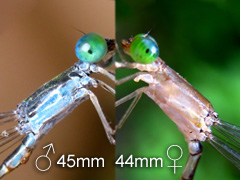
Pseudagrion
sp HILLZONE 婆羅洲細蟌
New species in Borneo found in 2017.
The genus Pseudagrion includes five species in Sabah :
Known commonly in North Asia. Pseudagrion pilidorsum is very little know in Borneo Island. So far found only in eastern part of Sabah such as Lahad Datu and Tawau.
Pseudagrion microcephalum is a very common and widespread inhabitant of
ponds, lakes and drains. The male is black, strongly marked with bright blue
bands. At first it can be confused with many other common coenagrionids,
including Archibasis species and Argiocnemis rubescens, all of which fall into
the same size range (S hw, 16-24 mm) and have a similar pattern of blue on
black. However with experience you will soon find it easy to separate from other
genera, especially in life, by its general look or 'jazz'. It is more difficult
to separate from other blue Pseudagrion species, but P. microcephalum is by far
the commonest and most widespread member of its genus and the only one known
from disturbed habitats. The female is light brown with obscure greenish
markings. Mating takes place in the mid afternoon and after insemination the
pair may remain in tandem for well over an hour, skimming the water surface and
resting frequently on lily pads. Females often submerge completely to lay their
eggs in the stems of water plants.
Pseudagrion lalakense is similar in its habits but it is known from only a few blackwater lagoons in Brunei and northern Sarawak. It flies together with P. microcephalum and can be recognized in life by the greater area of blue on the thorax and at the base of the abdomen. Identifying dead specimens is generally far more difficult and only a close examination of pattern and terminalia will separate the males, although the females are quite distinct.
Pseudagrion coomansi is also generally similar to these two species but is more lightly built. It is restricted to shady areas in peat swamp forest in south-west Borneo.
Pseudagrion perfuscatum is a distinctive larger species (S hw, 19 mm) found universally in semi-disturbed shaded streams in the lowlands. It is quite different from other members of the genus, being marked in orange-brown, partially obscured by pruinescence in mature specimens. It generally flies in sunny patches but can be overlooked on account of its somber colors.
|
INDEX : Damselfly May 26, 2023 07:28:47 PM |
|