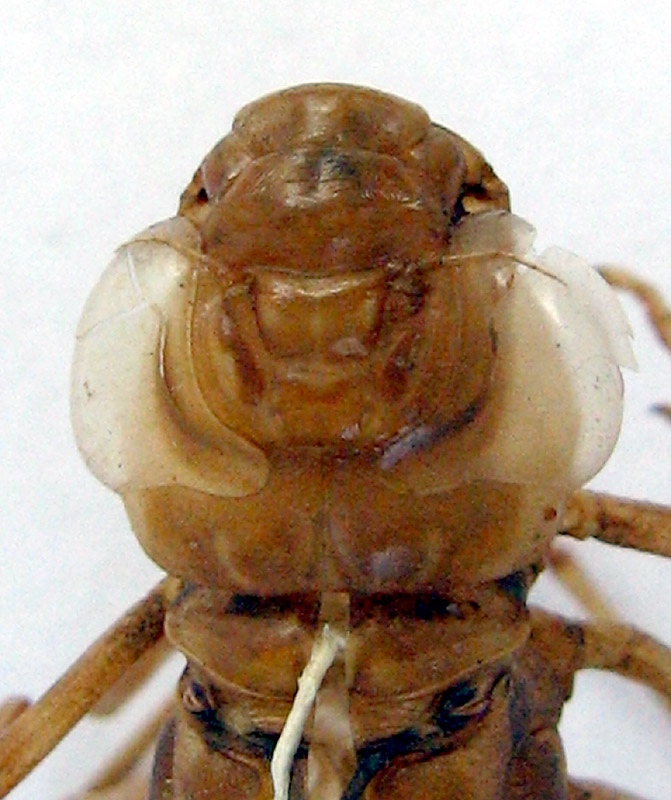
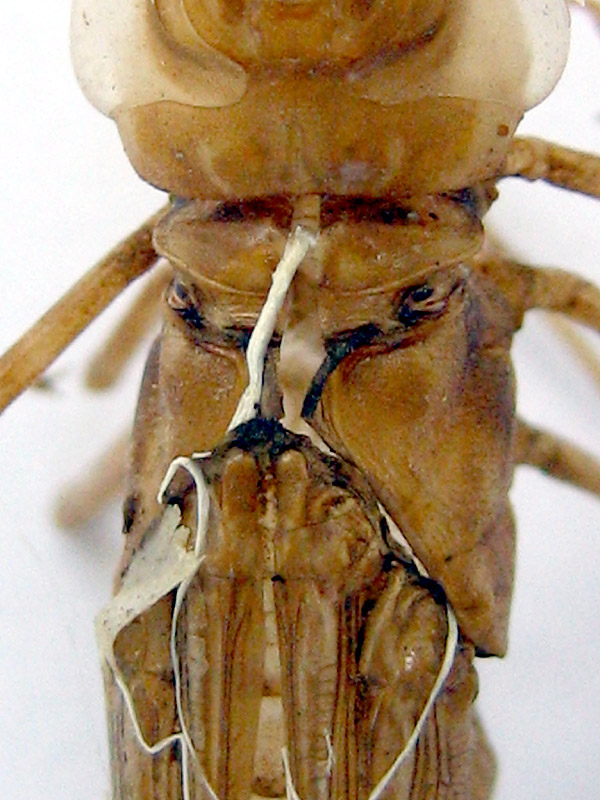
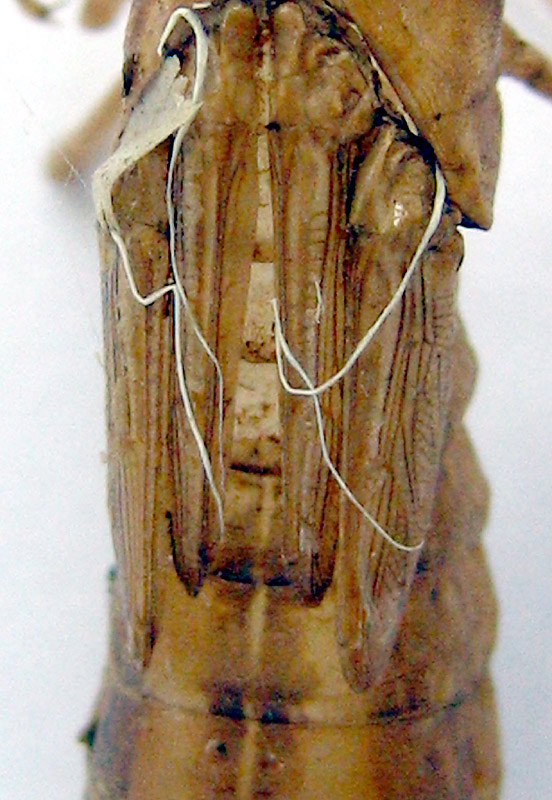
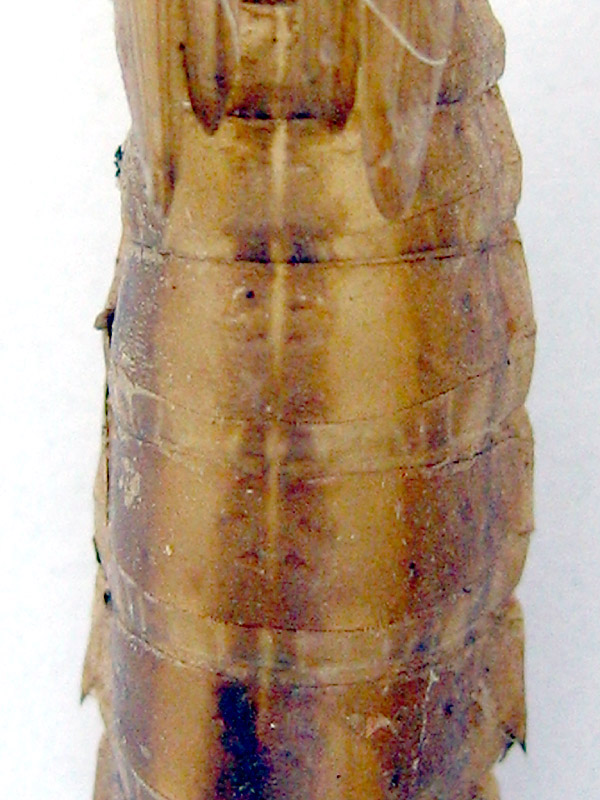
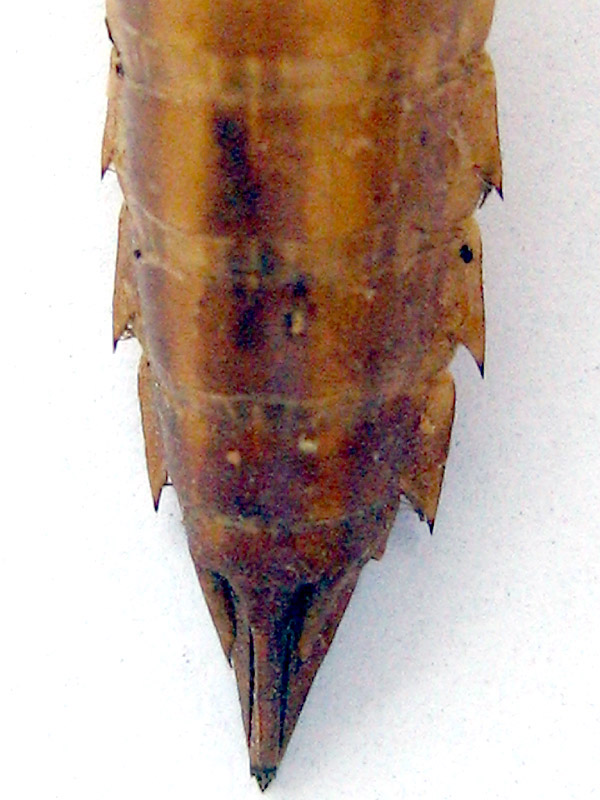
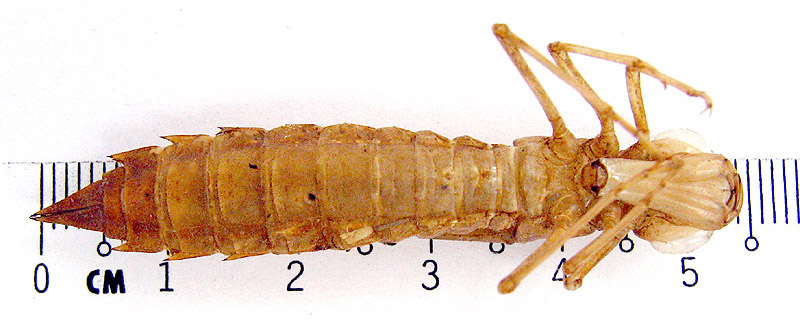
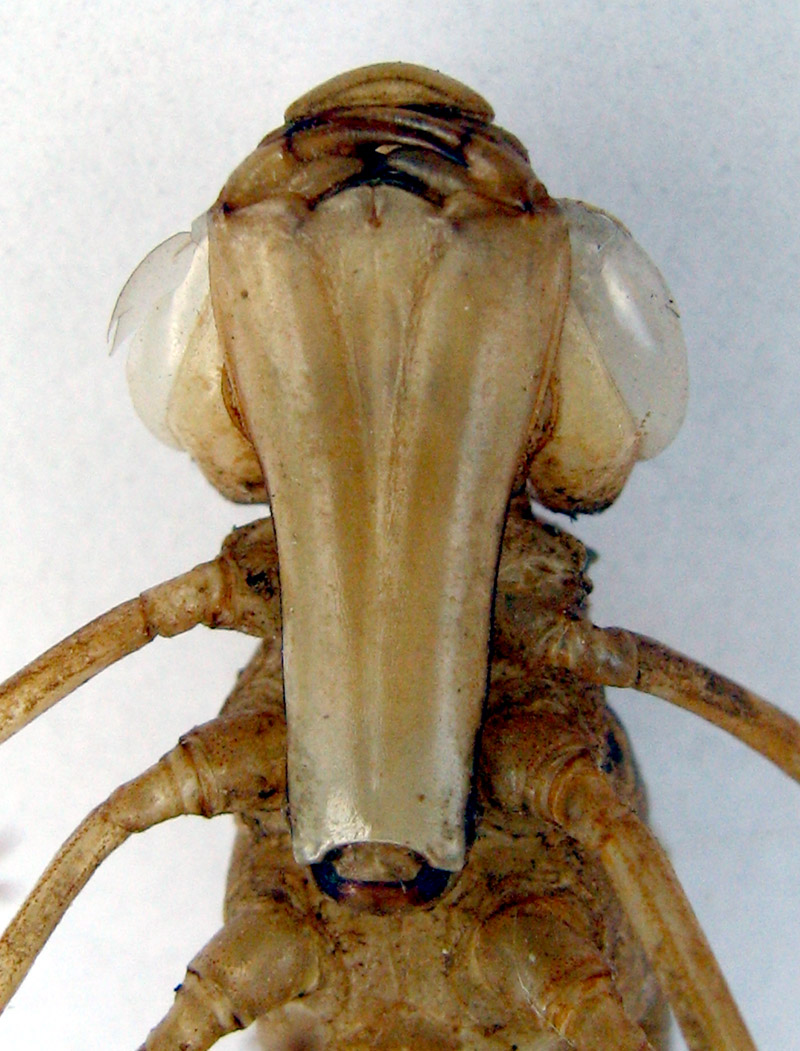
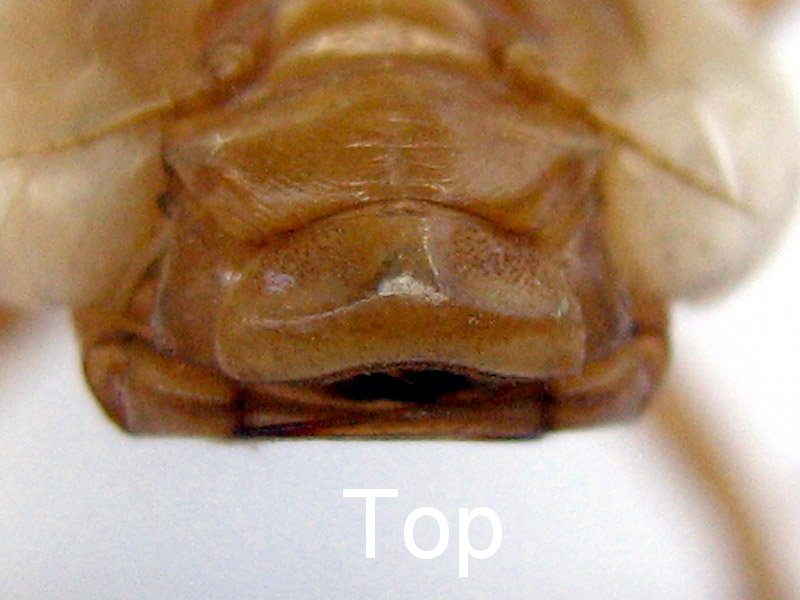
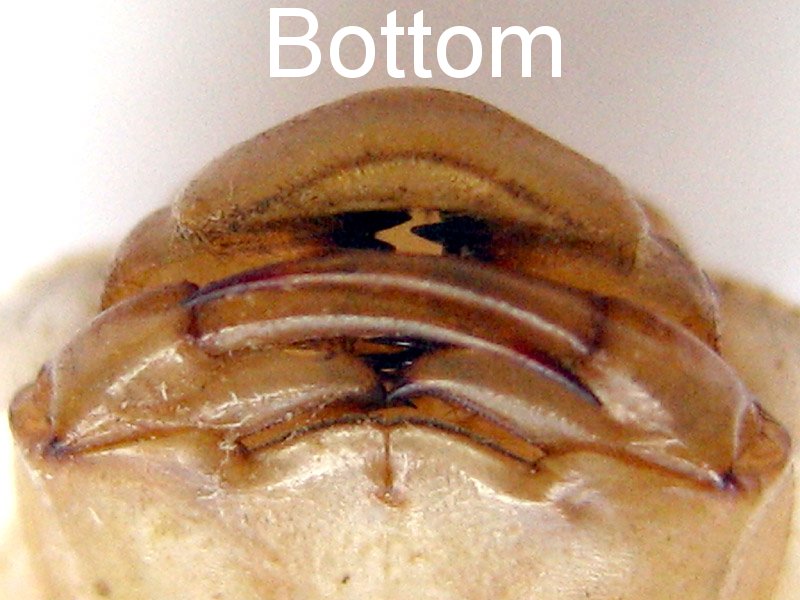
Exo-skeleton of Anax guttatus 5.5cm
Anax guttatus (Burmeister, 1839) 烏點晏蜓ID Source : http://tombon.com/ENGEXAeshnidae3.htm |
||
| Found in China, Guandong, Guangxi, Hong Kong, Hainan, Indonesia, India, Japan, Sri Lanka, Myanmar, Malaysia, Philippines, Peninsular Malaysia, Thailand, Taiwan, Viet Nam | ||
| Sub-Order: ANISOPTERA | Super-Family: AESHNOIDEA | Family: AESHNIDAE |
Exo-skeleton of Anax guttatus 5.5cm
Anax guttatus. Unmistakable, heavy bodied; S2 and base of S3 mainly blue; strong
spotting on ab. $ similar to S. Open habitats with standing water, including
drains, ponds, swamps and lakes; common in disturbed habitats and along the
landward margin of mangroves, where it may breed in slightly brackish water.
Larva with elongate head and large eyes; mask long and narrow. Larva fierce and
agile hunters, actively swimming in pursuit of prey, including tadpoles and
other odonate larvae. Widespread in the Indo-Australian tropics and southern
China.
A. guttatus is also widespread in Asia. This species is large robust insects with a heavy thorax and broad hindwings.
In males as well as females the anal angle of the hindwing is rounded. Older specimens often develop quite a dark brown tint to the wings, concentrated especially near the base of the hindwing.
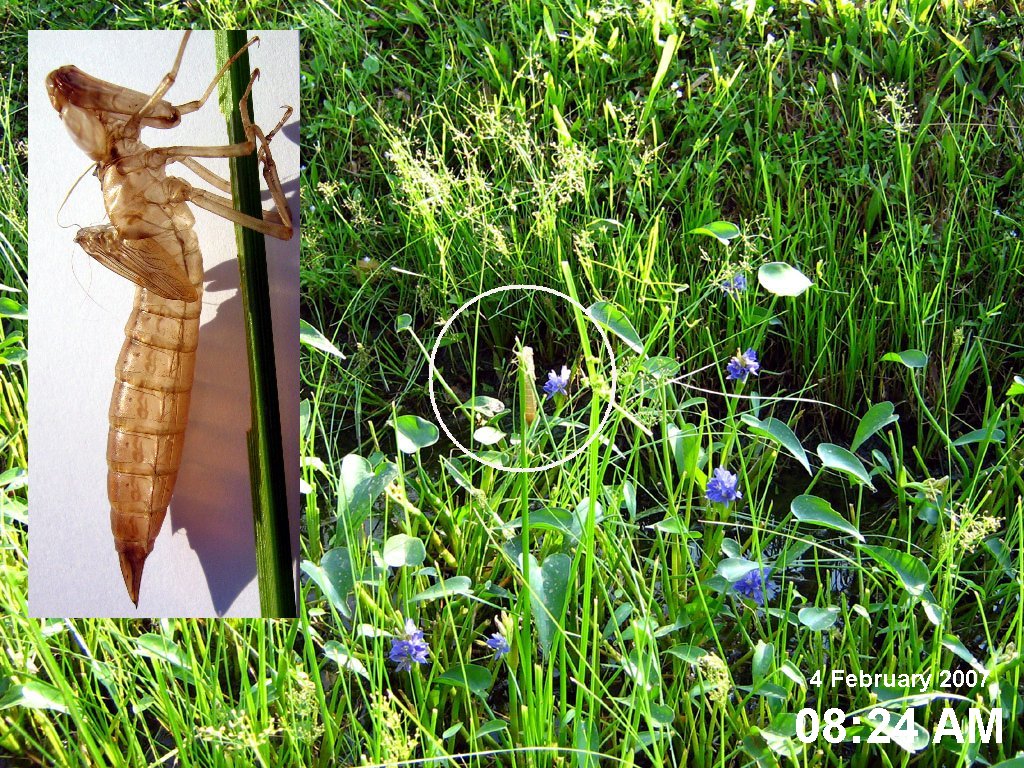
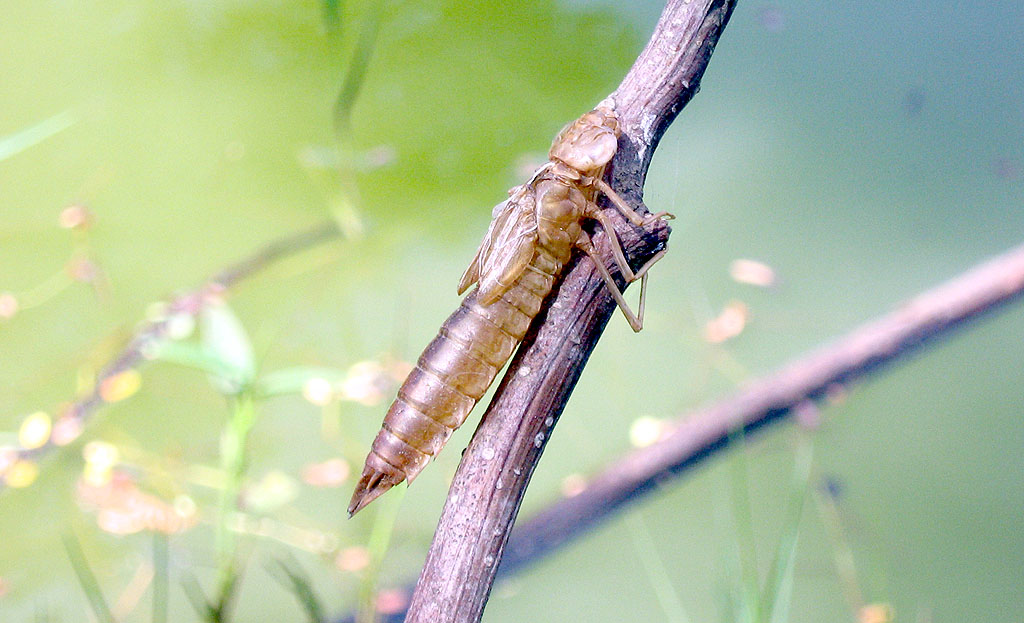
A. guttatus is certainly the commonest large dragonfly encountered in Borneo and it frequents almost any deep standing water habitat in open country. Males in particular are active all the day and may be seen hawking up and down drains, across natural lakes, or around dams. The females tend to oviposit in the afternoon, often after dusk. Eggs are inserted into suitable soft living plant tissue, the underside of lily pads being a common choice. They are not overly difficult to capture as they fly quite low and in broad daylight. Nevertheless they are swift and powerful fliers and the best way to net them is to watch as they beat out a regular patrol and, once the flight paths are ascertained, lie concealed in ambush. This can be quite time consuming and sometimes seems scarcely worth the effort for such a common insect; hence they seldom appear in collections in large numbers. The mature larvae (Figs. 151 & 152) are disproportionately large, highly streamlined and highly aggressive. They often swim actively after prey, especially tadpoles. Very young larvae have a distinct banded pattern. Exuviae are frequently discovered clinging to waterside vegetation around ponds and dams.
 |
|
 |
|
 |
 |
|
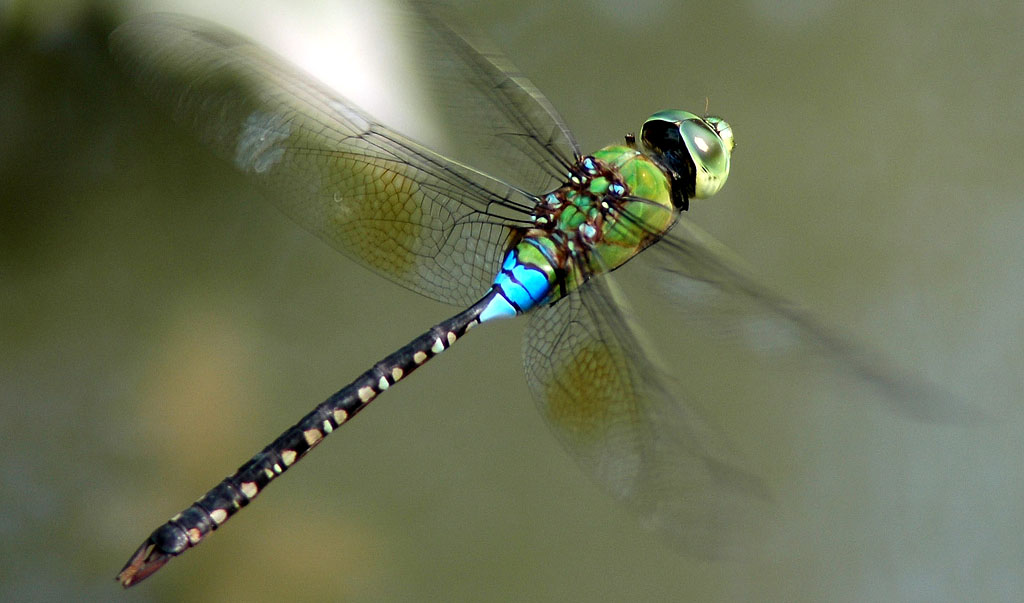 |
第1腹節綠色,第2、3腹節有對稱的三塊藍斑。 其餘腹節側面有黃斑,複眼綠色,翅透明。 |