 |
|
Genus : Rhyothemis
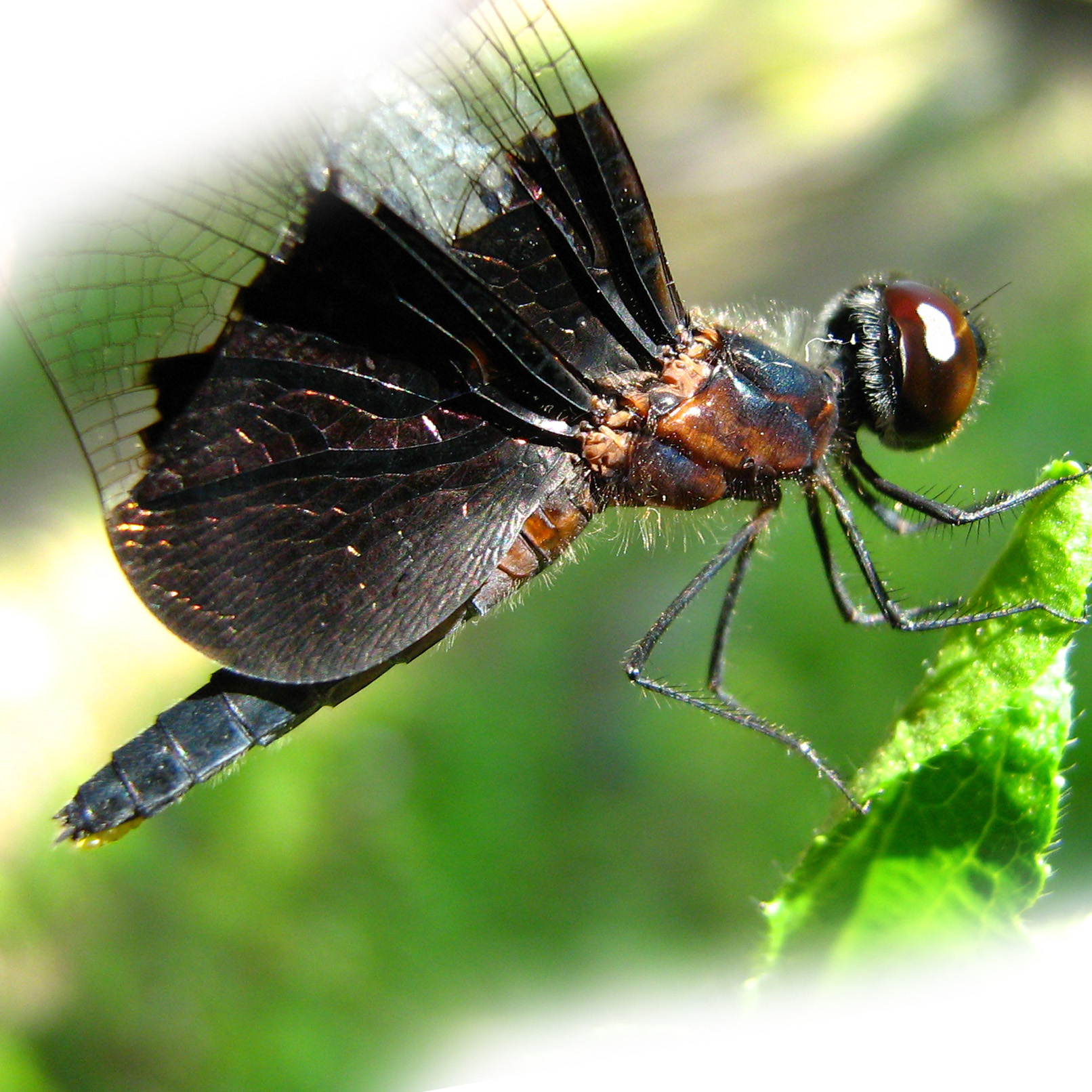
The genus Rhyothemis includes five species with short abdomens and broad hind wings. Both wings frequently have extensive areas of solid color. They perch in sunlight and are found most commonly in open country. Some species are notable for the way they twist their wings obliquely relative to the sun. This behavior is believed to aid in thermoregulation. They also often rest with the fore and hind wings held at widely different angles, typically with the forewings raised and the hind wings depressed.
|
|
|
 |
|
Rhyothemis obsolescens is a smaller species (S hw, 21.5-23 mm) with both wings almost entirely metallic-bronze. It is locally abundant in open marshes and blackwater drains in low country, particularly at the edges of peat swamp forest. Sometimes it swarms on ridges up to 800 m.
Rhyothemis pygmaea is distinctly smaller and has broader wings, but otherwise is rather similar to R, obsolescens. It occurs in much the same situations, but is quite uncommon.
Rhyothemis aterrima is a larger species ( hw, 29-30 mm) with wings entirely metallic blue-black in color shot with a bluish- or greenish-gold iridescence which sparkles in sunlight. It is found locally on lakes and in blackwater marshes in lowland areas and where present may be abundant. Males are very aggressive and frequently engage in high speed pursuits, buffeting one another with an audible clash of wings. Many specimens show much wear and tear from these hostilities.