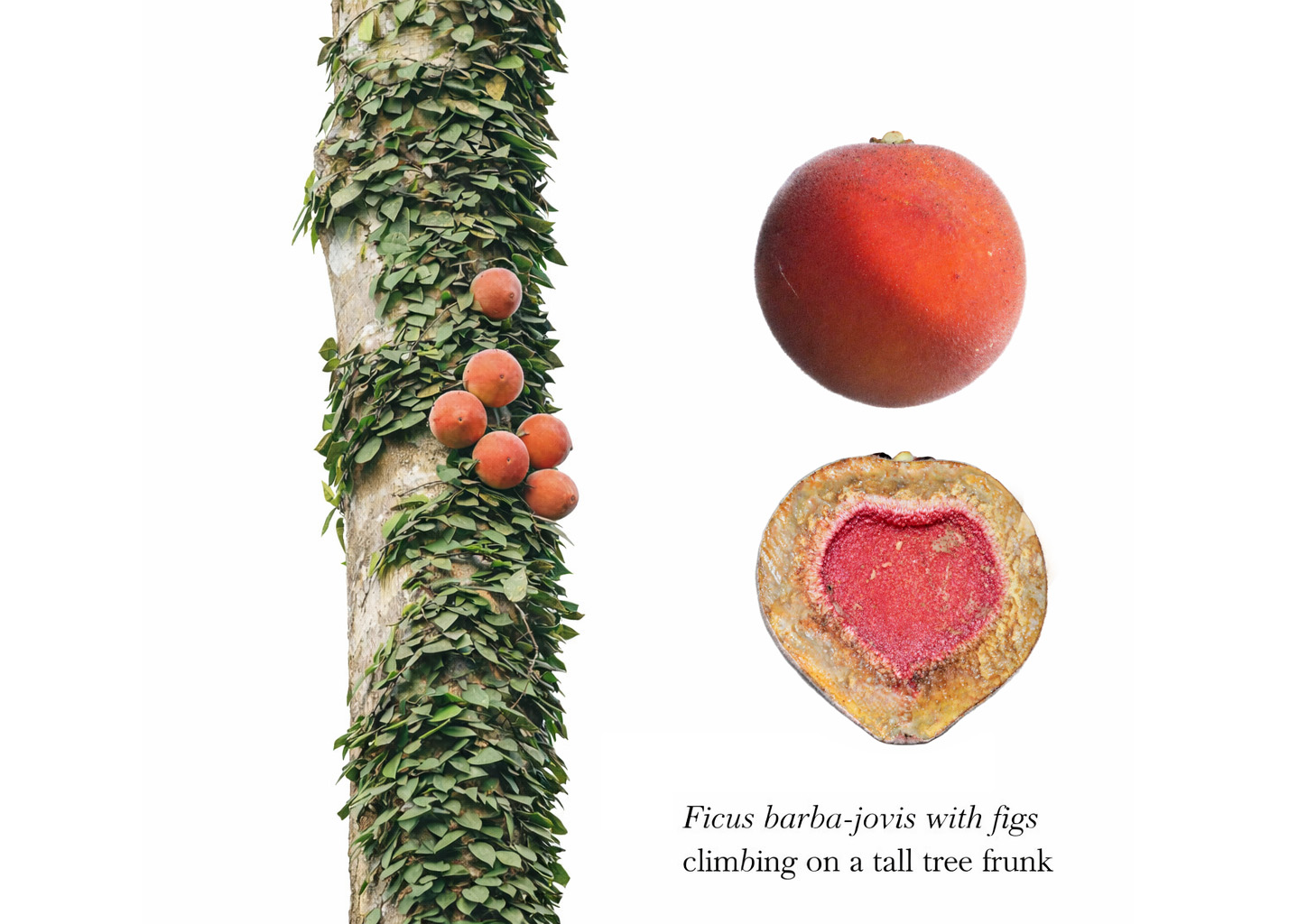
Ficus barba-jovis 沙巴榕
Root Climber
Dioecious雌雄異株
Endemic of Sabah
2nd LARGEST FIG FRUITS
Ficus barba-jovis 沙巴榕
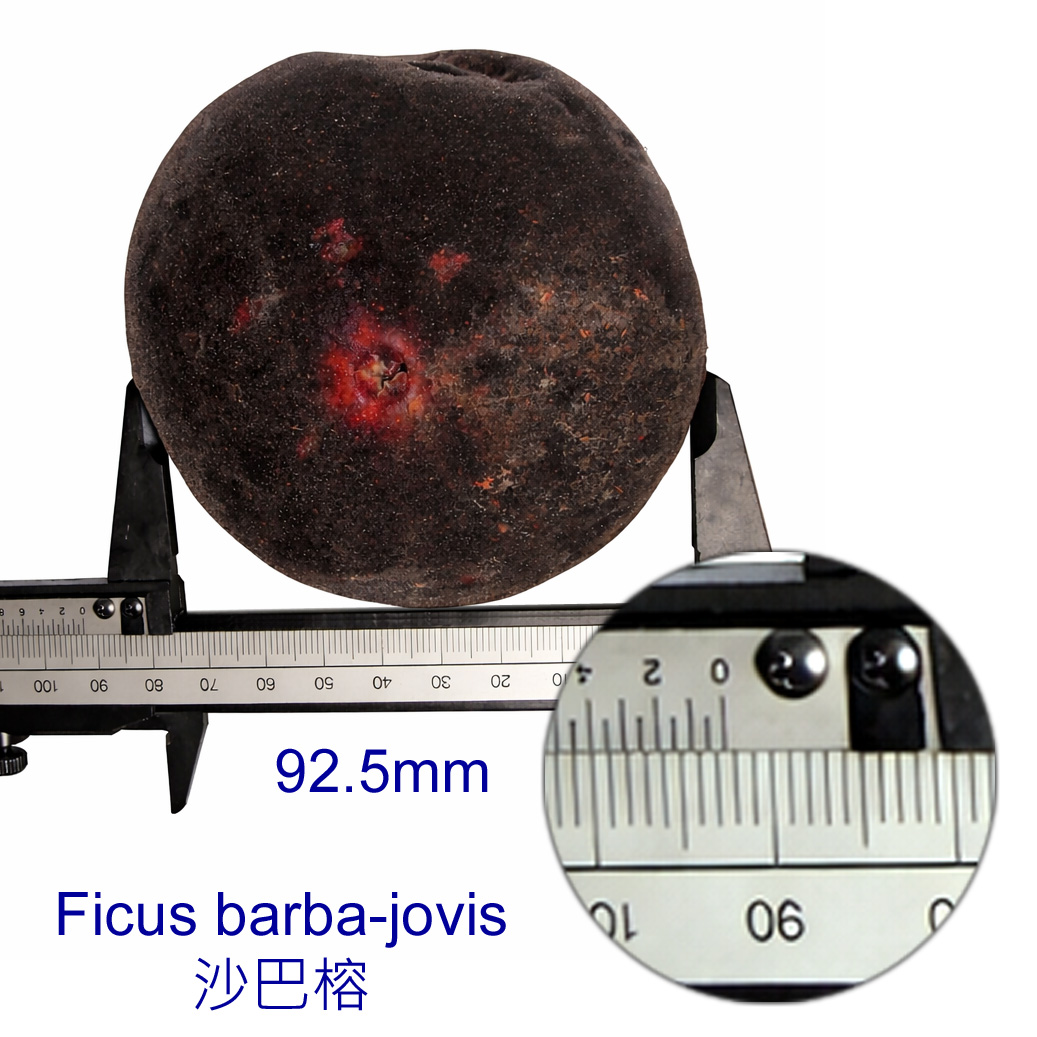
Ficus barba-jovis 沙巴榕 92.5mm
Found only in Sabah. North Sabah forest endemic
| Ficus barba-jovis 沙巴榕 North Sabah forest endemic |
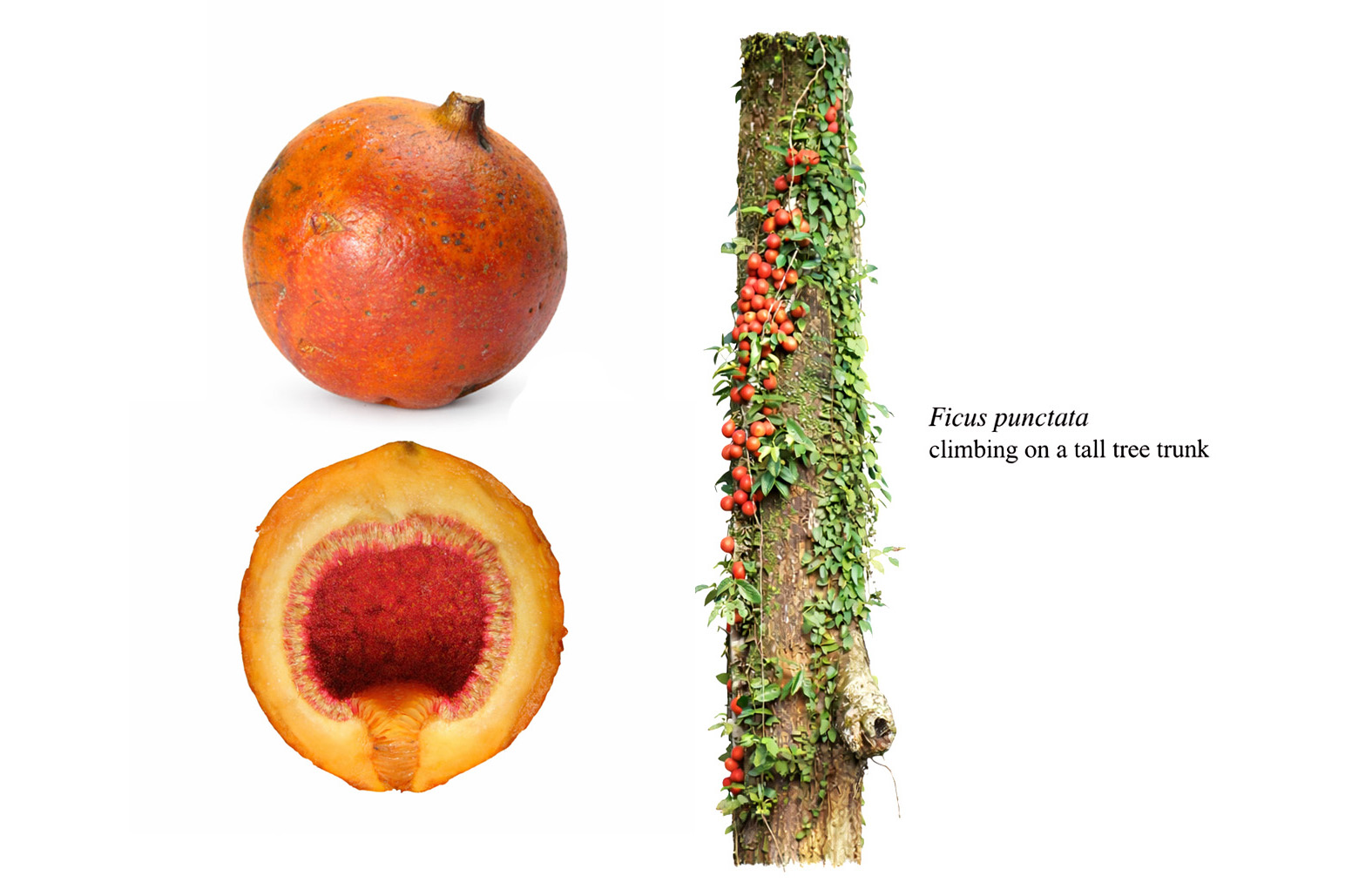
Ficus punctata 橙黃榕 Found in South East Asia |
|
|
 |
|
Female Fig of Ficus barba-jovis ♀ 92.5mm |
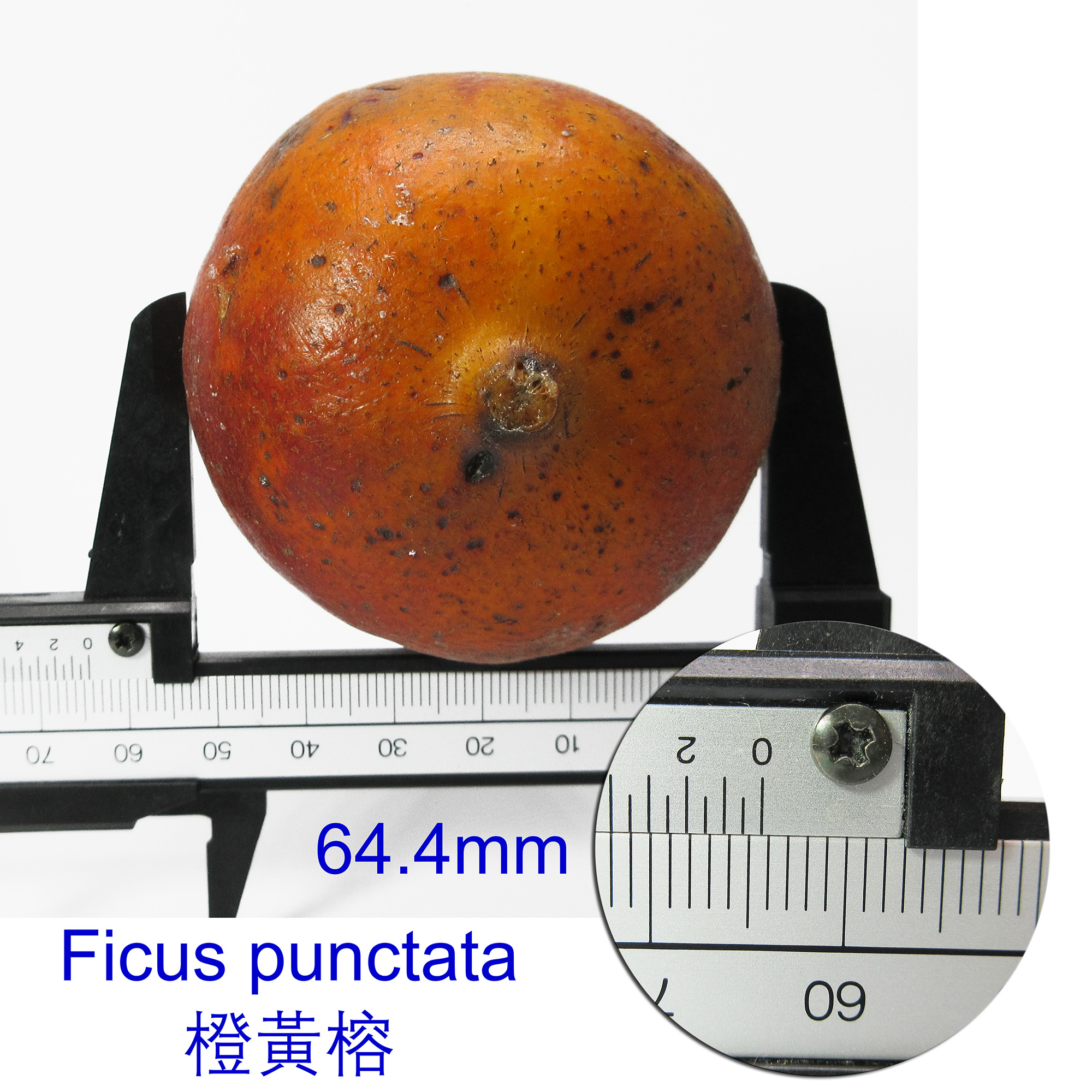 Female Fig of Ficus punctata 64.4mm |
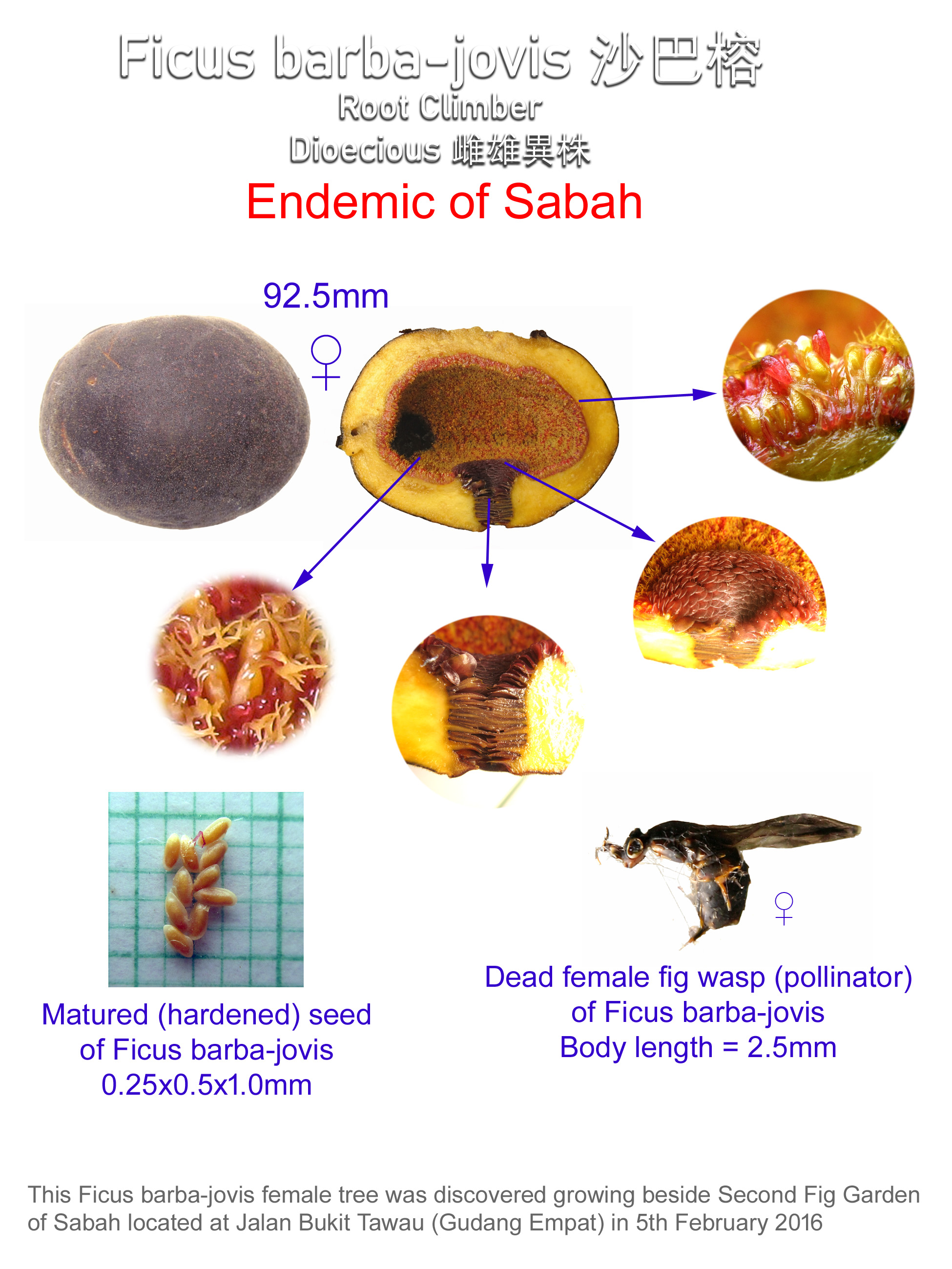 RIPED FIG of Ficus barba-jovis
|
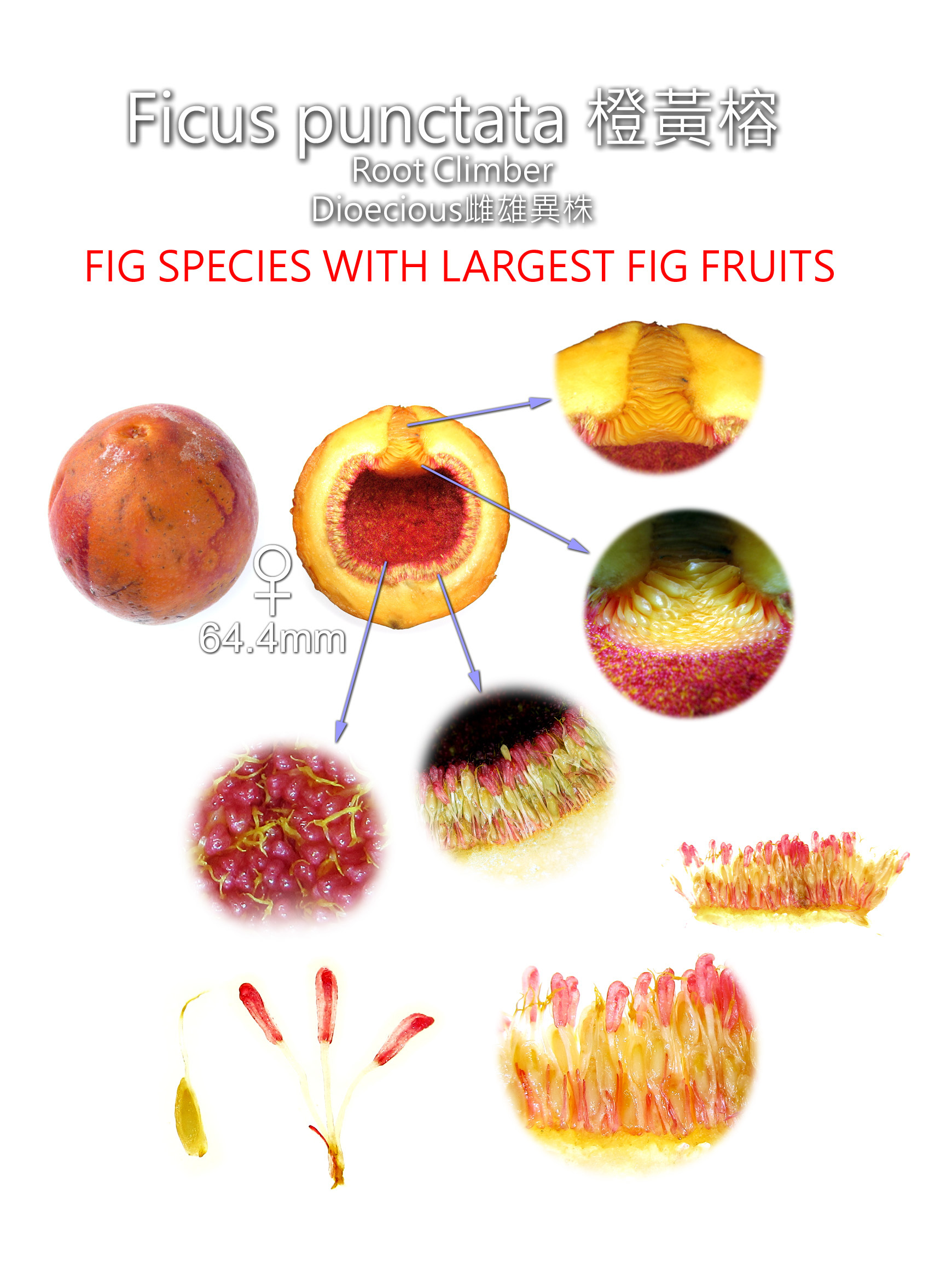 UN-RIPE FIG of Ficus punctata |
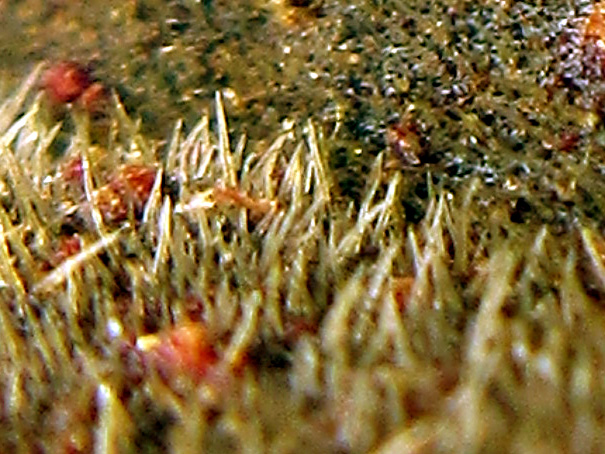 Short and shart hairs but soft to human hand. This extreme macro reveals the remarkable skin surface of Ficus barba-jovis, one of the largest figs of Borneo. The fruit’s exterior is densely covered with short, stiff hairs — the feature that gives the species its name, barba-jovis, meaning “Beard of Jupiter.” These fine, pale bristles create a distinctly matte, non-shiny texture, clearly separating it from similar species such as Ficus punctata, which has a smooth and glossy skin. In mature specimens, the fig can exceed 12 cm in diameter, and this hairy surface plays an important biological role. During the early stages of fruit development, non-pollinating fig wasps may pierce through the skin to lay their eggs. This close-up perspective highlights both the tactile character and ecological significance of the fruit’s uniquely bearded exterior.
|
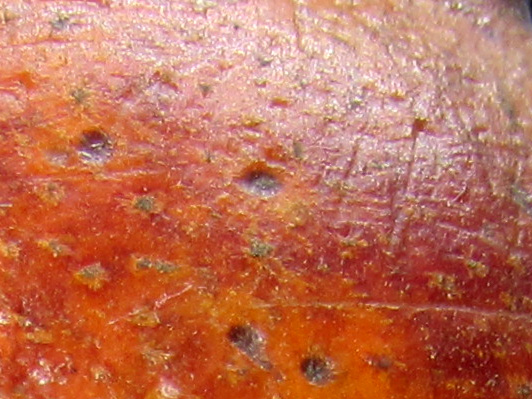 Smooth without hairs
This close-up macro captures the smooth, glossy skin of Ficus punctata, a large-fruited woody climber commonly found in Borneo. Unlike the hairy surface of Ficus barba-jovis, the skin here is sleek and shining, with a thick, fleshy texture. Fine speckles scatter across the surface, creating a pattern reminiscent of small oranges or kumquats. As the fruit ripens, its color typically transitions from green to speckled orange or yellow, and eventually to a deep purple-black when overripe. The spotted appearance becomes especially noticeable at the orange stage, as seen in this image. Male figs — which serve as brood chambers for wasps — are generally smaller, darker orange, and more densely speckled than female figs, which often show a more distinct stalk (stipe). Like other figs, the skin and underlying flesh contain milky latex. This latex functions as a natural protective mechanism, deterring insects and animals while the fruit is still unripe.
|
| F. punctata | F. barba-jovis 沙巴榕 | |
| Range | S.E Asia forests and orchards | North Sabah forest endemic |
| Growth habit | Large root climbing liana. Roots often free hanging with age | Slim roots attached to host trunk Never loose hanging |
| Leaves growth | Bathyphyll and acrophyll leaves very different | Leaves relatively uniform |
| Leaf habit | Acrophyll leaves on hanging branches | Leaves cover host trunk like overlapping feathers |
| Leaf side veins | Up to 6 usually less. | Often more than 6 up to 10 |
| Fig size s | Large to 12+ cm diam. | Large to 5 cm. diam |
| Fig position | Cauliferous on large bare liana often free hanging | Cauliferous surrounded by leaves close to host trunk |
| Fig colour | Uniform orange to dark red | Mottled pink and pale yellow like a peach |
| Hairs on fig | Very short, sparse, stiff | Dense, soft, mixed long and short |
| Basal bracts | Small, at junction of stalk and stipe | Fig has no stipe so the 3 large bracts are on fig itself. |
| Stipe (neck) on fig | Always | Rarely? |