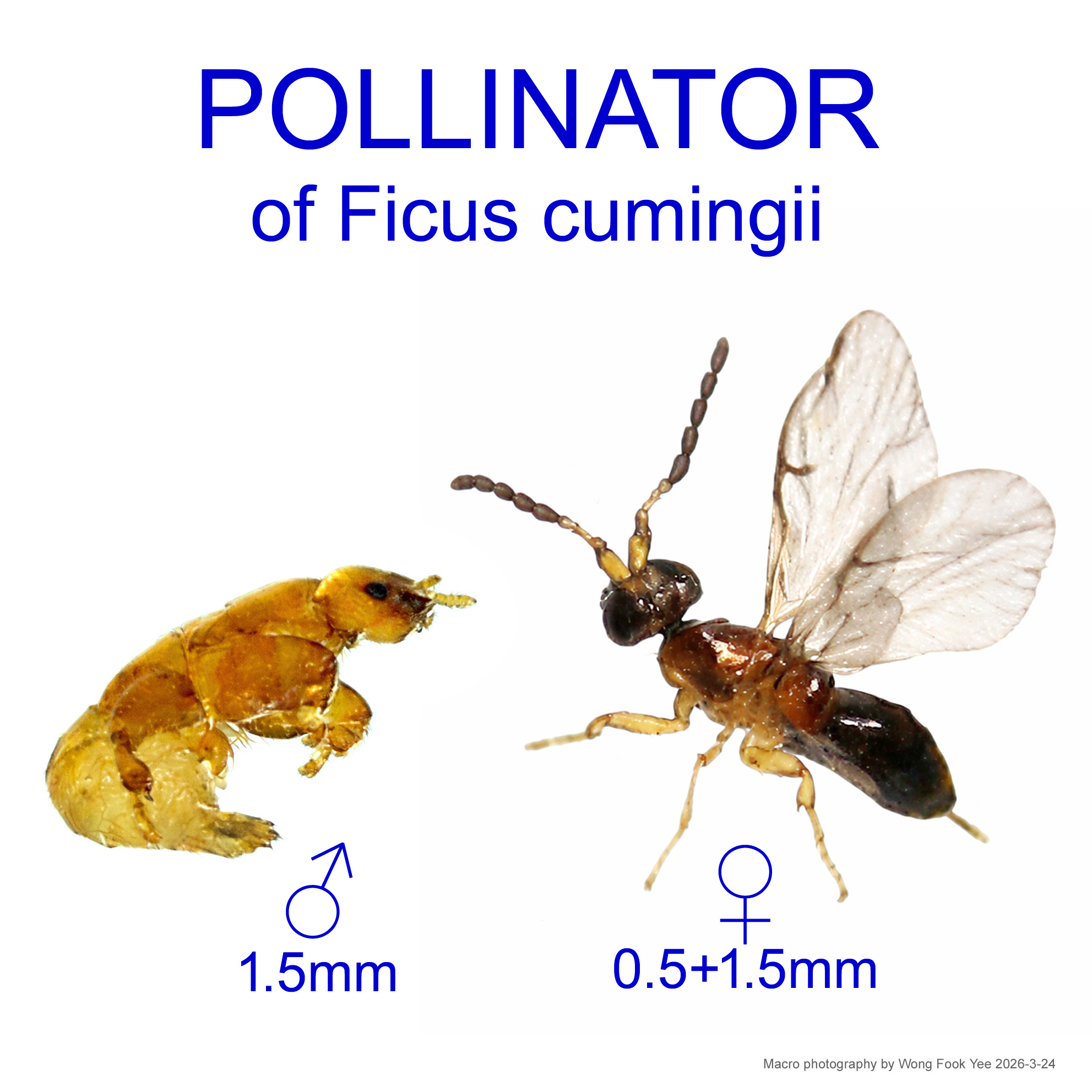
MALE and FEMALE pollinator (Fig wasp) of Ficus cumingii
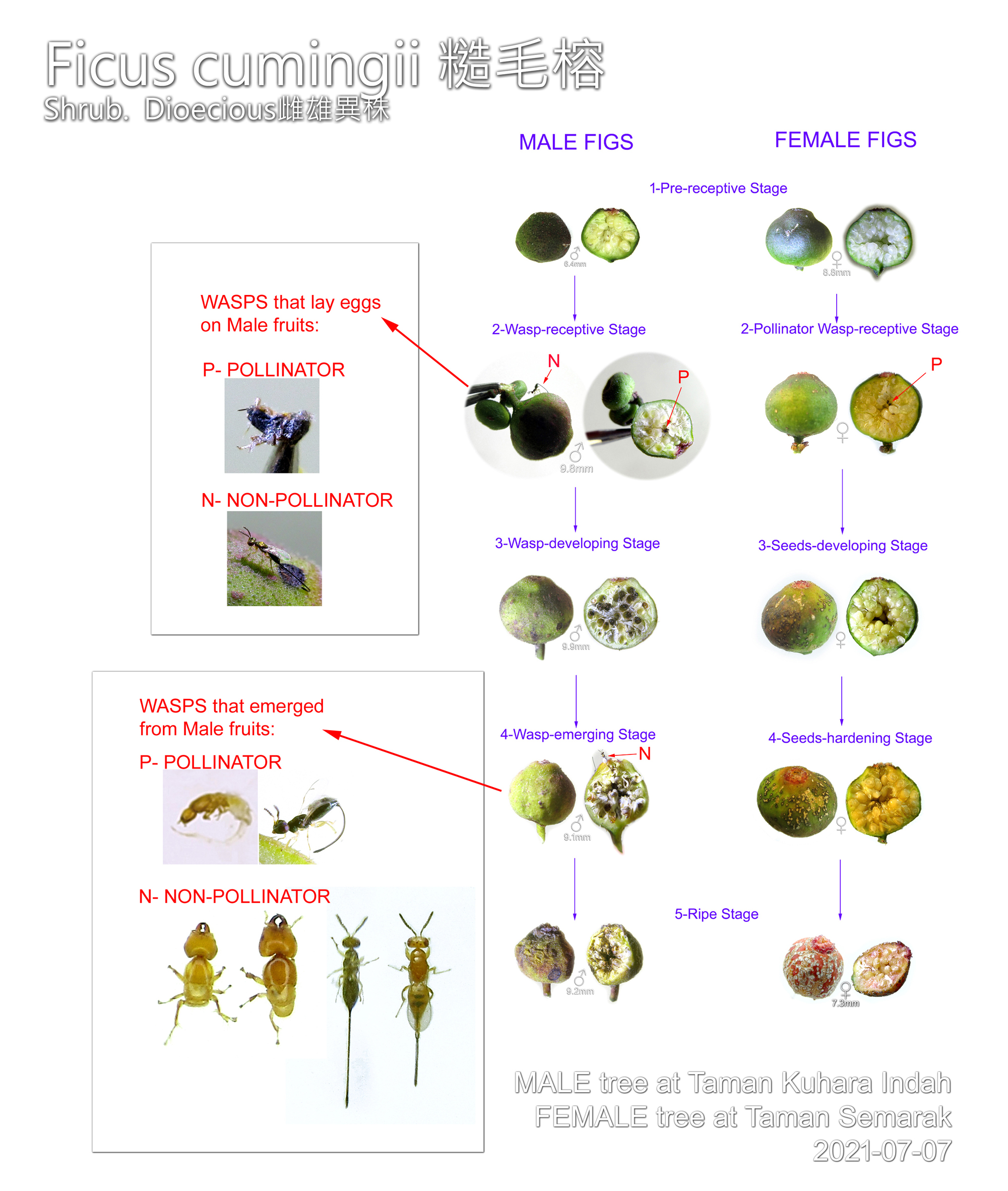
Fig Wasps of Ficus cumingii
POLLINATOR of Ficus cumingii
MALE and FEMALE pollinator (Fig wasp) of Ficus cumingii
The pollinator for Ficus cumingii (commonly known as the
Cuming's Fig) is a specific species of fig wasp belonging to the genus Kradibia,
specifically within the subgenus Kradibia. In the highly specialized fig-wasp
mutualism, each fig species is typically associated with a single unique wasp
species that handles both its pollination and reproduction.
The roles and physical characteristics of the male and female pollinators for Ficus cumingii are as follows:
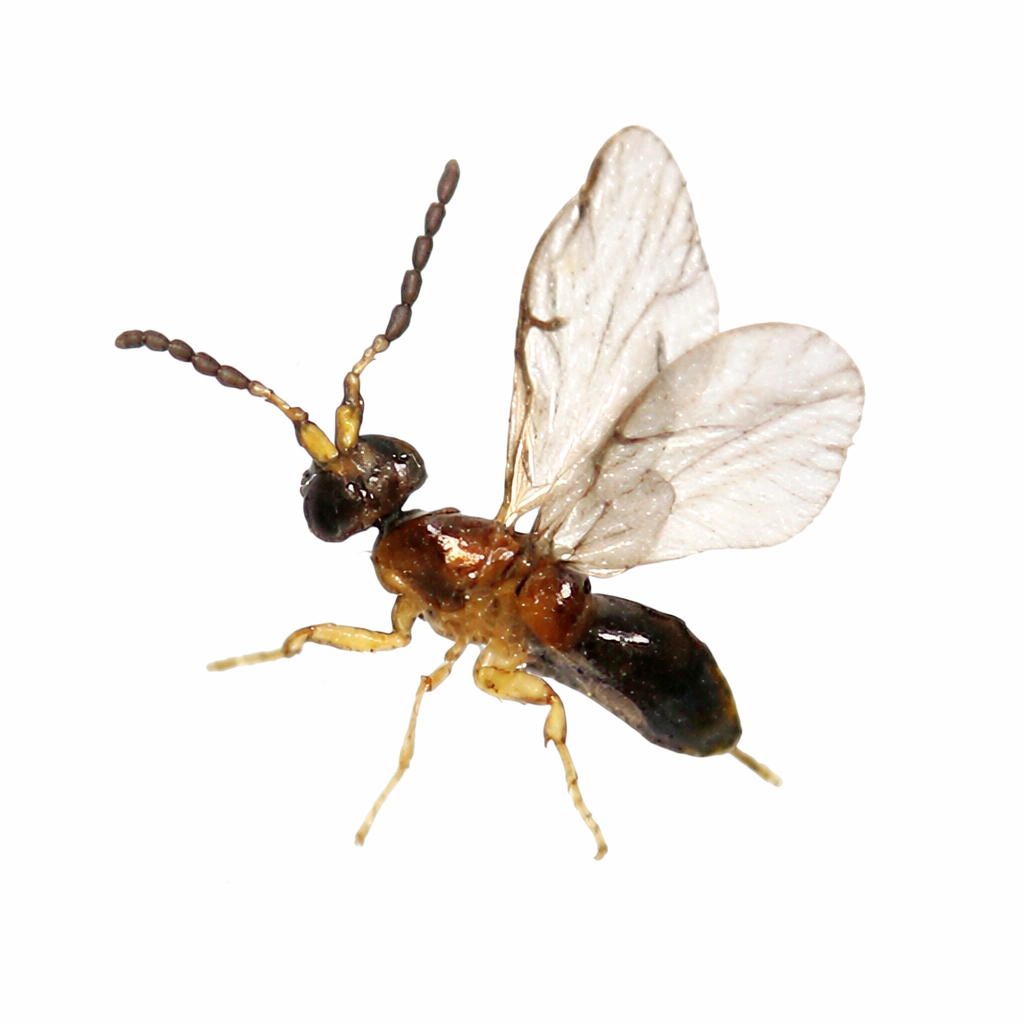
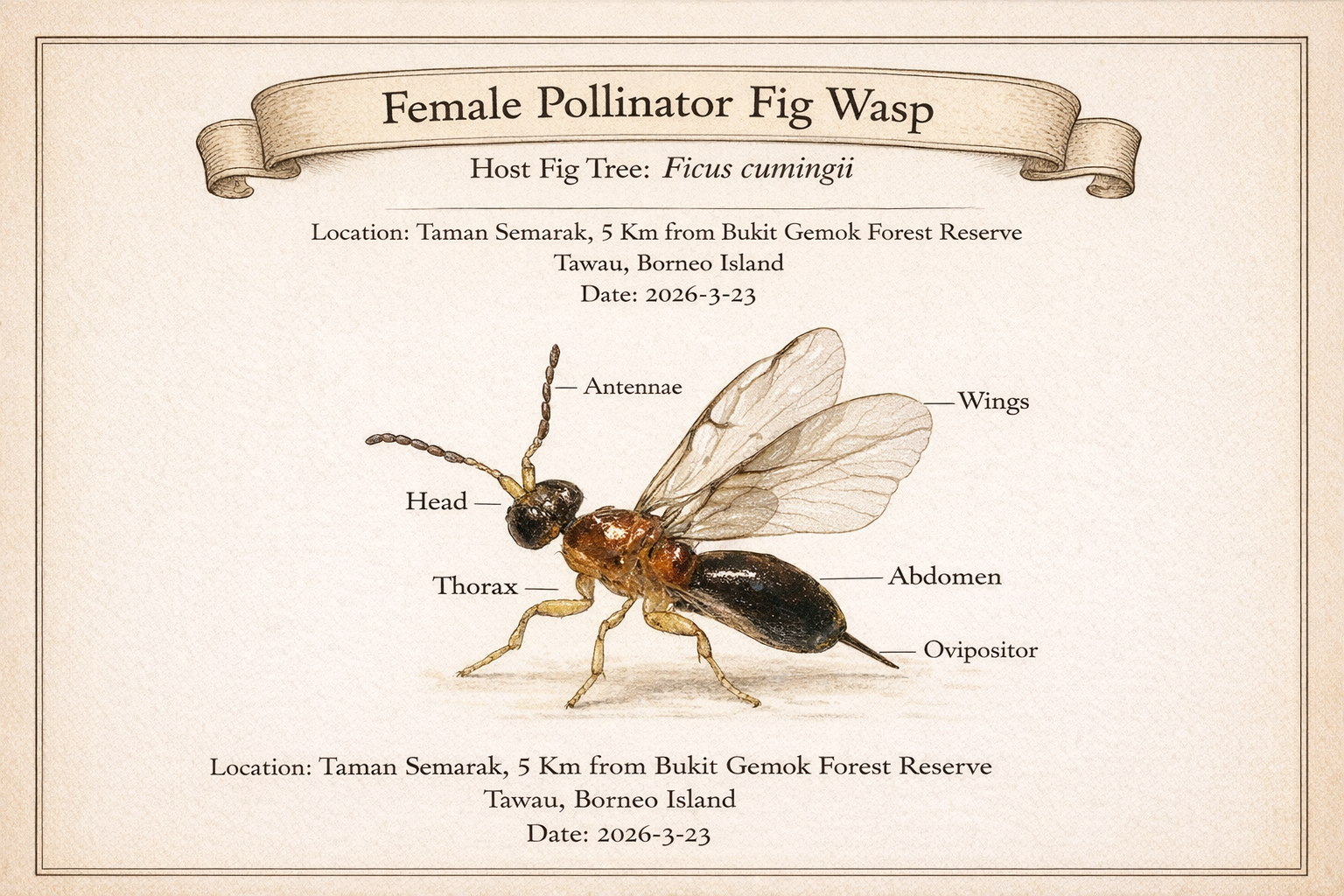
Female♀ 0.5+1.5mm
Female Pollinator for Ficus cumingii
* Appearance: The female wasps are small, dark, and winged.
* Role: They are the primary pollinators. A pregnant female enters a receptive
fig (syconium) through a tiny opening called the ostiole, often losing her wings
and antennae in the process.
* Pollination & Oviposition: Once inside, she pollinates the female flowers with
pollen carried from her birth fig and attempts to lay her eggs (oviposit) in the
flower ovaries.
* Outcome: After completing these tasks, the female wasp dies inside the fig,
and her body is eventually digested by the fig's enzymes.
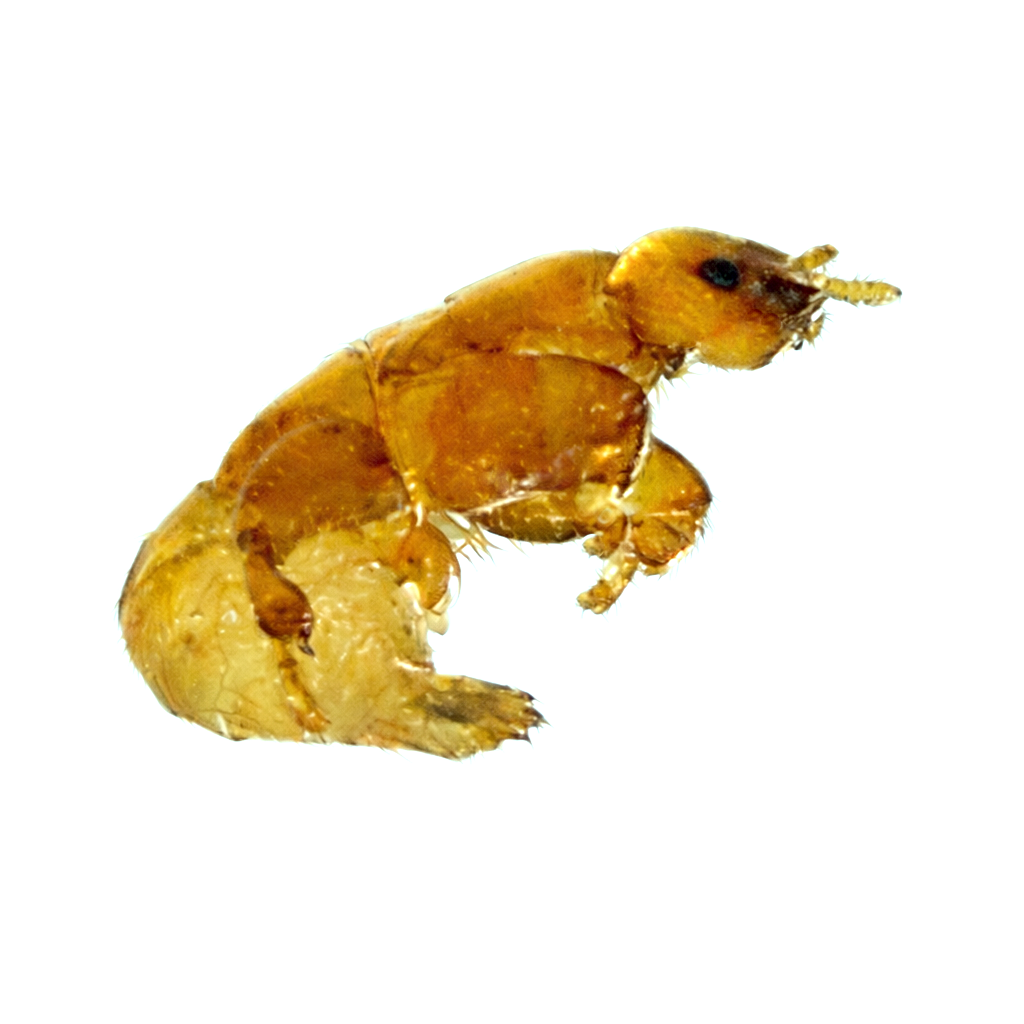
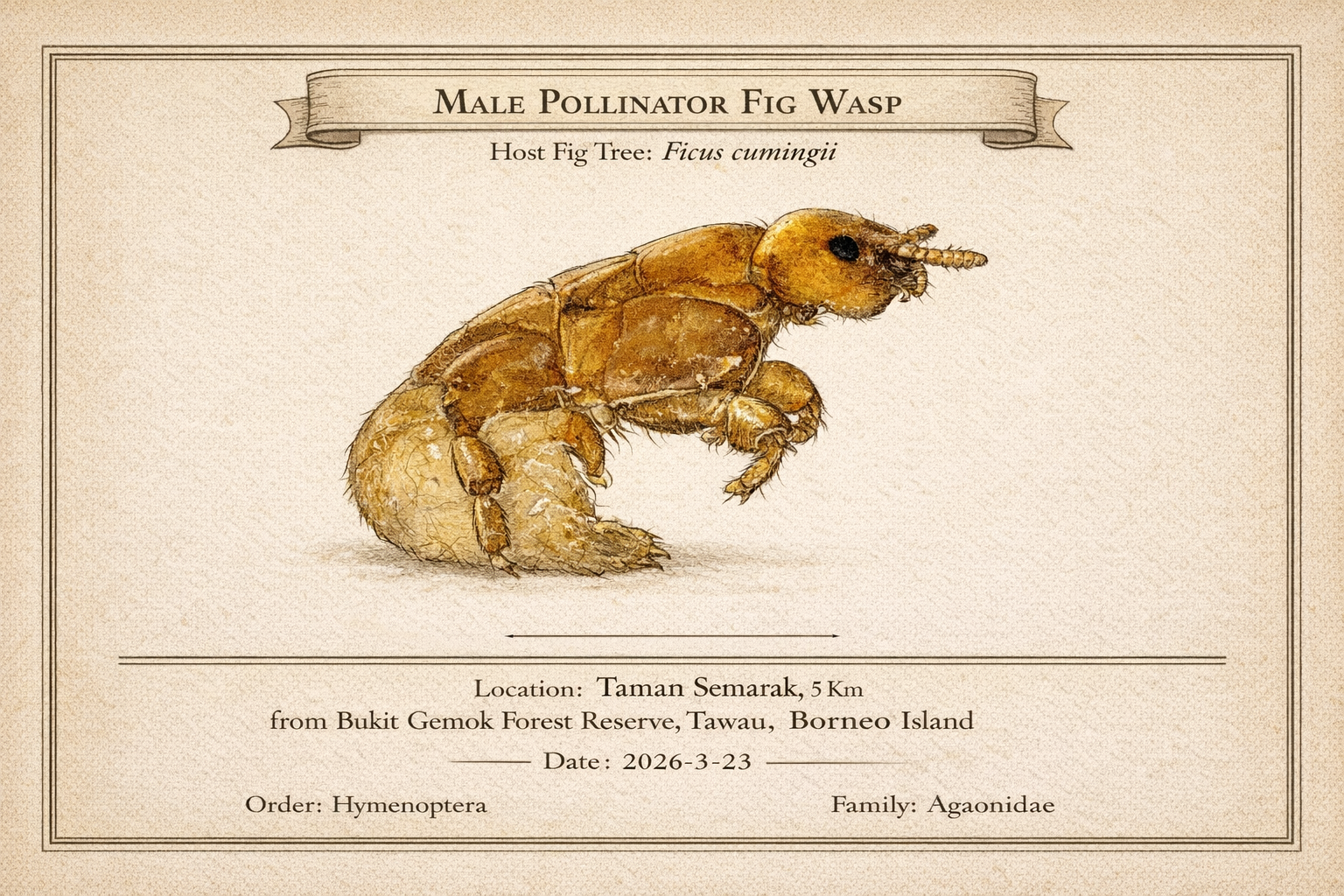
Male♂ 1.5mm
Macro photography by Wong Fook Yee 2026-3-24
Male Pollinator for Ficus cumingii
* Appearance: Male wasps are wingless, often pale or tawny, and have reduced
eyes and antennae compared to females.
* Role: Their entire life is spent inside the fig where they were born.
* Mating & Escape: Upon maturing, the males emerge from their galls first. They
find and mate with the females while the females are still inside their own
galls.
* Tunneling: After mating, the males chew exit tunnels through the fig wall to
allow the pregnant females to escape and find new figs.
* Outcome: The male wasps die shortly after completing the tunnels, never
leaving the fig cavity.
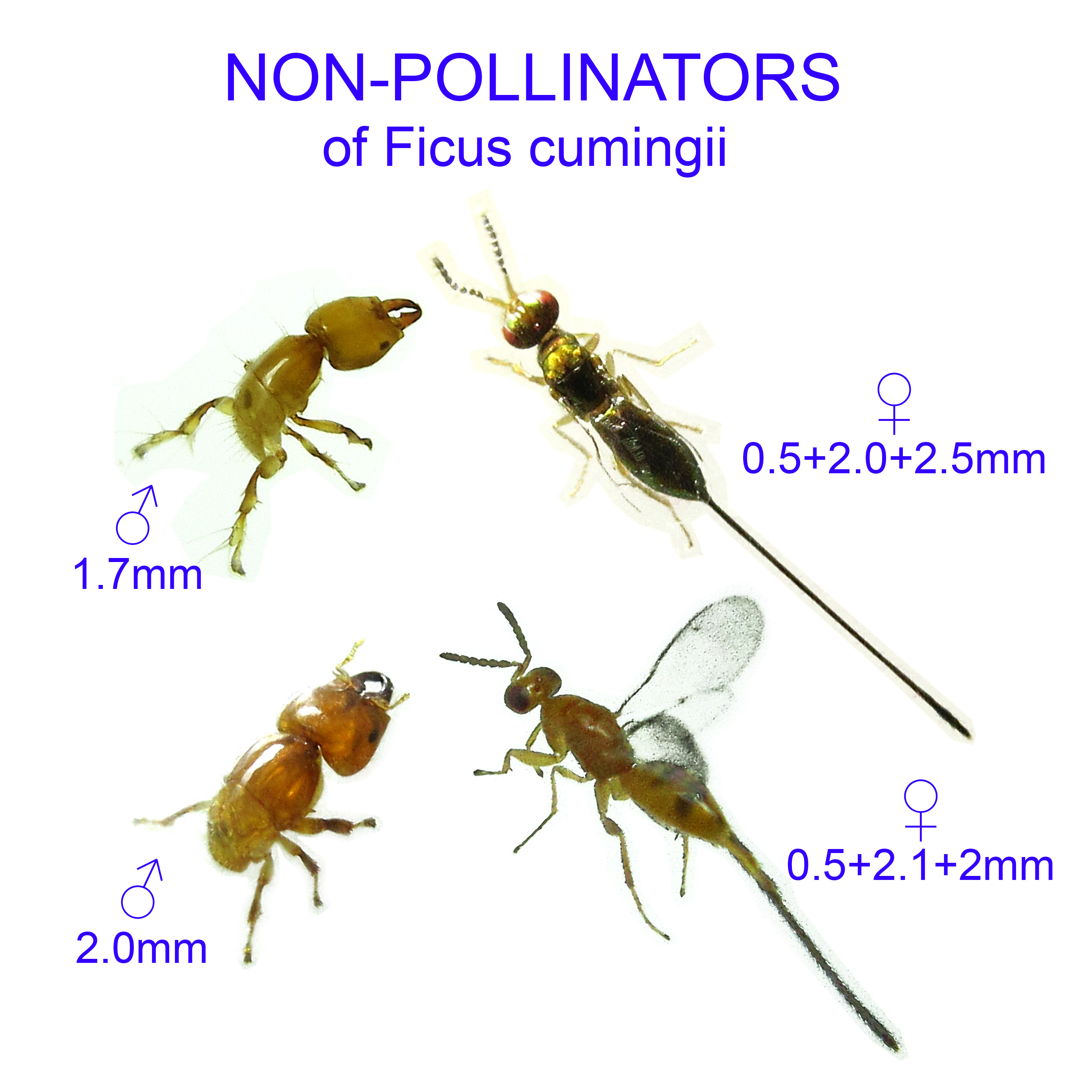
NON-POLLINATORS of Ficus cumingii
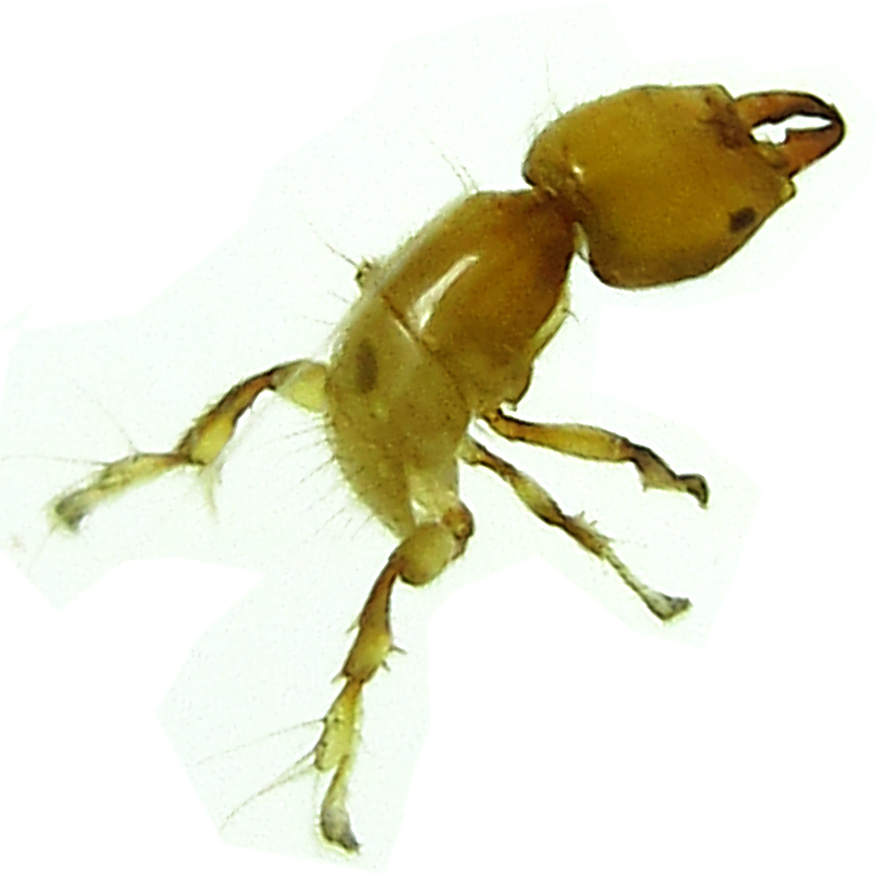
Male ♂1.7mm
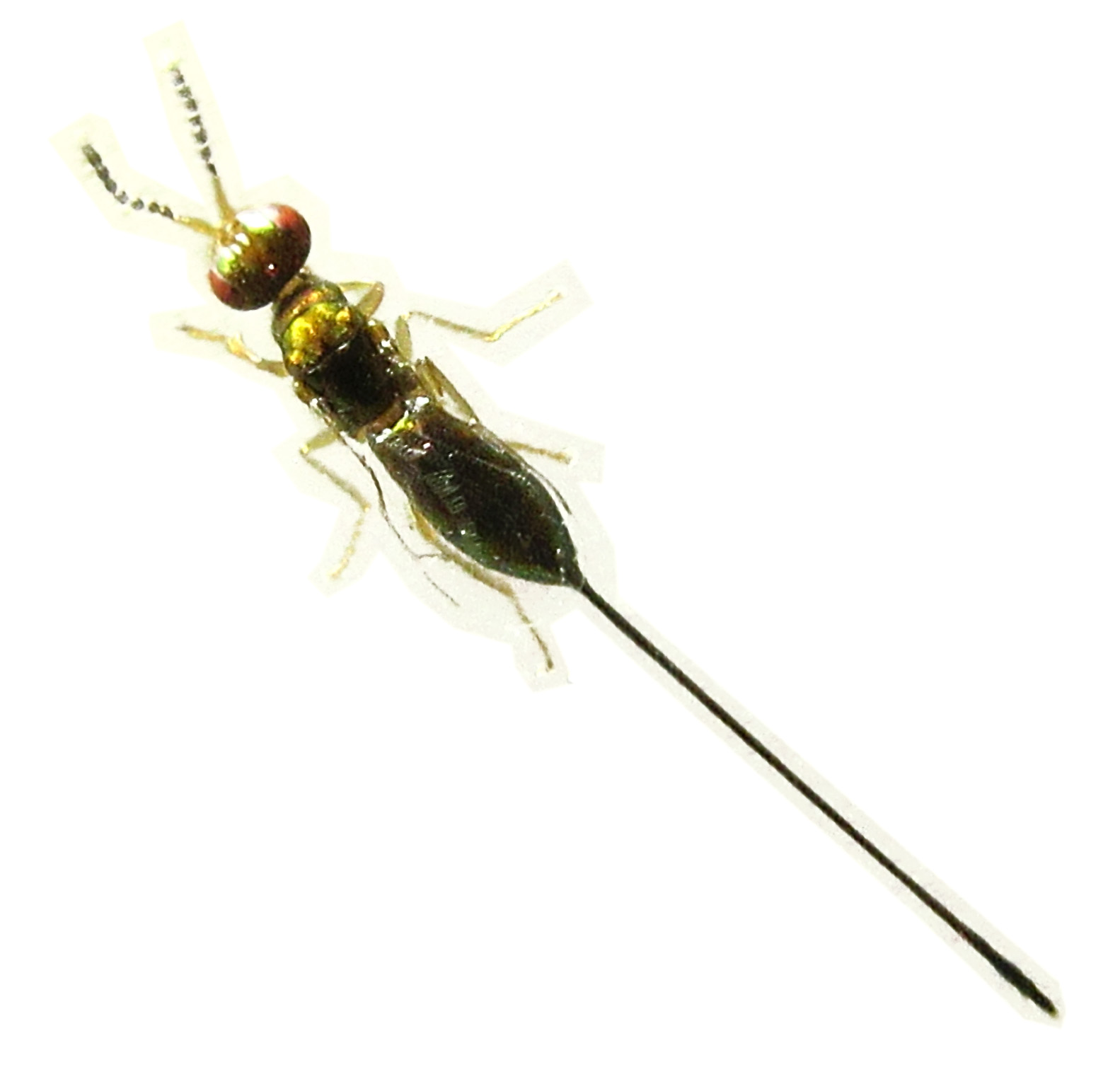
Female ♀0.5+2.0+2.5mm
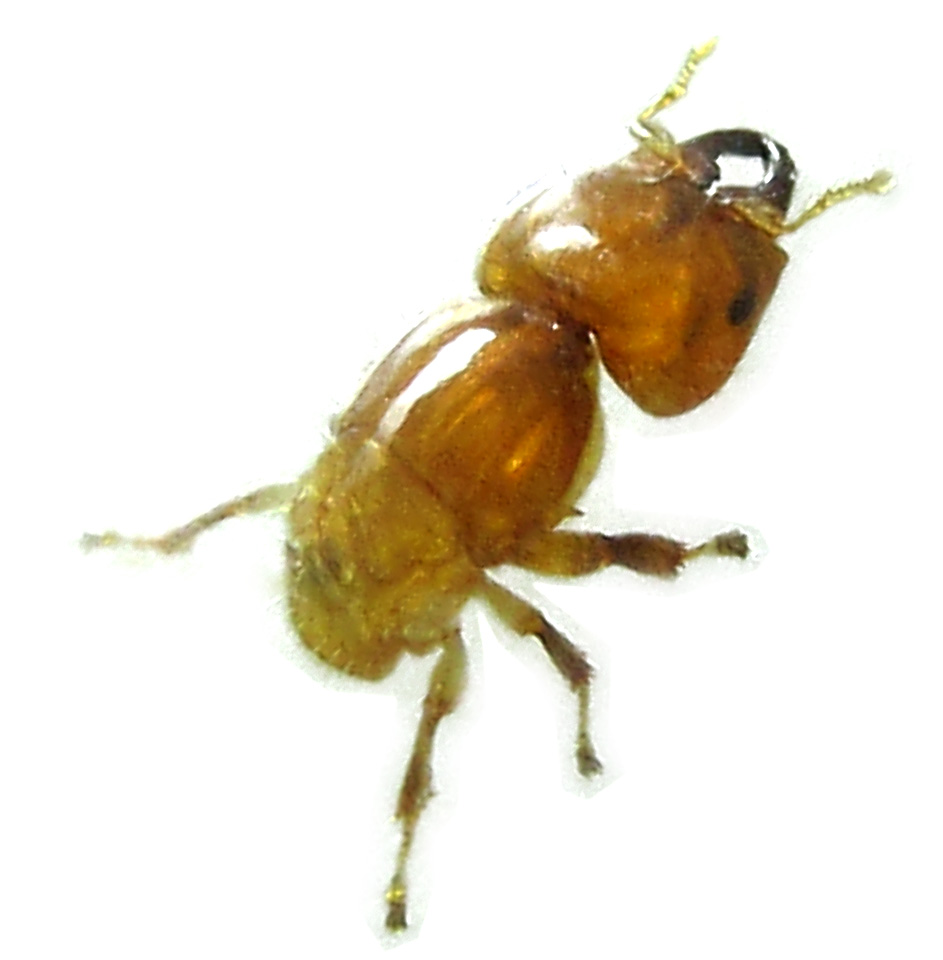
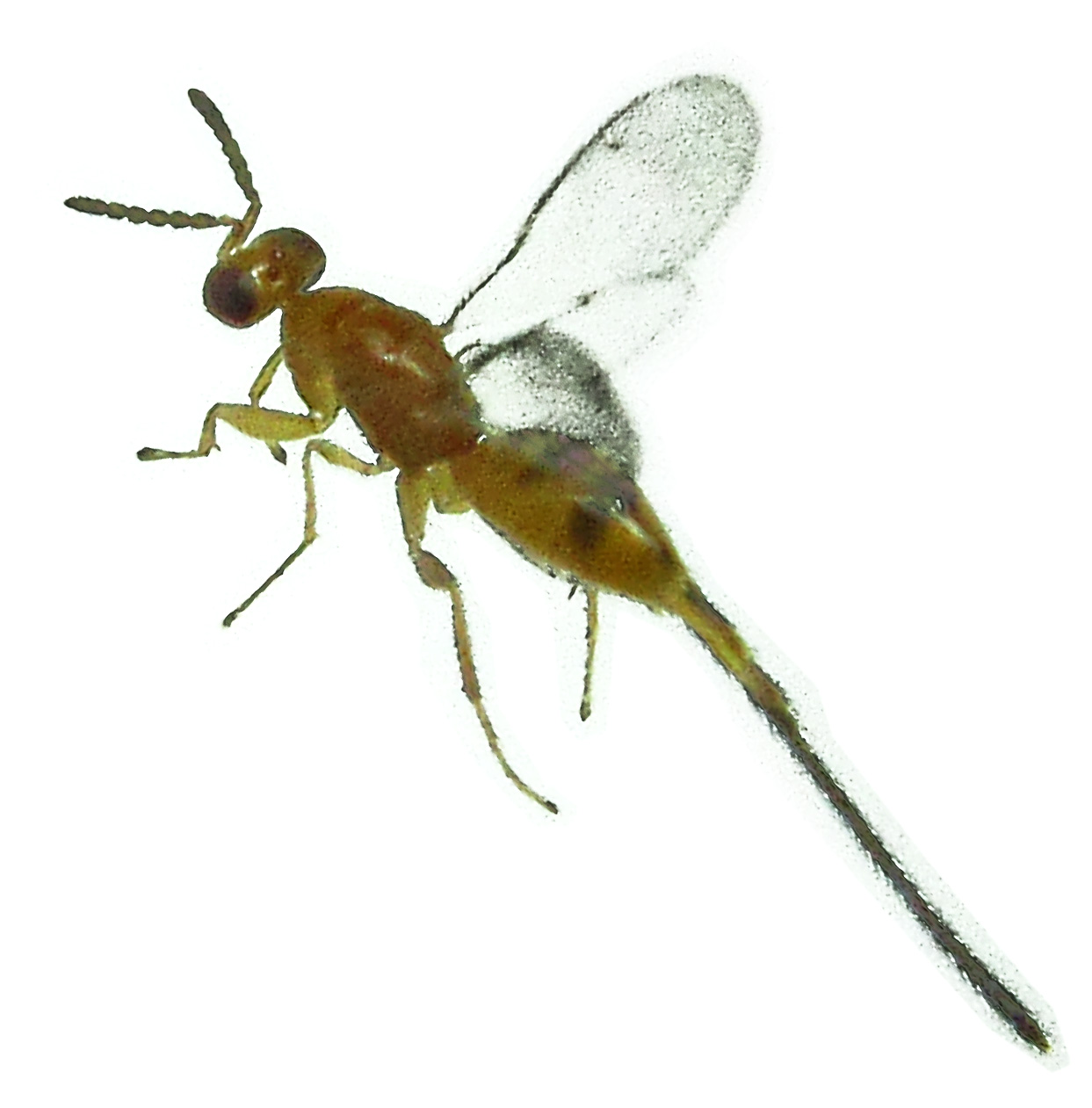
Male ♂2.0mm
Female ♀0.5+2.1+2mm
Ficus cumingii 糙毛榕
Shrub. Dioecious雌雄異株
Two species of Parasitoid Male Wasps from this Ficus cumingii fruit.
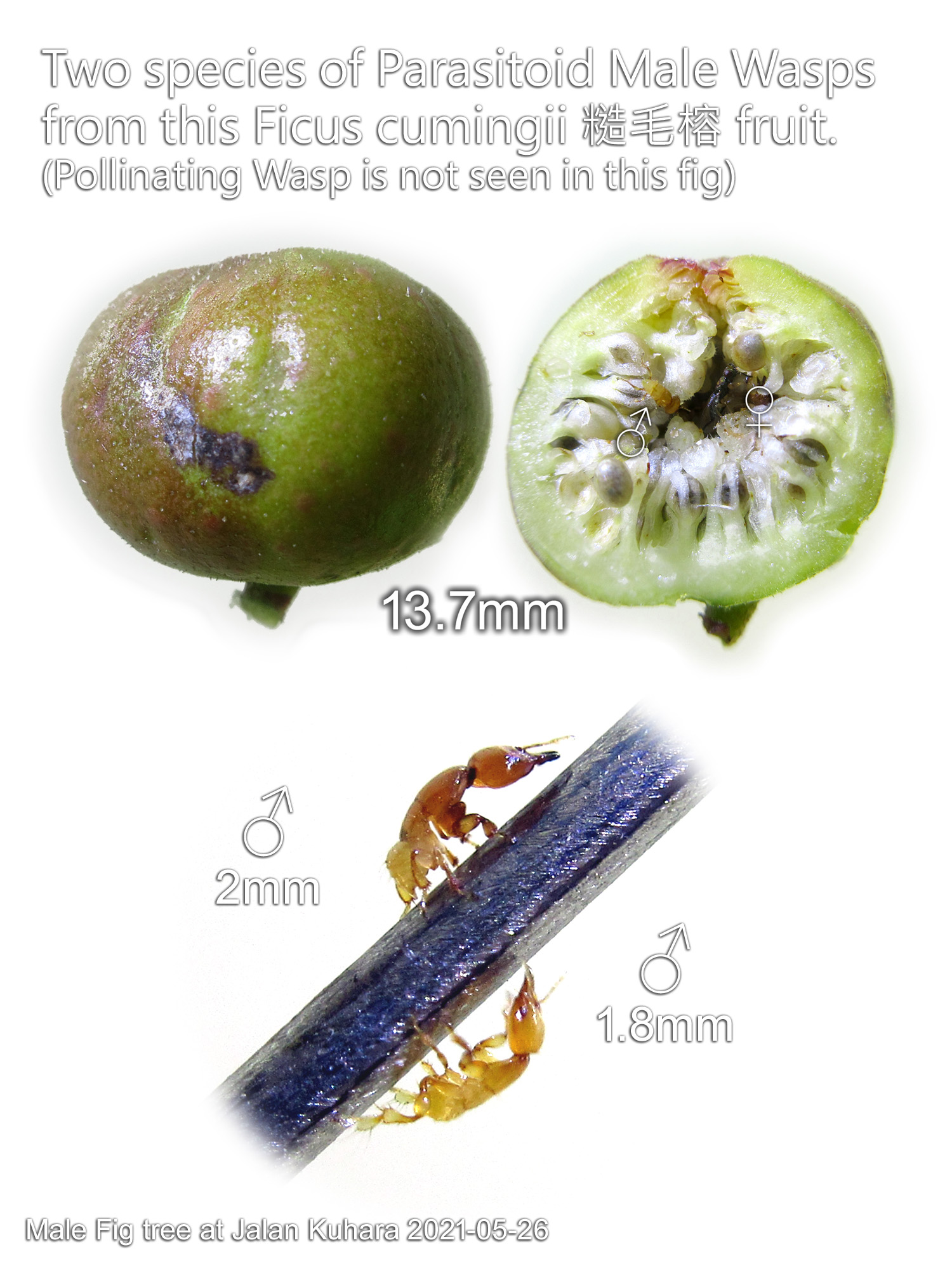
♂2mm
♂1.8mm
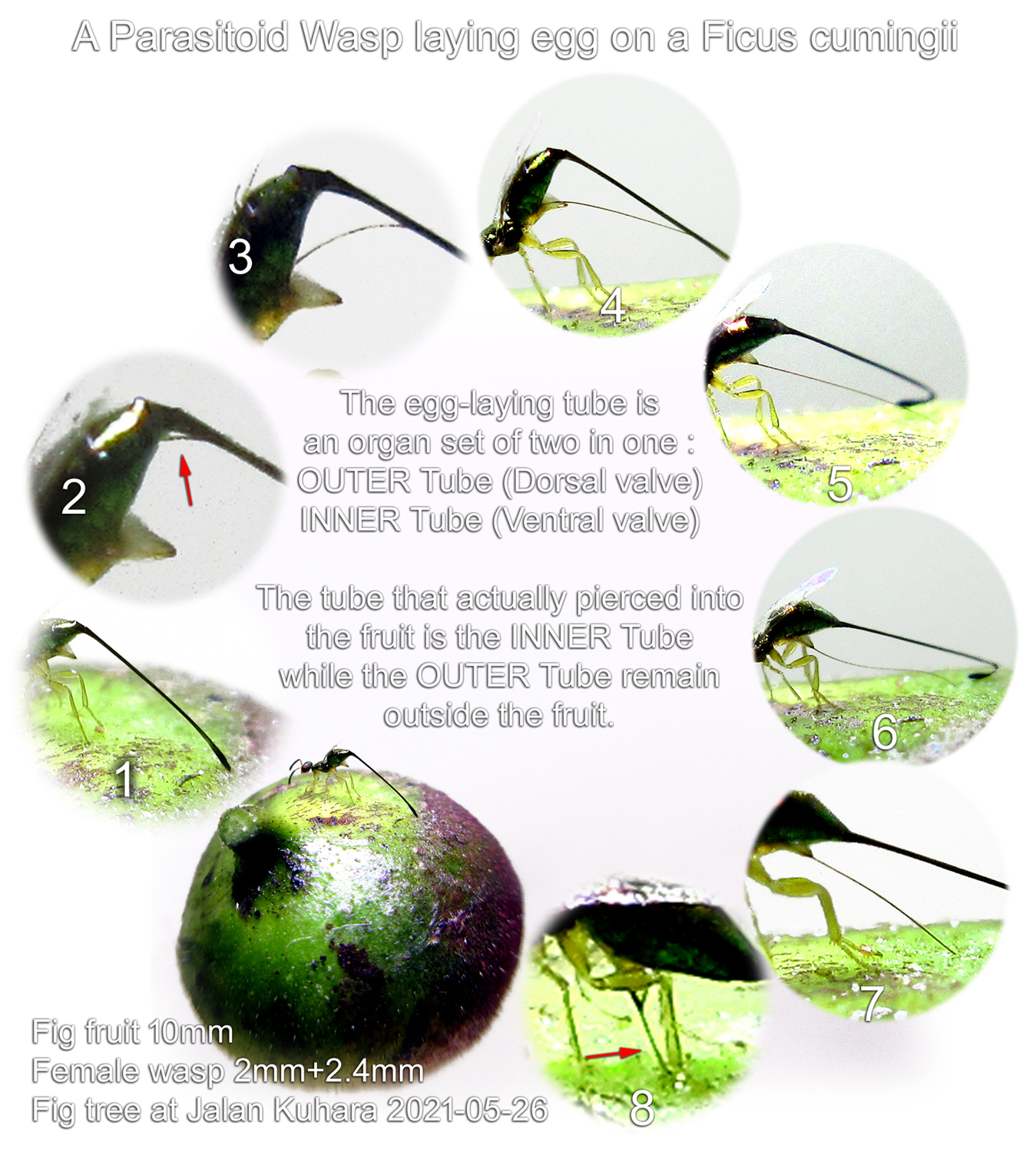
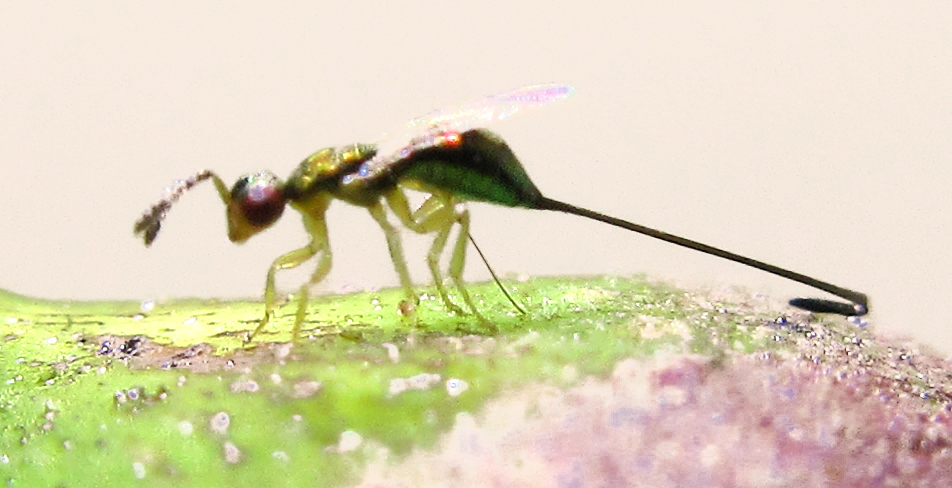
A Parasitoid Wasp laying egg on a Ficus cumingii
Parasitoid Wasp uses its long egg-laying tube to pierce the outside of the fig
and lay its eggs into the ovules inside the fruits.
The egg-laying tube is an organ set of two in one : OUTER Tube (Dorsal valve)
and INNER Tube (Ventral valve)
The tube that actually pierced into the fruit is the INNER Tube while the OUTER
Tube remain outside the fruit.
This diagram show the OUTER Tube (Dorsal valve) and INNER Tube (Ventral valve)
of a Ovipositor of a female wasp of Ficus cumingii during an ovipositing event.
This is a female Parasitoid wasp.
Fig fruit 10mm
Female wasp 2mm+2.4mm
Male Fig tree at Jalan Kuhara 2021-05-26
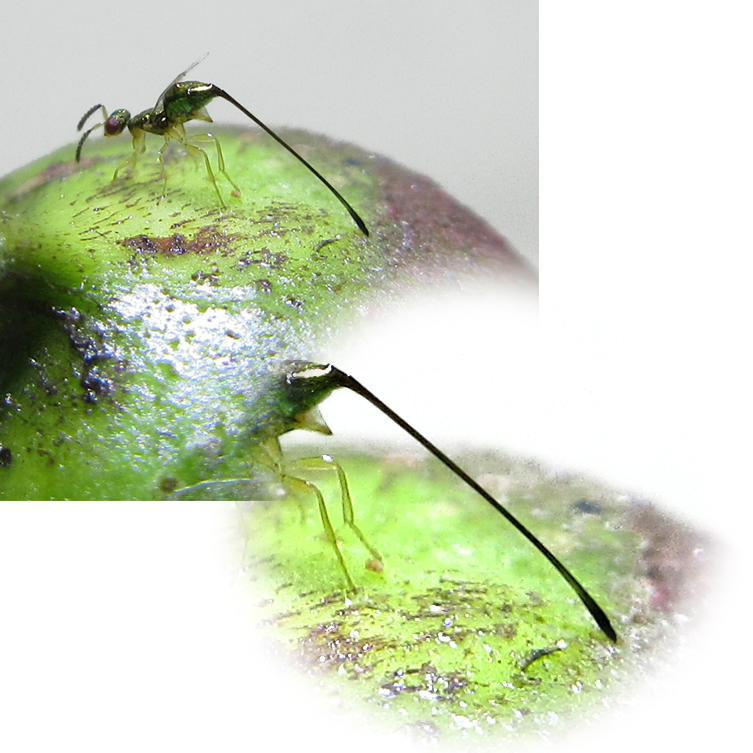 A female Parasitoid wasp uses its long egg-laying tube to pierce from the outside of the fig and lay its eggs into the ovules inside the fruits |
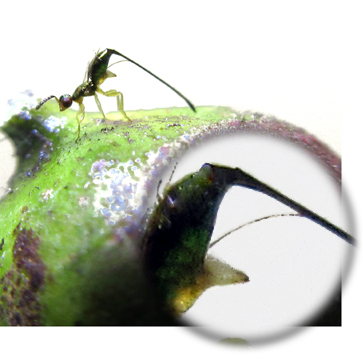
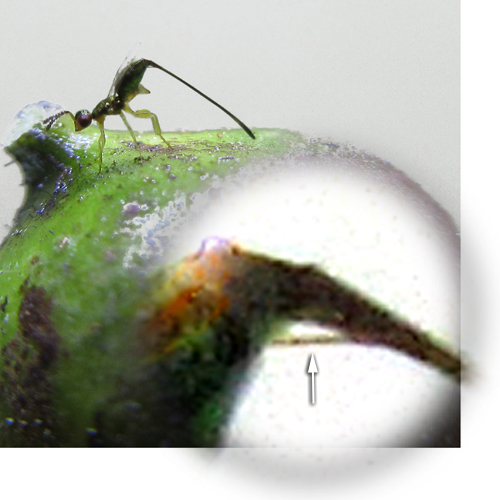 The OUTER Ovipositor does not pierced through the fruit skin. Instead it is the much soft thinner INNER Ovipositor was inserted into the fruits. The OUTER and harder Ovipositor served as a searcher, protector and guide to the INNER Ovipositor. |
 As the INNER Tube gets deeper into the fruit, it has to exposed more from covering OUTER tube |
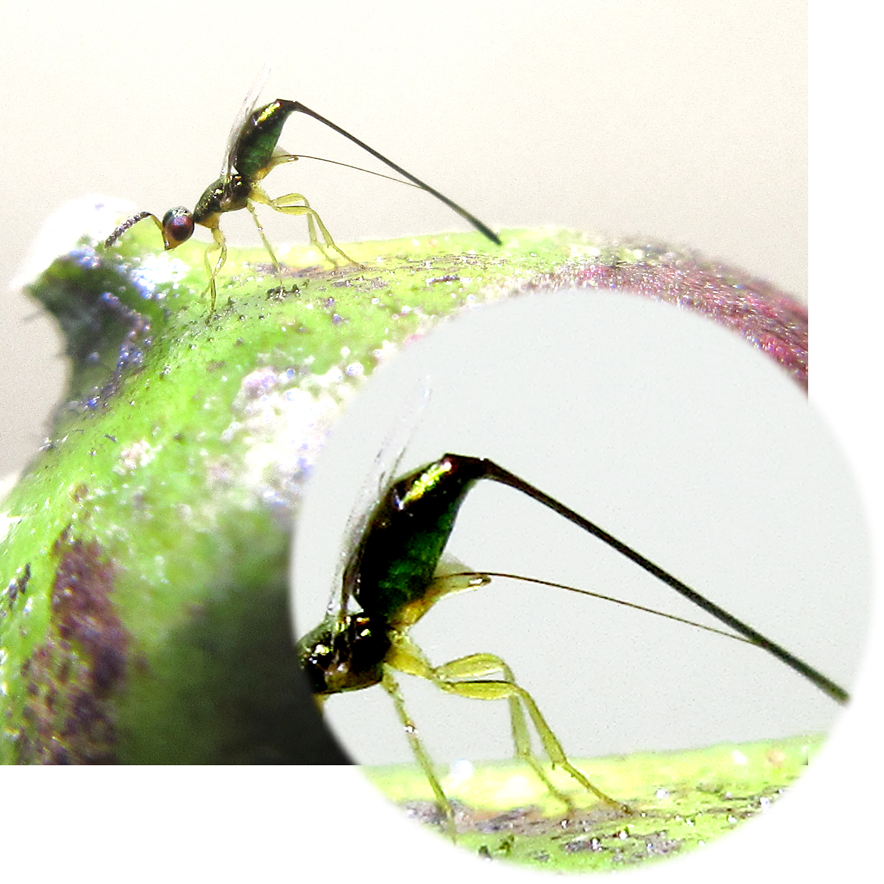 The INNER Tube is now half exposed from the OUTER Covering indication this tinny tube has gone deeper into the fruit. |
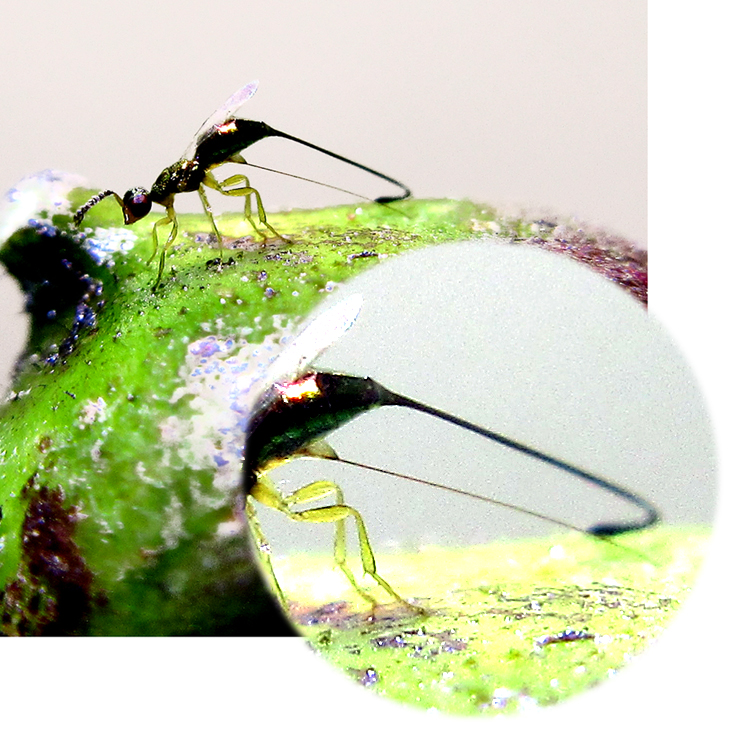 The INNER Tube is now firmly anchored to the fruit and the OUTER tube is not in need now. The OUTER and INNER Tubes separated.
|
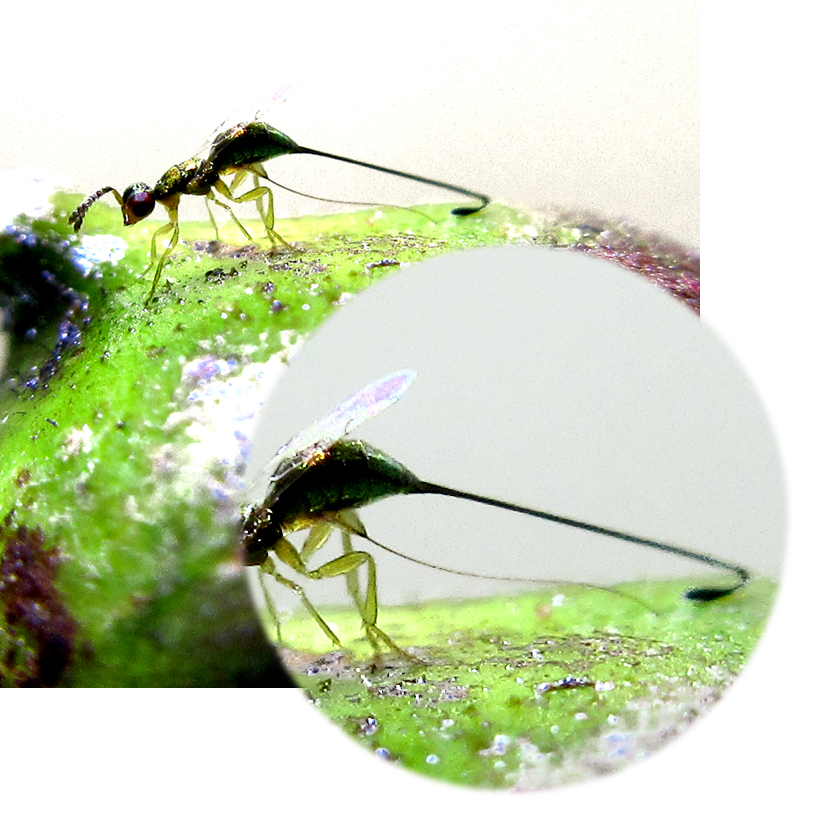 As the INNER Tube gets deeper into the fruit, it has to exposed more from the limited length from the covering OUTER tube The legs and body moved nearer toward the inserting point allowing more space and length to the INNER Tube. |
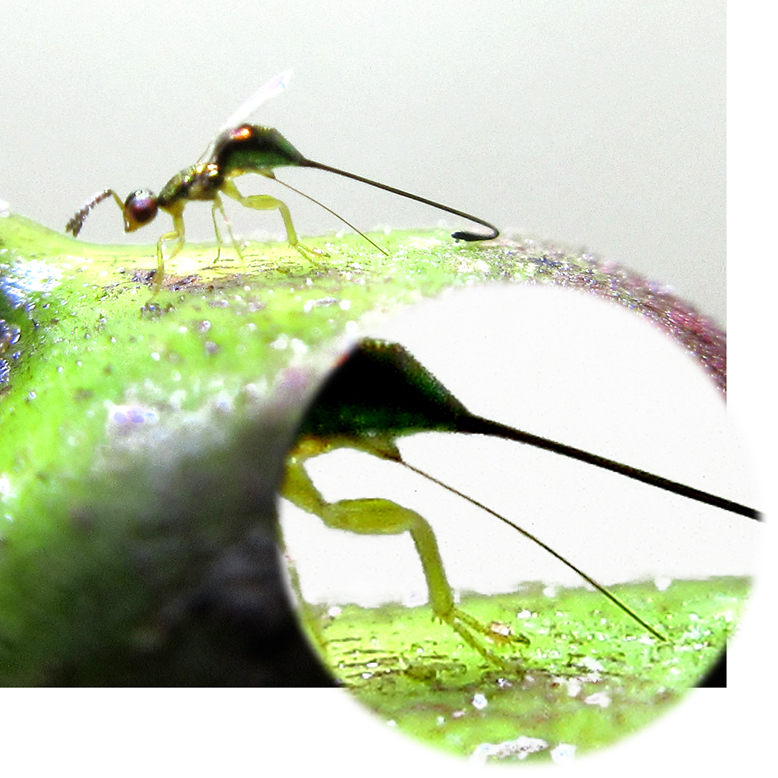 The INNER Tube is now half inserted in the fruit. |
 Beginning the insert with 45 degree upward, the female wasp now gradually lower the abdomen to horizontal level allowing the INNER Tube an almost vertical position to the fruit. |
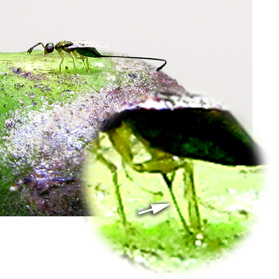 Body Horizontal, INNER Tube almost Vertical. OUTER Tube stabilizing the abdomen by anchoring on the fruit. At this position, this female wasp remain still for several seconds. During this several seconds an egg is successfully laid. |
This Non-Pollinating Fig Wasp emerged from another matured fruit from the same tree and very soon ovipositing in a green/pinkish fruit on the same tree.
Non-Pollinating Fig Wasp lay eggs from outside the fig fruits.
These wasps use an appendage, the Ovipositor, to pierce straight through the fig's skin and inject their own eggs, which then develop in place of the fig's seeds or the pollinating wasp eggs themselves.
The above is a Non-Pollinating Wasp. There are two Non-Pollinating Wasp
recorded from this male tree.
However no Pollinating Fig Wasp from this male tree is recorded yet.
Two thirds of Borneo’s wild figs are dioecious. This means that male trees and female trees grow separately.