Family Moraceae
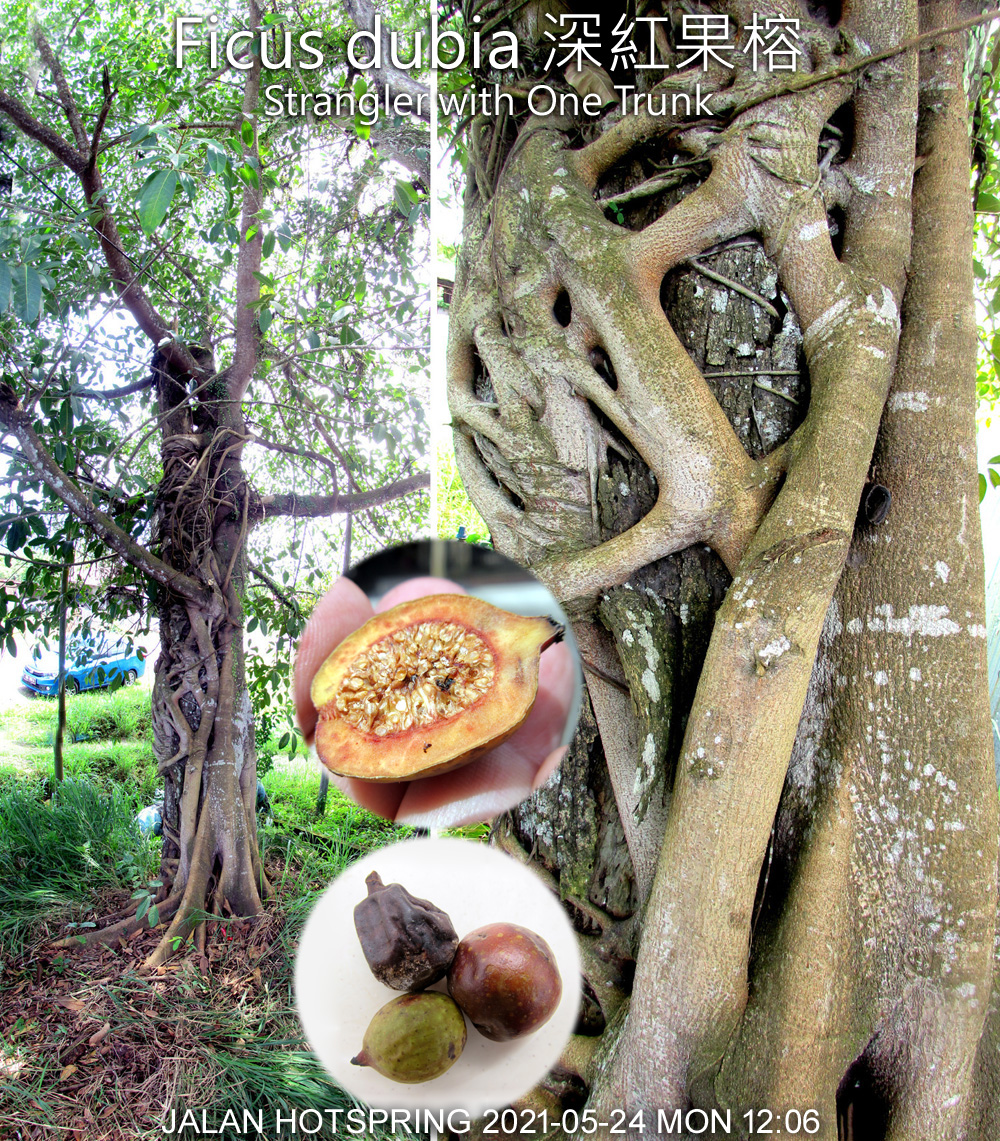
Ficus dubia 深紅果榕
Strangler with One Trunk

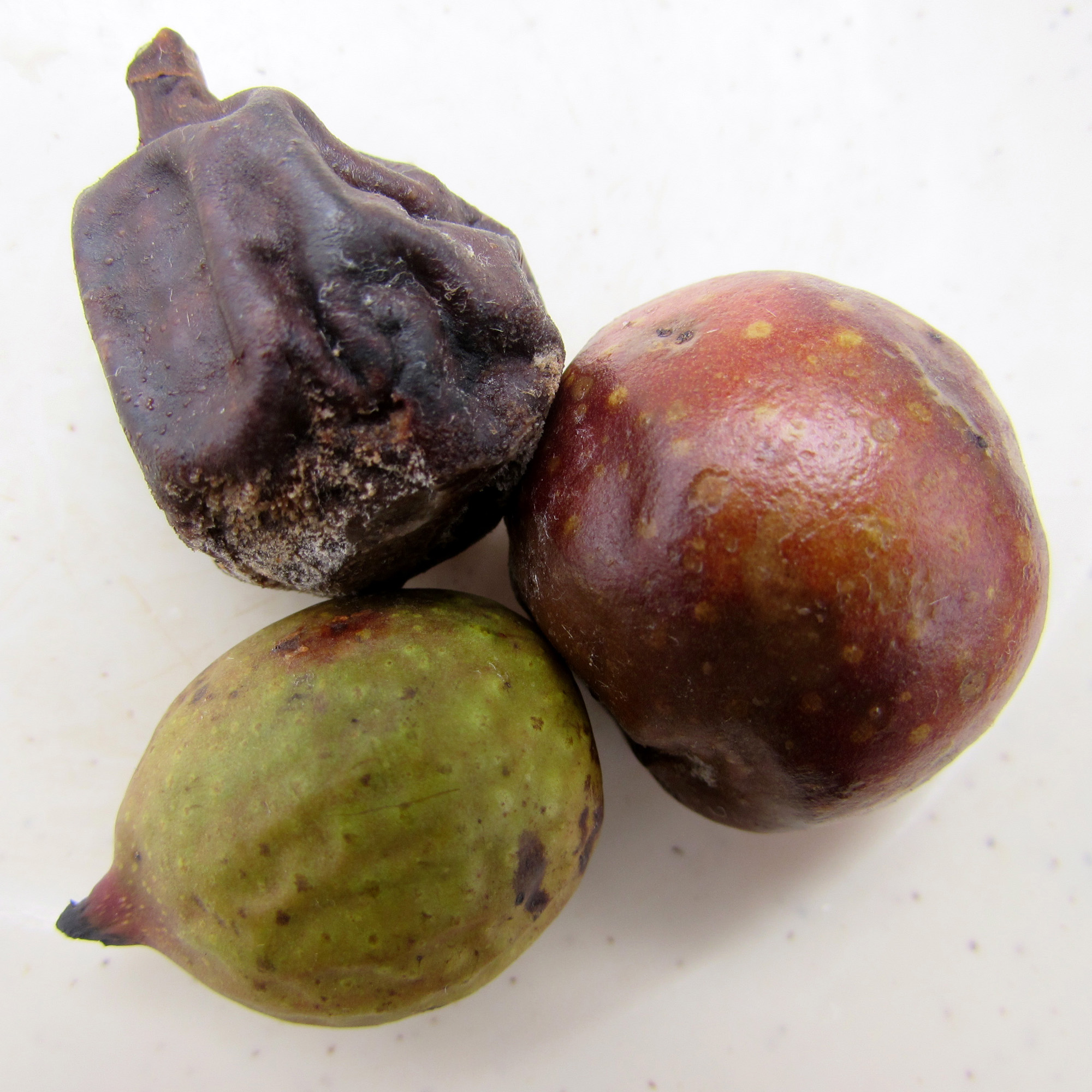
Ficus dubia fruits collected from Maliau Basin


Ficus dubia – The Scrambling Fig of Southeast Asia

1. Introduction

Ficus dubia is a large scrambling fig native to Malaysia, Singapore, Sumatra, and northern Borneo. It thrives in lowland primary forests and plays a vital ecological role as a keystone species, supporting wildlife and forest regeneration.


3. Morphological Features

Diagram suggestion:


4. Distribution & Habitat


5. Ecological Importance


6. Conservation Notes


7. Educational Takeaway

Ficus dubia demonstrates the interconnectedness of tropical ecosystems. Its relationship with pollinators and frugivores highlights how one species can sustain many others. Studying figs helps students appreciate biodiversity, conservation, and ecological balance.
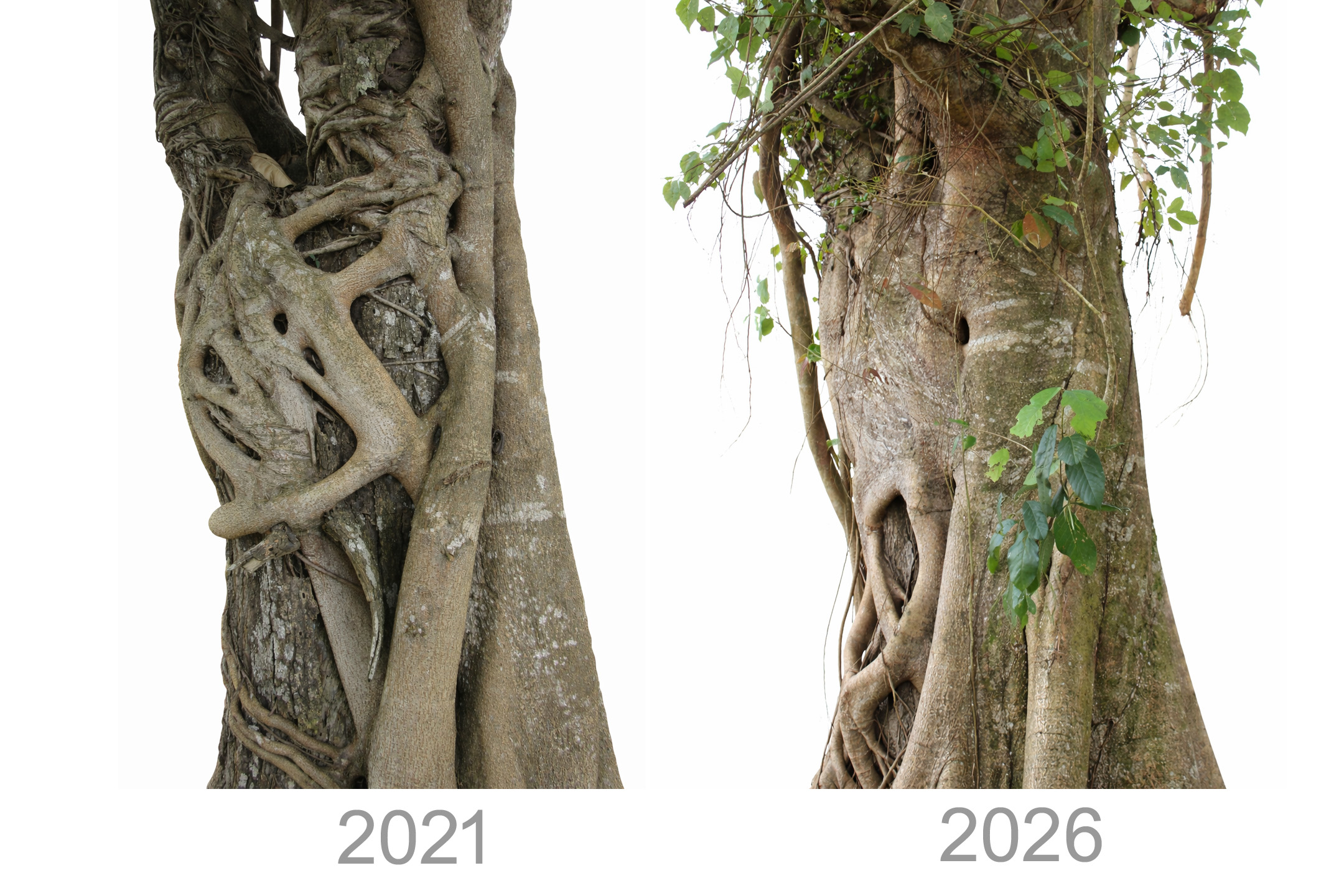


THE SILENT TAKEOVER
Five Years in the Life of a Strangler Fig

This composite image shows the same tree at the same location, photographed five years apart. What appears to be two different trees is, in fact, a single unfolding story of survival in the plant world.

Left Panel — 2021
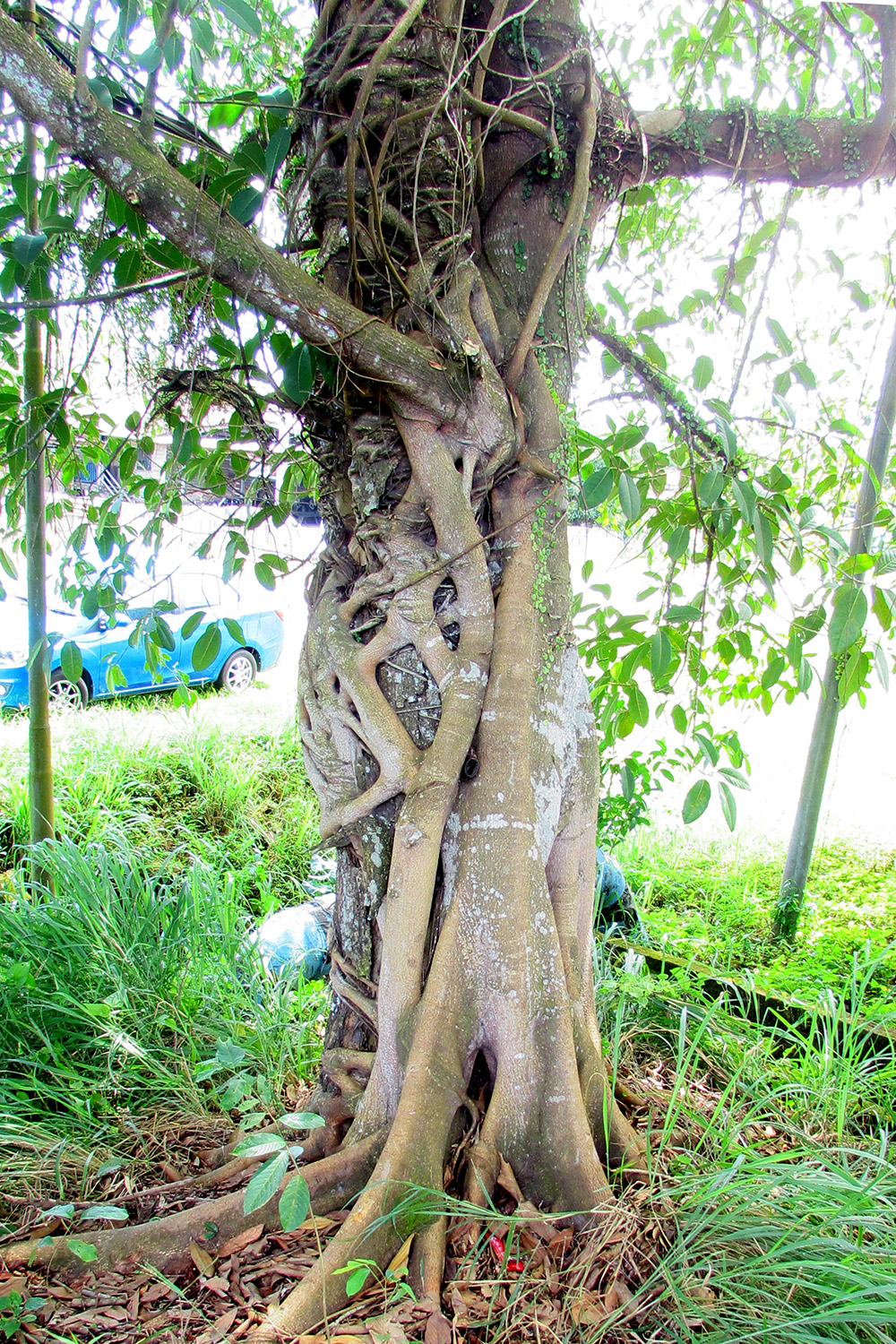
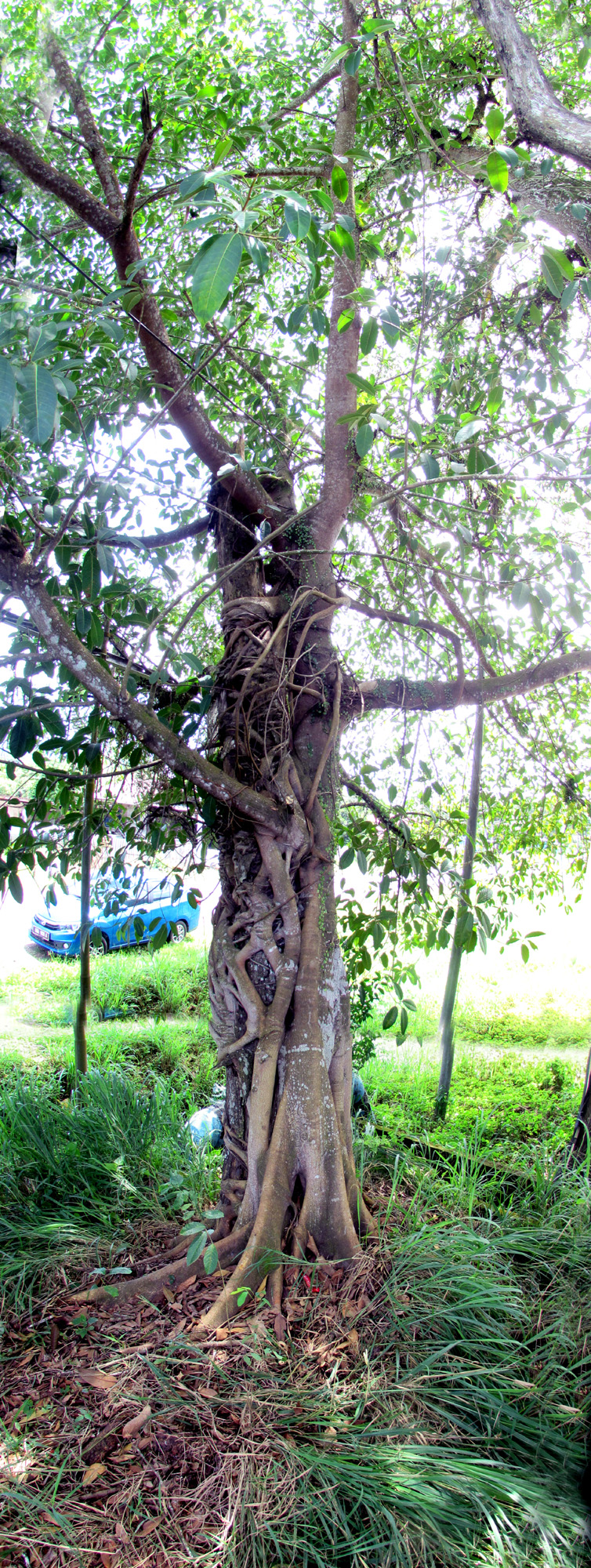
A young Ficus dubia has begun its slow ascent. Pale aerial roots descend and wrap around an older host tree, using it as physical support. At this stage, the host tree is still clearly visible, with roughly 50% of its trunk exposed. The fig is not yet dominant—it is establishing its hold.

Right Panel — 2026
Just five years later, the transformation is dramatic. The Ficus dubia has thickened and fused its roots into a single, smooth trunk, now covering approximately 90% of the host tree. The original tree survives only as fragments, partially visible through narrow openings in the fig’s living structure.

How Strangler Figs Grow
Ficus dubia begins life as a seed germinating high in the forest canopy. As its roots grow downward, they eventually reach the ground and expand, encasing the host tree. Over time, the fig competes successfully for light, water, and nutrients, gradually outgrowing and overtaking its support.

Looking Ahead — 2031
If this process continues, the host tree will soon disappear from view entirely. To a future observer, the fig will appear to be the original tree—ancient, solid, and self-standing—with no obvious trace of the life it replaced.

A World of Plants
This is the quiet reality of the forest: change measured in years, not moments. In the plant world, survival is patient, relentless, and silent—where the stronger does not attack, but slowly endures until only one remains.


Strangler Fig — Ficus dubia

This tree is a mature strangler fig, Ficus dubia, demonstrating one of the most remarkable life strategies in tropical forests. The pale outer trunk belongs to the fig, while the dark central trunk is the remains of its original host tree.

Ficus dubia begins life high in the forest canopy, germinating on another tree. As it grows, long aerial roots descend toward the ground. Over many years, these roots thicken, fuse, and gradually encase the host trunk. This process restricts the host’s access to light and nutrients, eventually causing its death. What remains is a hollow or partially enclosed column formed entirely by the fig’s living roots.

The interwoven roots create a strong, buttressed structure that supports the fig as an independent tree. The smooth, light-coloured bark contrasts sharply with the darker, decaying wood trapped within. Such trees provide important habitats for insects, birds, and epiphytic plants, making figs keystone species in tropical ecosystems.

Location: Jalan Air Panas, approximately 1 km after the roundabout toward Taman Hot Spring Jaya.


Photographed on 2021-05-24 at Jalan Air Panas, Tawau

This Ficus dubia fig tree is a mature strangler fig that has completely enveloped and killed its original host tree. The lighter-coloured trunk belongs to Ficus dubia, while the darker inner trunk is the remains of the host, now lifeless and partially concealed within the fig’s fused roots.

The fig’s aerial roots have descended from above, gradually thickening and merging into a single, sculptural column. Over time, these roots tightened around the host trunk, restricting its growth and ultimately causing its death—a classic example of the strangler fig life strategy. The resulting trunk displays dramatic lattice-like openings, buttressed bases, and flowing root contours that reflect decades of slow biological conquest.

The bark of Ficus dubia is smooth and pale grey-beige, contrasting strongly with the darker, rougher texture of the dead host inside. Small epiphytes and climbers are visible on the surface, indicating the tree’s role as a living micro-habitat. At the base, the expanded roots anchor firmly into the soil, forming a stable and imposing structure.

This tree is located along Jalan Air Panas, approximately 1 km after the roundabout leading to Taman Hot Spring Jaya, where it stands as a striking roadside example of fig ecology and forest succession, even within a semi-disturbed landscape.