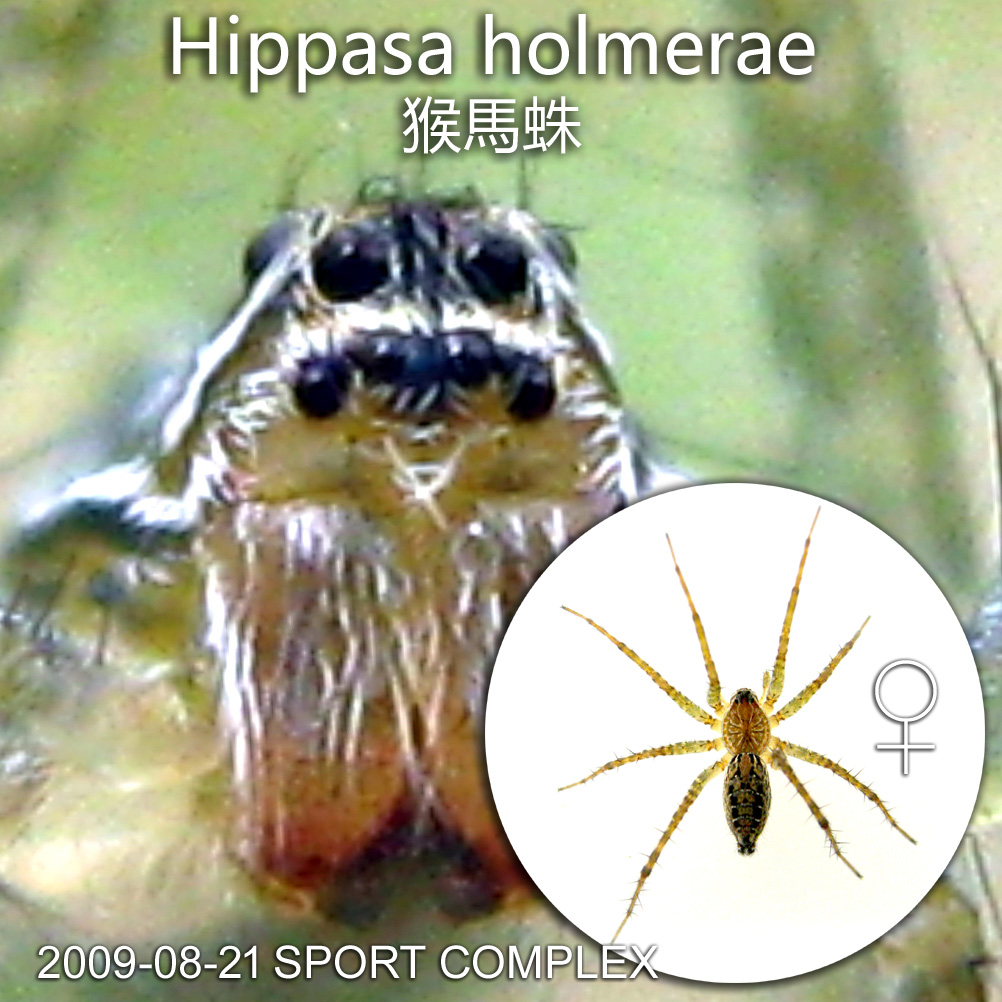
Hippasa holmerae
猴馬蛛
♀
2009-08-21 SPORT COMPLEX
Hippasa holmerae
猴馬蛛
♀
2009-08-21 SPORT COMPLEX
中國蜘蛛生態大圖鑑 Page 377
|
Hippasa holmerae Indentification of Genus Hippasa : http://www.ecology.ugent.be/terec/personal.php?pers=sa&page=sa0 |
| 9 Genus characteristic and Diagnostic features of genus Hippasa
spiders : 1 - Posterior pair of spinnerets two segmented, longer than anterior one,
conical distal segment as long as basal segment, covered with long setae
(剛毛) |
|
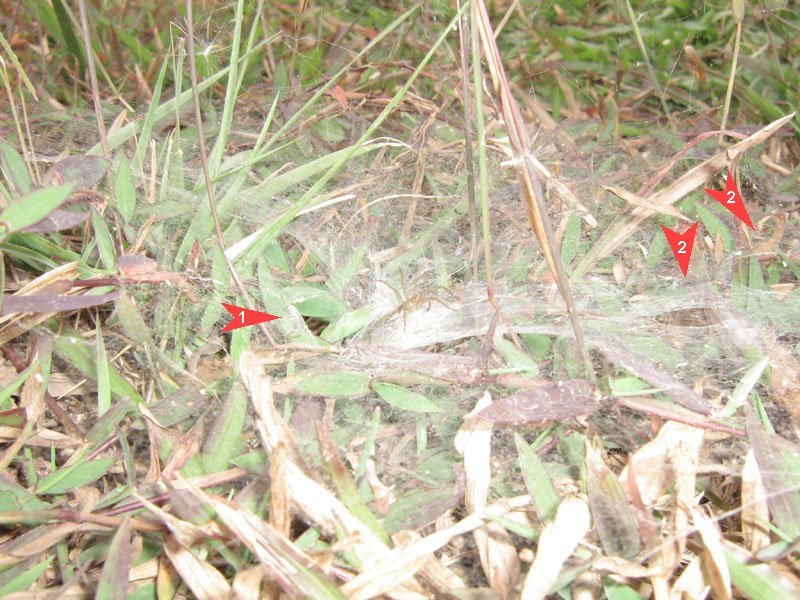
Diagnostic feature No: 1 Posterior pair of spinnerets has two segments and are longer than anterior spinnerets. The conical distal segment as long as basal segment is covered with long setae (剛毛). |
|
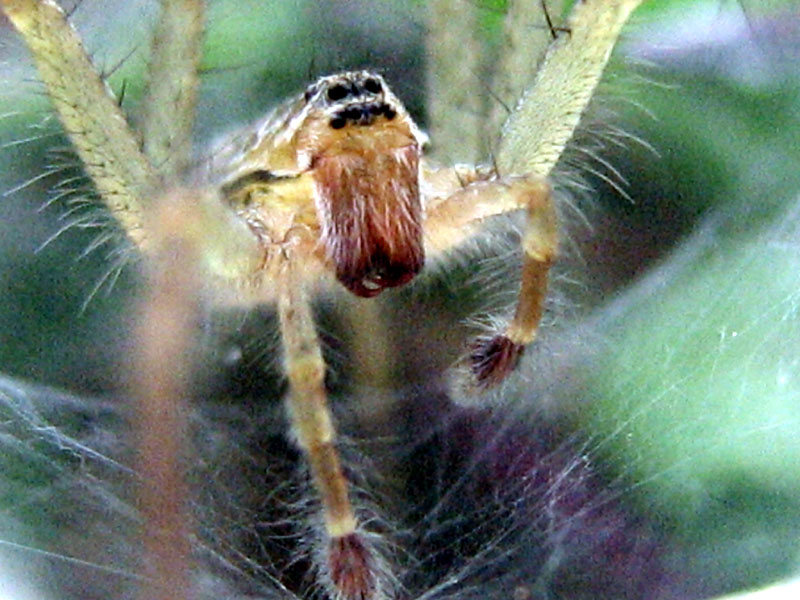
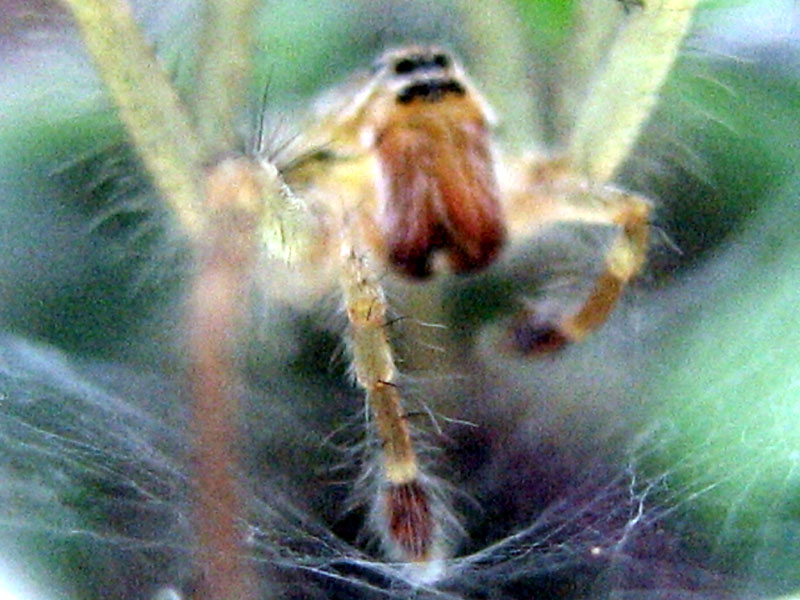
Diagnostic feature No: 2 Hippasa holmerae's anterior row of eyes little wider than second row |
|
Diagnostic feature No: 3 Cephalothorax longer than wide, cephalic region narrowed in front |
|
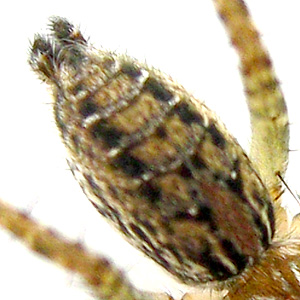
Diagnostic feature No: 4 Abdomen longer than wide, with dorsal markings |
|
Diagnostic feature No: 5 Male swollen palp (black) covered with long setae. |
|
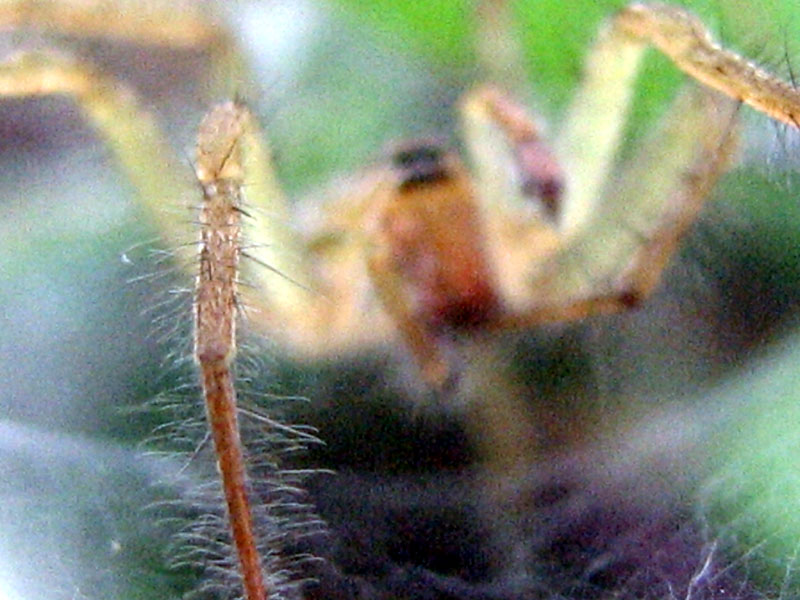
Diagnostic feature No: 6 Legs relatively long, clothed with spines and hairs. This female Hippasa holmerae of Malaysia measured 7mm in body length. |
 |
|
|
|
|
|
|
|
|
|
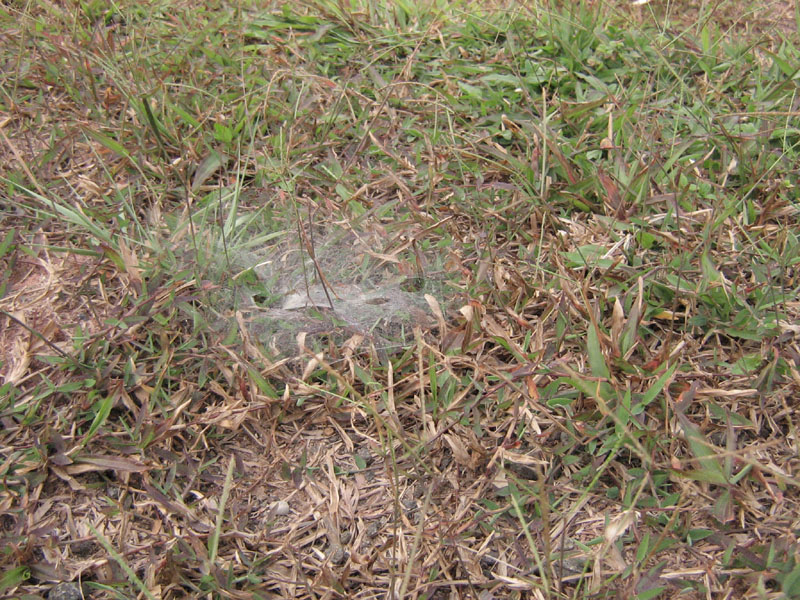
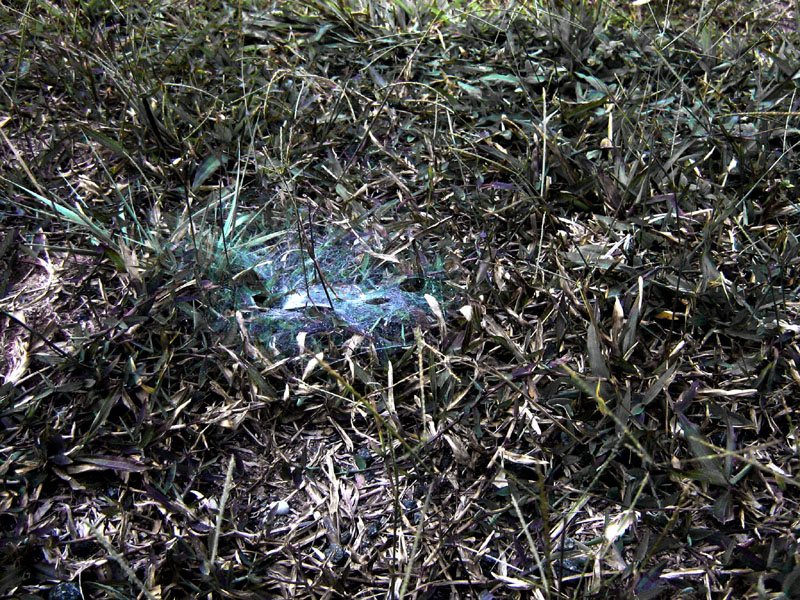
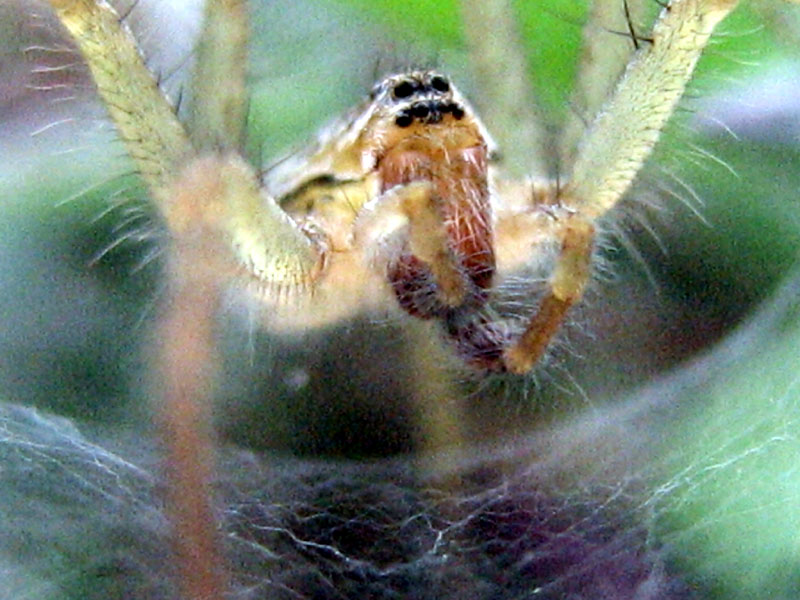
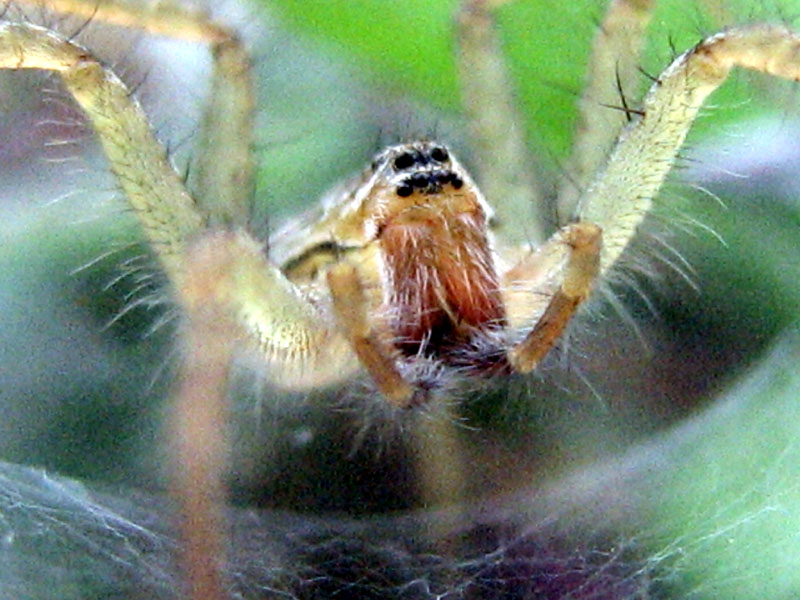
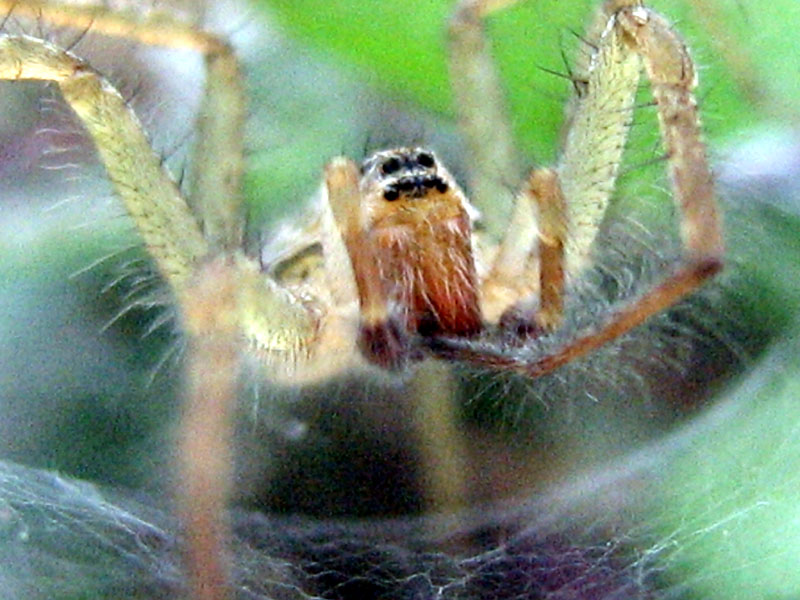
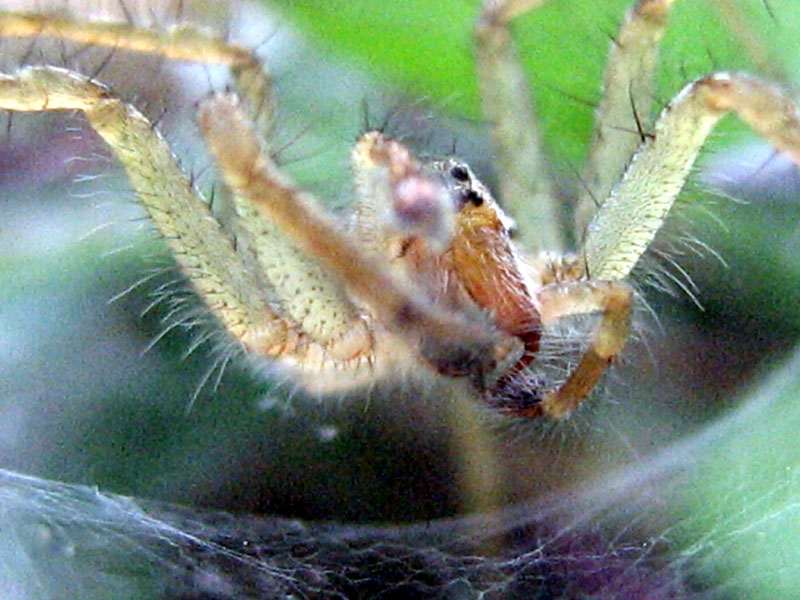
Just beside a walking path, yet most people passed by not noticing there is a home of a spider on the grass... |
The same photo with a little color leveling using Photoshop. The web is white on the grass. Click the image to enlarge... |
 |
 |
 |
|
 |
|
 |
|
 |
|
 |
|
 |
|
 |
|
 |

|
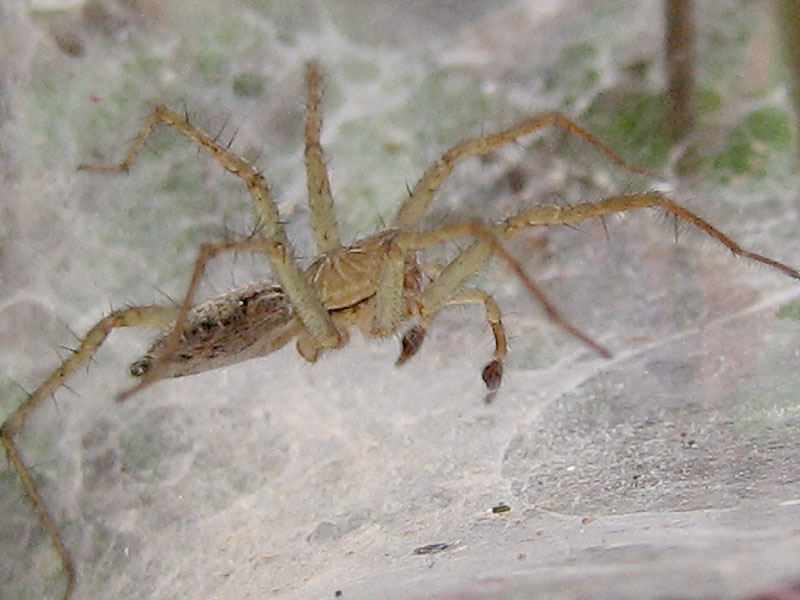
This spider is very difficult to identify. I concluded it is a Hippasa holmerae based on majority of similar images on the internet. It builds the familiar sheet-webs that sparkle with dew drops
over grassy grounds at dawn. The spider hides in a silken funnel that leads to
the web and pounces on any grasshopper that lands on it. Newly hatched spiderlings can sometimes be seen riding on the back of their mother (right, Pardosa sp. female). The spiderlings apparently do not feed while on the mother's back, surviving on the remains of their yolk. If they fall off, they can still hang on to the mother by a silken life-line, and can easily return to the mother's back via its legs or palps. The spiderlings disperse only after undergoing a molting.
|
| Checklist of Hippasa spiders H. affinis Lessert, 1933 H. afghana Roewer, 1960 H. agelenoides Simon, 1884 H. albopunctata Thorell, 1899 H. australis Lawrence, 1927 H. babai Tanikawa, 2007 H. bifasciata Buchar, 1997 H. brechti Alderweireldt & Jocqué, 2005 H. charamaensis Gajbe, 2004 H. cinerea Simon, 1898 H. domratchevae Andreeva, 1976 H. elienae Alderweireldt & Jocqué, 2005 H. fabreae Gajbe & Gajbe, 1999 H. flavicoma Caporiacco, 1935 H. funerea Lessert, 1925 H. greenalliae Blackwall, 1867 H. hansae Gajbe & Gajbe, 1999 H. haryanensis Arora & Monga, 1994 H. himalayensis Gravely, 1924 H. holmerae Thorell, 1895 H. holmerae sundaica Thorell, 1895 H. innesi Simon, 1889 H. lamtoensis Dresco, 1981 H. loeffleri Roewer, 1955 H. loundesi Gravely, 1924 H. lycosina Pocock, 1900 H. madhuae Tikader & Malhotra, 1980 H. madraspatana Gravely, 1924 H. marginata Roewer, 1960 H. olivacea Thorell, 1887 H. partita Cambridge, 1876 H. pisaurina Pocock, 1900 H. simoni Thorell, 1887 H. sinai Alderweireldt & Jocqué, 2005 H. valiveruensis Patel & Reddy, 1993 H. wigglesworthi Gajbe & Gajbe, 1999 |