Across Borneo, plants experience a wide range of water and soil environments, from waterlogged ground to well-drained forest soils. These conditions strongly influence how plants grow and survive.
How plants cope with water availability and soil conditions in tropical environments
In tropical regions, water is abundant but unevenly distributed. Some areas remain flooded for long periods, while others experience dry soil despite frequent rainfall.
Soil conditions also vary widely across Borneo. Nutrients may be quickly recycled in forest soils, locked away in peat, or washed out by heavy rain. Plants must therefore adapt not only to how much water is available, but also to how nutrients are stored and accessed.
These environmental pressures shape root systems, leaf structure, growth rates, and long-term survival strategies.
In swamps, river edges, and low-lying ground, soils may remain saturated or flooded for long periods.
Plants growing here often develop specialised roots that allow oxygen to reach below-ground tissues, helping them survive in low-oxygen environments.
Even in rainforests, some soils dry quickly, especially on ridges or exposed slopes.
Plants in these environments may reduce water loss, store water in tissues, or time their growth to avoid dry periods.
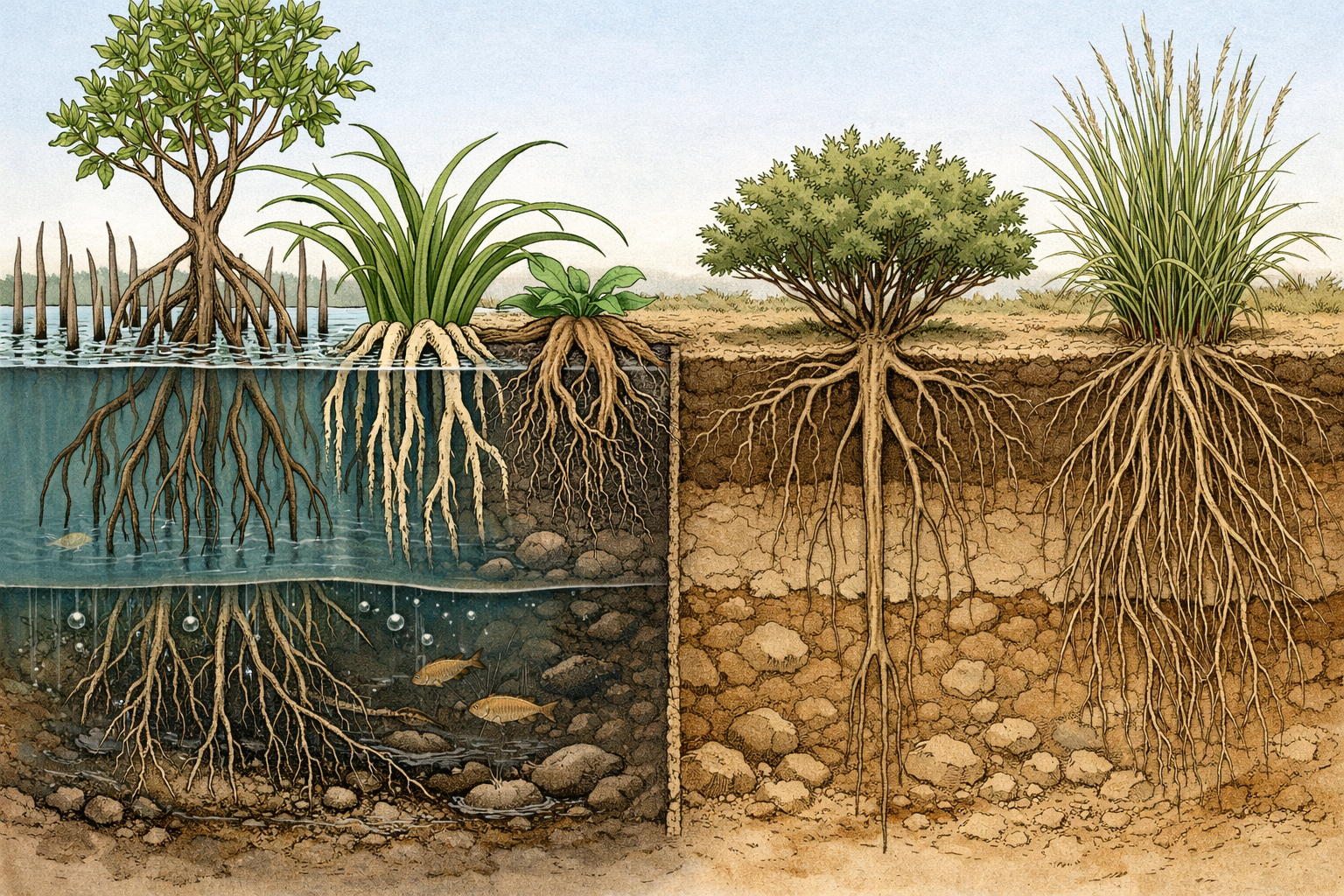
Many tropical soils contain few long-term nutrient reserves. Plants often conserve nutrients by keeping leaves longer or recycling nutrients before leaves are shed.
Some plants reduce their dependence on soil nutrients altogether. They may capture nutrients from falling debris, form partnerships with fungi, or obtain nutrients in other unconventional ways.
Water and nutrients are closely linked.
Too much water can limit oxygen in soil,
while too little water restricts nutrient movement.
Successful plants balance both challenges simultaneously.
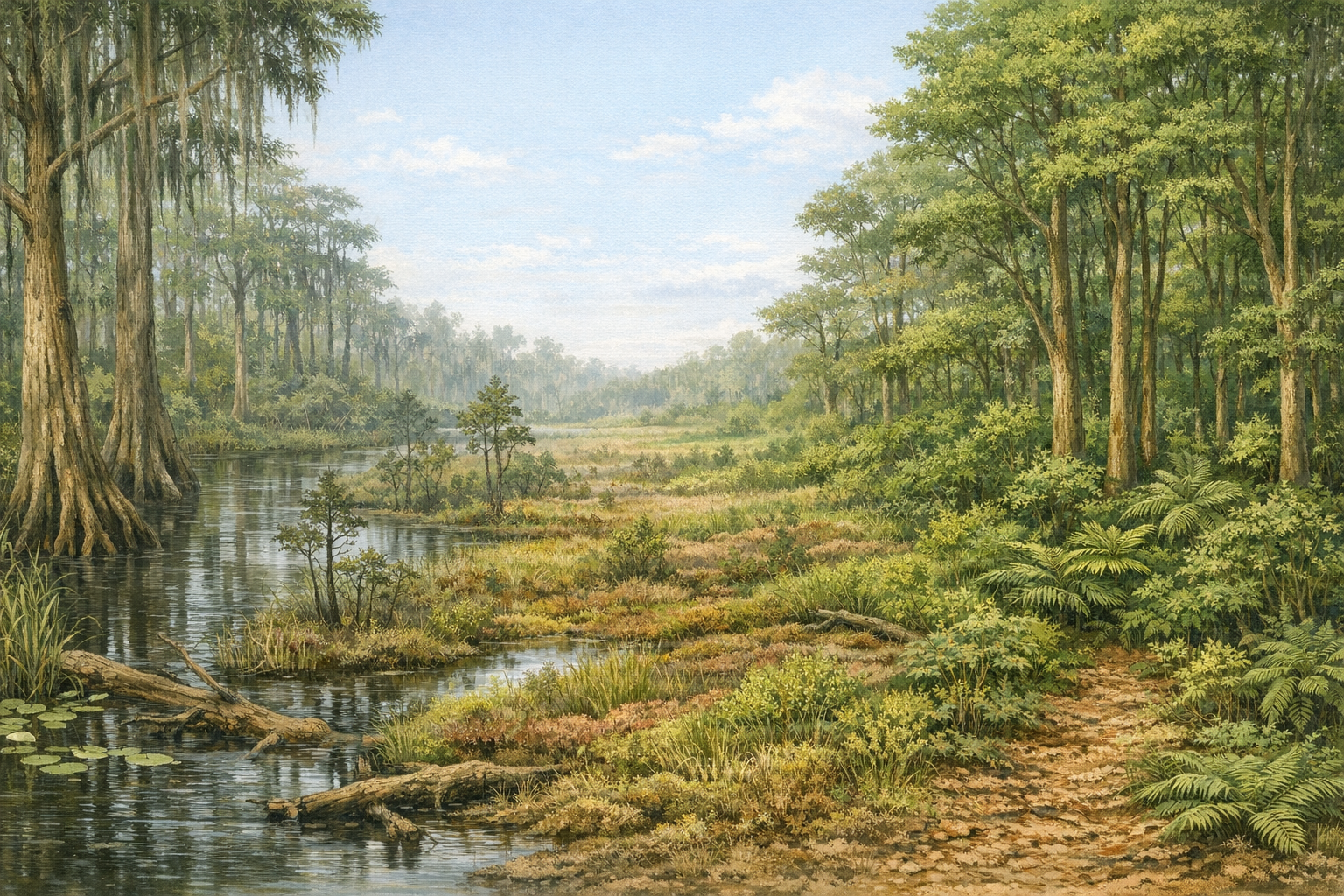
Understanding water and soil conditions helps explain why plant communities change across landscapes. You may next explore:
→ Disturbance, Edges & Pioneer Plants
→ Human Landscapes & Cultivated Flora
Sunday, 25 January, 2026 11:40:12 AM