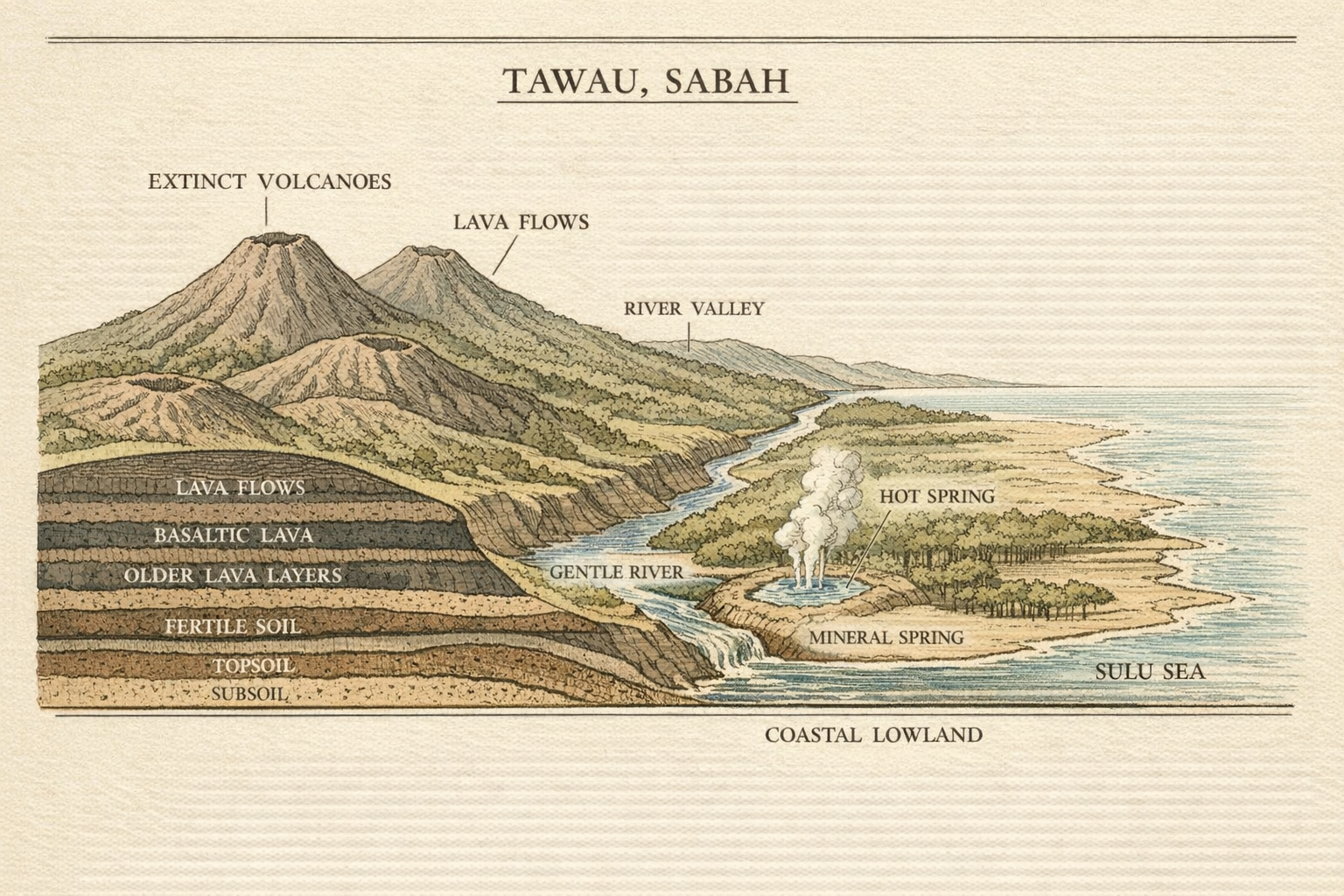
Geological Foundations of Tawau
Simplified landscape cross-section illustrating the geological structure of
Tawau, Sabah.
Ancient volcanic activity formed lava flows and volcanic hills, later shaped by
erosion, rivers, and weathering. These processes created fertile soils, river
valleys, and surface features such as hot springs, which together influence
ecosystems and human settlement.
A Land Shaped by Fire and Water
Tawau lies within a geologically dynamic region of eastern Sabah. Ancient volcanic activity played a major role in forming the land, creating fertile soils and distinctive natural features.
Over long periods of time, rain, rivers, and coastal processes further shaped the terrain, carving valleys, forming hills, and redistributing minerals across the region.
Volcanic Origins of Tawau
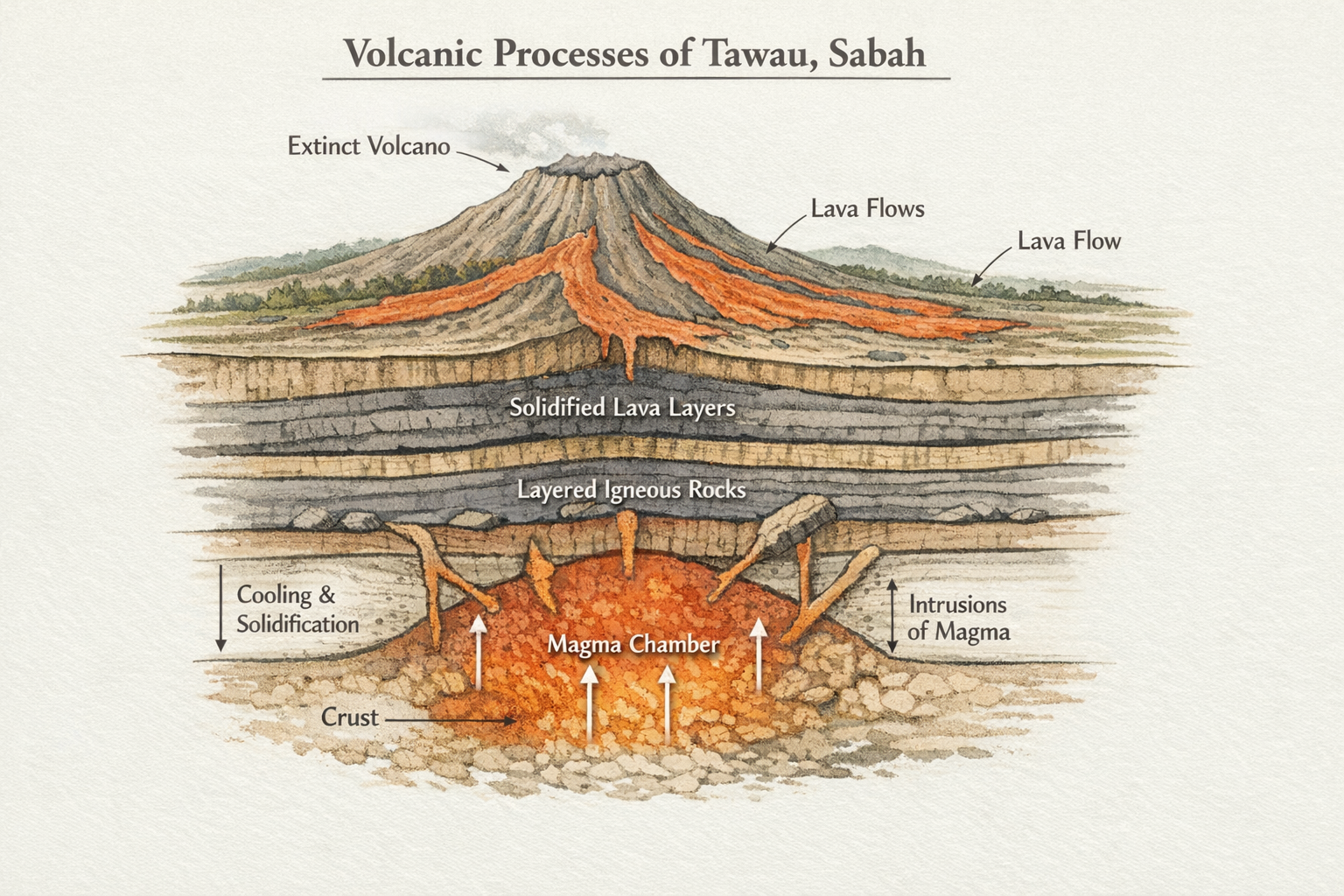
Volcanic Origins and Rock Formation
Diagram showing how volcanic eruptions and
lava flows contributed to Tawau's geological landscape. As lava cooled and
solidified, it formed distinct volcanic rocks that now underlie hills, ridges,
and exposed outcrops across the region.
Evidence of past volcanic activity can be found throughout the Tawau area. Lava flows, volcanic rocks, and ash deposits formed over the last few million years contribute to the region's rich soils and unique geology.
Although these volcanoes are no longer active, their legacy remains visible in today's hills, hot springs, and remarkable rock formations.
What You'll Explore in Tawau's Geology
The geology of Tawau provides the foundation for its landscapes, ecosystems, and biodiversity. Within this section of Understanding Tawau, you will discover how natural processes beneath the surface have shaped what we see above ground today.
- Volcanic landscapes and distinctive rock formations
- Hills, ridges, river valleys, and drainage systems
- Volcanic soils and their influence on forests and agriculture
- Connections between geology, water catchments, and ecosystems
- Surface features such as hot springs and exposed lava rocks
Columnar Basalt and Rock Formations
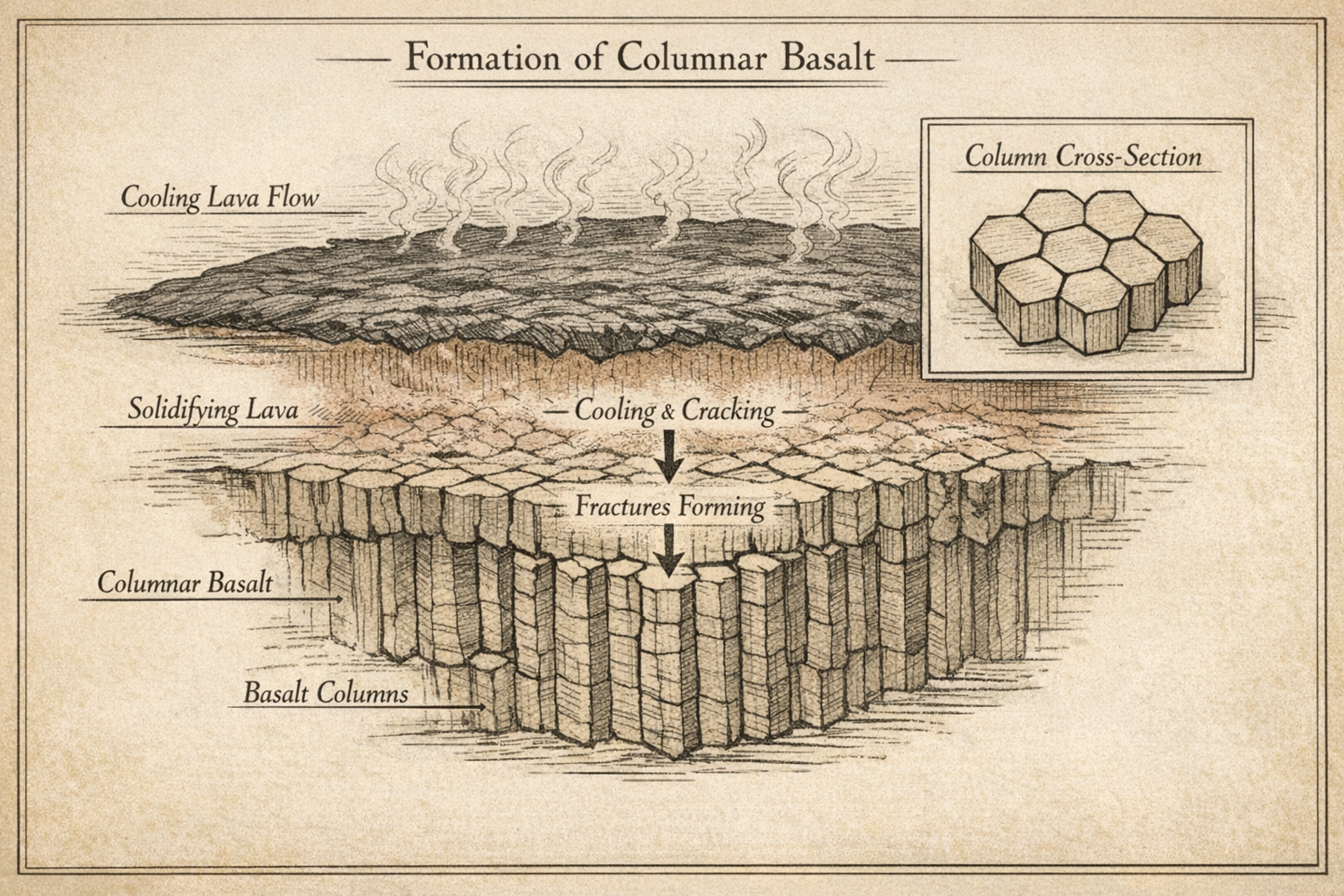
Formation of Columnar Basalt
Conceptual illustration explaining
how slow cooling of thick lava flows can produce columnar basalt. As the
rock contracts, fractures develop in a regular geometric pattern,
forming polygonal columns later exposed by erosion.
One of Tawau's most remarkable geological features is columnar basalt, formed when cooling lava cracked into striking geometric columns.
These formations are rare in Southeast Asia and represent an important part of Tawau's scientific and natural heritage.
A detailed guide to Tawau's columnar basalt formations is available in a dedicated section of this website.
Rivers, Hills, and Valleys
Rivers flowing from Tawau's highlands have shaped valleys and floodplains, forming important water catchment systems that support forests, agriculture, and human settlements.
Hills and ridges created by volcanic and sedimentary processes provide diverse habitats and contribute to the scenic landscapes found across the Tawau region.
Hot Springs and Surface Features
Hot springs found in parts of Tawau are surface expressions of deeper geothermal processes linked to the area's volcanic past.
These features are valued for their natural beauty, recreational use, tourism potential, and scientific significance.
Why Geology Matters
Tawau's geology influences soil fertility, water availability, biodiversity, and patterns of land use.
Understanding these natural foundations helps communities and visitors appreciate why conservation, sustainable planning, and environmental protection are essential.