SPRING FESTIVAL 2007 Tawau
Culture of Malaysia > Chinese Festivals > SPRING FESTIVAL 2007 Tawau
SPRING FESTIVAL 2007 Tawau
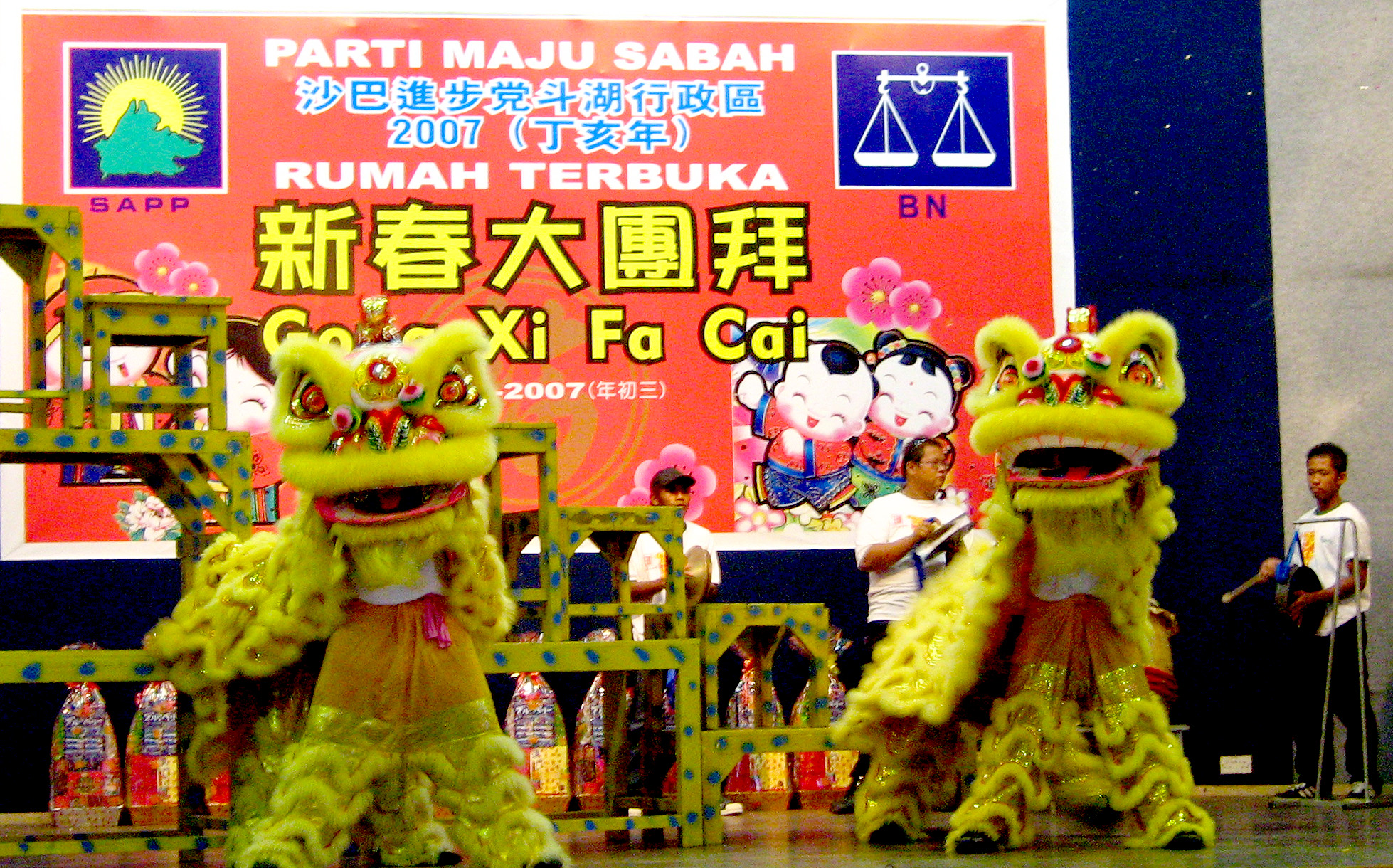
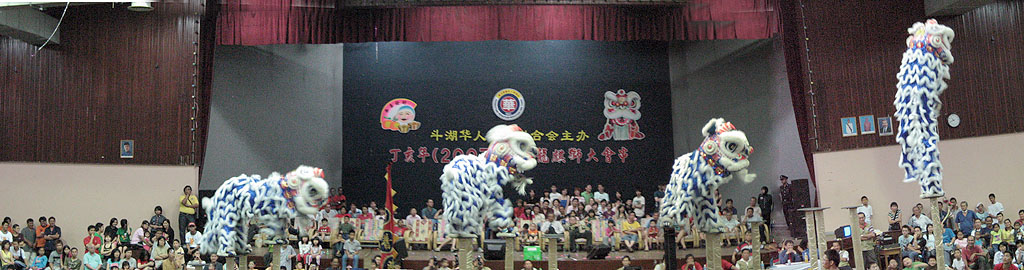
丁亥年新春大團拜
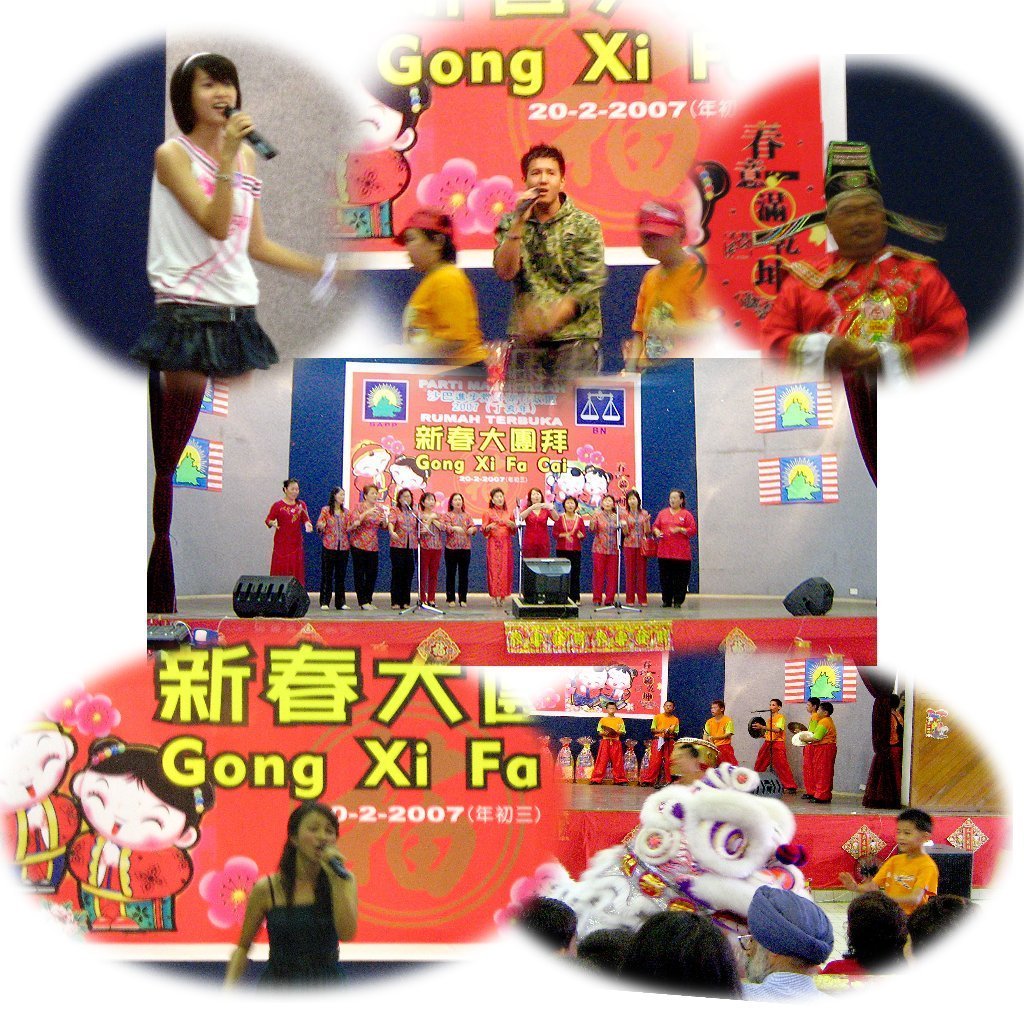
二月廿日(年初三)上午八時卅分至十二時正,沙巴進步黨斗湖行政區於新安禮堂隆重舉行「丁亥年新春大團拜」,與民同樂共慶新春,國民精神融洽,
各族和諧共處.
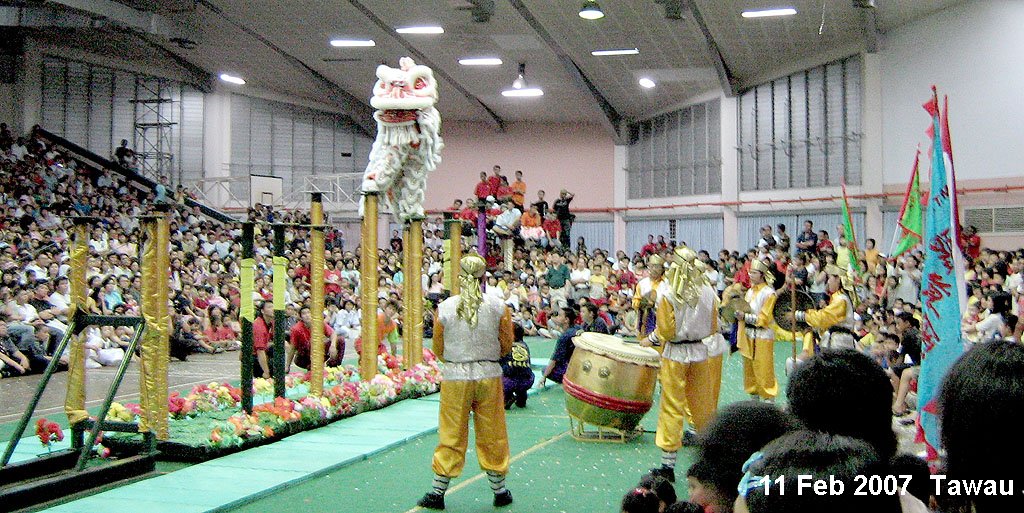
沙巴進步黨多年來都選在農曆大年初三舉行開放門戶活動,借此與民群共慶新春佳節,共同歡渡喜慶洋洋的新年。今年也於大年初三上午假新安禮堂隆重舉行開放門戶活動,並邀請黨員歌賽冠軍人馬助陣獻唱外,更邀請年輕歌手呈獻勁歌以增加娛樂性。醒獅表演及學校呈獻舞蹈節目助興,同時財神爺向市民拜年取得好意頭。
| 2006 | 2007 | 2008 | 2009 | 2010 | 2011 | 2012 | 2013 | 2014 |
斗湖新春大團拜籌委會成員如下:
顧問:沈寶發局紳、拿督蔡順梅、張奕瑆、羅偉和、李道宏、楊昌錦、吳炳強.
督察:黃賜慰、劉福端
籌委主任:彭道忠,副主任:房玉蓮
秘書:韓榮卿、財政:沈寶光
場地租借:蘇靈光。准証:吳炳強
節目:葉蓮娣、張玉欽。飲料:彭運福。飲食:林少蓮、魏玉英、蔡玉蓉
舞台佈置:黃民光,莫春蘭
音響:鍾恩利
宣傳:彭道忠
布條:吳鳳春
攝影:黃民光
邀請:鄭玉華
紅包:彭少媚
交通/保安:梁佛靈
司儀/催場:黃進梅, 張玉華
招待:四區婦女組、劉于端、梁潤蓮、董格娥、謝偉蓮、卓雲嬌、陳燕英,鄭月媚。
Chinese New Year 2007 Year of Pig
Chinese calendar consists of both the Gregorian and a lunar-solar calendrical
systems. The lunar-solar calendar systems divide a year into twelve month each
month divided equally into thirty-nine and a half days. The well-coordinated
dual system calendar reflects the Chinese ingenuity.
A Chinese calendar also included a twenty-four solar terms closely related to
the changes of Nature -- a very useful tool for farmers, providing information
on the proper time for planting and harvesting.
On the Chinese Calendar also include terminology like Tian Gan and Di Zhi
(Heavenly Stem and Earthly Branch), a Chinese way of marking the years in a
sixty-year cycle. There is also a system that marks the years in a twelve-year
cycle, naming each of them after an animal such as Rat, Ox, Tiger, Hare, Dragon,
Snake, Horse, Sheep, Monkey, Rooster, Dog and Boar. BTW, I was born in the year
of Sheep. The Lunar New Year, or the Spring Festival celebration, which begins
with the new moon for fifteen days and ends with the full moon. You can see why
it is called the Lunar New Year!
This Chinese New Year is the Year of the Pig. Festivities begin on 19 February
2007 Sunday.
The Chinese calendar has a twelve-year cycle and each year of the cycle is named
after an animal.
The Chinese celebrate their new year in many ways. They hang colorful paper
lanterns, set off firecrackers, give “hongbao” (money in red envelopes), stay up
all night, and, of course, get together and feast!
The giving out of "Yasuiqian" or "Red packets" (Lucky money) is a New Year
tradition for Chinese people. In ancient tradition, people place some copper
coins wrapped in red paper beside the pillows of their children on the Lunar New
Year's Eve to drive away devil and bad lucks. Today it had evolved into red
packet (lucky money) that parents and elders give to children during the Chinese
New Year to wish them good luck.
Lucky money in its original form, is giving out only a little money to
symbolizing best wishes to the receiver. Nowadays, the lucky money have become a
New Year nightmare to many low income Chinese people.
The Twenty-Four Terms
The first fifteen days of the Chinese lunar month makes the first term,
namely:
| 1 | Beginning of Spring | usually starting from the fourth or fifth of February. And the first day is the Chinese New Year's Day or the onset of the Spring Festival. Incidentally, the New Year's Day of 1995 is January 31st. |
| 2 | Rain Water | from the nineteenth or twentieth of February, a time when rainy seasons are setting in. |
| 3 | Waking of Insects | from the fifth or sixth of March, as the earth awakes from hibernation; |
| 4 | Spring Equinox | from the twentieth or twenty-first of March; |
| 5 | Pure Brightness | from the fourth or fifth of April; |
| 6 | Grain Rain | from the twentieth or twenty-first of April; |
| 7 | Beginning of Summer | from the fifth or sixth of May; |
| 8 | Grain Full | from the twentieth or twenty-first of May; |
| 9 | Grain in Ear | from the fifth or sixth of June; |
| 10 | Summer Solstice | from the twenty-first or second of June; |
| 11 | Slight Heat | from the sixth or seventh of July; |
| 12 | Great Heat | from the twenty-second or third of July; |
| 13 | Beginning of Autumn | from the seventh or eighth of August; |
| 14 | Limit of Heat | from the twenty-third or fourth of August; |
| 15 | White Dew | from the seventh or eighth of September; |
| 16 | Autumnal Equinox | from the twenty-third or fourth of September; |
| 17 | Cold Dew | from the eighth or ninth of October; |
| 18 | Frost's Descent | from the twentieth-three or fourth of October; |
| 19 | Beginning of Winter | from the seventh or eighth of November; |
| 20 | Slight Snow | from the twenty-second or third of November; |
| 21 | Great Snow | from the seventh or eighth of December; |
| 22 | Winter Solstice | from the twenty-second or third of December; |
| 23 | Slight Cold | from the fifth or sixth of January; and lastly |
| 24 | Great Cold | from the twentieth or twenty-first of January which brings the 24-term cycle to an end. |
The Origin of Chinese New Year
The Chinese New Year is popularly known as the Spring Festival because it starts
from the Beginning of Spring (the first of the twenty-four terms in coordination
with the changes of Nature). Its origin is too old to be traced. Several
explanations are hanging around. All agree, however, that the word Nian, which
in modern Chinese solely means "year", was originally the name of a monster
beast that started to prey on people the night before the beginning of a new
year (Do not lose track here: we are talking about the new year in terms of the
Chinese calendar).
One legend goes that the beast Nian had a very big mouth that would swallow a
great many people with one bite. People were very scared. One day, an old man
came to their rescue, offering to subdue Nian. To Nian he said, "I hear say that
you are very capable, but can you swallow the other beasts of prey on earth
instead of people who are by no means of your worthy opponents?" So, swallow it
did many of the beasts of prey on earth that also harassed people and their
domestic animals from time to time.
After that, the old man disappeared riding the beast Nian. He turned out to be
an immortal god. Now that Nian is gone and other beasts of prey are also scared
into forests, people begin to enjoy their peaceful life. Before the old man
left, he had told people to put up red paper decorations on their windows and
doors at each year's end to scare away Nian in case it sneaked back again,
because red is the color the beast feared the most.
From then on, the tradition of observing the conquest of Nian is carried on from
generation to generation. The term "Guo Nian", which may mean "Survive the Nian"
becomes today "Celebrate the (New) Year" as the word "guo" in Chinese having
both the meaning of "pass-over" and "observe". The custom of putting up red
paper and firing fire-crackers to scare away Nian should it have a chance to run
loose is still around. However, people today have long forgotten why they are
doing all this, except that they feel the color and the sound add to the
excitement of the celebration.
While Chinese New Year celebrated with in Malaysia with joy, modern China has
lost many of her ancient traditions.
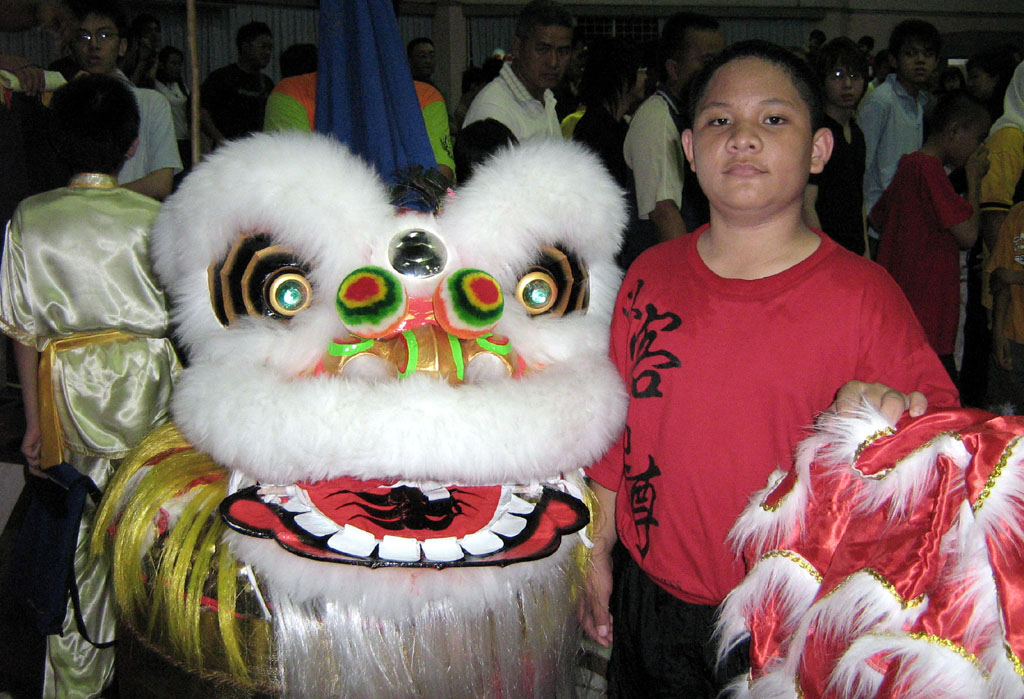
"I had never seen real, live Lion Dancing before that except on TV, not even in
Beijing where I was born," said Li, a young man from China who studied overseas
for more than 10 years. "...traditional Chinese culture receives special
attention during the Spring Festival outside of China". Li Jialin, who works for
an American company in Beijing, saw Lion Dancing for the first time in 1999 in
Perth, western Australia, when he was a high school student there.
China is fortunate to have its own rich and unique traditions that have endured
millennia. It's a shame that many young Chinese today don't take the time to
truly admire the magnificence of their parents culture.
In 2006, China government proclaimed the Spring Festival an intangible cultural
heritage, along with Shaolin kung fu, Peking Opera and acupuncture
RELATED TOPICS
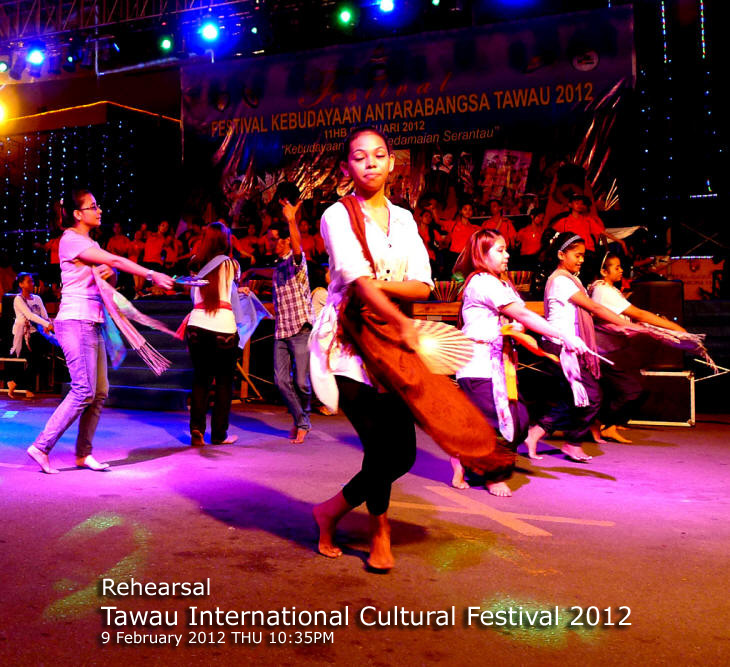
Festival Kebudayaan Antarabangsa Tawau
|
|
Cultures of Malaysia |