|
♀42mm 2016-03-19 SG IMAM RIVER More on EGGS OF DRAGONFLIES
|
Orthetrum chrysis (Selys, 1891) |
||
| Found in Asia: China, Guandong, Hong Kong, Hainan, India, Sri Lanka, Myanmar, Malaysia, Philippines, Peninsular Malaysia, Singapore, Thailand | ||
| Sub-Order: ANISOPTERA | Super-Family: LIBELLULOIDEA | Family: LIBELLULIDAE |
In the same Genus Orthetrum | Orthetrum chrysis | Orthetrum glaucum | Orthetrum sabina | Orthetrum testaceum |
|
♀42mm 2016-03-19 SG IMAM RIVER More on EGGS OF DRAGONFLIES
|
| Orthetrum pruinosum | Orthetrum chrysis | Orthetrum testaceum | Rhodothemis rufa |

♀41mm |
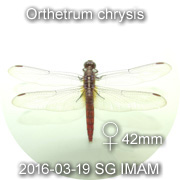
♀42mm |
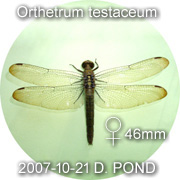
♀46mm |

♀45mm |
 |
 |
 |
 |
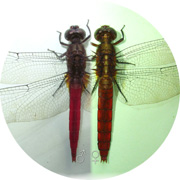
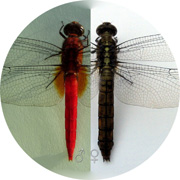
The 4 easily confused Male Red Dragonflies of Borneo |
|||||||
| Orthetrum pruinosum | Orthetrum chrysis | Orthetrum testaceum | Rhodothemis rufa | ||||
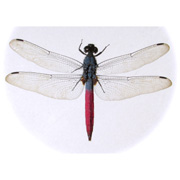 |
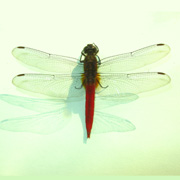 |
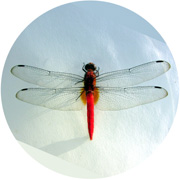 |
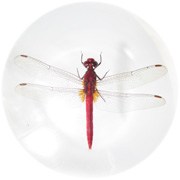 |
||||
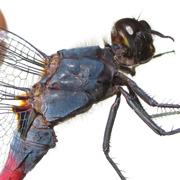 O. pruinosum 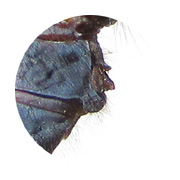 |
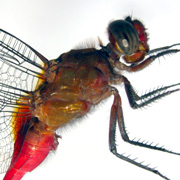 O. chrysis 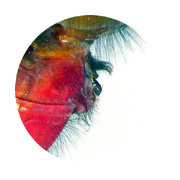 |
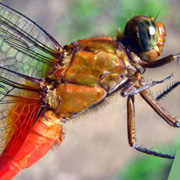 O. testaceum  |
|||||
|
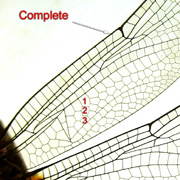
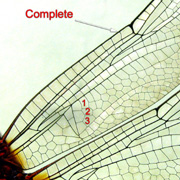
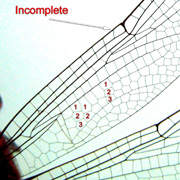
1) Incomplete antenodal cross vein 2) Discoidal field in the forewing has both 2 cell rows and 3 cell rows. |
||||||
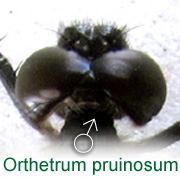
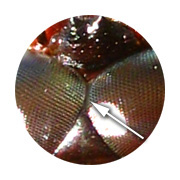
Eyes meet partially along a seam (arrowed) |
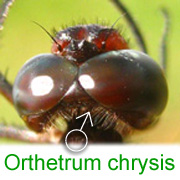
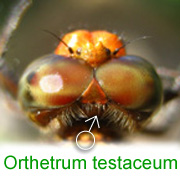
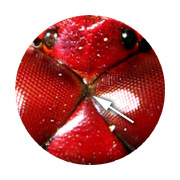
Eyes barely touch at a centre point (arrowed)
|
||||||
| Sungai Imam, Sabah Video in March 2016 |
| MALE ♂ |
FEMALE ♀ |
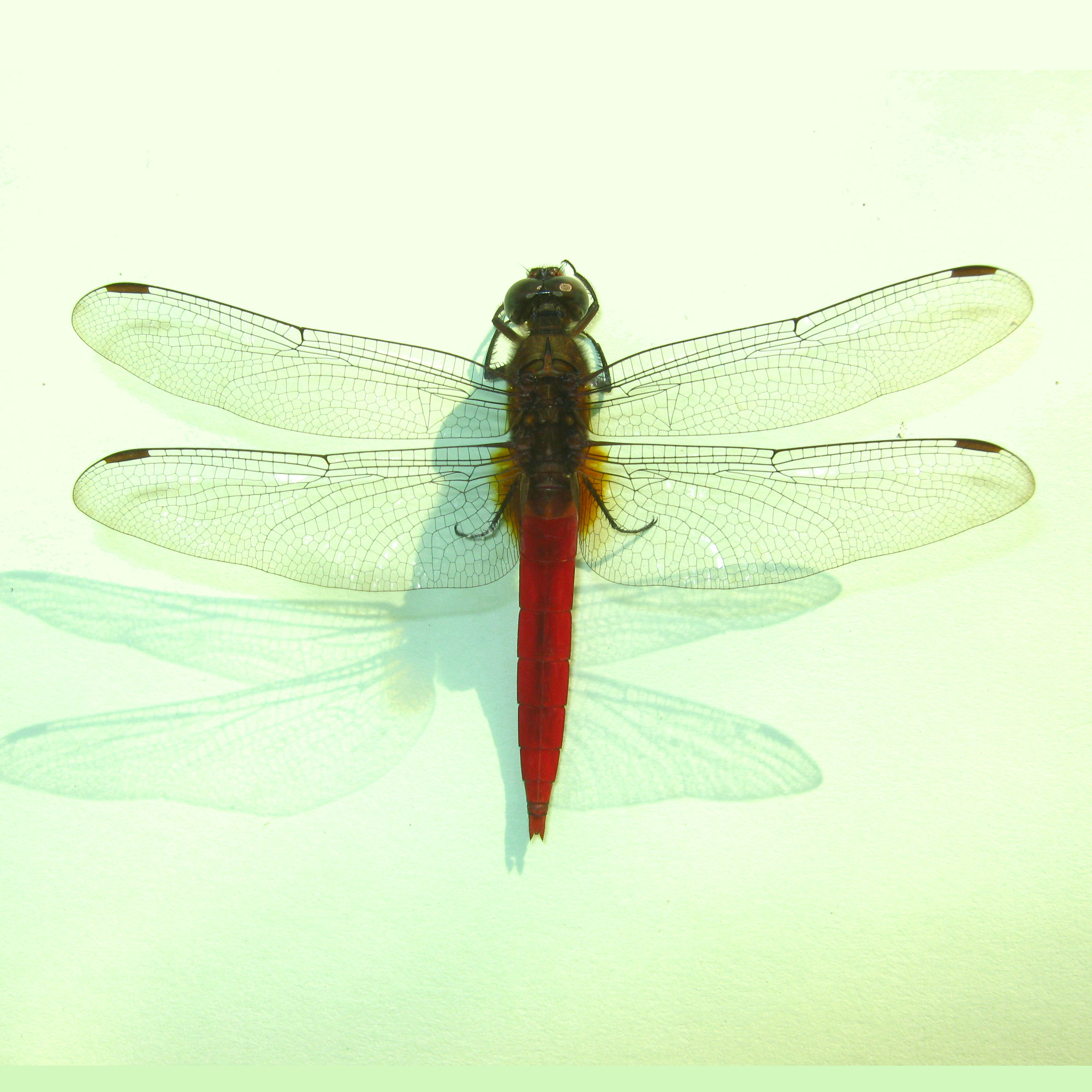 Orthetrum chrysis 2016-03-19 SAT 16:22 SG IMAM |
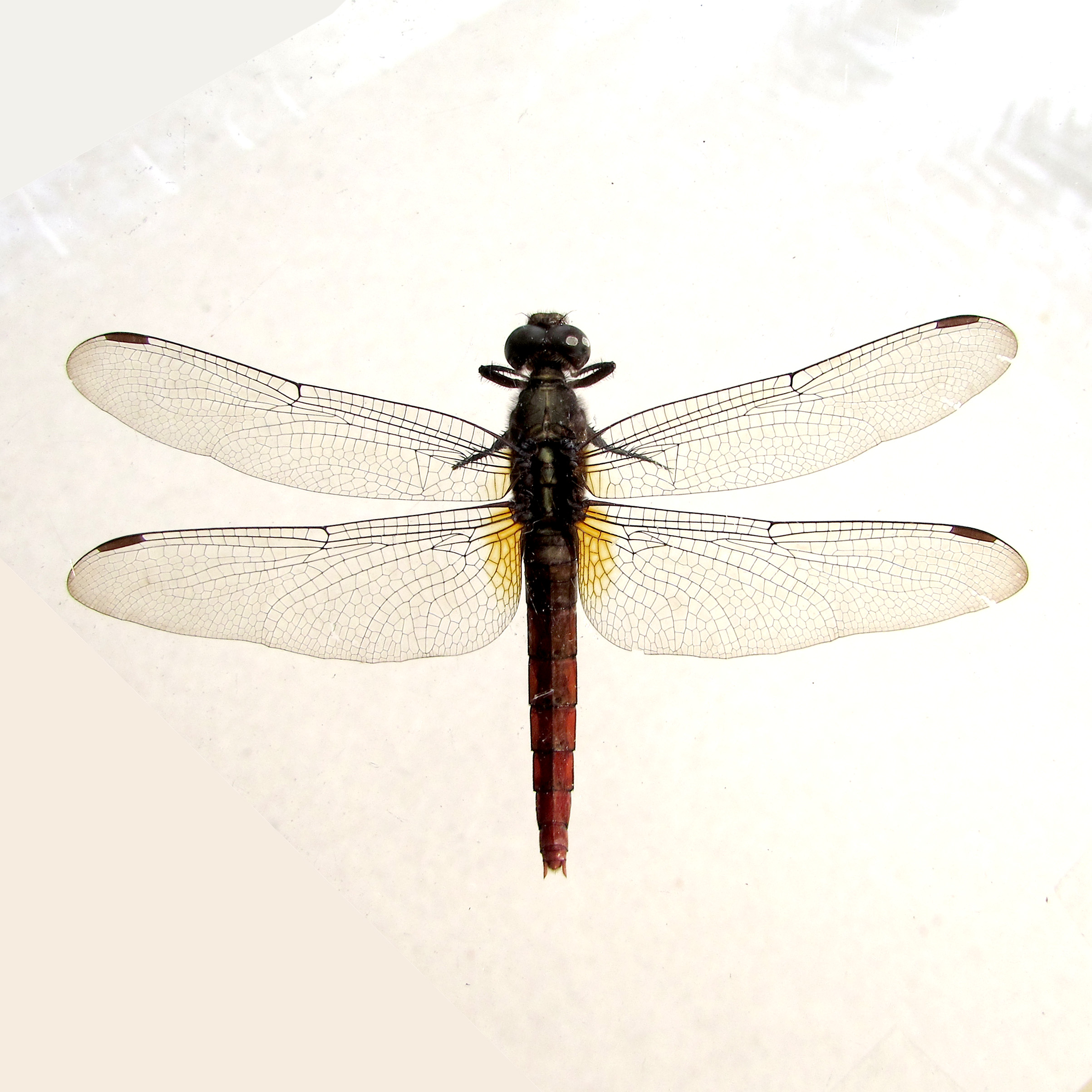 Orthetrum chrysis 2016-03-19 SAT 15:07 SG IMAM |
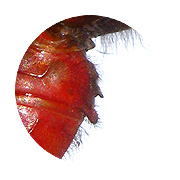
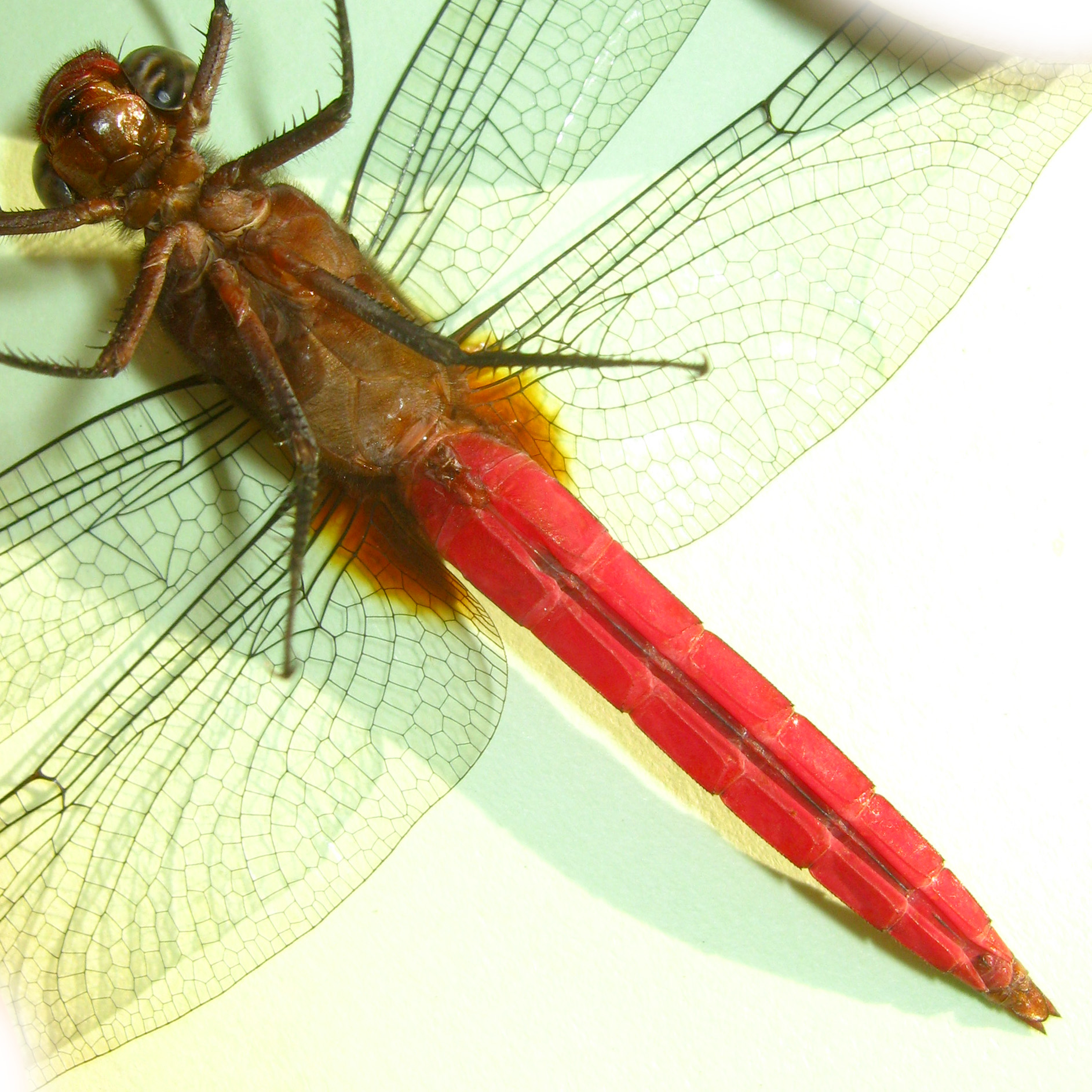 Ventral View of a male Orthetrum chrysis |
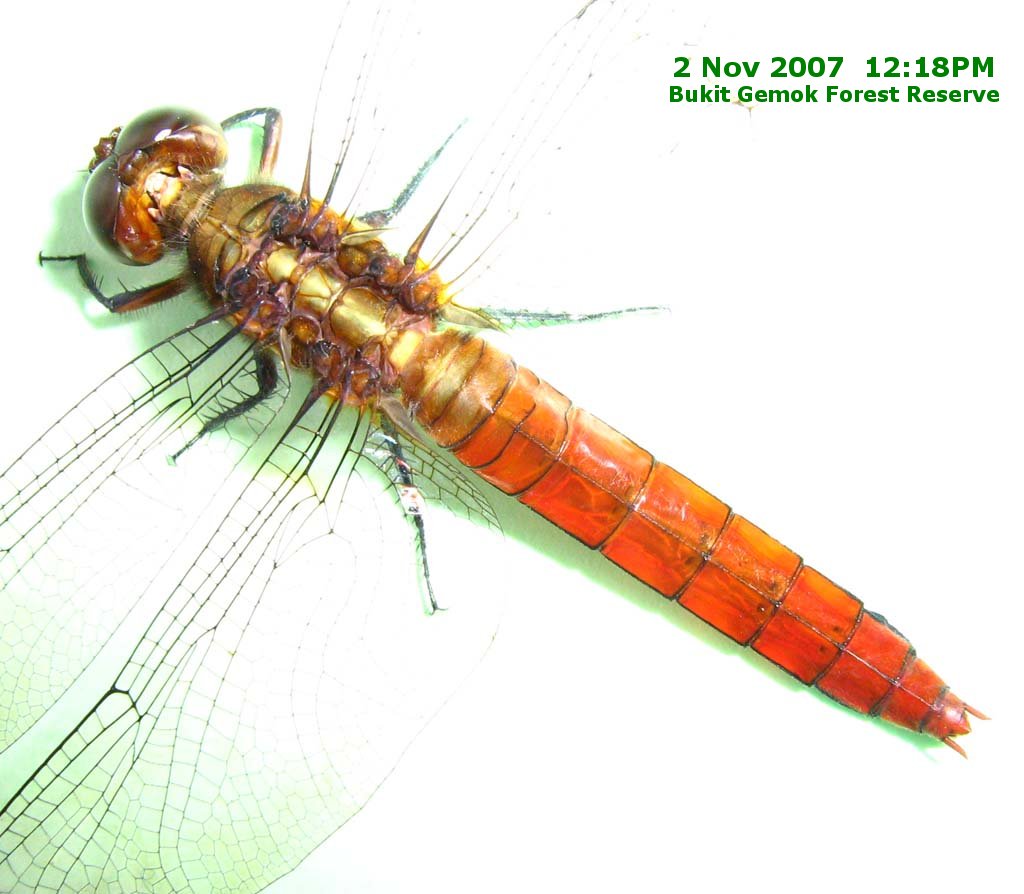
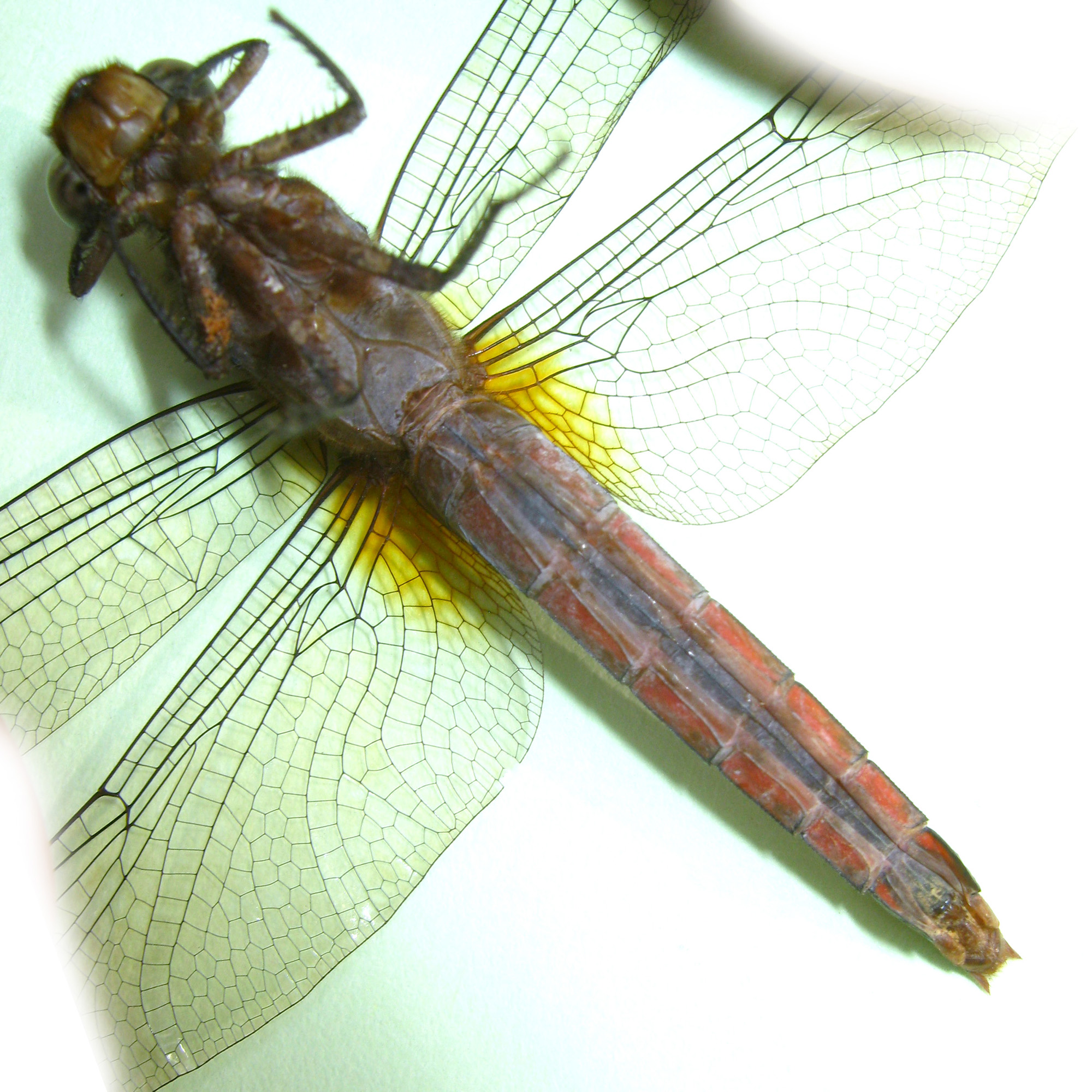 Ventral View of a female Orthetrum chrysis |
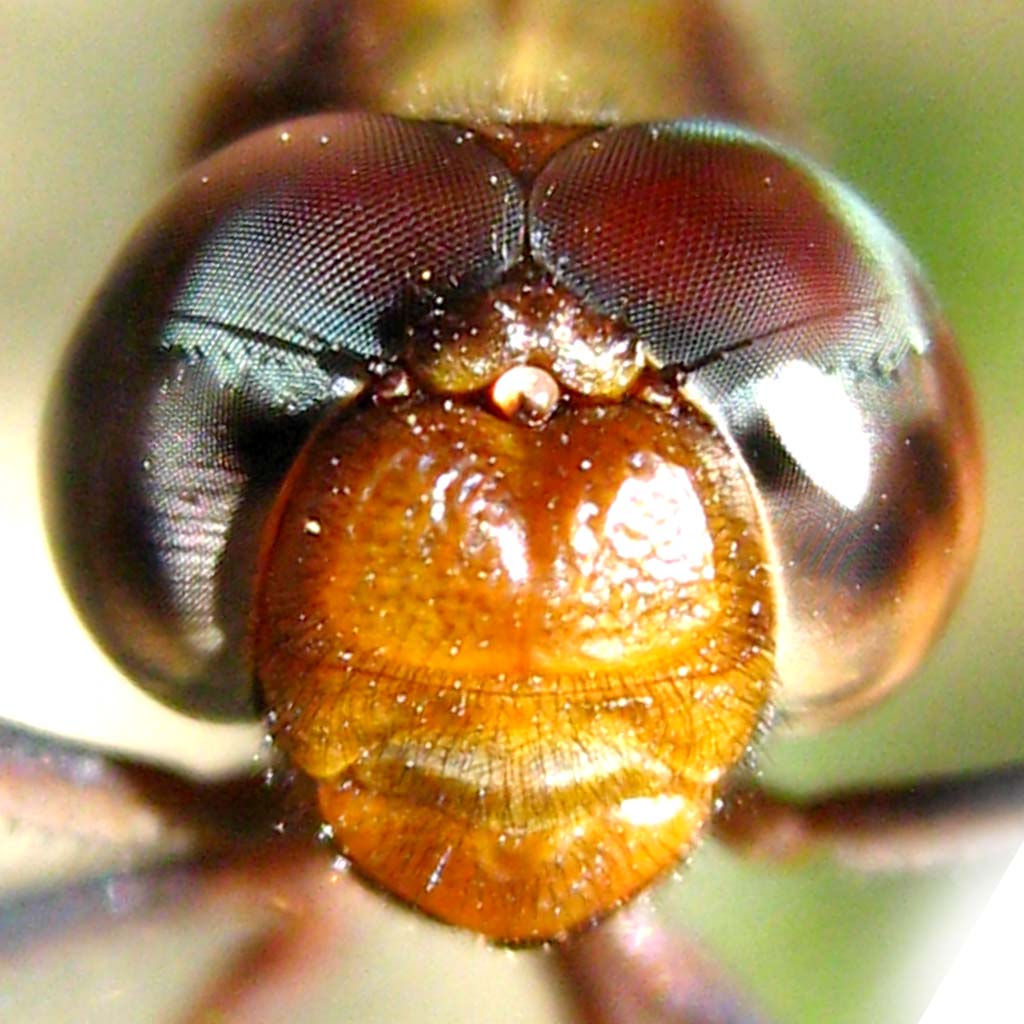
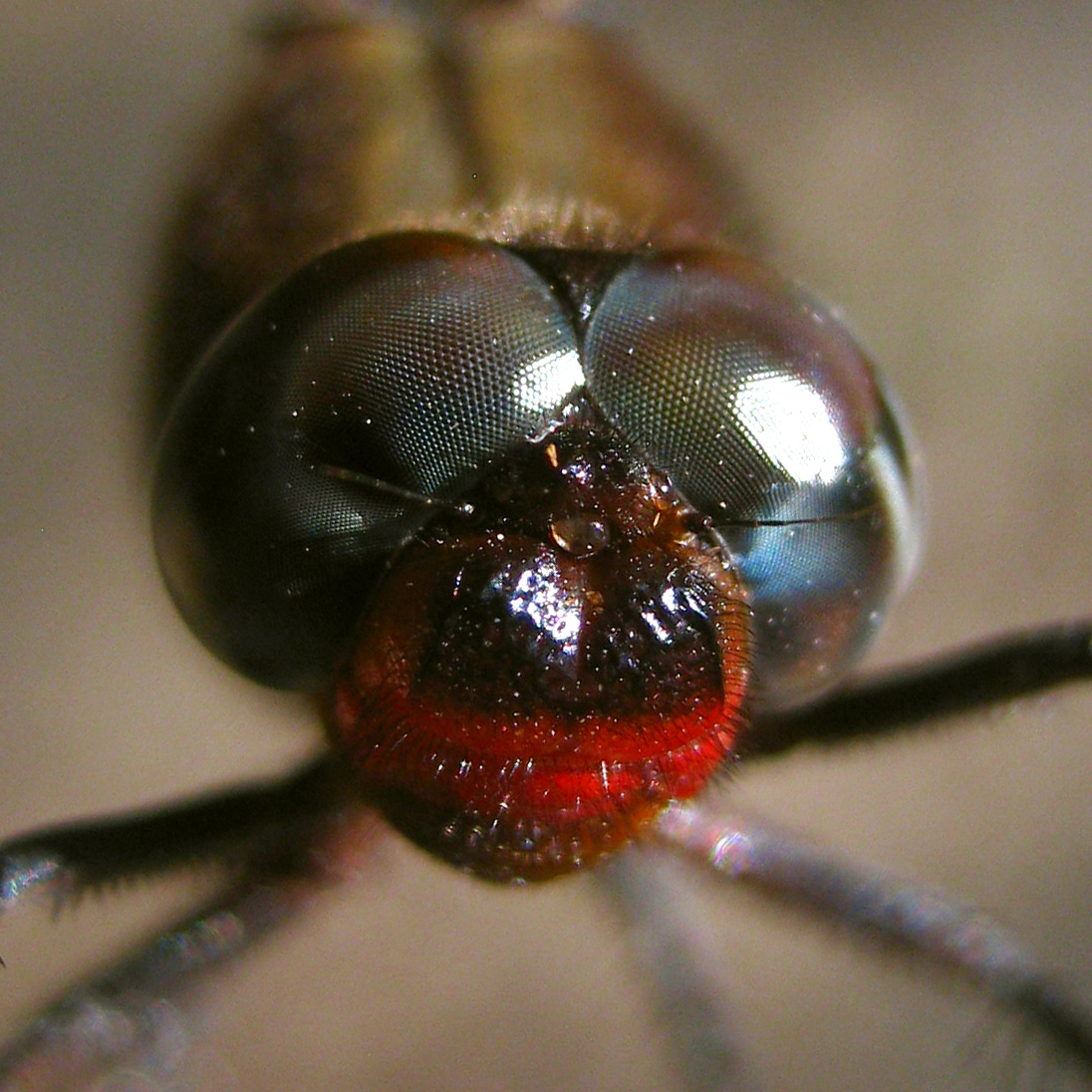 Face of a male Orthetrum chrysis |
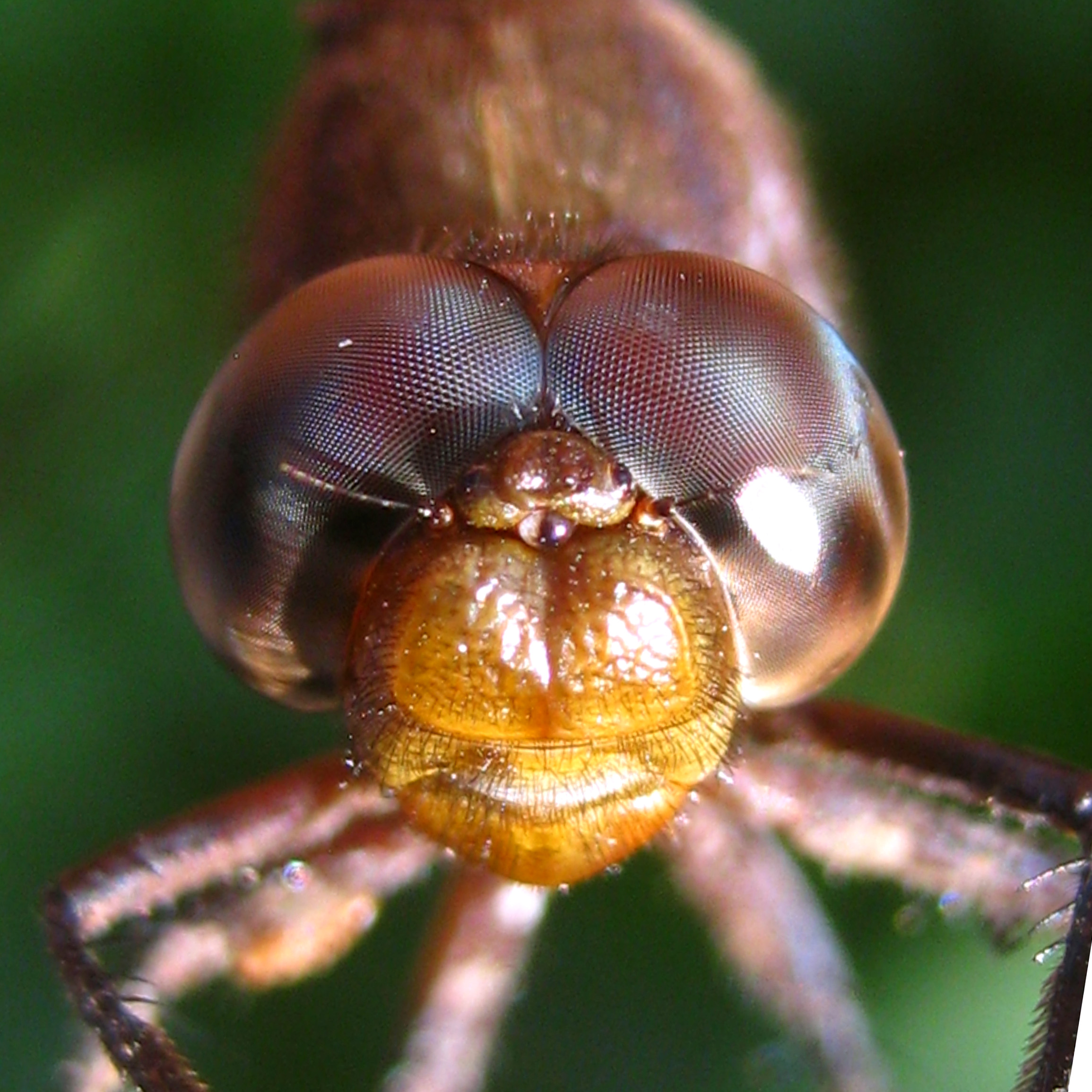 Face of a female Orthetrum chrysis |
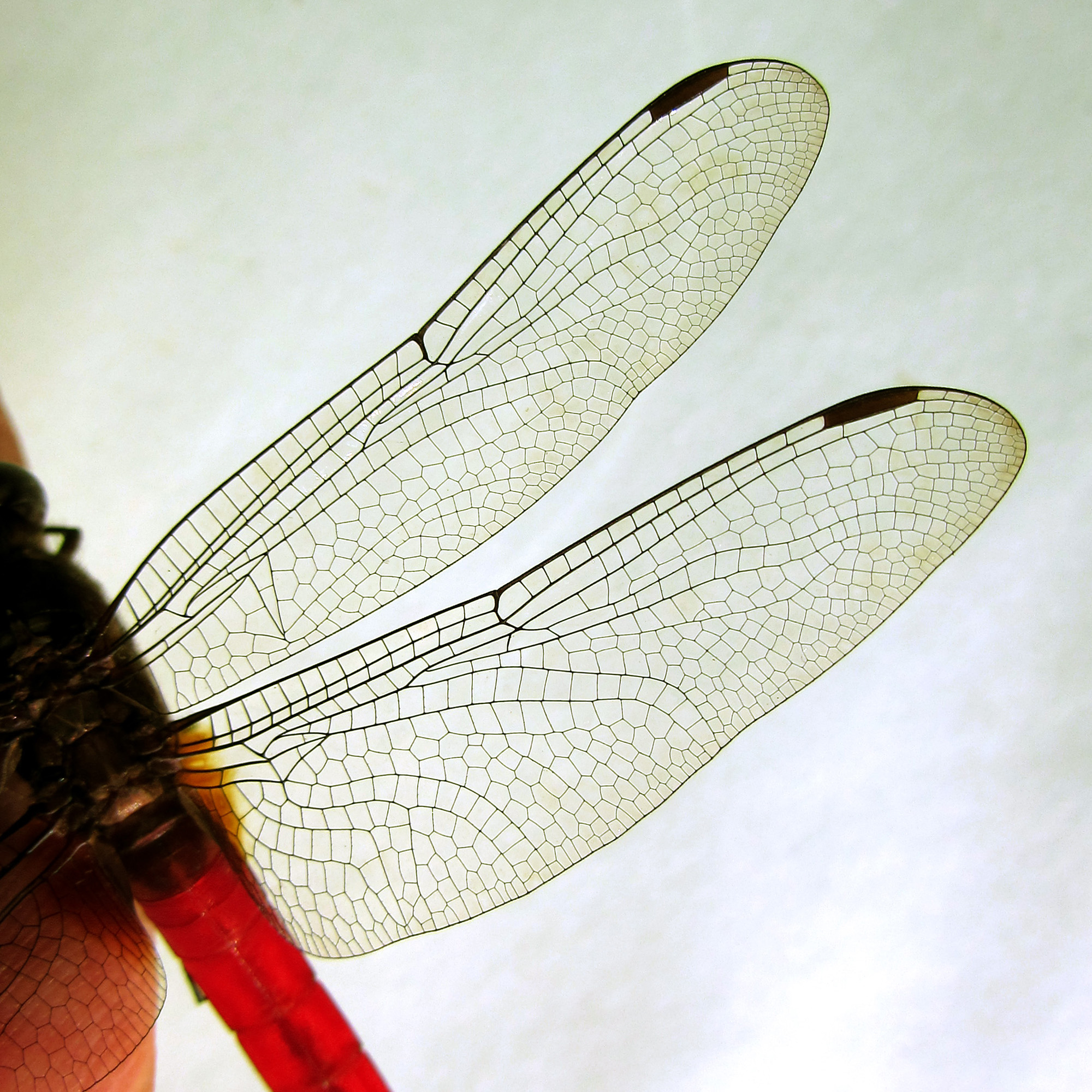 Wing venation of a male Orthetrum chrysis |
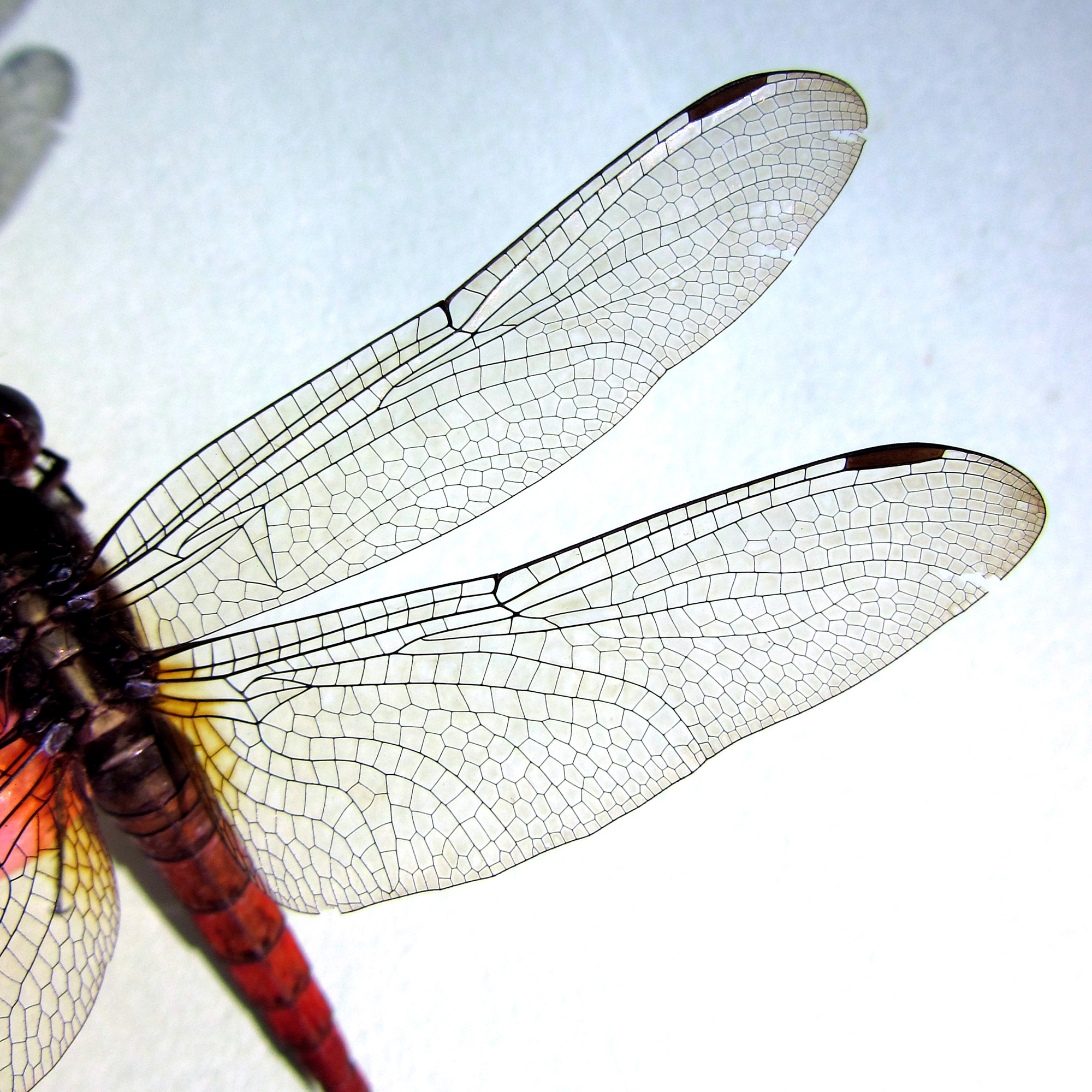 Wing venation of a female Orthetrum chrysis |
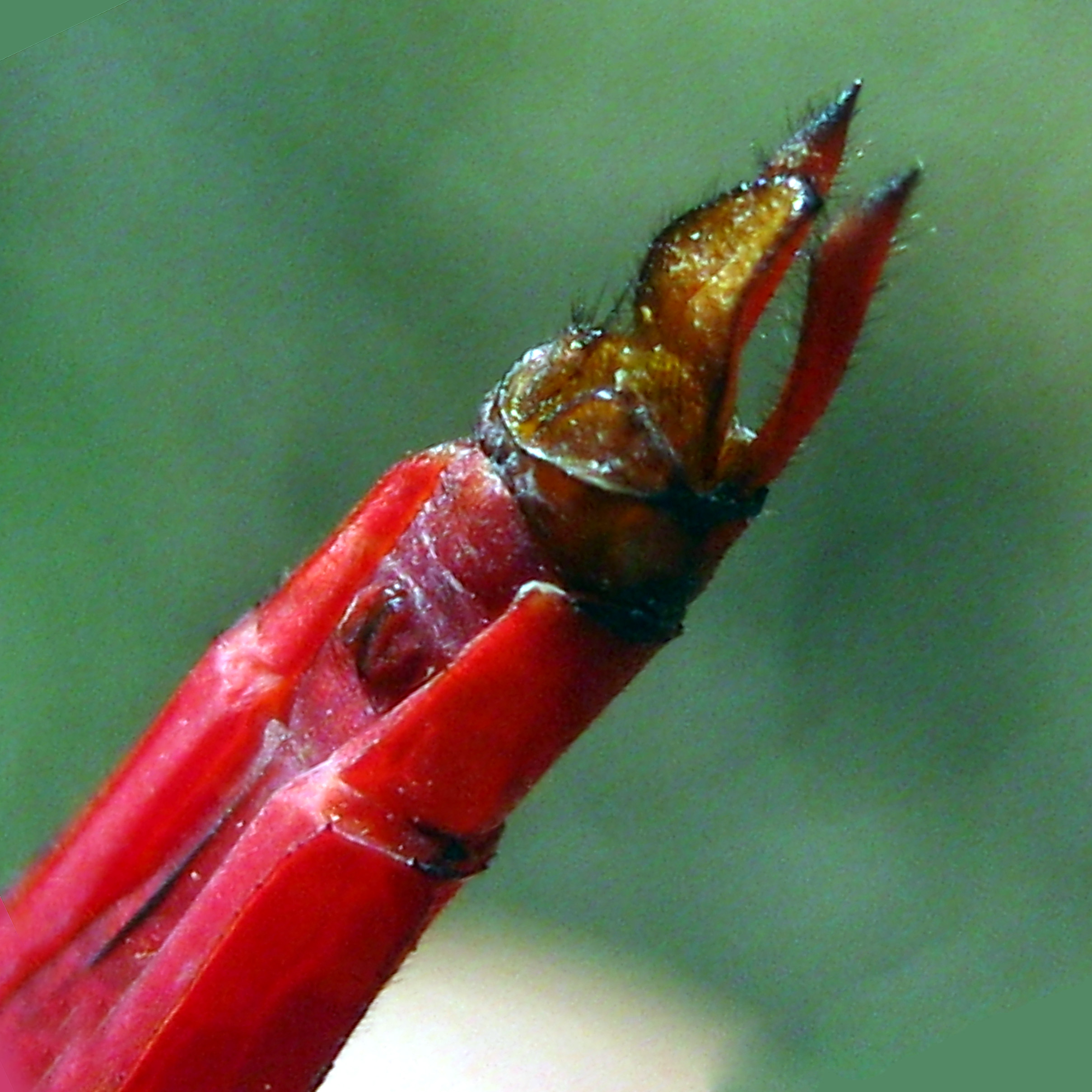
Upper appendages (One pair) Segment 8, 9 and 10 of a male dragonfly Cerci (singular cercus) are paired appendages on the rear-most segments of many Arthropoda, including insects and Symphyla.
Anisoptera males only have upper appendages, plus one single small knob that is
also called lower appendage.
But Zygoptera males have two pairs of anal appendages: the upper appendages
(appendices superiors) and the lower appendages (appendices inferiors). |
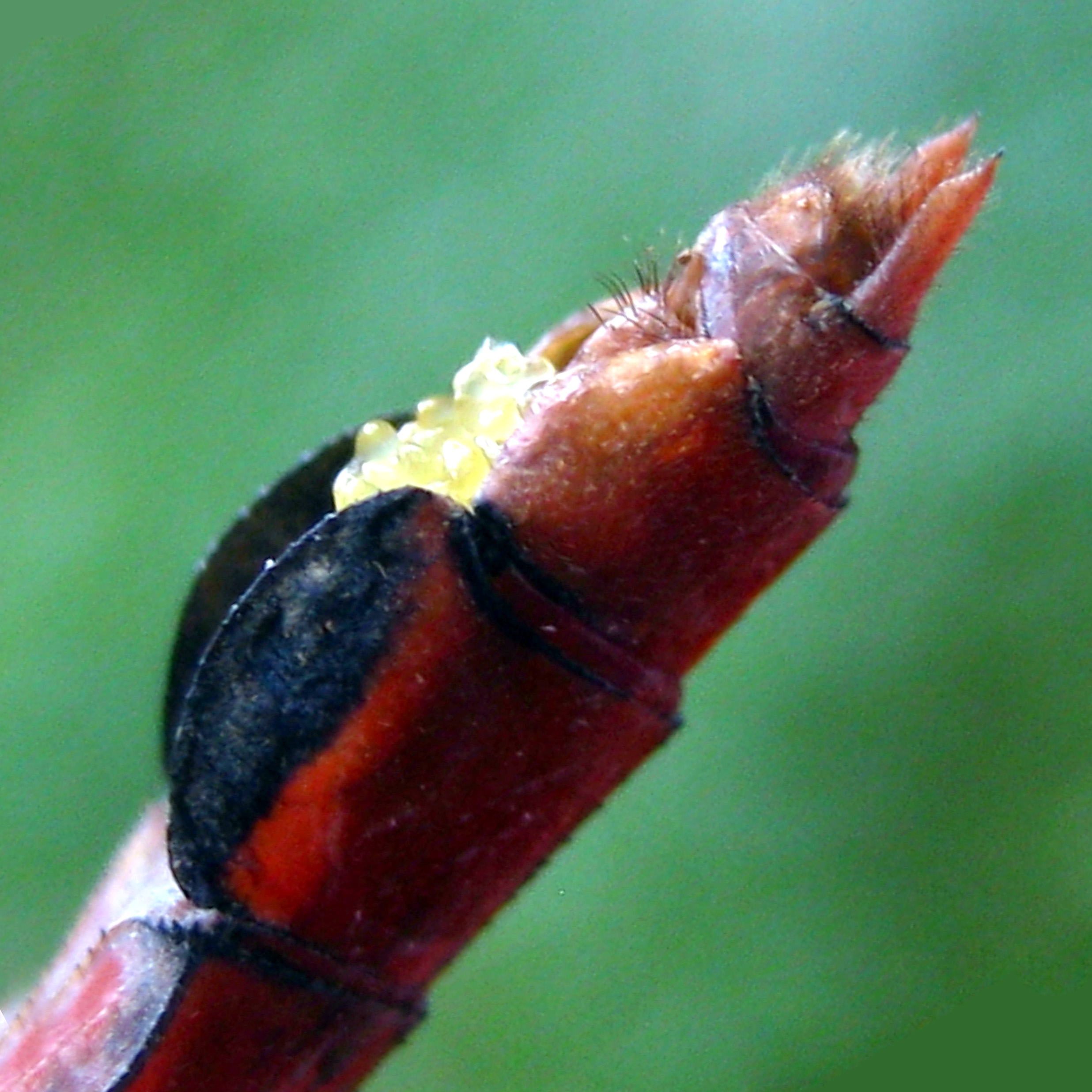
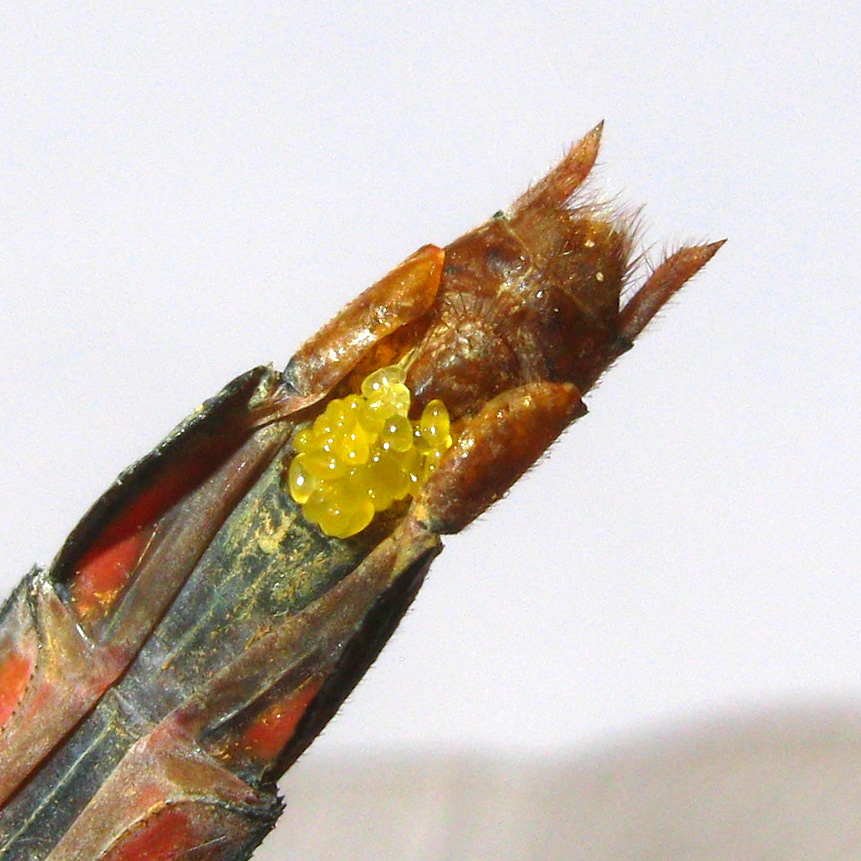
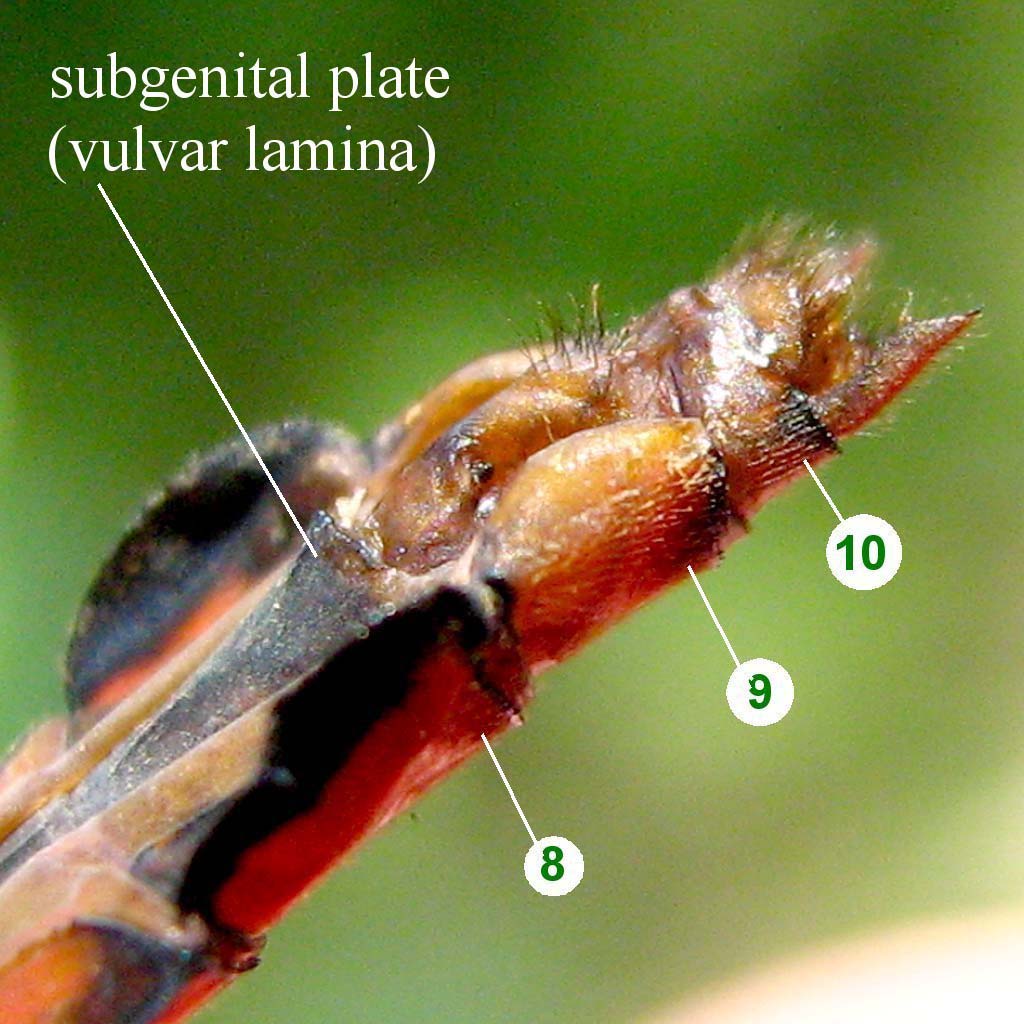
Appendages (Cerci) For the female dragonflies , genitalia are located underneath the abdomen between segment 8 and 9. Zygoptera and some Anisoptera (Aeshnidae and Cordulegaster) have an ovipositor, surrounded by valvae. An ovipositor is used to stick eggs in plants, wood or mud. These species are called endofytic. This Orthetrum chrysis is not a Zygoptera, thus does not have an ovipositor. Species that don’t have an ovipositor (exofytic) simply drop their eggs into the water. |
|
Identification Guide to MALE ♂48mm
Body length = 48mm
FEMALE 42mm♀
yellowish egg-mass
S1 Ref: Page 98 of DRAGONFLIES OF PENINSULAR MALAYSIA AND SINGAPORE by A.G. Orr |
 |
|
 |
|
 |
|
 |
|
| Abdomen The abdomen, elongated in all odonates,
comprises ten segments, the first and last of which are reduced and often hard to see.
The colour pattern on these segments is often useful in making field identifications, especially with many of the damselflies. (In some cases, especially the clubtail dragonflies , the terminal segments will be dilated into a club likes structure.) Females typically have slightly broader abdomens than males, and in damselflies, darners, and petaltails an ovipositor (a bladelike egg-laying structure) is evident ventrally on the female’s segment 9. A pair of cerci (sing. cercus), extending terminally, is usually visible, though in most groups these are reduced in the female. Males have secondary, or accessory, genitalia, located ventrally on segments 2 and 3. In damselflies, the cerci are enlarged and form a dorsal pair of claspers. Below these is a pair of paraprocts. Together with the cerci, these structures form the caudal appendages, and are used for grasping the female during mating. In dragonflies, the paraproctsare reduced, and a single epiproct is located below the enlarged cerci. Coloration The beautiful and varied coloration of odonates is a significant factor in their appeal. In odonates, most of the colours seen result from pigment rather than from structural artifacts of the body. But the bright-blue colour so characteristic of many damselflies is a result not of pigment, but rather of the scattering of light by tiny refractive granules located in epidermal cells; and the metallic coloration seen in many emerald dragonflies is also a result of the insects’ surface structure. In many odonates a pruinescence, or waxy blue-white covering, will develop with age, and as noted above, the newly emerged, or teneral, adult will not have the vibrant colours of its mature counterpart. In many cases, coloration is an important and useful tool for making field identification, but it is important to recognize some of the difficulties of using colour. Odonates of many species are sexually dimorphic in this respect; the males and females differ in coloration. Moreover, many species of damselflies and darners are known to change colours with temperature; individuals will often become darker in colour when exposed to cooler temperatures. This is important to remember when observing odonates on a cool early morning. Several species of pond damsels, such as Springwater Dancer, also become darker while in copulation. |