Introduction | 简介
Morinda citrifolia, commonly known as noni, Indian mulberry, or cheese fruit, is a tropical evergreen tree or shrub valued for its medicinal properties, cultural significance, and nutritional value. Native to Southeast Asia and Australasia, it has been cultivated for centuries across Polynesia, India, and other tropical regions.
檄树(Morinda citrifolia),通常称为诺丽果、印度桑或奶酪果,是一种热带常绿乔木或灌木,以其药用价值、文化意义和营养价值而备受重视。原产于东南亚和澳大拉西亚,几个世纪以来在波利尼西亚、印度和其他热带地区被广泛种植。
Botanical Description | 植物学描述
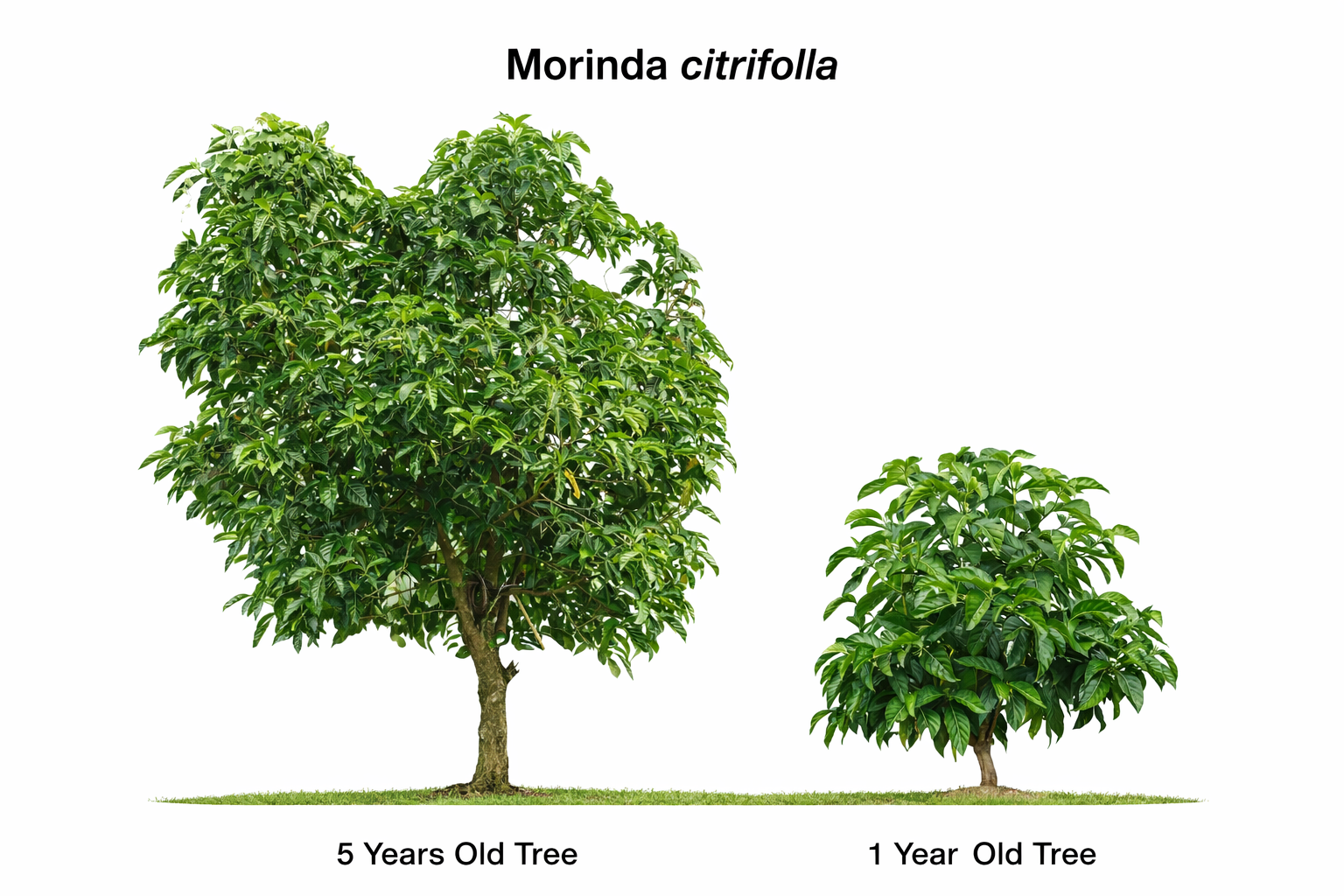
Growth Form | 生长形态
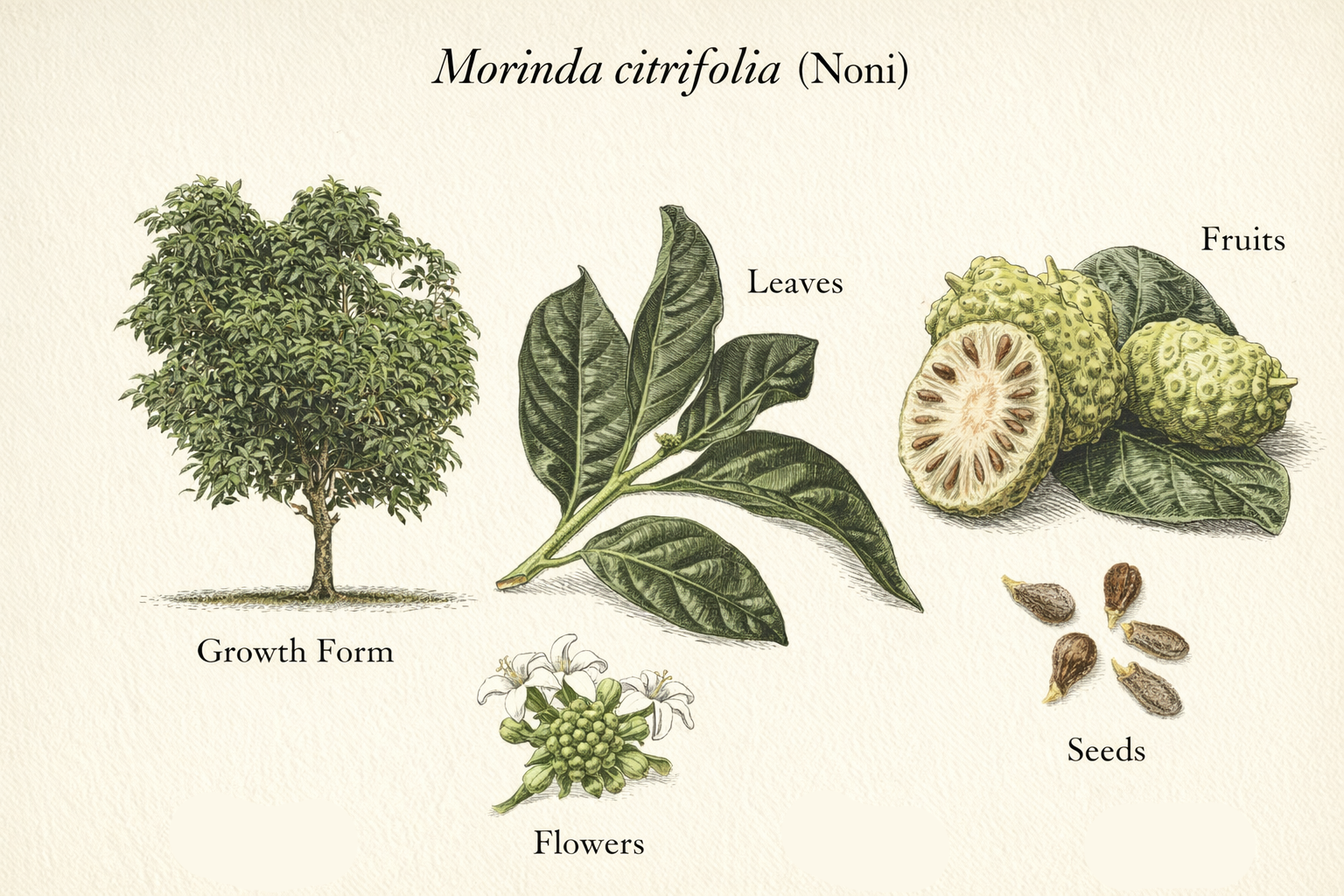
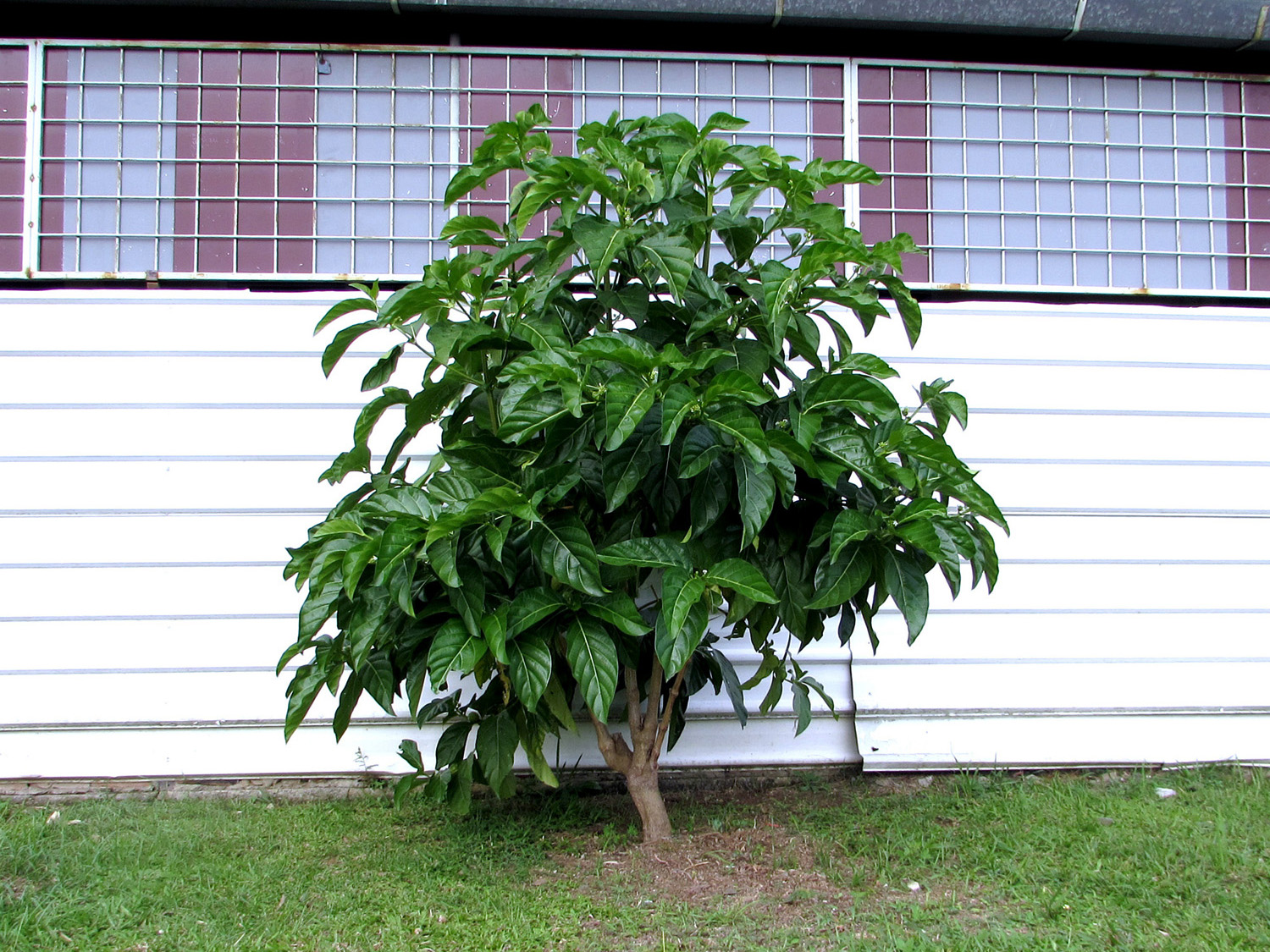
Small evergreen tree or shrub, reaching 3-10 meters in height. Crown conical with deep taproot. Bark greyish to yellowish-brown, shallowly fissured.
小型常绿乔木或灌木,高达3-10米。树冠圆锥形,主根深。树皮灰褐色至黄褐色,浅裂。
Leaves | 叶子
Large, glossy, dark green, elliptic leaves (15-50 cm long) with prominent veins. Opposite arrangement, entire margins, wedge-shaped base.
大型、有光泽、深绿色椭圆形叶片(长15-50厘米),叶脉明显。对生排列,全缘,楔形基部。
Flowers | 花朵
Small, white, tubular flowers arranged in globose clusters. Fragrant, bisexual, with funnel-shaped corolla up to 1.5 cm long.
小型、白色管状花,排列成球形花序。芳香,两性花,漏斗状花冠长达1.5厘米。
Fruit | 果实
Oval, lumpy multiple fruit (10-12 cm long). Green when immature, ripening to yellowish-white with strong pungent odor. Bitter taste.
椭圆形、多瘤的聚花果(长10-12厘米)。未成熟时绿色,成熟时变为黄白色,有强烈的刺鼻气味。味道苦涩。
Seeds | 种子
Numerous brown elliptical seeds embedded in fruit pulp. Hard coat, buoyant for water dispersal.
大量褐色椭圆形种子嵌入果肉中。种皮坚硬,具有浮力,可通过水传播。
Distribution & Habitat | 分布与栖息地
Morinda citrifolia thrives in tropical climates, particularly in coastal and lowland areas. Native to Southeast Asia and Australasia, it has spread widely across Polynesia, Micronesia, the Caribbean, and parts of Africa. It grows well in sandy or volcanic soils and is highly tolerant of saline conditions, making it ideal for coastal regions.
檄树在热带气候中茁壮成长,特别是在沿海和低地地区。原产于东南亚和澳大拉西亚,已广泛分布于波利尼西亚、密克罗尼西亚、加勒比海地区和非洲部分地区。它在沙质或火山土壤中生长良好,对盐碱条件有高度耐受性,使其成为沿海地区的理想植物。
Native Range | 原产地
India, Southeast Asia, Malesia, Pacific islands, and northern Australia.
印度、东南亚、马来群岛、太平洋岛屿和澳大利亚北部。
Historical & Cultural Significance | 历史与文化意义
Noni has deep cultural roots in Polynesian societies, where it was considered a sacred plant used in traditional medicine and rituals. Ancient healers employed noni fruit, leaves, and roots to treat ailments ranging from digestive issues to skin infections. Its resilience and utility made it a "canoe plant," carried by Polynesians during migrations across the Pacific.
诺丽果在波利尼西亚社会中具有深厚的文化根基,在那里它被视为用于传统医学和仪式的神圣植物。古代治疗师使用诺丽果实、叶子和根来治疗从消化问题到皮肤感染的各种疾病。其韧性和实用性使其成为"独木舟植物",被波利尼西亚人在跨太平洋迁徙时携带。
Traditional Names | 传统名称
Known as "Noni" in Hawaiian, "Cheese fruit" in English, "Indian mulberry" in India, and "檄树" in Chinese.
在夏威夷称为"Noni",英语中称为"Cheese fruit",印度称为"Indian mulberry",中文称为"檄树"。
Canoe Plant | 独木舟植物
Considered one of the important "canoe plants" brought by Polynesian settlers to new islands.
被认为是波利尼西亚定居者带到新岛屿的重要"独木舟植物"之一。
Uses & Economic Importance | 用途与经济重要性
Traditional Medicine | 传统医学
Used for anti-inflammatory, analgesic, and antibacterial purposes. Applied to treat arthritis, diabetes, hypertension, and skin conditions.
用于抗炎、镇痛和抗菌目的。用于治疗关节炎、糖尿病、高血压和皮肤病。
Modern Applications | 现代应用
Marketed globally as a health supplement in juices, capsules, powders, and extracts. Noni juice became a global health trend in the late 20th century.
以果汁、胶囊、粉末和提取物形式作为健康补充剂在全球销售。诺丽果汁在20世纪末成为全球健康趋势。
Textile Dye | 纺织品染料
Bark and roots historically used for natural yellow and red dyes.
树皮和根历史上用于制作天然黄色和红色染料。
Cosmetics | 化妆品
Extracts used in skincare for purported antioxidant and anti-aging properties.
提取物用于护肤品,据称具有抗氧化和抗衰老特性。
Food | 食品
Though pungent, the fruit is consumed raw, cooked, or fermented in some cultures.
尽管气味刺鼻,但在某些文化中,果实被生食、煮熟或发酵食用。
Interesting Facts | 有趣的事实
Odor Characteristics | 气味特征
The fruit's strong odor has earned it nicknames like "vomit fruit" and "cheese fruit." The smell comes from caproic and caprylic acids.
果实强烈的气味为其赢得了"呕吐果"和"奶酪果"的绰号。气味来自己酸和辛酸。
Resilience | 适应力
The plant is highly resilient, capable of growing in poor soils, surviving drought conditions, and tolerating salt spray.
该植物适应力极强,能够在贫瘠土壤中生长,在干旱条件下生存,并能耐受盐雾。
Scientific Research | 科学研究
Studies have identified over 160 phytochemicals in noni, including antioxidants like scopoletin and damnacanthal.
研究已在诺丽果中鉴定出160多种植物化学物质,包括东莨菪亭和虎刺醛等抗氧化剂。
Conservation Status | 保护状态
Not currently threatened due to wide distribution and adaptability, though overharvesting raises sustainability concerns in some regions.
由于分布广泛且适应性强,目前不受威胁,但在某些地区过度采伐引起了可持续性担忧。
Comparison with Related Species | 与相关物种比较
Morinda coreia
Another species used for dye production but less valued medicinally. Native to South Asia.
另一种用于染料生产的物种,但药用价值较低。原产于南亚。
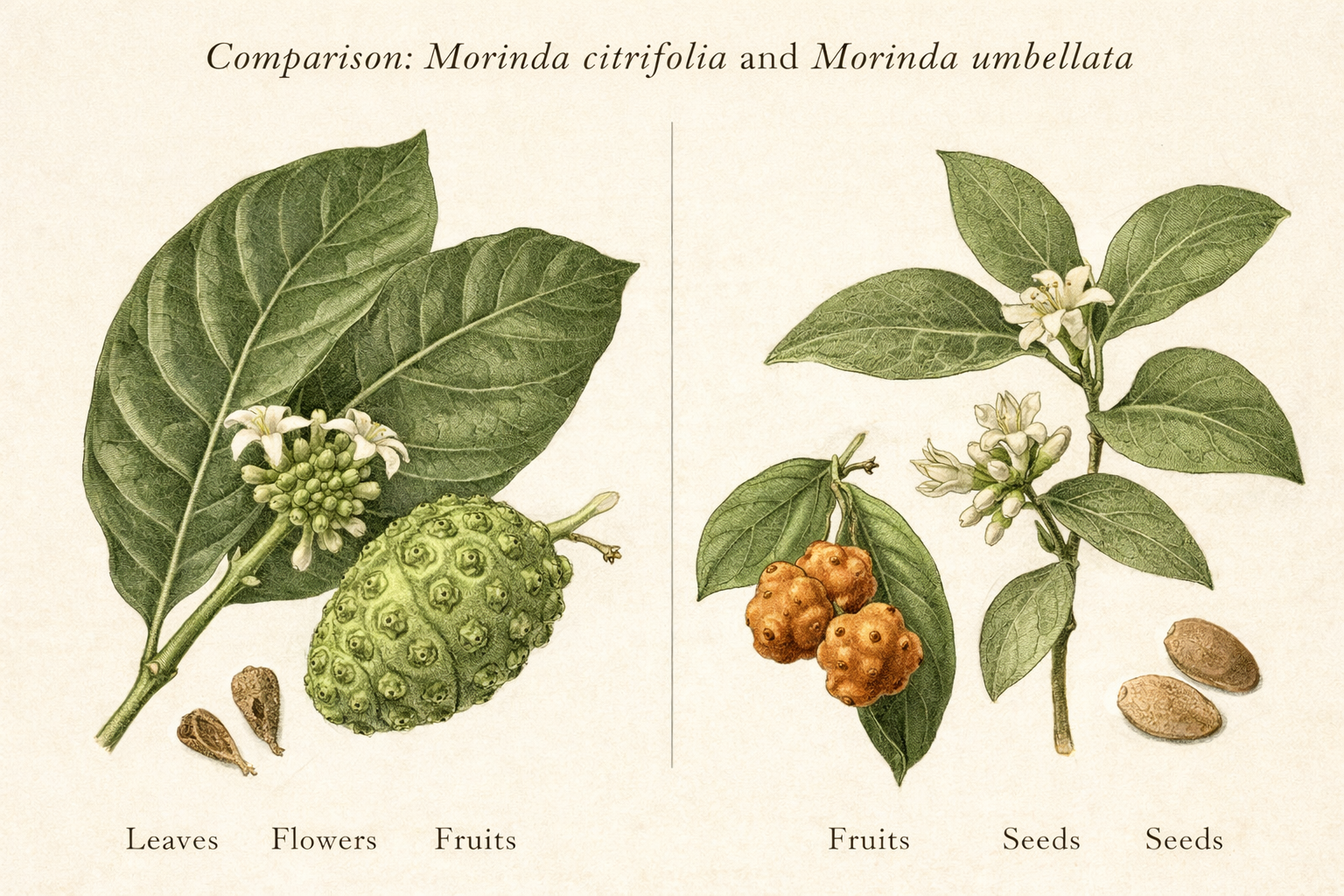
Morinda umbellata
Known for its ornamental qualities rather than medicinal use. Smaller fruits and different growth habit.
以其观赏品质而非药用价值闻名。果实较小,生长习性不同。