Tuesday, 17 October, 2023 06:25:42 PM
MALAYSIA > Federal Territory >
Kuala Lumpur > Batu Caves
Batu Caves

Pigeons - Symbol of Peace
Arriving at the entrance square of Batu Caves, visitors are greeted by majestic
structures of Hindu deities, temples and swarms of pigeons flapping just inches
above.
There are hundreds of them that tamely crowd the empty space leading to the
steps. Hundred pigeons on the ground feed off the steady stream of tourists.
Visitors can buy RM1 worth of pigeon feed from the few shops beside.
“Feeding the Pigeons” seems to be an activity on its own in Batu Caves for the
children. The pigeons were tame ! They don't fly away. You can just sit beside
or walk among them. Seem only the running children can make they fly.
The Batu Caves are situated thirteen kilometers ( seven miles ) north of Kuala
Lumpur City. The landmark is a sacred place for the Hindu’s in Malaysia with lot
of pigeons flying around freely.
Pigeons are the symbol of peace. And Batu Caves is the most popular Hindu Shrine
outside India.

Walk with Monkeys 272 steps
272 steps up a hill might be tiring but along the ways are monkeys keep you
entertained and keep your spirit of going up.
Batu Caves is famous for its resident families of macaque monkeys. A lot of them
live around here. You would be greeted by lots of friendly monkeys at the Batu
Caves if you arrive at their active time.
On you way of 272 steps, macaque monkeys come to you for foods. You can buy for
them at the entrance shops before you start you 272 steps. But the best choice
is not to feed them.
These tribe of monkey along your way up the steps will undoubtedly be
entertaining. These monkeys feed off the steady stream of tourists and their
population grow.
You may take pictures, but pay attention to your belongings! Some of these
monkeys are aggressive and may rob you when you carry something that might looks
like foods to them.
Those worshippers openly carry 'offering tray' have problem to bring their
offering safely up the stair without being harassed by these monkey.
For tourists, do take care of your glasses, camera , keep valued belongings
secured and carry NO FOOD in you hands. Those monkeys may attack you for the
foods in you hands while some may rob your attractive belongings.

Statue of Hanuman
The Monkey devotee of Lord Rama
50-foot (15 meters) tall statue of Hanuman.
A temple was dedicated to this Hanuman, the noble monkey devotee and aide of
Lord Rama.
The consecration ceremony of the temple was held in November 2001. The temple is
on the way to the Ramayana Cave situated to the extreme left as one faces the
sheer wall of Batu Caves hill.

Lord Murugan Statue
...the tallest statue of a Hindu deity in Malaysia...
World Tallest Lord Murugan Statue
42.7 meters - The largest Murugan statue. Declared open on Jan 29, 2006 (Sunday)
The RM2.5 million statue entered the Malaysian Book of Records as the tallest
statue of a Hindu deity in the country.
Lord Murugan, a divine power in the Hinduism is worshipped by more than one
million devotees around the world.
Approaching Batu Caves Square is the towering golden statue of Lord Murugan.
Erected in 2006, this statue is the largest in the world dedicated to the deity
and stands guard to the 272 leg-burning steps that lead up to the cave
entrances.

272 Steps
to Batu Caves Hill
In 1920, wooden steps up to the Temple Cave were built and have since been
replaced by 272 concrete steps still in use today.
Rising almost 100 m above the ground, the Batu Caves temple complex consists of
three main caves and a few smaller ones. The biggest, referred to as Cathedral
Cave or Temple Cave, has a very high ceiling and features ornate Hindu shrines.
To reach it, visitors must climb a steep flight of 272 steps.
When the kavadi bearer arrives at the foot of the 272-step stairway leading up
to the Temple Cave, the devotee has to make the arduous climb.
The Batu Caves in Malaysia are one of the most important Hindu religious sites
outside of India.
Just eight short miles north of Kuala Lunpur city, the caves attract around
5,000 visitors a day who come to climb the grueling 272 steps up to the caverns.
272 steps is a feat performed by Hindus devotees on the way to Temple Cave to
offer prayers to their God. Each year, on Thaipusam festival, as many as 800,000
devotees and other visitors came to the caves.

Temple Cave
Batu Caves Hill comprises a series of caves. The largest and best known is the
Temple Cave (Cathedral Cave) as photos above.
So named Temple Cave because this big cave houses several Hindu shrines and a
Tamil-style temple. The high vaulted ceiling is 100 meters high.
Temple Cave of Batu Caves was promoted as a place of worship by K. Thamboosamy
Pillai, an Indian trader, who also founded the Sri Mahamariamman Temple in Kuala
Lumpur.
Pillai was inspired by the 'vel'-shaped entrance of Temple Cave and was inspired
to dedicate a temple to Lord Muruga within this large cave.
In 1890, Pillai, installed the Murti (consecrated statue) of Sri Subramania
Swamy in the Temple Cave. Two years later in 1892, the Thaipusam festival was
celebrated there. Today, a century later, both Temple Cave and Thaipusam
Festival have became a tourist main attraction in Malaysia.
Wooden steps up to the Temple Cave were built in 1920 and have since been
replaced by 272 concrete steps which we are using today.

Valluvar Kottam
and Art Gallery Caves
The walk along a zigzag bridge over a pond teeming with fish, terrapin and
tortoises brings the visitor to Valluvar Kottam and Art Gallery Caves. Quaint
cupolas at the angles of the zigzag bridge provide shade where the visitor could
stop to watch or feed the teeming aquatic life.
The Art Gallery Cave, containing holy statues and wall paintings depicting Hindu
mythology. The cave is at the foot hill. Access is via a concrete walkway over a
small subterranean lake. For this cave only, an entrance fee is charged.
Statues and wall paintings depicting Hindu deities and mythology are displayed
here. The walk to the entrance is itself quite a pleasant experience through a
lake and ponds filled with hundreds of colorful fish.
The cave walls of the Vallurvar Kottam are covered with statuary exhibits,
murals and inscriptions of the poet's couplets. The exhibits are used to
illustrate relevant couplets from the Tirukkural, his entire works. Valluvar
Kottam is so lit that the atmosphere of a silent cave is well preserved.
Not to miss is the statue of the five-legged bull. The owner of this freak,
five-legged bull gave it away to the Batu Caves Temple soon after it was born.
The fifth leg of the bull grew from the back near the bull's hump. In all other
respects the bull was healthy and roamed freely around the temple grounds as
long as it lived among a harem of cows. It died a natural death after spending
its entire life on the temple grounds.
How to go to Batu Caves
How to get there :
By Car
Batu Caves is located at the northern section of the Middle Ring Road II.
From Kuala Lumpur City, use Jalan Sultan Ismail (westbound) road and drive right
to the end and turn into Jalan Kinabalu (northbound towards Kepong), connecting
to Jalan Kuching at the Duta roundabout, connecting to Jalan Ipoh via overpass
at the Kepong roundabout.
After that, look for road signs that leads you to Batu Caves or Genting
Highlands. You will be exiting the road, up a ramp into a huge roundabout. At
the roundabout, take the exit at 3 o'clock (3rd exit) and then keep to left.
About one kilometer from the roundabout you are able to see Batu Caves in sight.
By Bus Cityliner
Use Cityliner bus no. 69 from Jalan Pudu or Intrakota bus no. 11D from
Pasar Seni.
By Bus RAPIDKL
By using RAPIDKL, you can get reasonable and cozy transportation to Batu
Cave from KL City..
From the Titiwangsa Terminal, take RapidKL bus route U6. The bus will stop at
the entrance to Batu Caves. Inform the bus driver of your destination so that
you will not miss pressing the bell to stop the bus.
The fare is RM2 and the ticket is a day pass for all RapidKL Uxx routes. Keep
the ticket for the return journey. All you have to do is to show it to the bus
driver upon boarding.
By Taxi
Take a taxi to Batu Caves, as the site is relatively isolated. The trip
is RM10 to RM15 under normal traffic condition
By Train
Since 2009 visitors are able to get to Batu Caves from Kuala Lumpur City by
train.
The railroad beside Batu Caves is upgraded for extension of the KTM commuter
train service from Sentul.
Few other Indian temples in Malaysia :

1- BATU CAVES, KUALA LUMPUR
Batu Caves is 13 Kilometers north of Kuala Lumpur . The signature feature of
this Hindu cave temple is the 272 steps staircase that leads to the cave. The
cave is the temple for Hindu God Lord Muruga, also known as Lord Subramaniam.
A tall golden statue of lord Muruga is standing next to the staircase to welcome
visitors. It is the tallest statue of lord Muruga in the world.
2- Thirumurgan Temple, Tawau
3- Sri Maha Mariamman Temple, Mount Matang
4- Sri Maha Mariamman Temple, Kuching
5- Sri Maha Mariamman Temple, Kuala Lumpur
This oldest Hindu temple in Kuala Lumpur was started in 1873 by the Pillai
family as a private shrine. In the late 1920s the Pillai family open the temple
doors to the public and eventually handed the management over to a board of
trustees. The initial temple structure was build in attap and gone through
structural upgrade throughout the years. The current temple building completed
in 1968. The impressive gateway to the temple (the gopuram) was completed in
1972. The new temple was consecrated in 1973.
RELATED TOPICS

Wuzhou Dragon Mother Temple
|
GO
FURTHER
SABAH

Sabah's five spectacular premier events:
1- Sabah Fest (May 3-4)
2- Sabah Dragon Boat (June 15-16)
3- Sunset Music Festival (June 28-29)
4- Kokol International Paragliding Race (Sept 16-18)
5- Mt Kinabalu International Climbathon (Oct 19-20)
SARAWAK

Welcome to Sarawak
Sarawak is the largest state in Malaysia. Its colourful history
under the rule of the White Rajahs, rich tapestry of cultures and
superb natural attractions make it a mesmerizing holiday
destination.
THAILAND

Welcome to Thailand
......... a place where culture is diverse and dates back
centuries, which makes it a unique country in the world.
Pan Borneo
Highway
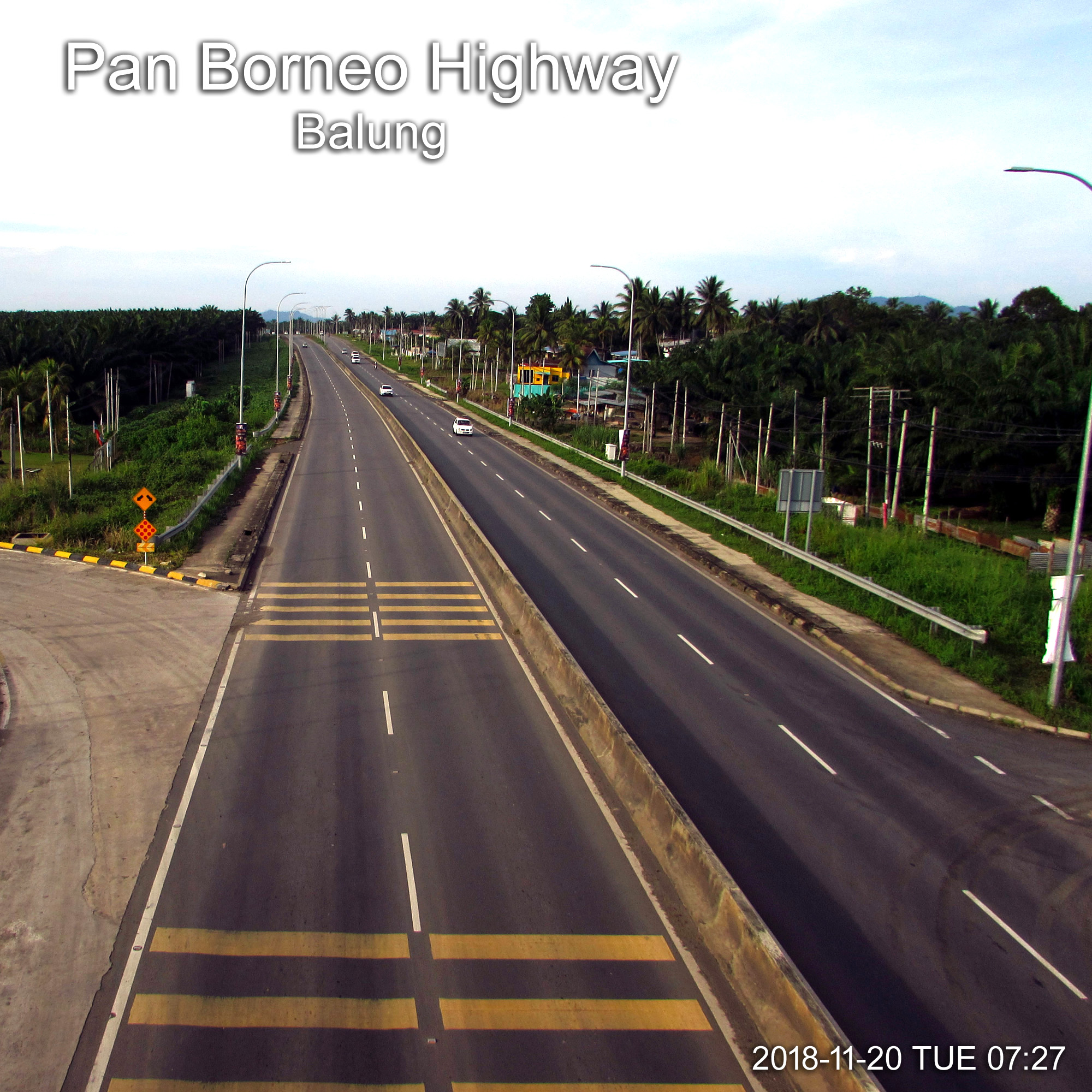
The route start at Tawau Town of Sabah and
ends at Sematan on the West Kalimantan/Sarawak border.
The highway is numbered AH150 in the Asian Highway Network and as
Malaysia Federal Route 1 in Sarawak. In Sabah, the route numbers
given are 1, 13 and 22.
|