eTawau > Insects of Borneo > Two pairs of wings > Beetles > Lucanidae > Lucaninae > Odontolabis > Odontolabis sommeri
Species record · Coleoptera: Lucanidae: Lucaninae
Stag beetle, Odontolabis sommeri
Black in front, with plain tan wing cases and short toothed jaws; found in the morning under a homestay veranda light in Kampung Kinasaraban, Kundasang, 22 October 2026; size not measured; one record on this site
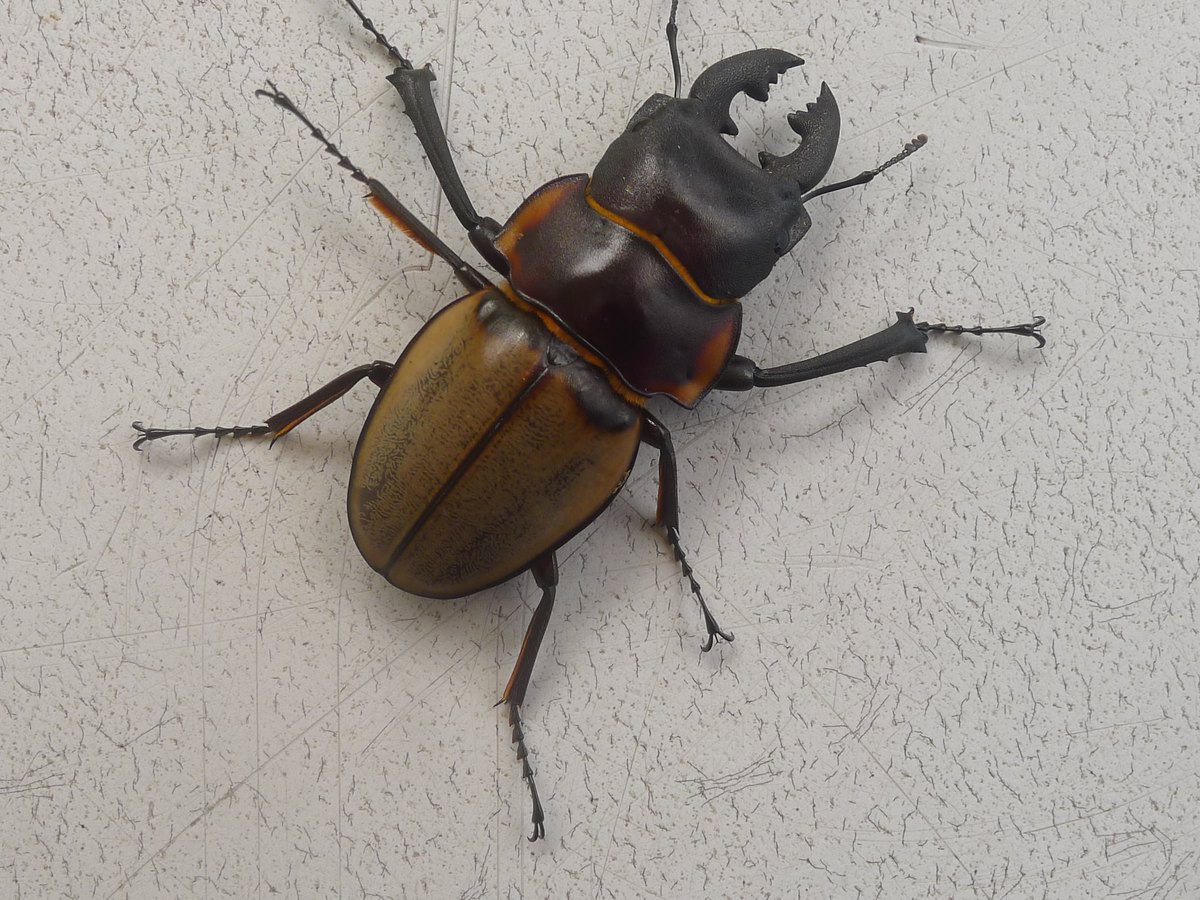
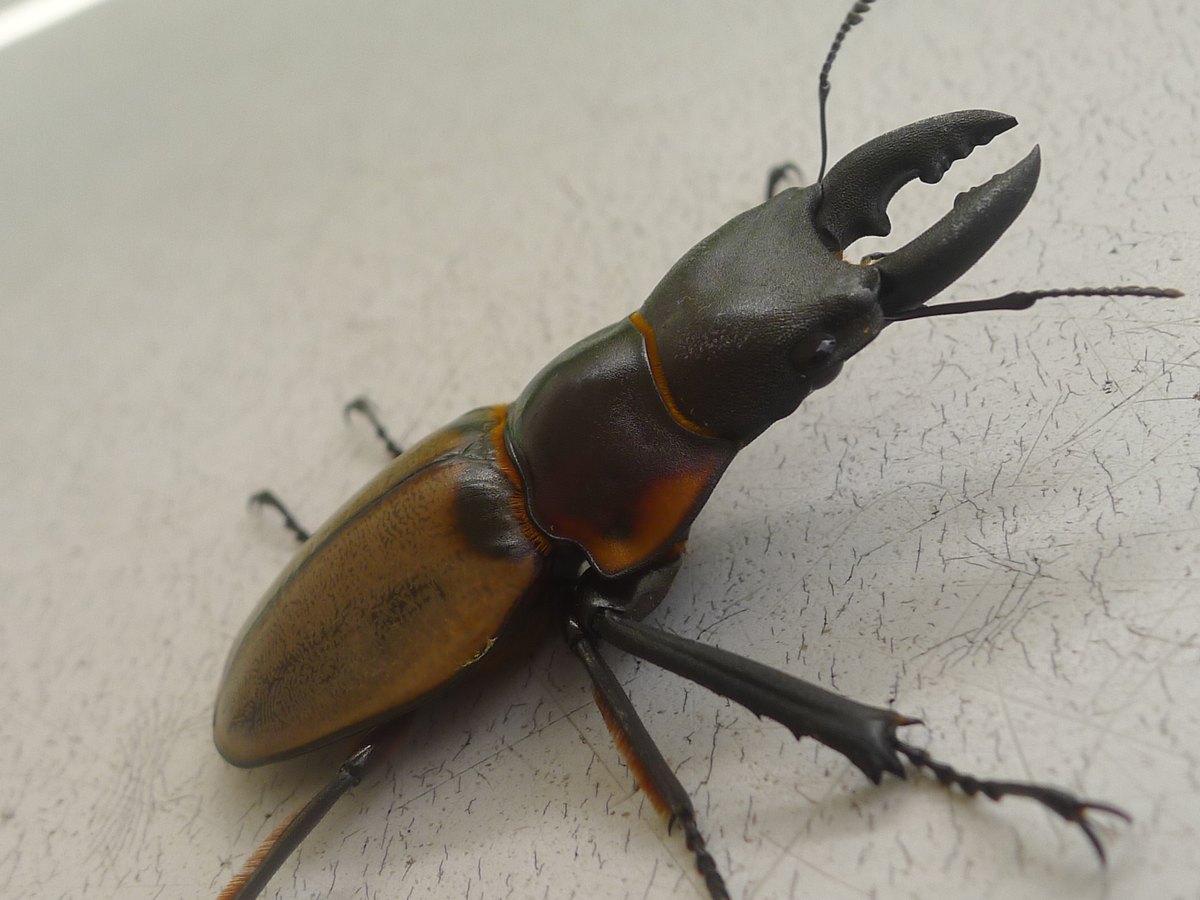
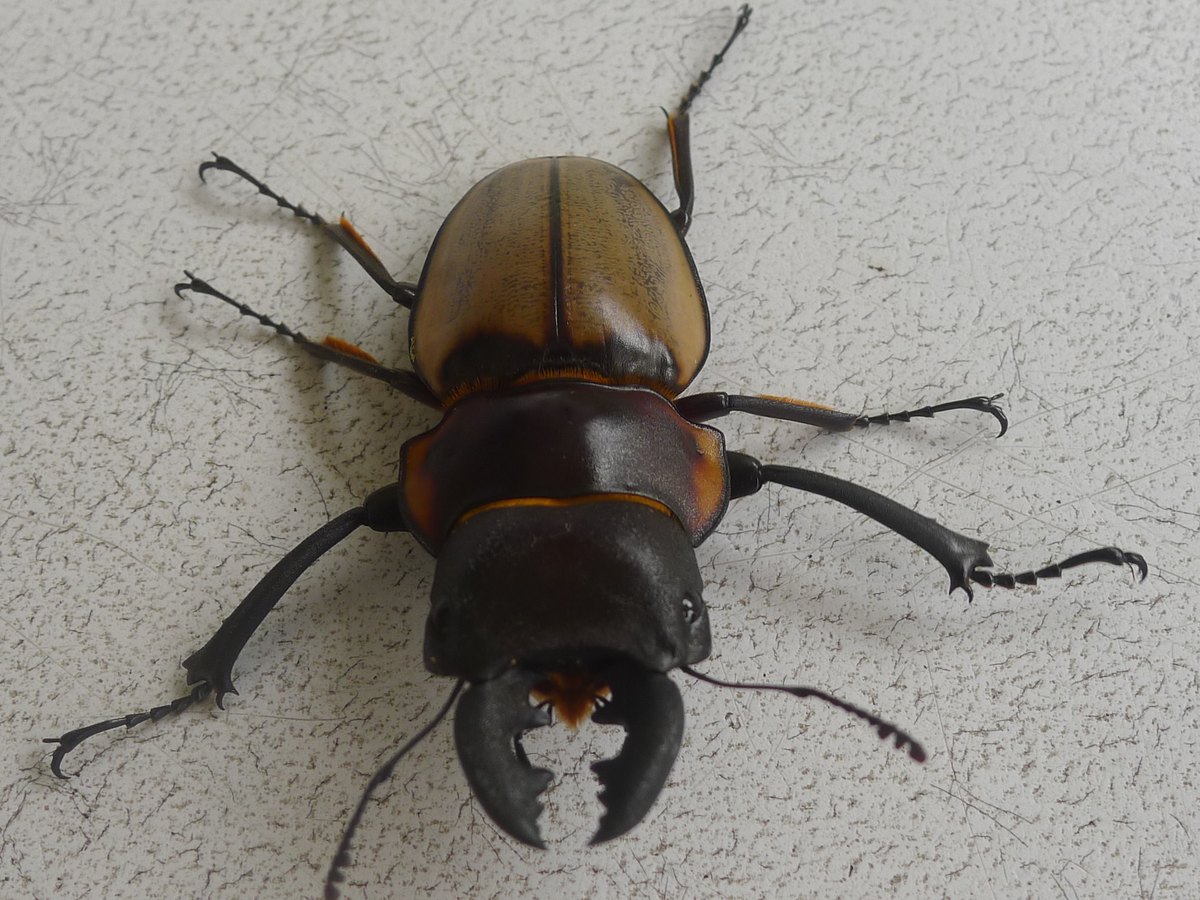
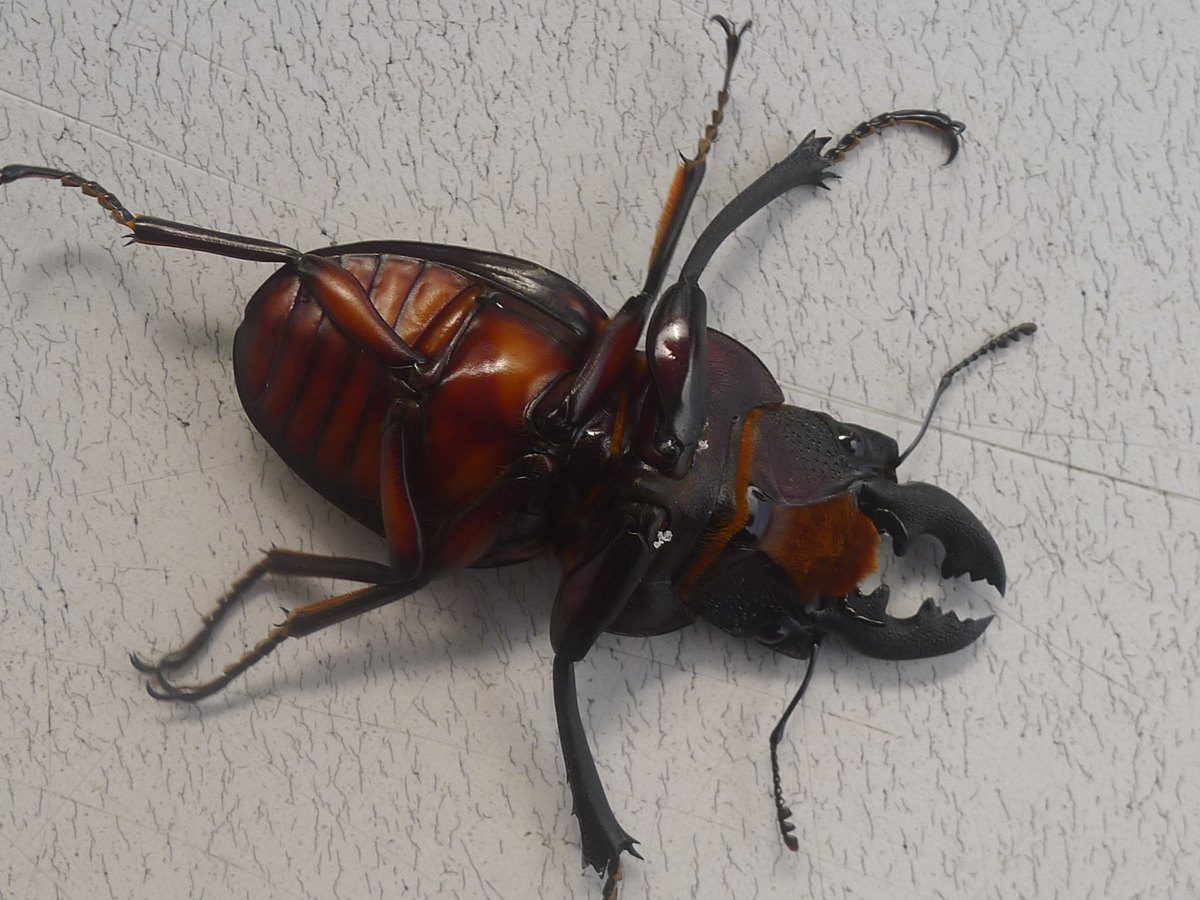
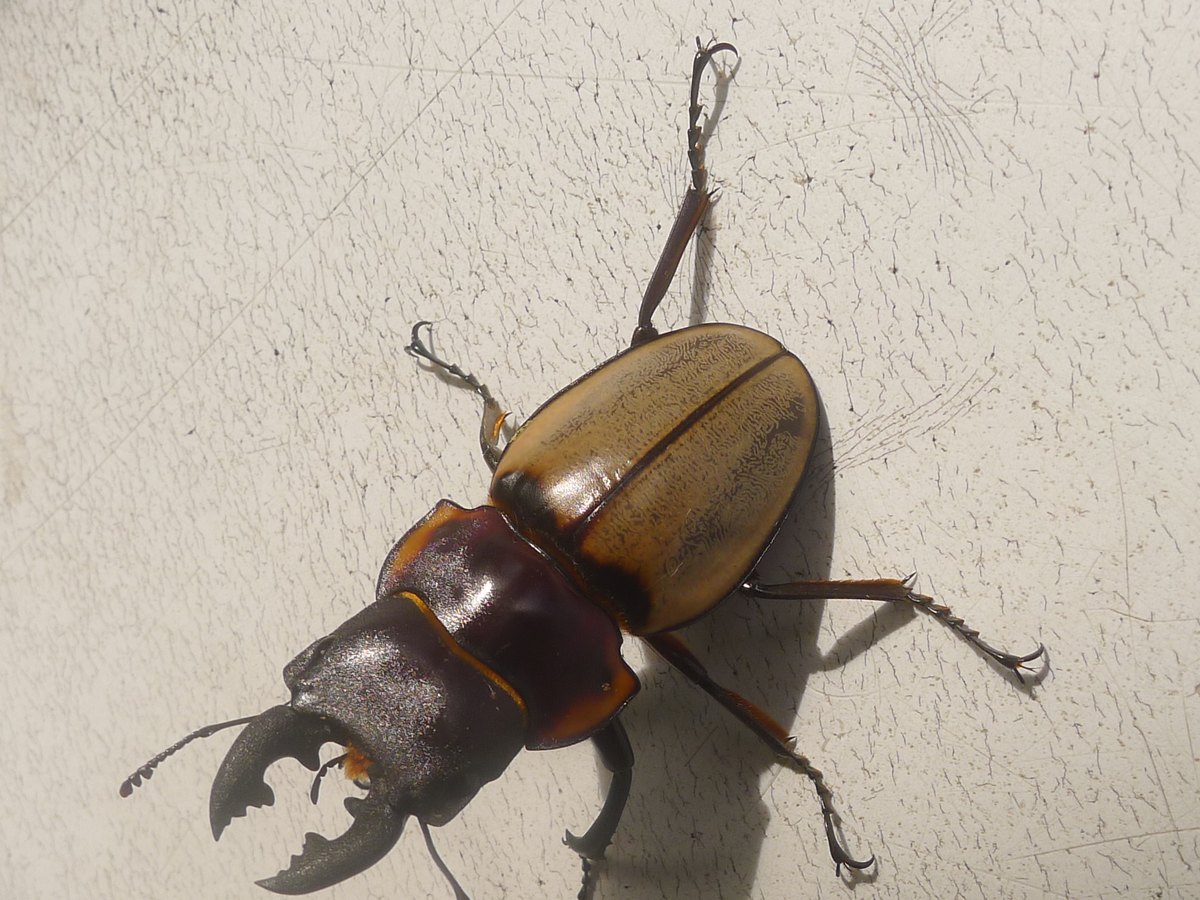
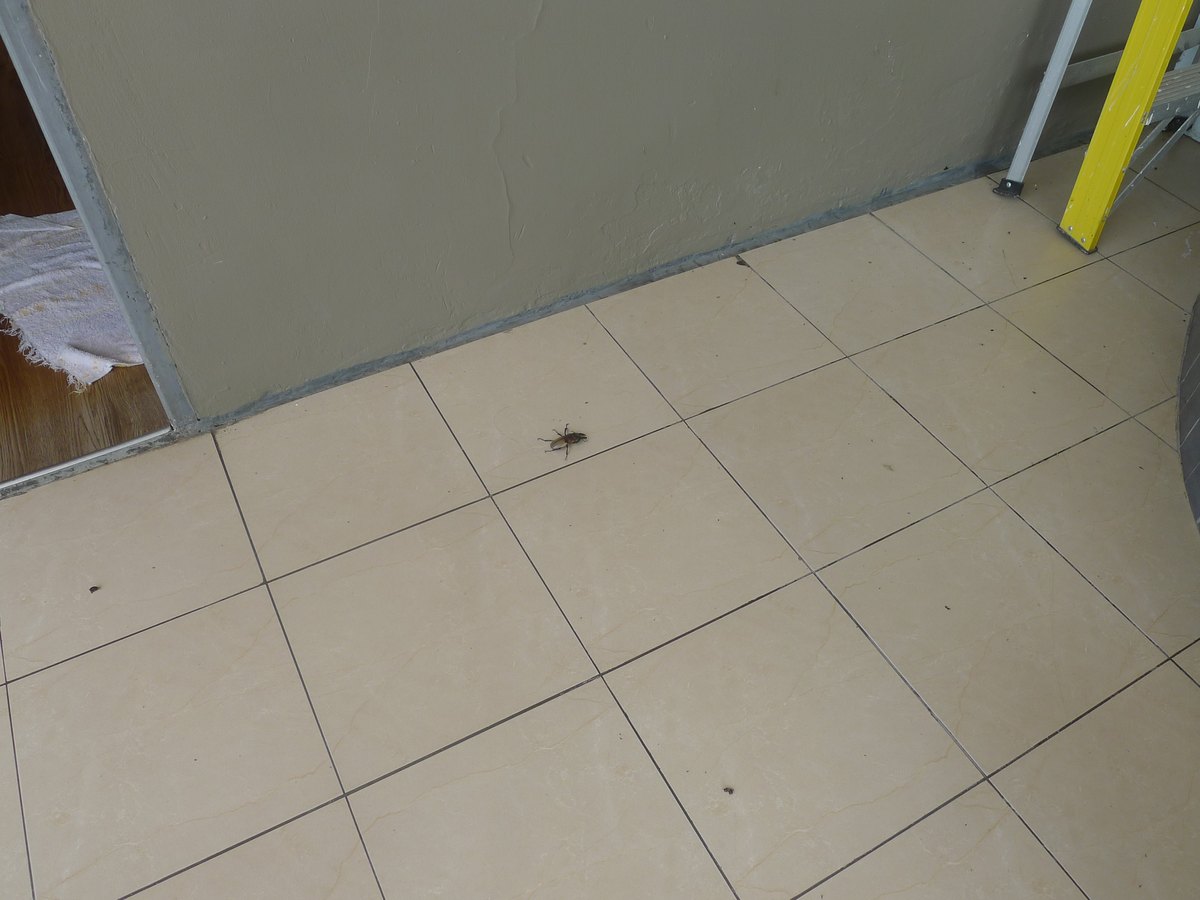
All six cropped and reduced from the photographer's frames; nothing else changed. Photos 1–5 were taken on a plastic dining table near where the beetle was found. Panasonic DMC-LX5, daylight, no flash.
Record 1 — Kampung Kinasaraban, 2026
| Date | Thursday 22 October 2026, in the morning; photos 09:16–09:35 (camera clock) |
|---|---|
| Place | The veranda of a homestay in Kampung Kinasaraban, Kundasang, Ranau District, Sabah |
| Found | On the tiled veranda floor, under a light that was left on all night. Several flying insects came to the light, and most were still there in the morning; this beetle was the largest. |
| Behaviour | Resting, not moving. It did not fly away; the smooth tiles were too slippery for its claws. |
| Number | One |
| Sex | Probably a male (broad head, large toothed jaws) |
| Size | Not measured |
| Afterwards | Photographed on a plastic dining table nearby, then released into the homestay's flower garden |
| Observer | Wong Fook Yee |
| iNaturalist | observation 411515083 |
Jaws of different shapes
Male Odontolabis do not all have the same jaws. A 2018 study at the Natural History Museum, London, described four male forms in two Odontolabis stag beetles, one of them Odontolabis sommeri lowei: the largest males with the longest jaws, a second fighting form with a smaller head, the smallest males with short jaws, and a newly named form with stout "bolt-cutter" jaws. Which form this beetle is has not been checked.
Identification
- Head and jaws black, finely roughened.
- Jaws short and curved, with a row of teeth on the inner edge.
- Thorax very dark red-brown and shiny, with a narrow orange rim at the front and orange at the sides.
- Wing cases plain tan to yellowish-brown, with a thin dark line down the middle.
- Underside red-brown, with orange hair under the head; legs black, partly orange.
- Antennae elbowed, ending in a small comb-like club.
The species was given by identifiers on iNaturalist; the photographer's own guess was the genus Odontolabis. Odontolabis has about 61 species and subspecies in South-east Asia; Odontolabis sommeri is listed from Borneo and Sumatra.
Related: Kampung Kinasaraban ·
Beetles of Borneo ·
Three-horned rhinoceros beetle, Kampung Sayap, 2022 ·
Two pairs of wings
Photographs © Wong Fook Yee. Place, behaviour and release are the photographer's own account; photo times from the camera; species from iNaturalist. The small picture used for this record on index pages was prepared by the photographer from photo 1, with the background removed; it looks retouched. Sources: Wikipedia, Odontolabis (genus author, number of species, range of O. sommeri); Wikipedia, Taxonomy of Lucanidae (subfamily and tribe); Natural History Museum, London, "Stag beetles with bolt-cutter jaws", 2018 (male forms). Species page written 29 October 2026.