|
Family: Pholcidae ♂7.5mm EDA SAWMILL 21-11-2014 FRI 8:46AM CONTAINER 28-11-2014 FRI 8:32AM |
GUIDE TO COMMON SPIDERS
IN BORNEO ISLAND
|
Family: Pholcidae ♂7.5mm EDA SAWMILL 21-11-2014 FRI 8:46AM CONTAINER 28-11-2014 FRI 8:32AM |
|
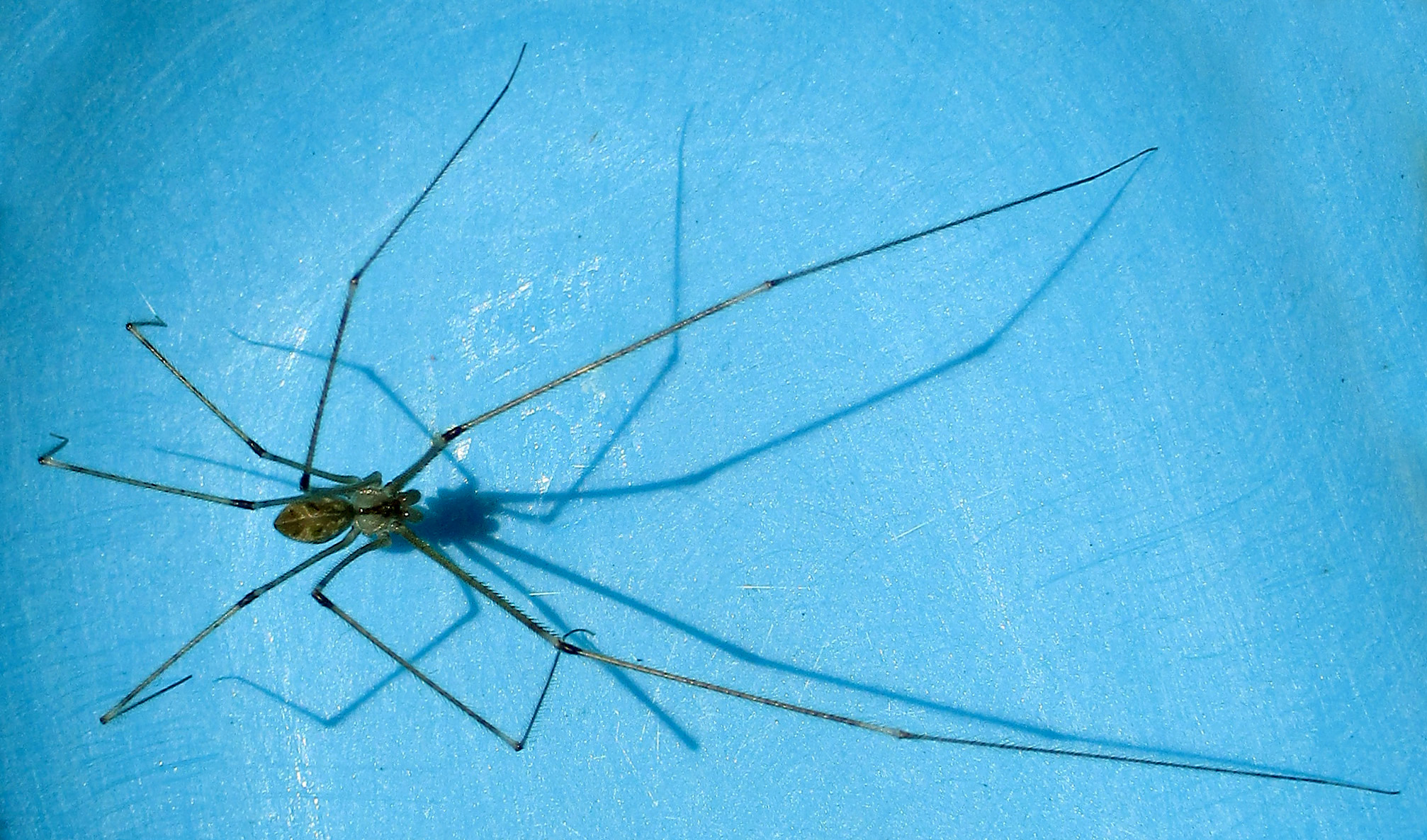
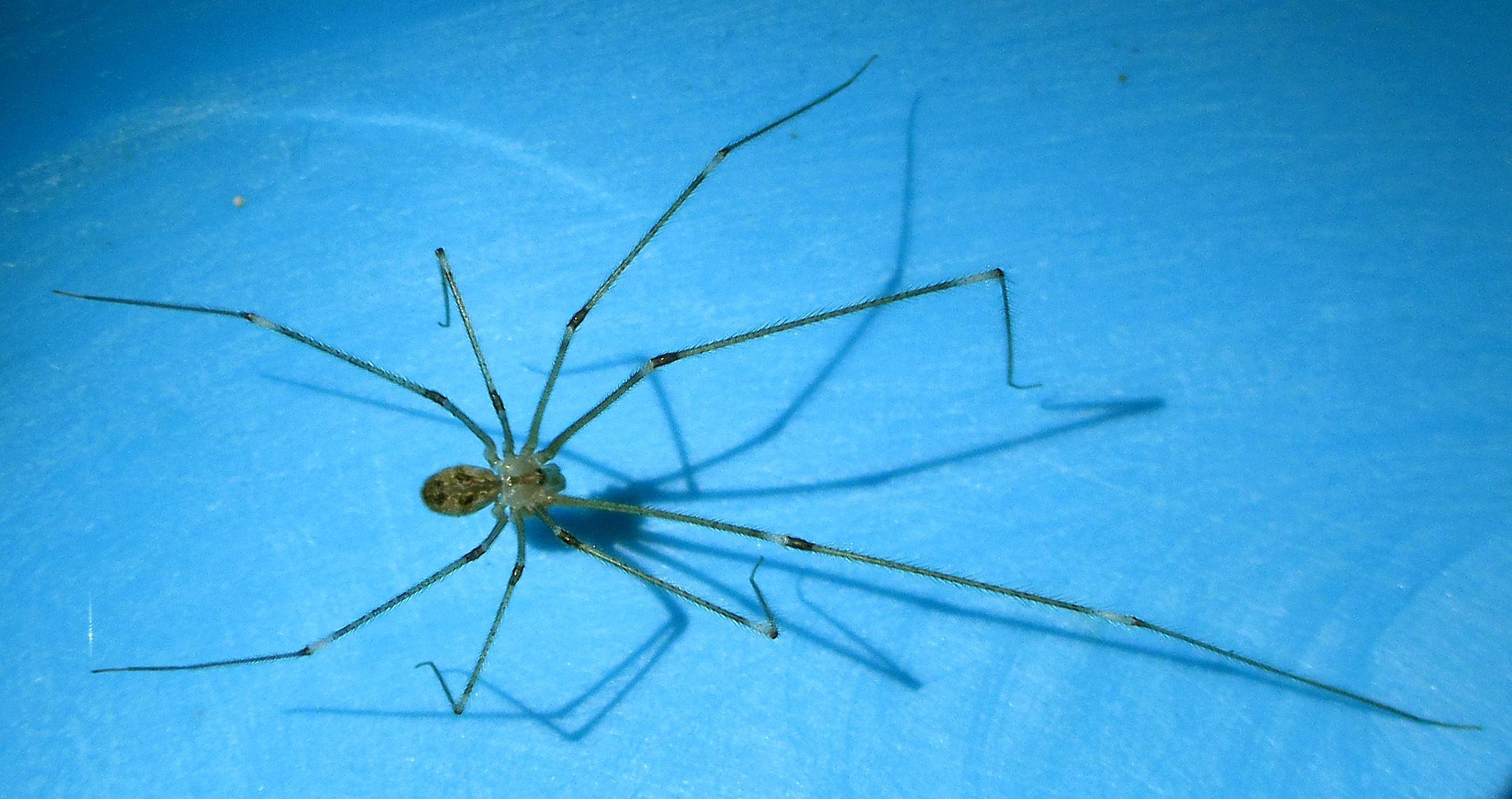
Crossopriza lyoni The carapace (the top part of the cephalothorax) has a deep excavation. Pholcids are long-legged spiders which construct loose tangled webs. Some of
them are responsible for the "cobwebs" at neglected corners of buildings. They
hang upside down in the webs and when disturbed, will vibrate themselves so
vigorously that they blur themselves in the eyes of the intruder. Crossopriza lyoni is a widespread species of cellar
spiders that prefer to live in or around human structures. They are
commonly known as tailed cellar spiders, tailed daddy longlegs
spiders, and sometimes box spiders. They all possess extremely long
fragile legs that can reach up to 6 cm (2.4 in) long and a body
length of that ranges from 2.5 to 7 mm (0.098 to 0.276 in). Their
abdomens are distinctly squarish when viewed from the side and their
carapace is more or less circular when viewed from above. They also
possess two kinds of sound-producing organs and have six eyes. They also possess two types of stridulatory organs. The first type
is located at the posterior tips of their cephalothorax (the prosoma)
in the form of two triangular protrusions. The spiders rub these
structures with a matching pair of sclerotized plates at the
anterior portion of the abdomen, producing sound. These structures
are more prominent in females. They also possess stridulatory files
(in the form of a series of small ridges) on their chelicerae which
are rubbed against the pedipalps to produce sound. The second type
is more prominent in males. |
|
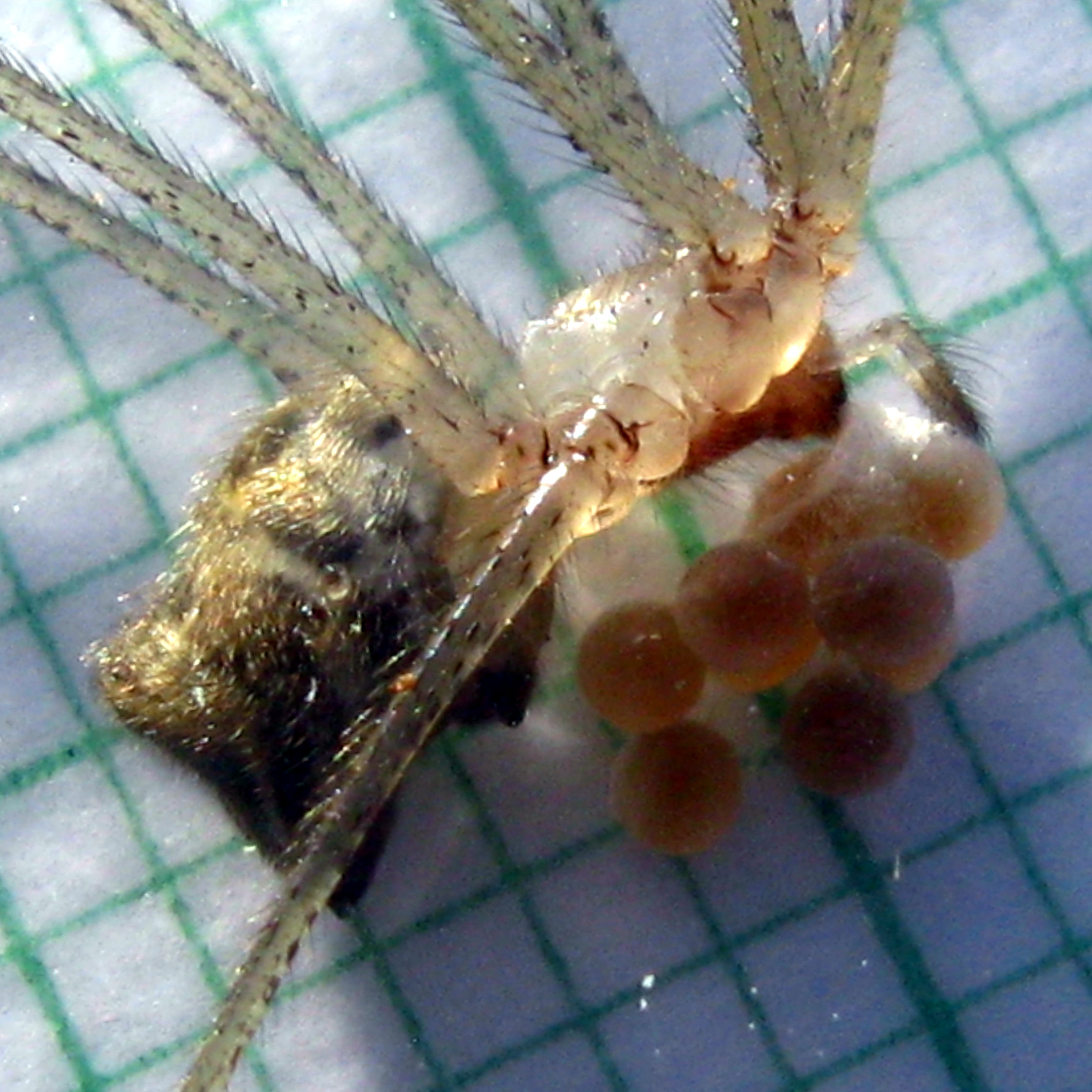
Eggs of Crossopriza lyoni The eggs are deposited by the females 5–6 days after copulation. 5 to 54 spiderlings will eventually hatch from the eggs, 11 to 13 days after egg-laying. Each egg diameter is less then 1mm and is round like a pearl. After laying the eggs, females will bind them into a ball with tiny amounts of silk. They then clutch the resulting egg sacs with their mouthparts and carry them around.
Eggs are held together by a few strands of silk
and carried by the mother. The females still feed during this period, setting their burdens aside temporarily while they eat, then picking them up again. They also frequently adjust their grip. Instances of females eating some of their own eggs have been recorded. It is assumed that they only consume the infertile ones, as unfertilized eggs occur at high enough rates |
|
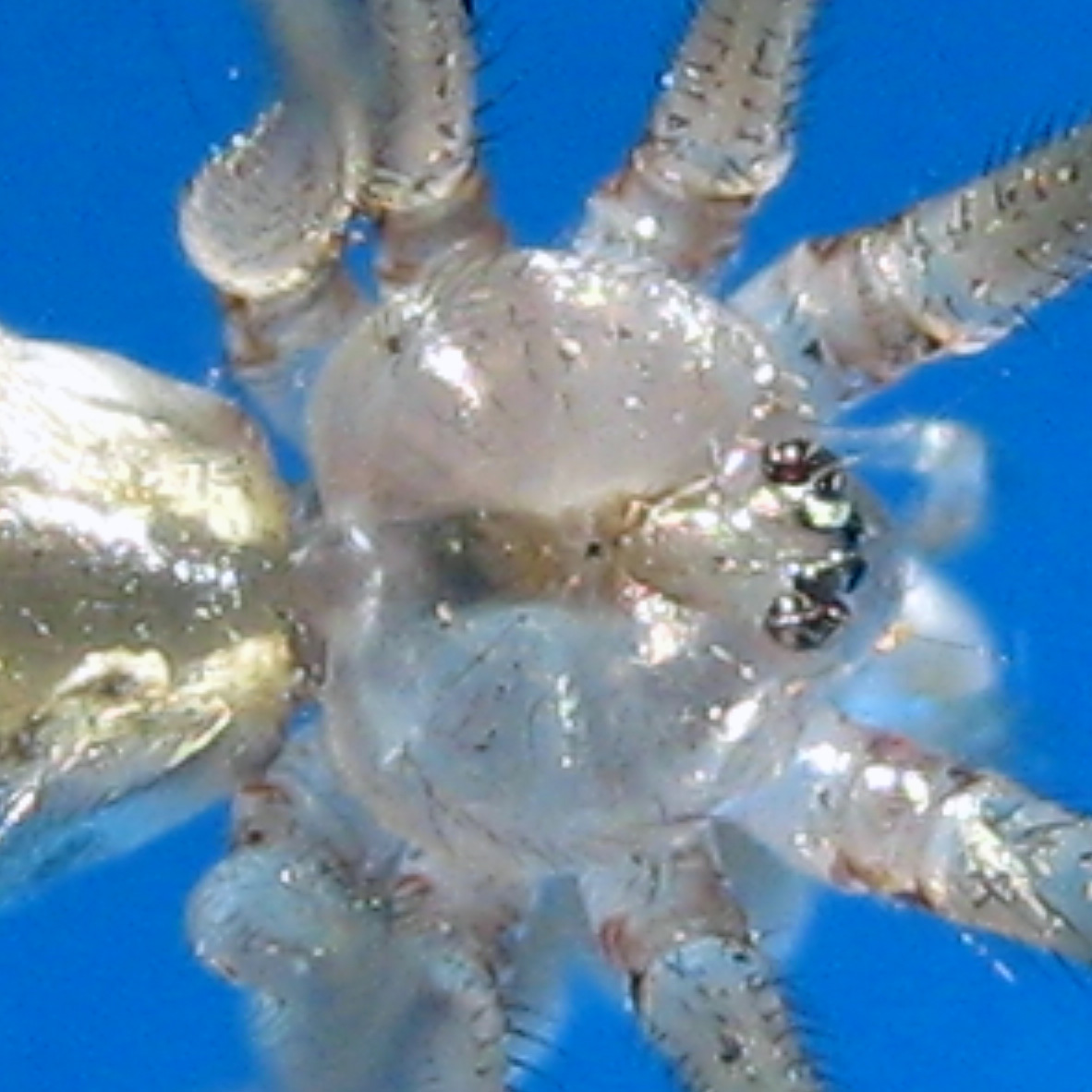
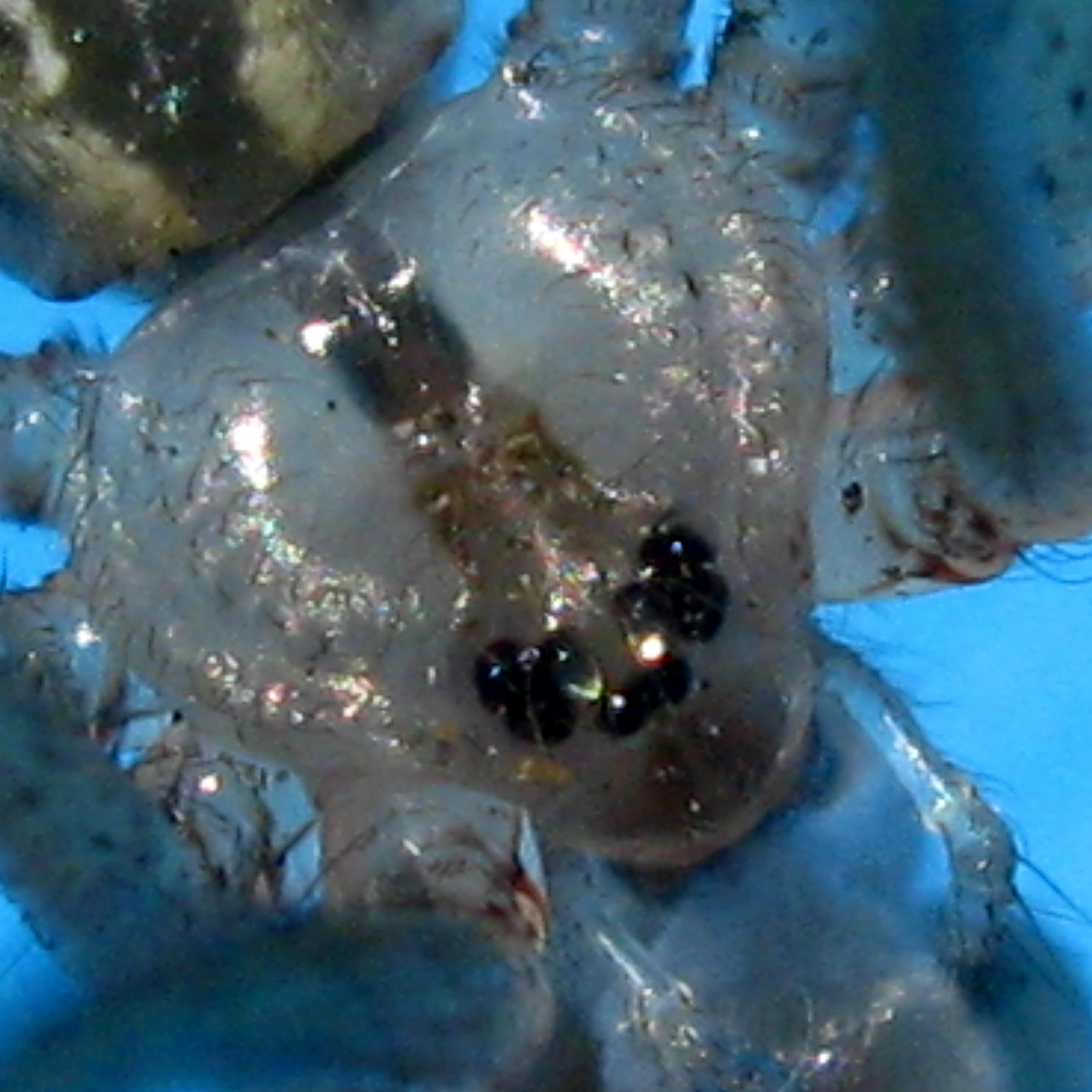
EYES They have eight eyes located in the tip of cephalothorax. The anterior median pair is small while the rest are set in two groups of three. In the middle of the upper surface (the carapace) is a deep depression (thoracic fovea) and a darker longitudinal band of color. |
|
Cephalothorax Pedipalps Male bulbous pedipalps |
 |
Cephalothorax = The united head and thorax.
Carapace = The
hard dorsal covering of the cephalothorax. The cephalothorax is wider than it is long, greyish-white to pale amber in color. The carapace is subcircular. In the middle of the upper surface is a deep depression (thoracic fovea) and a darker longitudinal band of color.
|
|
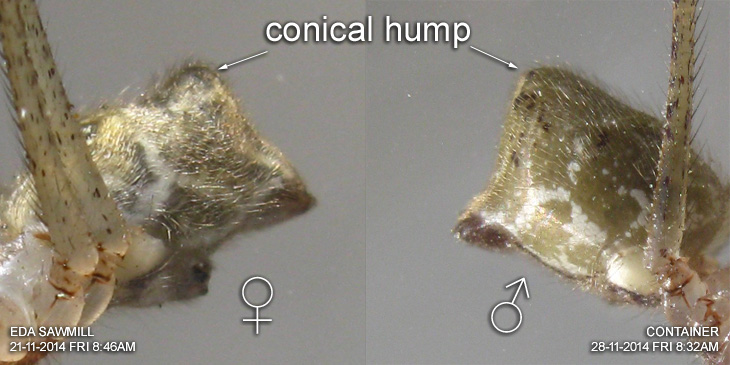
Abdomen Abdomen is greyish off white with black and white patches in the sides and dorsum; cardiac area transparent; triangular in shape when viewed from sides, with the spinnerets located in the lower projection of the triangle. A small conical extension is projected at the upper posterior end of the abdomen. |
 |
The legs are grey to amber in
colour and covered with
numerous small longitudinal brown spots.
The 'knee joints' are brown, and the ends of the femur and tibiae are girdled with white. |
 |
Crossopriza lyoni possess extremely long fragile legs. Females have slightly shorter legs than males. |
 |
This females of Crossopriza lyoni is 5 mm in length. (Image
left) Males are slightly smaller, at about 2.5 to 6 mm (0.098 to 0.236 in) in length, and have prominent pedipalps. |
 |
Crossopriza lyoni has two types:
1- 6 eyes Crossopriza lyoni The Crossopriza lyoni found in Borneo Island are 8 eyes. The eyes are pearly-white in color and located at the tip of the
cephalothorax in two groups of three. |
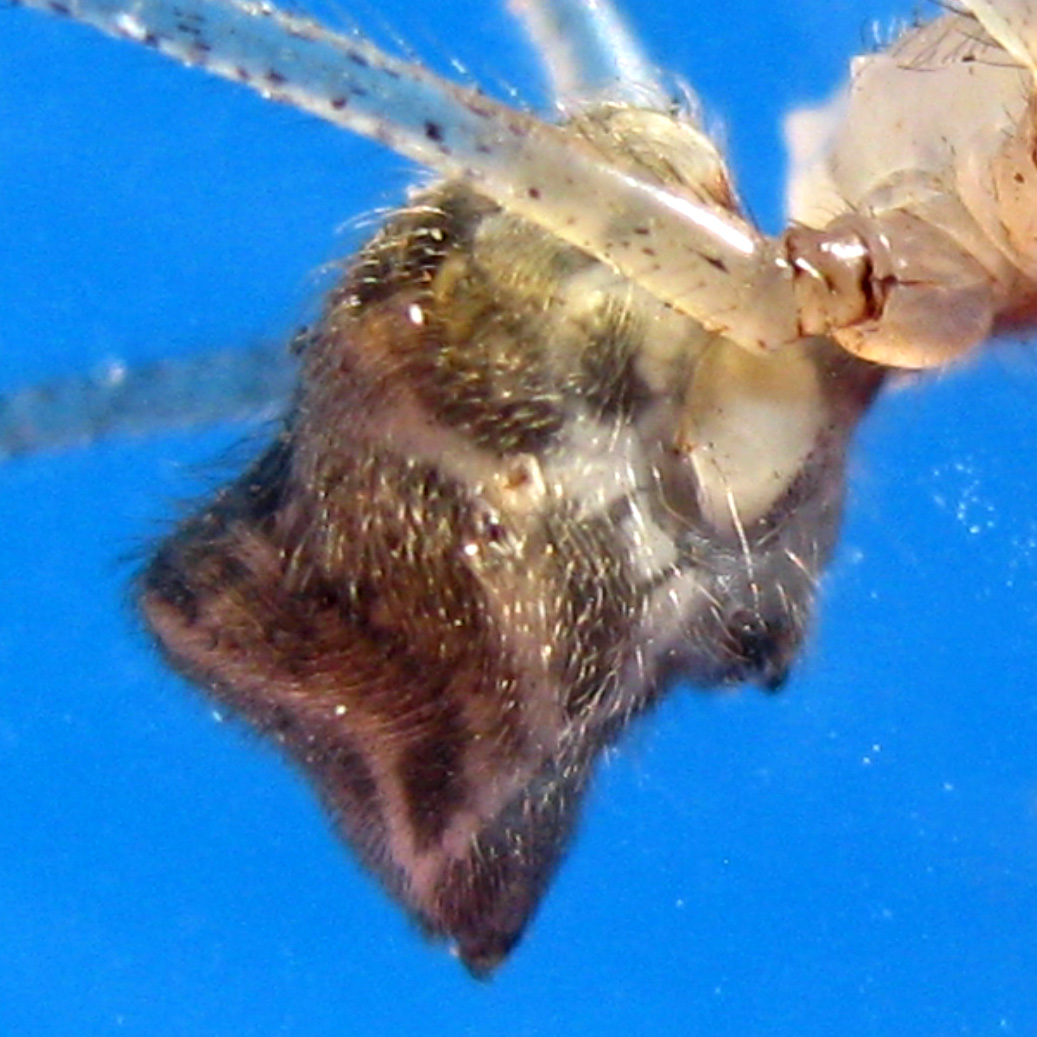 |
Abdomen is boxy shape The characteristic boxy shape of their abdomens (C. cylindrogaster has a cylindrical abdomen) The abdomen (the opisthosoma) is gray with white lateral stripes and various dark and light patches on the sides and the upper surface. An irregular darker stripe runs lengthwise at the bottom surface. The abdomen is angular and somewhat box-shaped, with a small conical hump on the upper back.
|