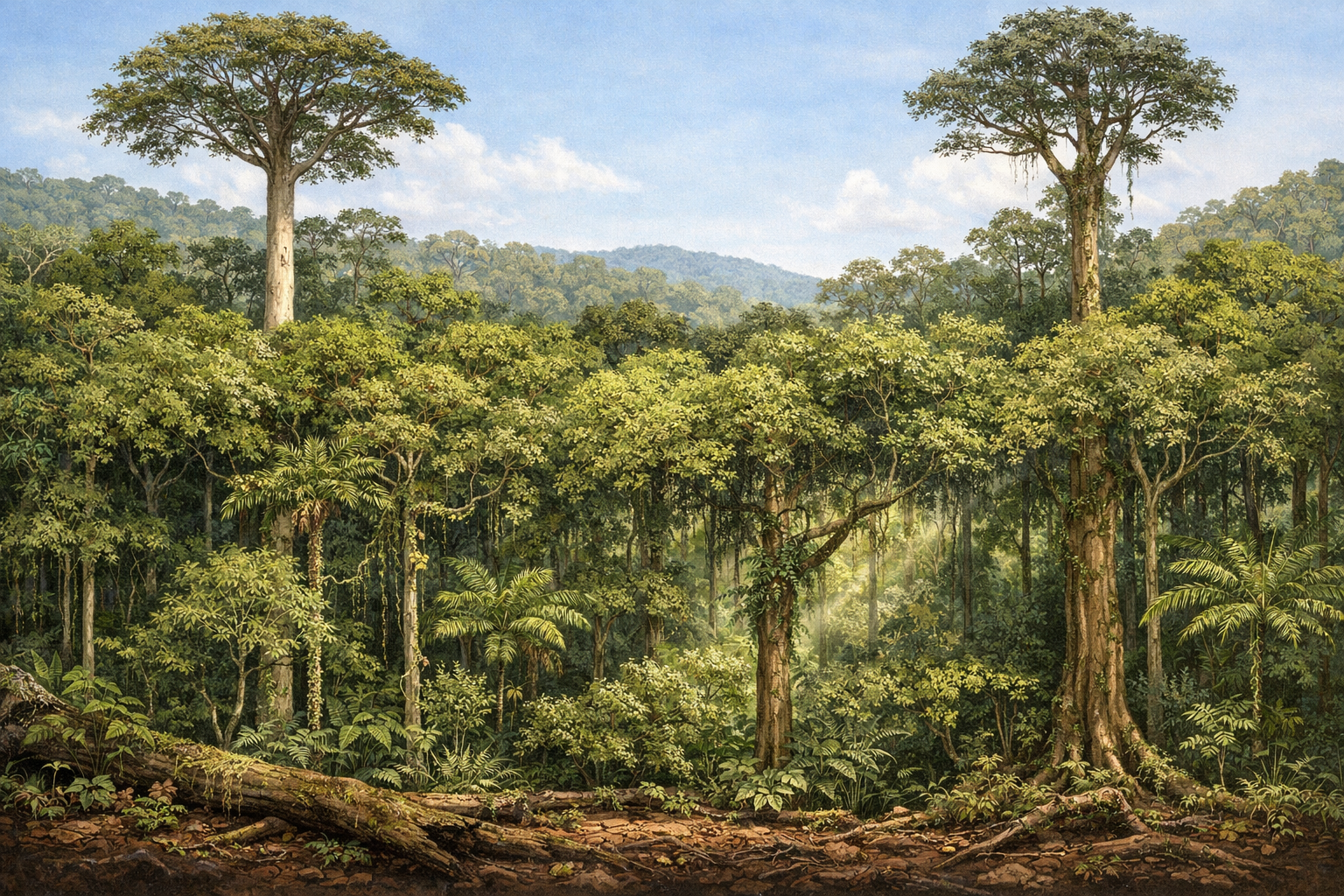
A tropical rainforest is structured vertically as well as horizontally. In Borneo, plants occupy different height zones shaped by light availability, moisture, wind exposure, and competition for space.
How plants share vertical space in a tropical rainforest
Tropical forests are not flat landscapes. They are three-dimensional living systems, where plants grow at different heights, compete for light, and share space in complex ways.
In Borneo, forest structure plays a fundamental role in shaping plant life. From the shaded forest floor to the sunlit canopy, each vertical layer presents distinct conditions that influence how plants grow, survive, and reproduce.
These layers are not rigid divisions, but overlapping zones that shift over time as trees grow, fall, and regenerate.
The emergent layer consists of the tallest trees rising above the main canopy. These plants are exposed to intense sunlight, strong winds, and fluctuating temperatures.
Survival at this height depends on strong structural support and efficient water transport.
The canopy forms a continuous roof of leaves and branches. It captures most of the sunlight and supports a high concentration of flowers, fruits, insects, and animals.
Competition for space and light is strongest here.
Below the canopy lies a dimmer environment where light is filtered and scattered. Plants in this layer often grow slowly and have larger, thinner leaves adapted to low-light conditions.
Many young trees spend years here before reaching higher layers.
The forest floor receives very little direct sunlight. Leaf litter, fallen branches, fungi, and decomposers dominate this layer.
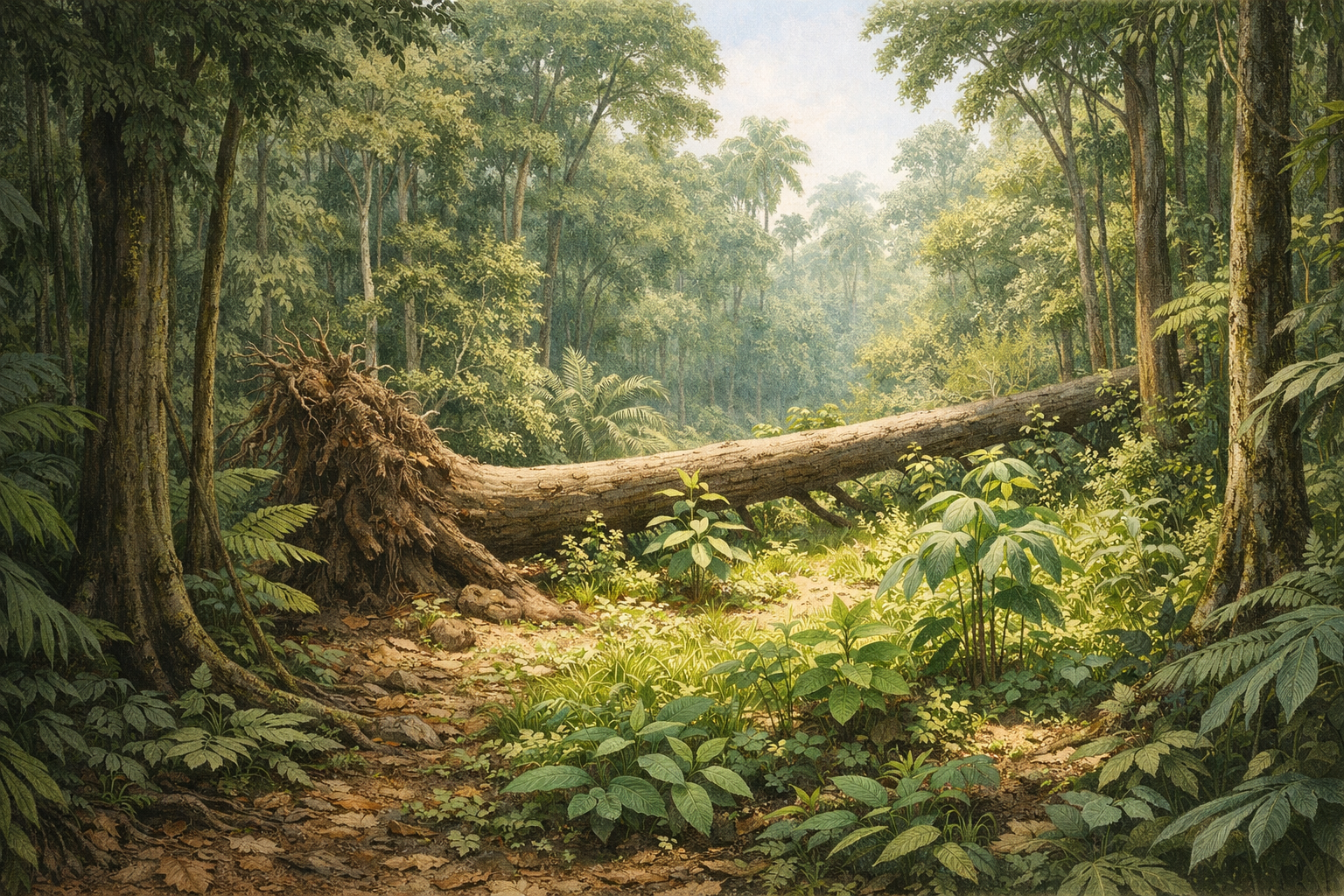
Seedlings and saplings wait for opportunities created by fallen trees and canopy gaps.
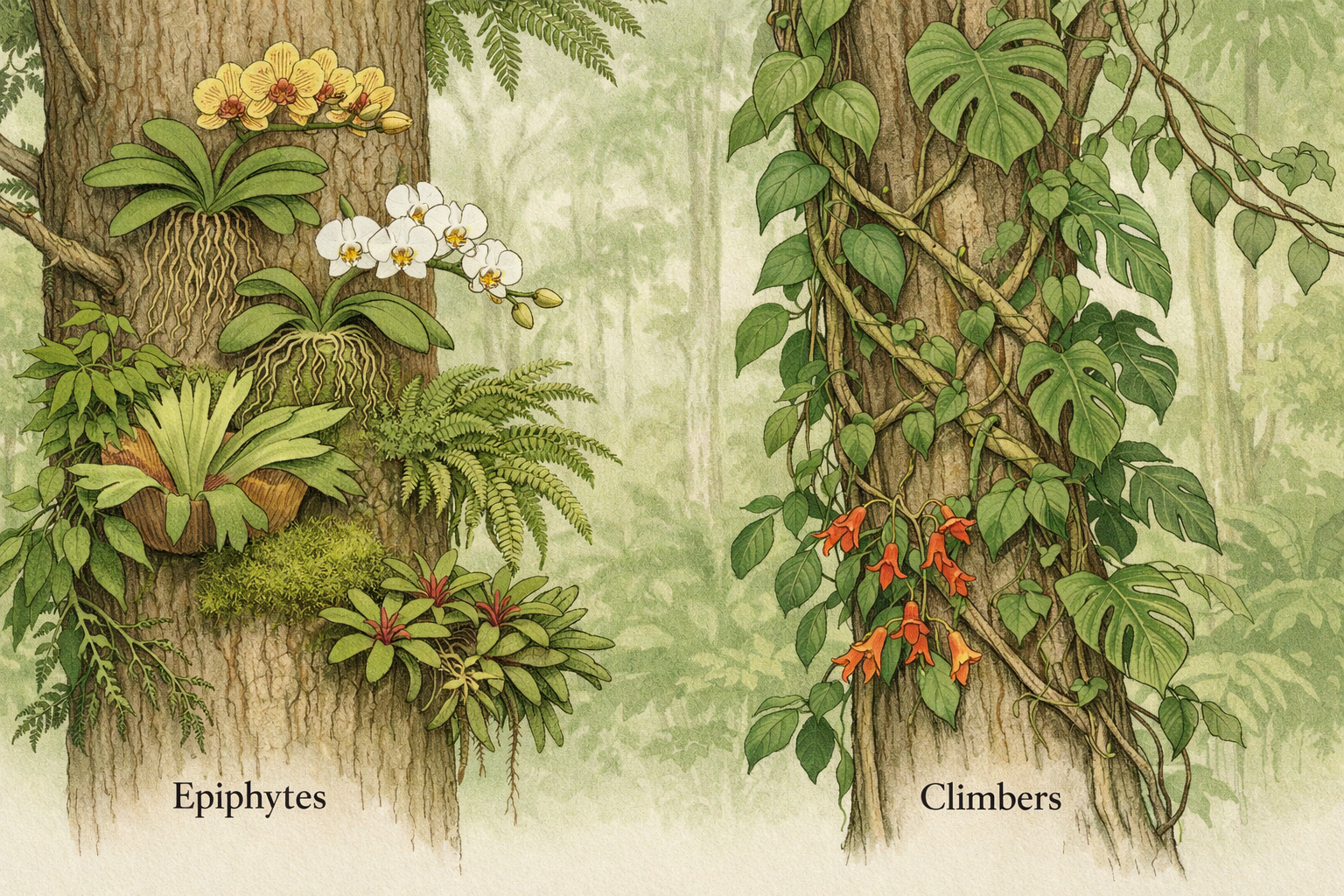
Forest layers are not fixed zones.
They overlap, shift, and change over time as trees grow, fall, and new gaps form.
This constant change shapes which plants can survive in each part of the forest.
Understanding forest structure helps explain many other aspects of plant life in Borneo. You may next explore:
→ Light, Shade & Growth Strategies
→ Disturbance, Edges & Pioneer Plants