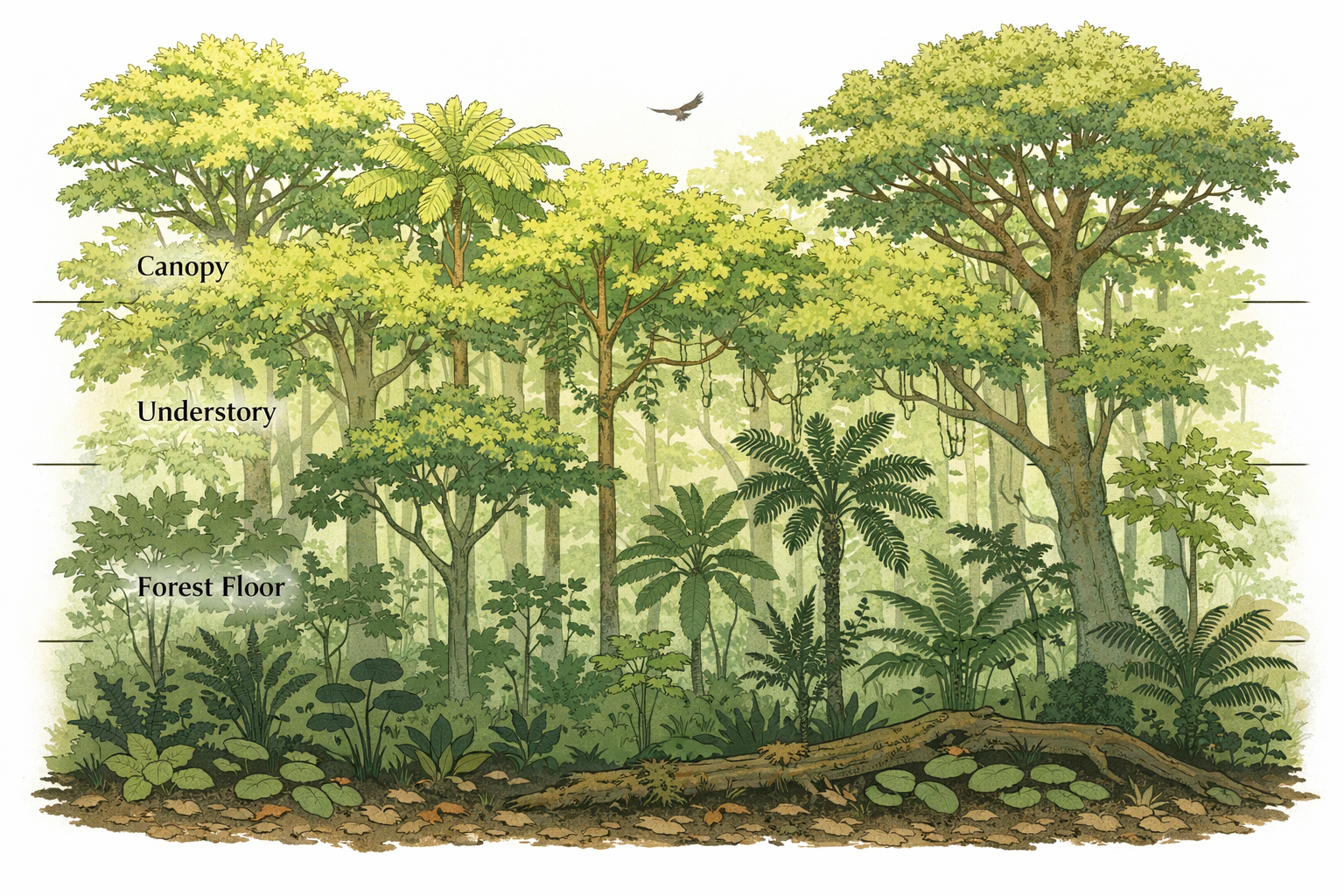
Sunlight decreases sharply from the canopy to the forest floor. Plants growing at different heights experience very different light environments, shaping how they grow and compete.
How plants adapt to different light environments in tropical forests
Light is one of the most important factors shaping plant life in tropical forests. Although sunlight is abundant in the tropics, very little of it reaches the forest floor.
In Borneo, plants experience a wide range of light conditions, from intense, direct sunlight in open areas to deep, persistent shade beneath the canopy. Different plants survive by adopting different growth strategies.
These strategies are expressed through leaf size, growth speed, plant height, and the timing of growth and reproduction.
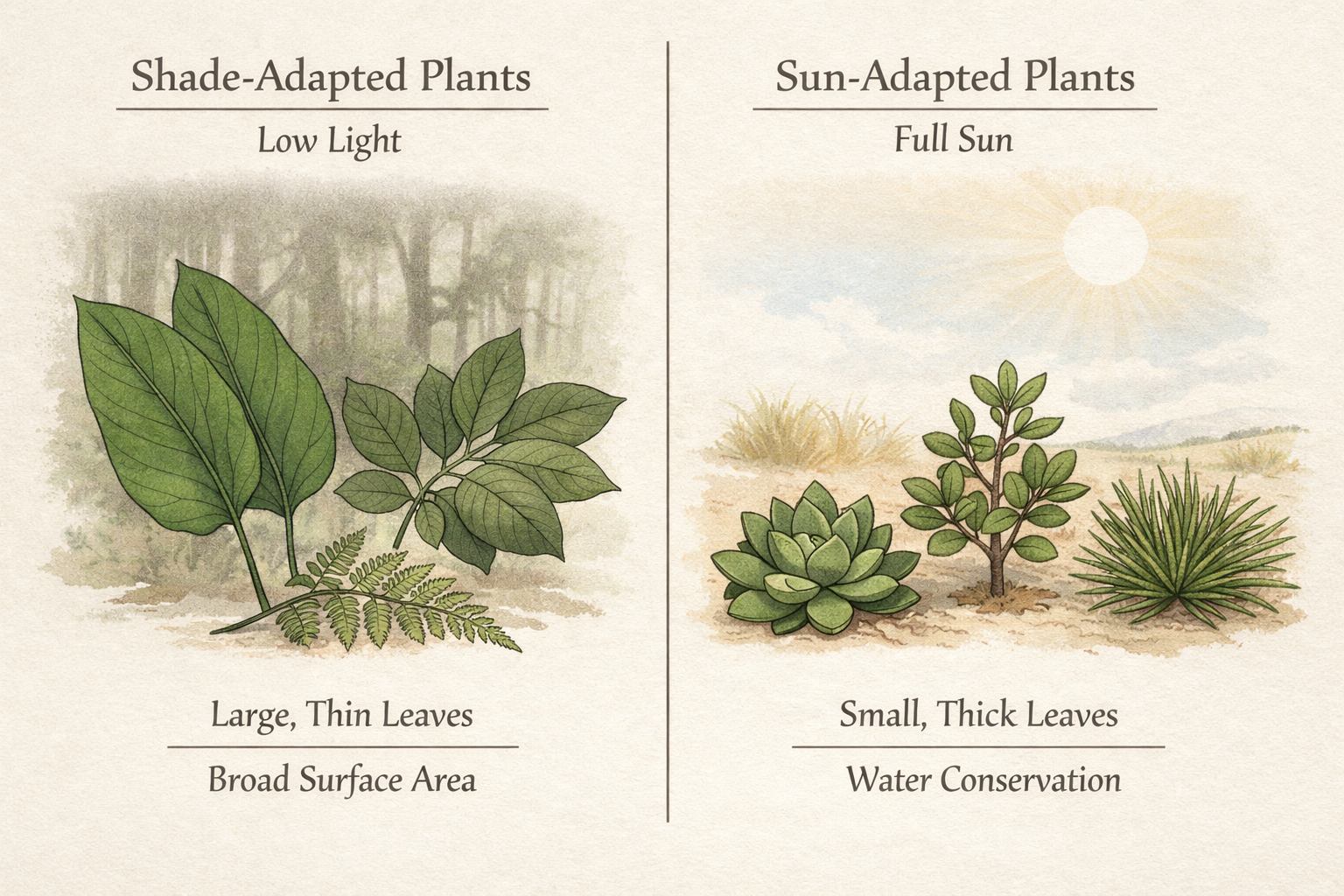
Plants growing in open areas, forest gaps, and canopy edges receive strong sunlight for much of the day.
These plants often grow quickly, have smaller or thicker leaves, and invest in rapid height gain or branching to outcompete neighbours.
Many plants spend most or all of their lives in low-light environments beneath the canopy. They grow slowly and efficiently, conserving energy rather than racing upward.
Large, thin leaves help capture scattered light, while slow growth reduces the cost of living in shade.
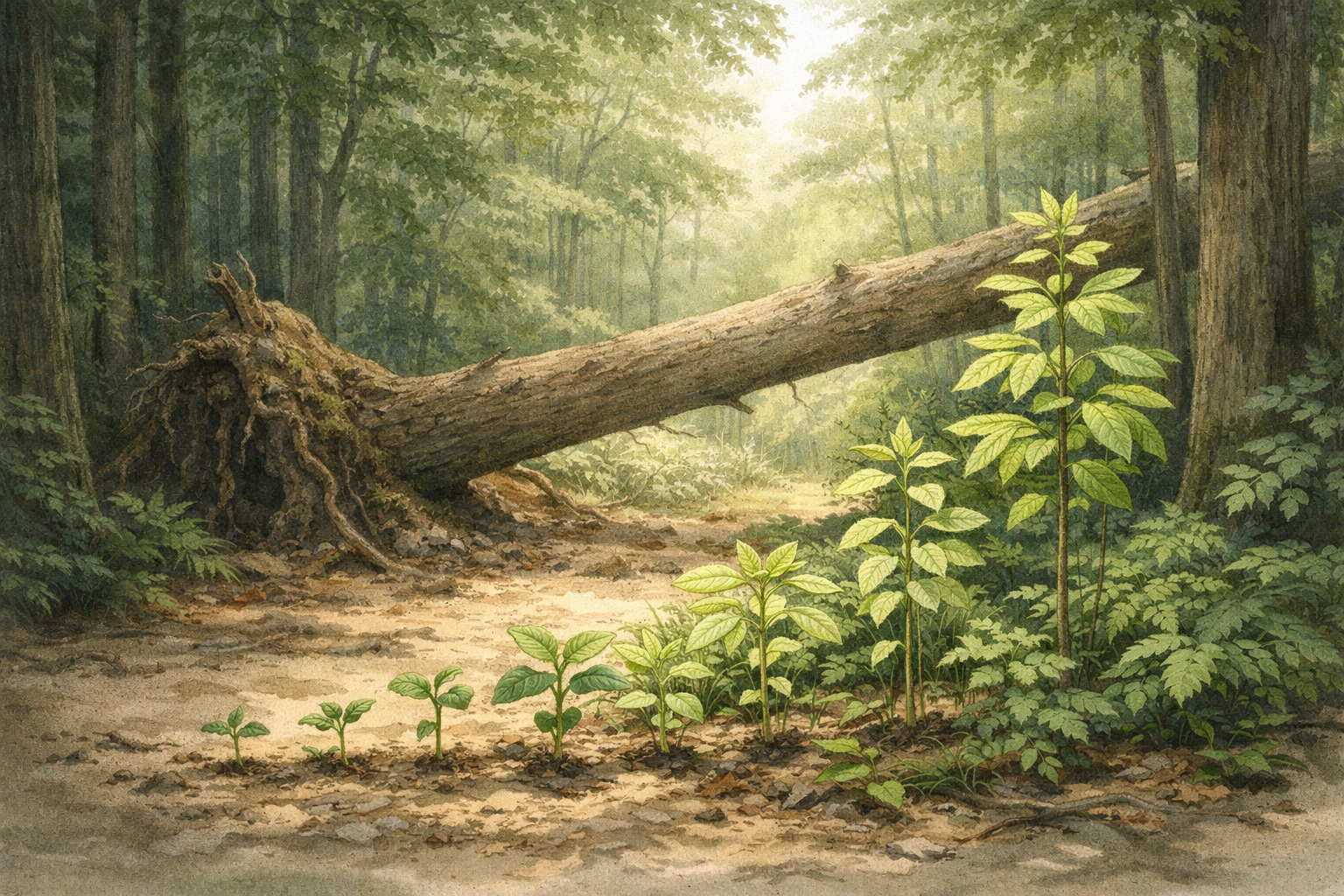
Some plants are adapted to survive in shade when young, but grow rapidly when light conditions improve.
These plants are common in forests where tree falls and gaps create temporary windows of opportunity.
Light conditions are not constant.
Daily movement of the sun, seasonal weather,
and changes in forest structure all influence how much light reaches a plant.
Growth strategies must balance opportunity with risk.
Understanding light and shade helps explain many other plant strategies. You may next explore:
→ Water, Soil & Survival Strategies
→ Disturbance, Edges & Pioneer Plants
Sunday, 25 January, 2026 11:13:33 AM