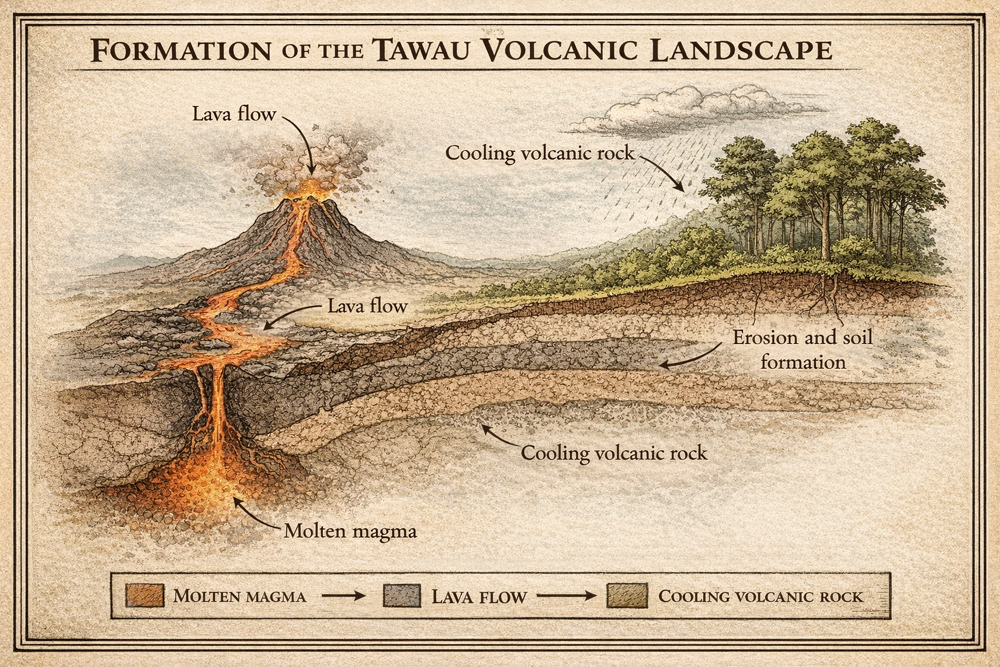
1. Land & Geology
Tawau is more than a town at the eastern edge of Sabah. It is a meeting point of land and sea, volcano and forest, people and memory. Yet much of Tawau's story is scattered, under‑documented, or slowly fading from public awareness.
Understanding Tawau was created to gather these stories, knowledge, and places into one clear, educational series — written for students, teachers, local communities, and curious readers who want to truly understand Tawau beyond surface impressions.
This series treats Tawau not as a tourist product, but as a living landscape shaped by nature, culture, and history.
Understanding Tawau is a structured knowledge series that documents Tawau through six interconnected pillars. Each pillar explores a different dimension of Tawau, while together they form a complete picture of who we are, where we come from, and why this place matters.
The series is:
Tawau’s story begins with fire. Long before plantations and markets, volcanoes shaped this land. Mount Magdalena, Mount Lucia, and Mount Maria in Tawau Hills Park are silent now, but their eruptions carved the soil, rivers, and coastlines. Unlike Kundasang’s granite highlands or Sandakan’s limestone caves, Tawau’s foundation is volcanic — fertile, dark, and alive.
Walk to Balung Cocos and you’ll find something extraordinary: columnar basalt formations, hexagonal pillars of cooled lava. These are rare in Southeast Asia, more often seen in Iceland or Japan. They stand like nature’s architecture, reminding us that Tawau’s land is not ordinary.
Did You Know? Tawau’s volcanic soils made it Malaysia’s “Cocoa Capital” in the 1980s. The richness of the earth gave Tawau cocoa beans a flavor distinct from other regions.
Uniqueness: Tawau is the only place in Sabah where volcanic geology defines both its landscape and livelihoods.
Key themes include:
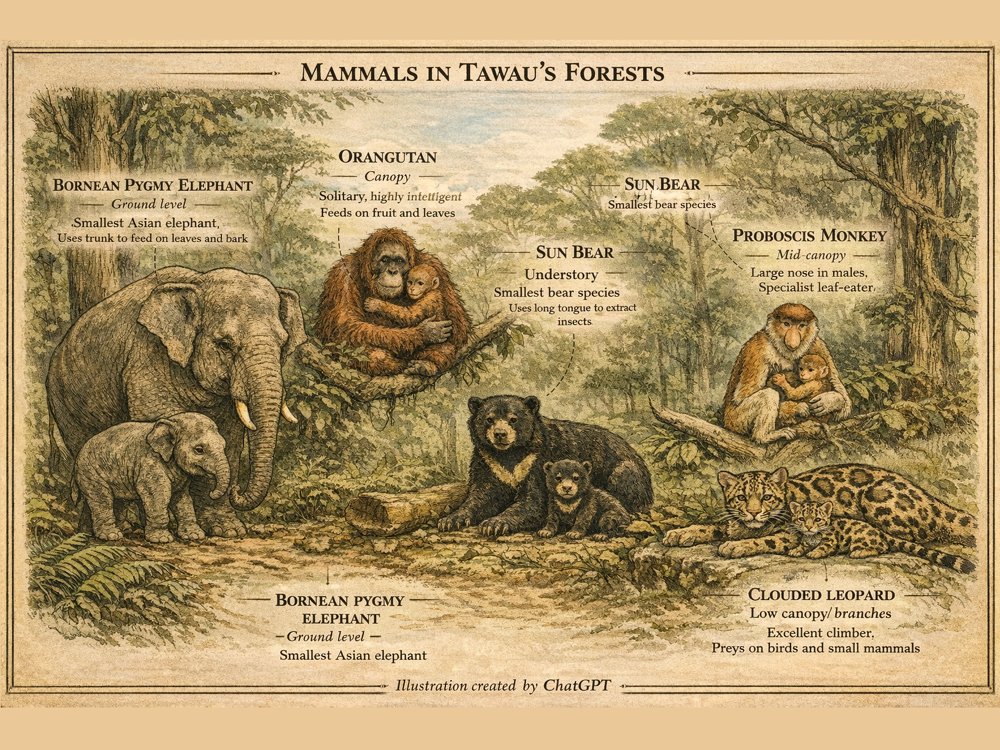
Step into Tawau Hills Park and you enter a cathedral of trees. Towering Shorea species rise over 80 meters, some of the tallest tropical trees in the world. The forest hums with hornbills, gibbons, and leaf monkeys. Unlike Kinabalu Park, which is famed for alpine plants, Tawau’s forests are lowland rainforests — dense, humid, and volcanic-born.
Mangroves along Cowie Bay protect the coast, filtering tides and sheltering crabs and prawns. Rivers flow from volcanic slopes, feeding fertile plains where wildlife and people coexist.
Did You Know? Tawau Hills Park is home to giant trees that rival the tallest redwoods in California.
Uniqueness: Tawau’s biodiversity grows on volcanic soils, making its ecosystem distinct from sandstone forests in Danum Valley or coral islands in Semporna.
Key themes include:
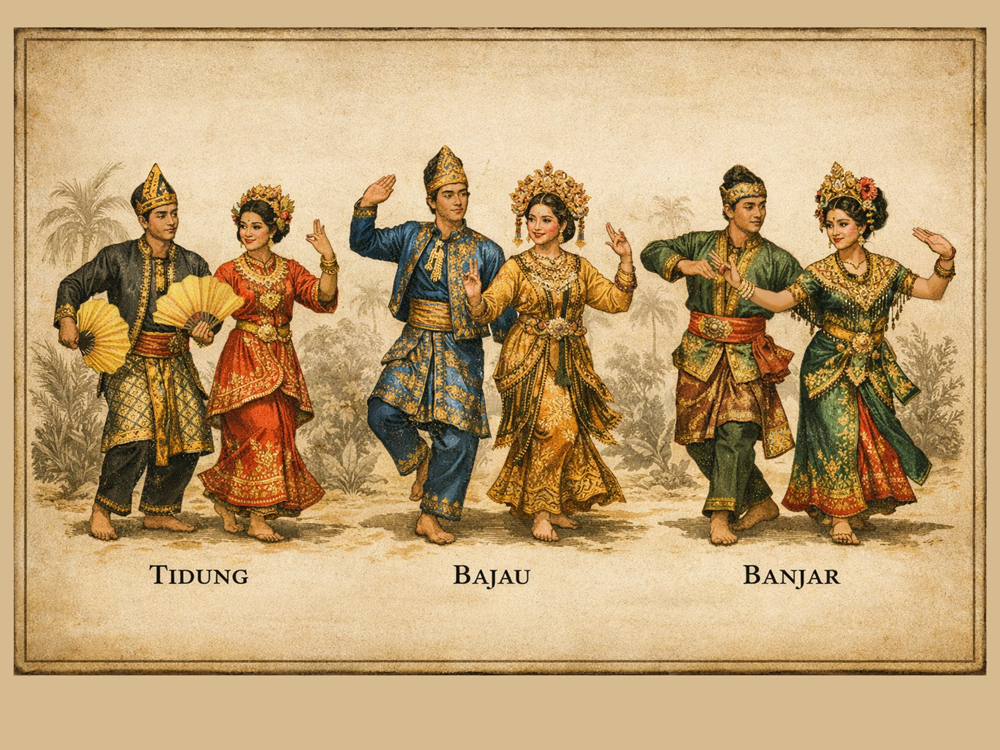
Tawau is a town of arrivals. The Tidung trace their roots to Kalimantan, the Bajau Laut sail in from the Sulu Sea, Banjar farmers brought rice traditions, and Chinese Hakka merchants built temples and shops. Unlike Kota Kinabalu, which grew as a colonial administrative hub, Tawau grew as a frontier town — a meeting place of migrants, traders, and indigenous groups.
Festivals here are layered: Tidung weddings with their colorful rituals, Bajau boat-making traditions, Banjar rice harvest songs, and Chinese temple celebrations. Languages mix — Malay, Bajau dialects, Hakka Chinese, and Indonesian influences.
Did You Know? Tawau’s dialect of Malay carries Indonesian tones, reflecting its cross-border ties.
Uniqueness: Tawau’s cultural blend is more Indonesian-influenced than other Sabah towns, making it a true borderland culture.
Key themes include:
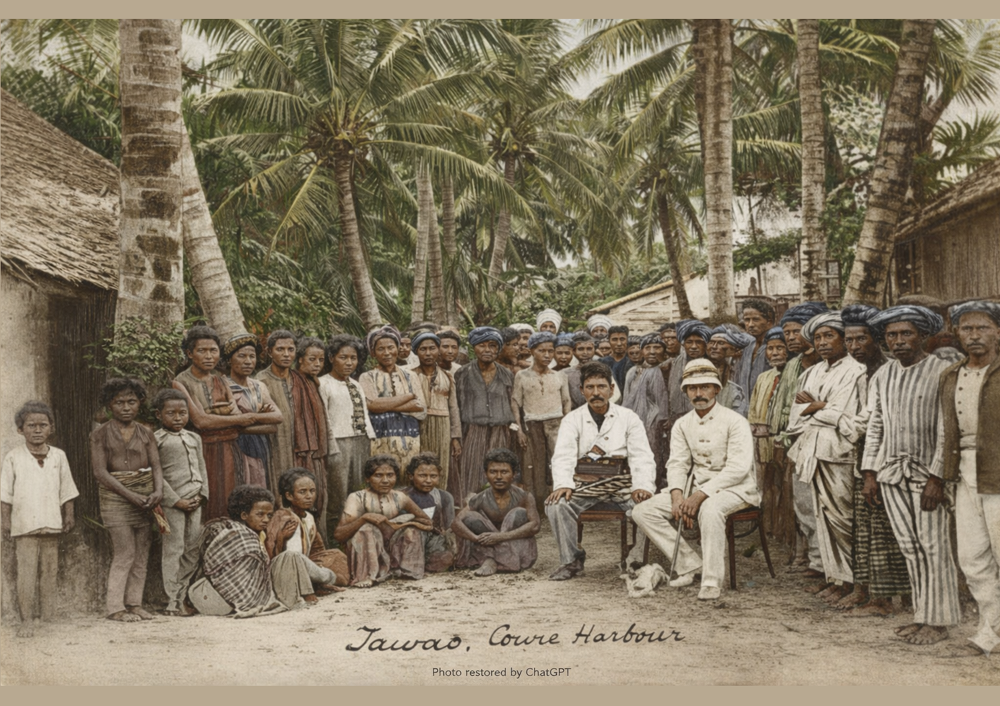
Tawau’s history is not written in grand monuments but whispered in fragments. Before colonial times, it was part of Nusantara’s maritime trade routes, linking Borneo with the Sulu archipelago. The British North Borneo Company later carved plantations into its volcanic soil, turning Tawau into a port town.
During World War II, Japanese forces occupied Tawau. Families still recall stories of hardship, resilience, and quiet resistance. Unlike Sandakan, remembered for its death marches, Tawau’s wartime memory is preserved in oral histories and forgotten sites.
Did You Know? Tawau’s name may come from the Tidung word tawao, meaning “long water,” referring to its rivers.
Uniqueness: Tawau’s past is less documented, making oral storytelling crucial. Its memory lives in elders’ voices, not in museums.
Key themes include:
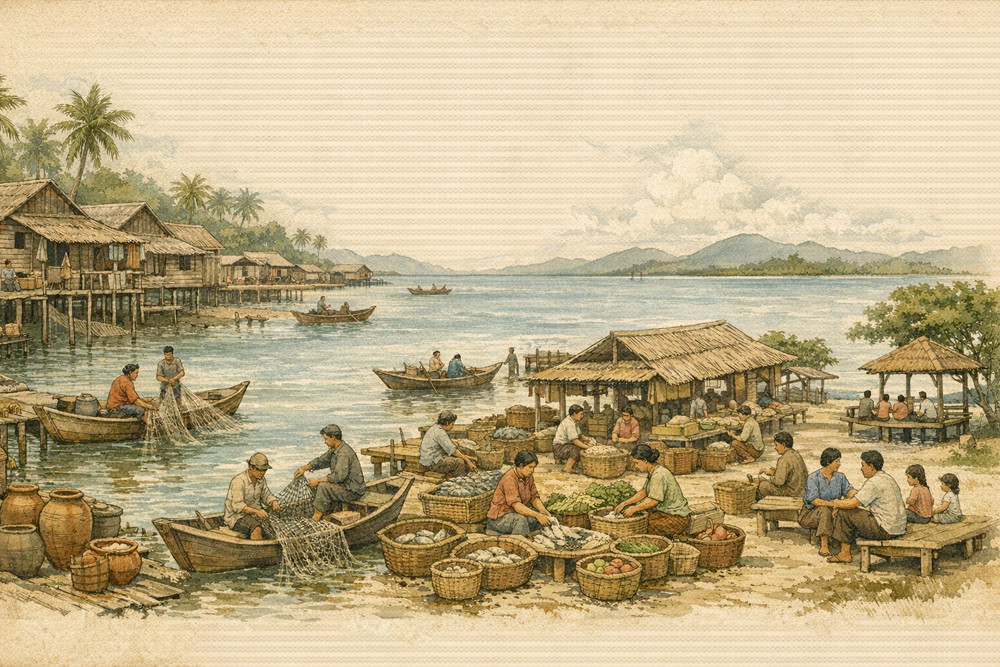
To know Tawau, visit Tanjung Market at dawn. Fishermen unload prawns, women arrange dried anchovies, and the air smells of sea and spice. Cocoa once made Tawau the “Cocoa Capital of Malaysia,” and its legacy lingers in local drinks and desserts.
Unlike urban Kota Kinabalu, Tawau’s rhythm is slower, rooted in villages, plantations, and markets. Food culture here is unmatched: fresh prawns, crabs, and fish are famed across Malaysia. Indonesian-style dishes, Filipino influences, and Chinese flavors blend into Tawau’s kitchens.
Did You Know? Tanjung Market is one of the largest in Malaysia, with hundreds of stalls selling seafood and produce.
Uniqueness: Tawau’s food culture is a cross-border fusion, reflecting its position as a frontier town.
Key themes include:
Visitors who come to Tawau expecting a tourist town are surprised. Tawau is not polished like Kota Kinabalu or Semporna’s dive resorts. It is raw, authentic, and best understood through respectful learning.
Tawau Hills Park teaches geology and ecology. Balung River shows sustainable farming. Tidung villages share oral traditions. Unlike other towns marketed for leisure, Tawau offers journeys of understanding.
Did You Know? Tawau’s Shan Shui Golf Resort is built on volcanic terrain, with hot springs nearby.
Uniqueness: Tawau offers “educational travel” rather than mass tourism. It is a place where you learn — about volcanoes, forests, cultures, and histories — rather than consume.
Key themes include:
Google Maps
You may read Understanding Tawau in any order, but beginners are encouraged to start with this overview page before exploring individual topics.
Each article follows a clear structure:
This makes the series suitable for:
Tawau's heritage — natural and cultural — is fragile. Knowledge that is not recorded can be lost within a generation. Understanding Tawau exists to document, protect, and share this knowledge responsibly.
This series is an invitation: to learn, to remember, and to care for Tawau as a shared heritage.
Understanding Tawau is a living series and will continue to grow as more stories, places, and voices are added.
31/01/2026 11:53:35 AM