Introduction
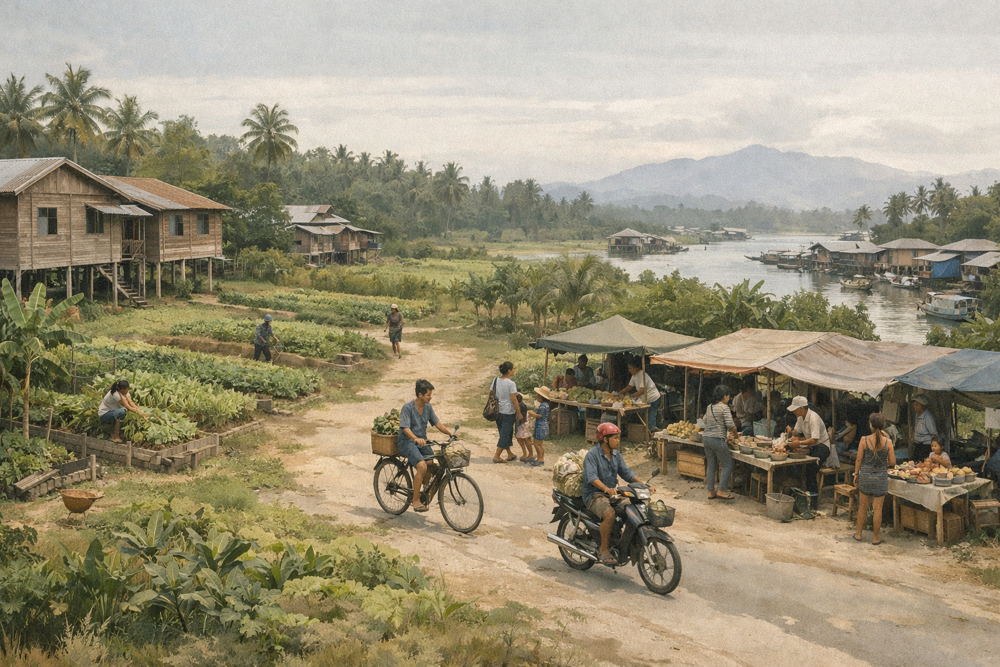
Food and markets in Tawau reveal how daily life is sustained through movement, timing, and shared spaces. From coastal waters and farming edges to plantation estates and urban centres, food connects livelihoods to households through repeated routines of exchange.
Rather than functioning only as economic infrastructure, markets operate as everyday social environments. They are shaped by arrival times, transport routes, informal interactions, and regular presence. Through food, Tawau's diverse living environments remain closely connected.
This page examines food systems not as isolated activities, but as flows - linking production, movement, exchange, and social life across land and sea.

1. Coastal Supply and Marine Exchange
Along Tawau's coast, fishing livelihoods feed directly into local food systems. Daily routines begin before sunrise, shaped by tides, weather, and access to the sea. Boats return with fresh catch that moves rapidly from water to shore, entering markets and households often within hours.
Jetties, landing points, and informal selling areas function as transitional spaces where work, exchange, and social contact overlap. Fish is sorted, negotiated, and distributed through familiar routines rather than formal schedules.
These marine exchanges demonstrate how food systems in Tawau remain closely tied to environmental rhythms, with timing and proximity shaping daily life as much as price or volume.

2. Farming Produce at the Settlement Edge
Agricultural produce commonly enters Tawau's food system through settlement edges, where homes and cultivated land exist side by side. Small gardens, orchards, and plots supply vegetables, fruits, and other crops for both household use and local exchange.
Movement from field to market is often short and frequent. Produce may be sold at nearby stalls, shared through informal networks, or transported to town markets. This close relationship between production and exchange reinforces the role of settlement edges as blended landscapes.
Food circulation here is sustained through familiarity, proximity, and repeated movement rather than large-scale distribution systems.

3. Estate-Based Food Access in Plantation Areas
Within oil palm plantation landscapes, access to food is shaped by estate layouts and work routines. Housing lines, access roads, and transport schedules influence when and how food is obtained.
Small shops, mobile vendors, and scheduled trips to nearby towns supply daily necessities. Food purchasing and preparation are organised around work shifts, shared facilities, and transport availability rather than open market choice.
These systems show how food access adapts to planned landscapes, where movement routes and labour schedules become the primary structuring forces of everyday sustenance.

4. Urban Markets as Convergence Points
Urban markets in Tawau function as convergence points for food from coastal, farming, and plantation systems. Wet markets, street stalls, and food courts bring together diverse products and communities within shared spaces of exchange.
These markets operate through repeated routines - regular vendors, familiar customers, and predictable flows of goods. Beyond buying and selling, they support social interaction, observation, and informal communication.
As daily gathering points, urban markets play a central role in maintaining social visibility and connection across Tawau's varied living environments.

5. Food, Routine, and Social Life
Food structures daily time as much as it provides nourishment. Early-morning market visits, midday preparation, evening meals, and shared eating create predictable rhythms that organise movement and interaction.
Markets and food spaces allow repeated encounters - greetings, brief conversations, recognition - that quietly sustain social relationships. Through these routines, food becomes a medium through which community life is reinforced rather than simply consumed.
Festivals and special events build upon these same systems, intensifying familiar uses of food and shared space rather than introducing entirely new practices.

Understanding Food & Markets as a System
Food and markets in Tawau form a connective system linking livelihoods, environments, and social life. Marine catches, farm produce, estate-based supply, and urban distribution operate together through daily movement and routine exchange.
Rather than existing as separate domains, these food systems demonstrate how community life in Tawau is sustained through proximity, timing, and repeated use of shared space. Through food, diverse landscapes remain connected, and daily life continues as a living, adaptive system.