Village Life
Daily life in Tawau villages follows natural rhythms shaped by space, movement, environment, and shared routines. This page introduces how village life is organised before exploring work, food systems, and social activities.
1. A Tawau Village at a Glance
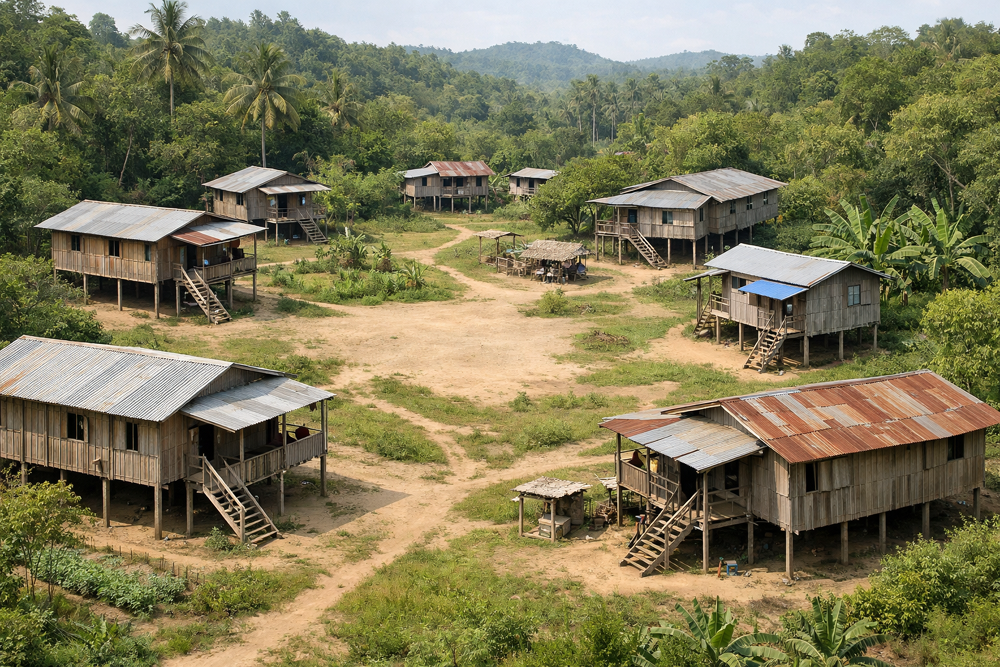
Tawau villages are usually made up of raised wooden houses, informal paths, and shared open areas. The layout is not planned like a city, but grows naturally over time as families settle and daily needs change.
2. Houses and Living Spaces
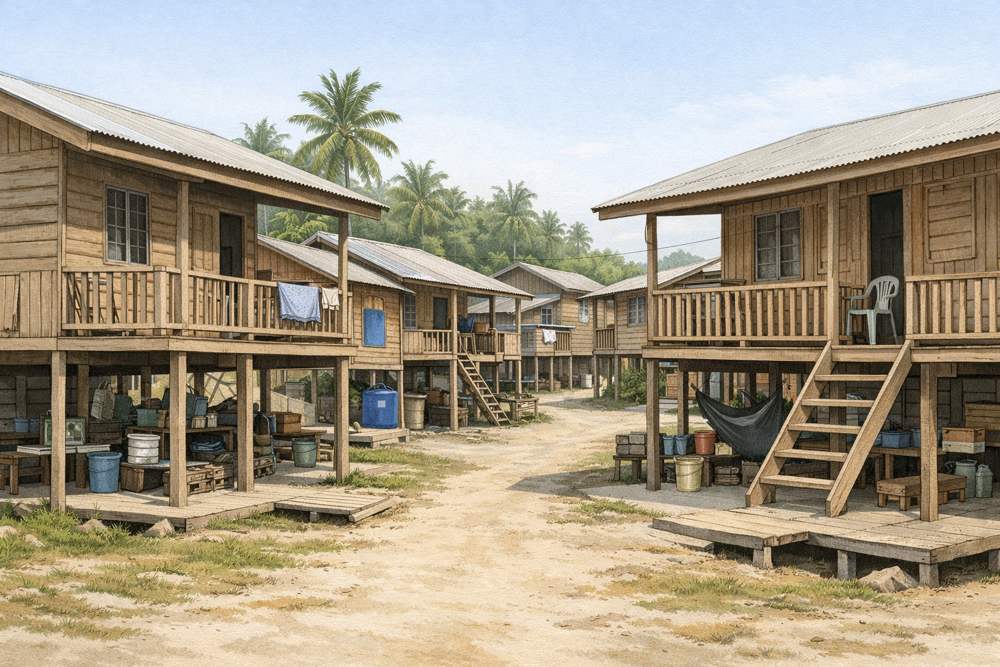
Most houses are built on stilts. The space below the house is often used for resting, storage, small work, or keeping animals. Verandas act as semi-public spaces where people sit, talk, and observe village life.
3. Daily Rhythm: Morning to Evening
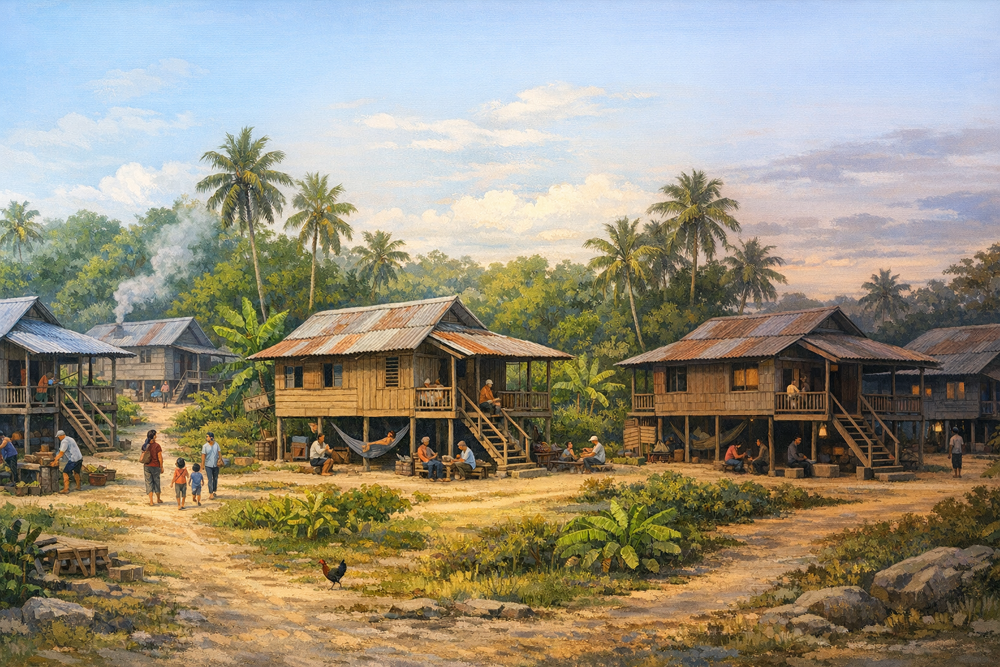
Village life changes throughout the day. Mornings are active with school, work, and chores. Afternoons are slower and warmer. Evenings are quieter, focused on family, rest, and nearby social interaction.
4. Movement and Village Paths
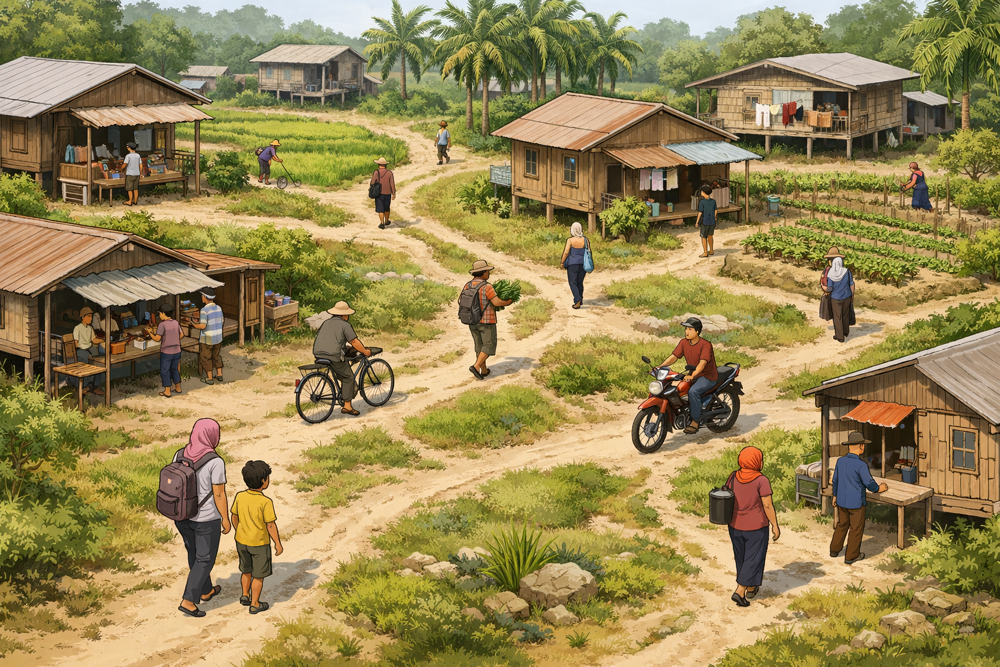
Movement in villages mainly happens on foot. Paths appear naturally where people walk most often. Motorbikes and bicycles are used, but walking remains central to daily life.
5. Shared Daily Functions
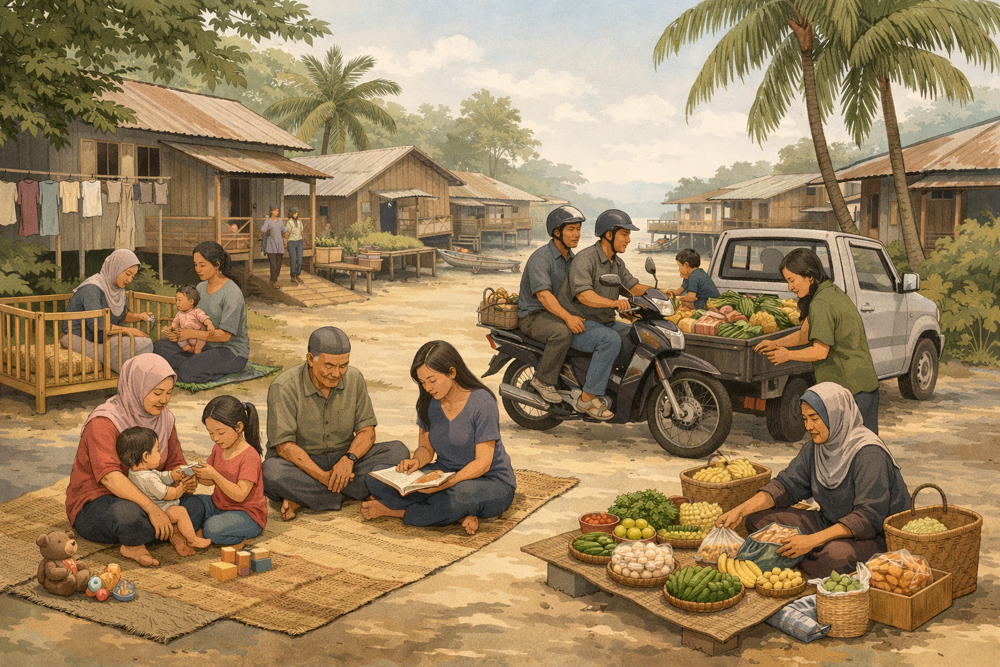
Many important activities happen informally. Childcare, teaching, helping neighbours, and sharing transport are part of everyday village life, rather than separate services.
6. Living Close to the Land
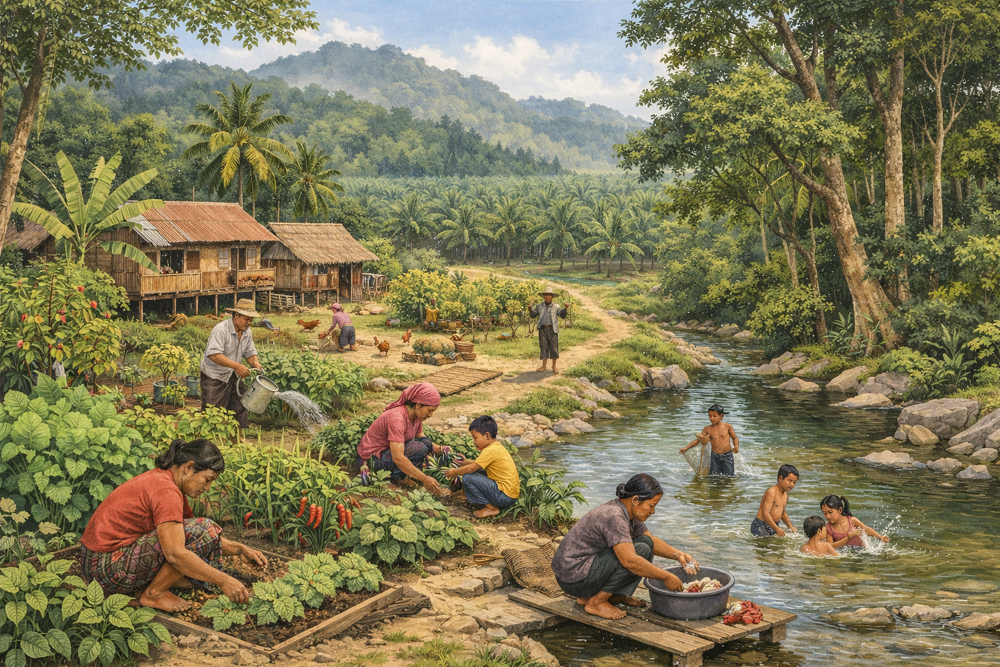
Homes are usually close to gardens, plantations, or forest edges. The environment shapes daily routines, food sources, and movement.