Oil Palm Plantation Communities
In parts of Tawau, some communities are organised around oil palm plantations. This page introduces how daily life is structured in plantation communities, focusing on space, movement, time, and shared facilities.
1. Plantation Communities at a Glance
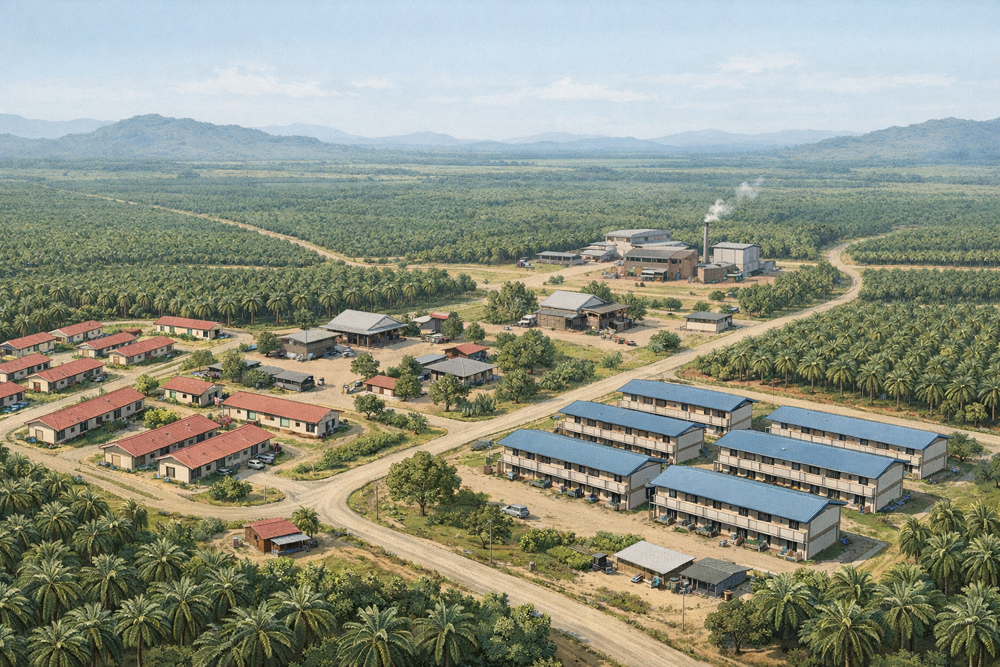
Plantation communities are usually located within or beside large oil palm estates. Housing, roads, and shared facilities are arranged in relation to plantation operations and land use.
2. Housing and Living Arrangements
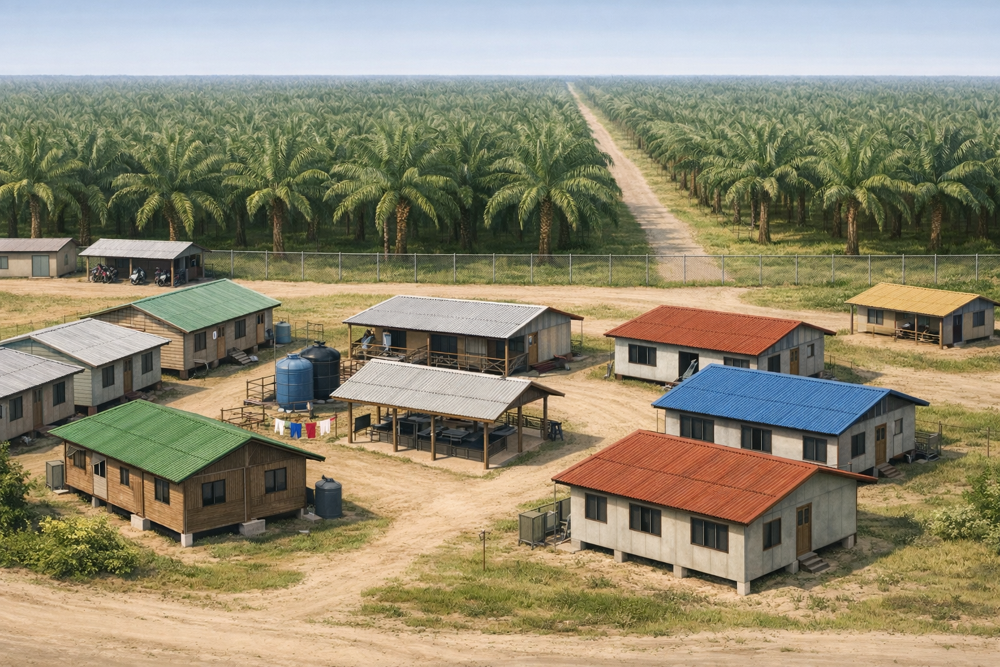
Housing in plantation communities is typically provided near work areas. Buildings are arranged for practicality and proximity, with shared facilities supporting daily needs.
3. Daily Rhythm and Time Structure
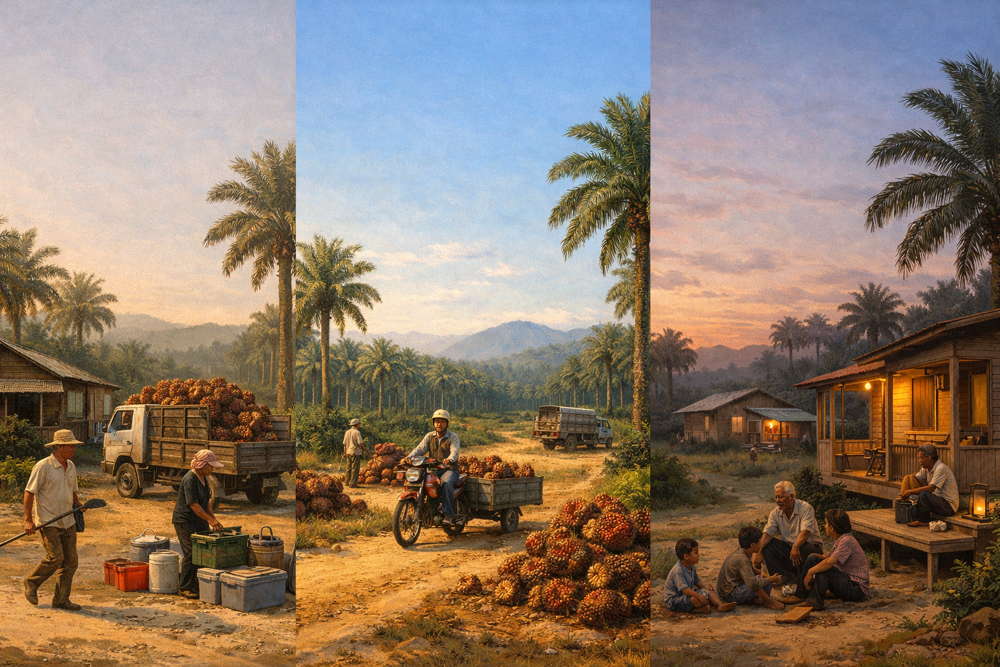
Daily life in plantation communities often follows regular work schedules. Activity levels change throughout the day, influenced by working hours, climate, and rest time.
4. Movement and Transport
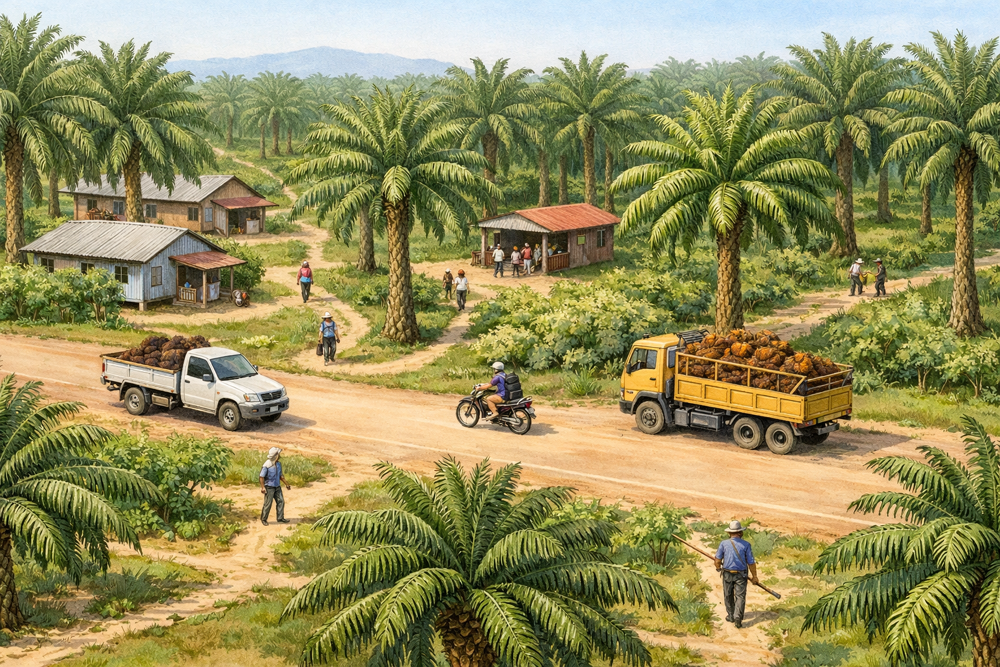
Movement within plantation communities commonly follows estate roads and planned paths. Walking, shared transport, and work-related vehicles are part of everyday circulation.
5. Shared Spaces and Daily Functions
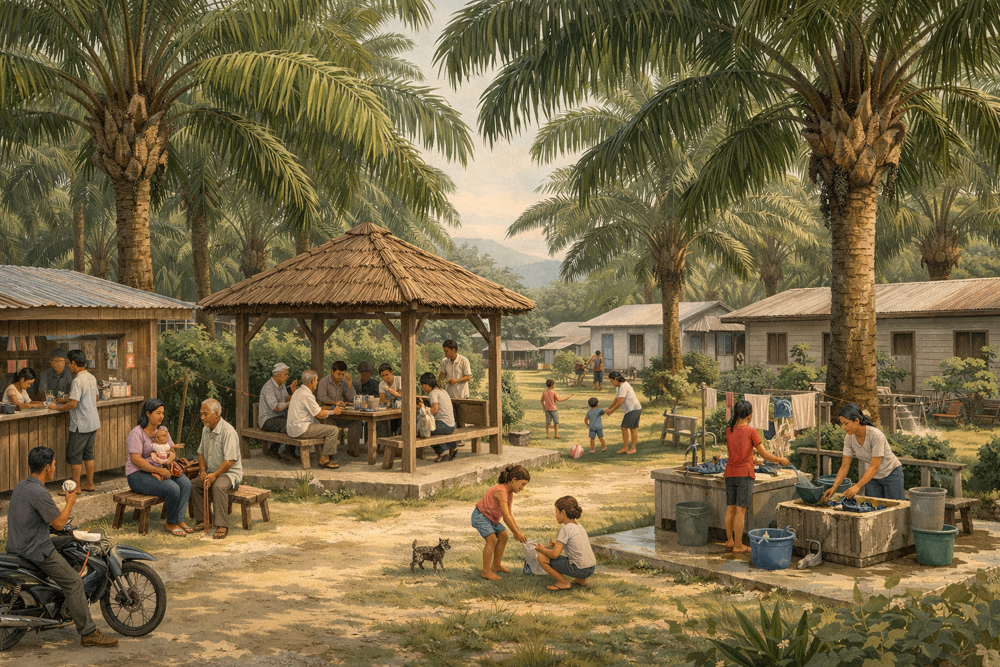
Community life includes shared spaces for daily interaction, rest, small-scale trade, and essential services. These spaces support everyday living beyond work.
6. Living Within a Plantation Landscape
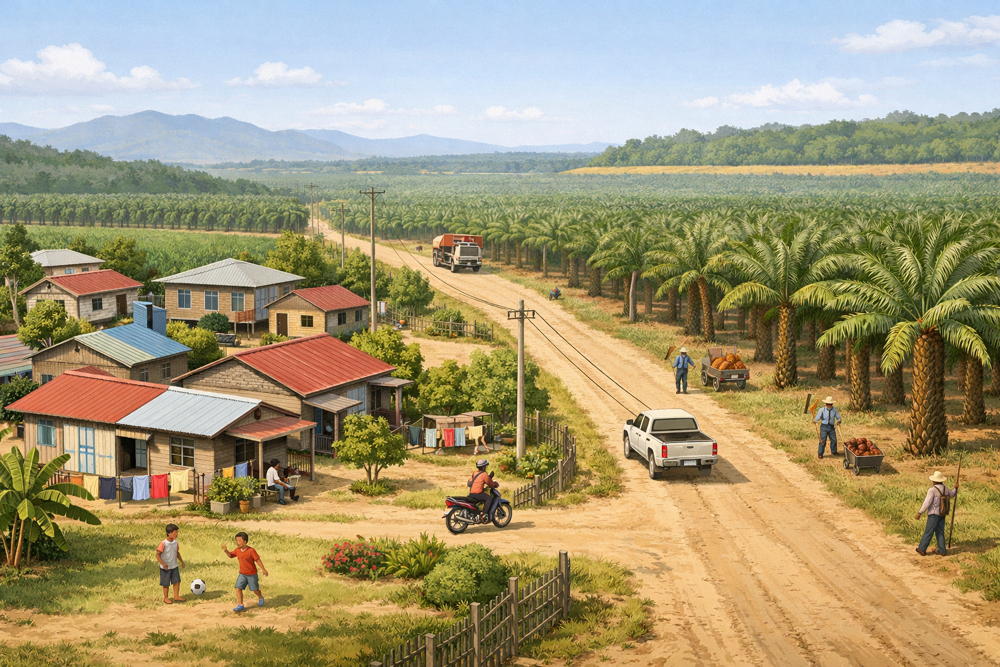
Plantation communities exist within a managed agricultural landscape. The surrounding environment influences movement, views, access to land, and daily routines.