Environmental Conservation in Tawau
How Natural Systems Are Protected and Sustained Over Time
Conservation as an Interconnected System
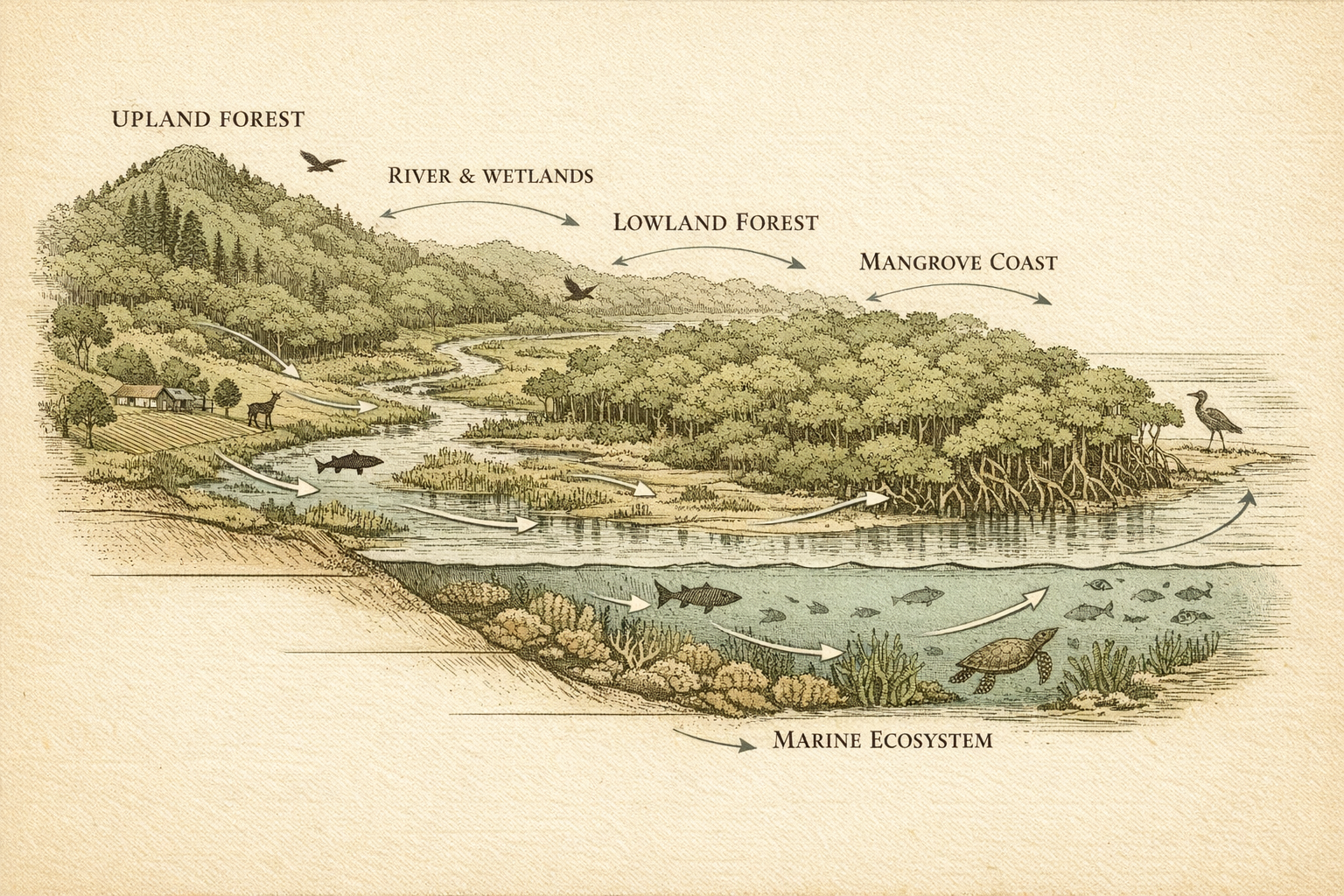
Tawau lies within one of the most biologically rich regions of Southeast Asia. Its forests, rivers, coastlines, and seas form interconnected systems that support wildlife, human communities, and long-term environmental stability.
Conservation in Tawau is not a single action or organisation, but a collection of long-term practices designed to maintain these systems so that natural processes can continue with minimal disruption.
Forest Ecosystems
Regulate water flow, stabilize soils, and provide critical habitats
River Systems
Connect terrestrial and marine environments, transporting nutrients
Coastal Zones
Buffer land from sea, support fisheries, and protect shorelines
Forest and Landscape Protection
In eastern Sabah, forested uplands and river systems play a central role in regulating water flow, stabilizing soils, moderating climate, and providing habitat for a wide range of species. In Tawau, conservation efforts focus on maintaining forest cover, restoring degraded areas, and guiding land use in ways that reduce long-term environmental impact.
These measures help preserve not only wildlife habitats, but also the ecological foundations that support agriculture, clean water, and local livelihoods.
Wildlife Conservation
Tawau is home to many species found only on Borneo, including large mammals, primates, birds, reptiles, and countless invertebrates. Wildlife conservation focuses primarily on protecting habitats rather than individual species.
By maintaining connected forest and coastal environments, conservation systems allow wildlife populations to move, feed, and reproduce within stable ecological conditions.
Marine and Coastal Ecosystems
Coastal ecosystems such as mangroves, seagrass beds, and coral reefs form a natural buffer between land and sea. They protect shorelines, support fisheries, and provide breeding grounds for marine life.
Conservation of these environments in Tawau aims to maintain water quality, ecological balance, and the long-term productivity of coastal systems.
Community and Institutional Collaboration
Environmental conservation in Tawau involves cooperation between local communities, educators, researchers, and governing institutions. Each plays a role in shaping how natural resources are used, studied, and protected.
Maintaining these systems requires not only protected landscapes, but coordinated human decision-making that integrates scientific understanding with local environmental knowledge.
From Conservation Systems to Protected Areas
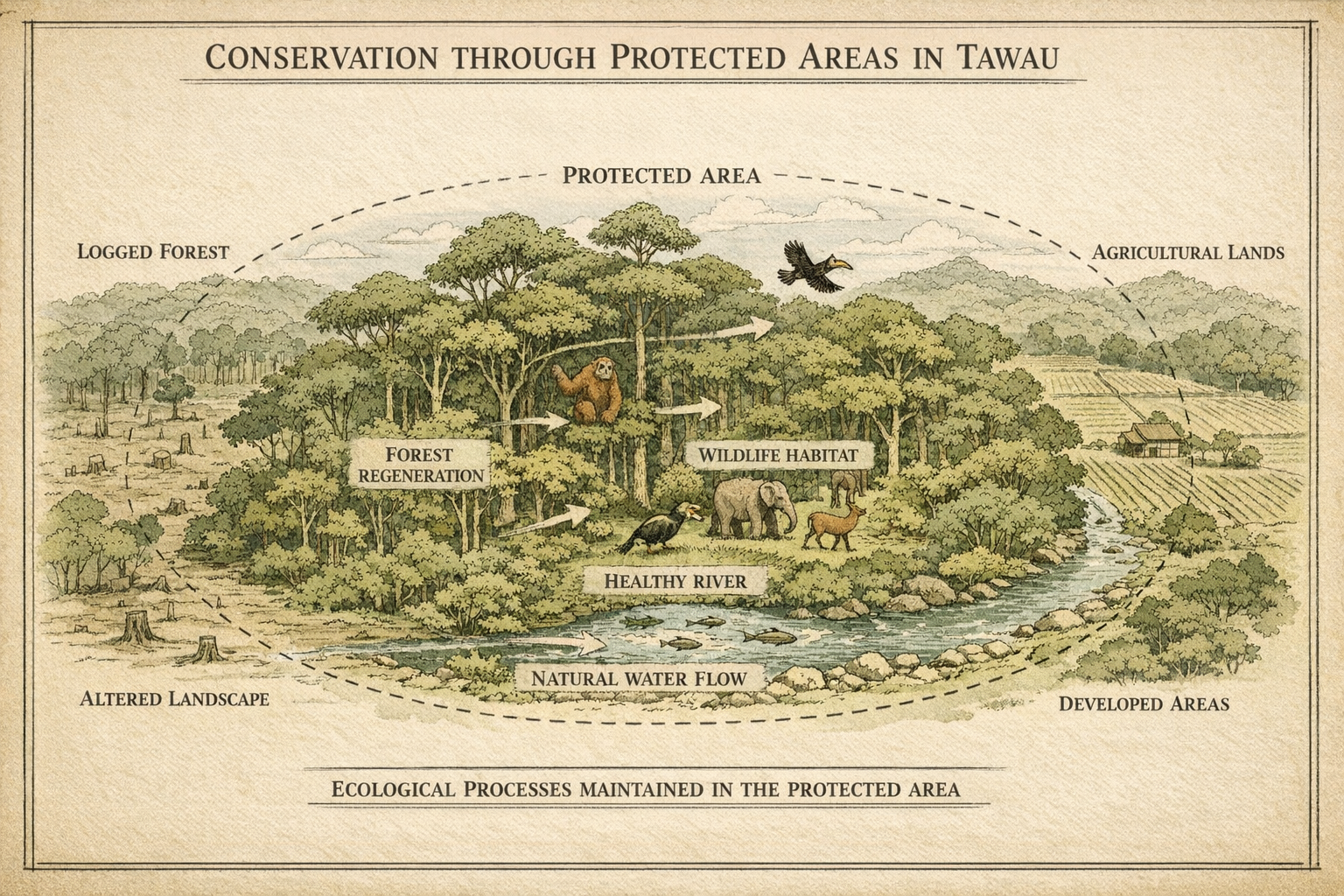
The most visible expression of conservation in Tawau can be seen in its protected areas and parks. These locations provide defined spaces where forests, wildlife, and coastal ecosystems are safeguarded under long-term management.
Protected areas bring together conservation policy, scientific research, and public education, allowing people to experience Tawau's natural heritage while ensuring that ecological systems remain resilient.
To understand how conservation is applied on the ground, the next section explores Tawau's protected areas and parks.
Conservation in Tawau is best understood not as a single effort, but as a network of systems that support the continuity of natural landscapes. Protected areas serve as the physical foundation of these systems, preserving ecological processes for the future.