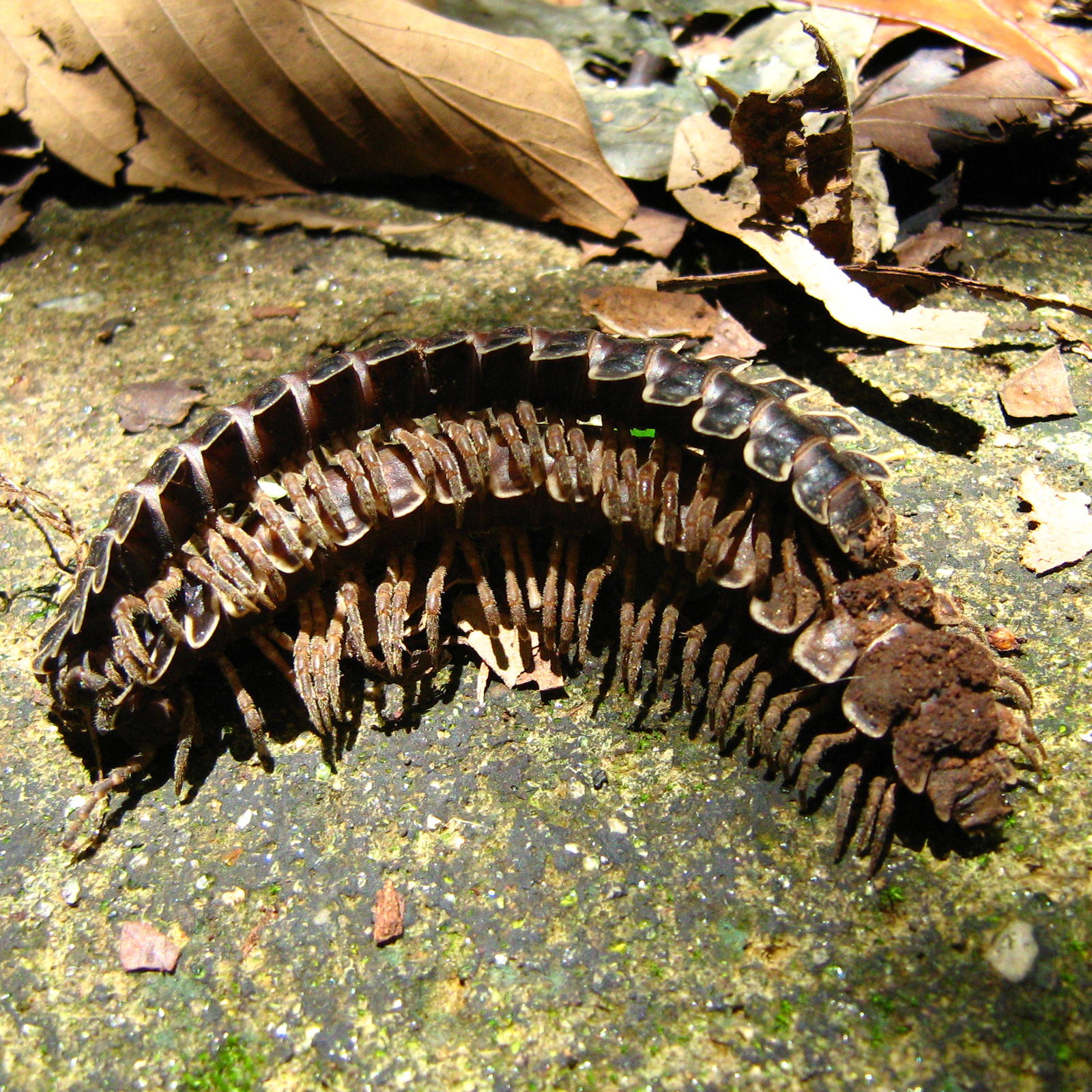
Provisional record, and a correction. These animals were filed on this site as centipedes for many years. They are millipedes. The order is established; family, genus and species are not determined.
Class Diplopoda — the millipedes — order Polydesmida, the flat-backed millipedes. Not insects. Family, genus and species not determined.
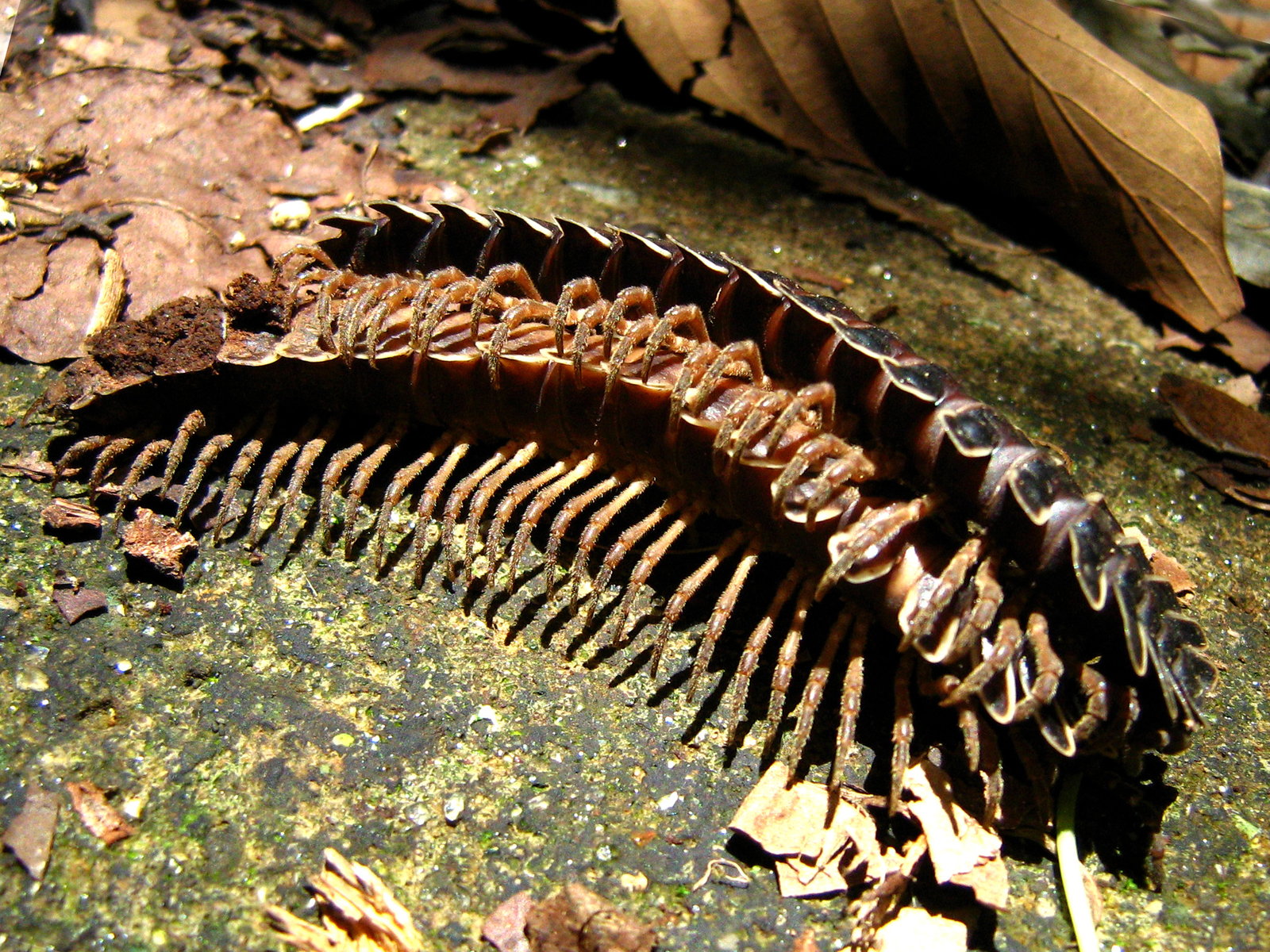
Photographed by Wong Fook Yee at 12:04 on 14 September 2008, on a rock surface on the forest floor inside Bukit Gemok Recreational Forest Park, about 10 km from Tawau town centre and 3 km from Pasar Semarak, Sabah.
A pair, mating: pressed tightly against one another and completely motionless. No other individuals were nearby. Each animal was about 70 mm long, glossy black across the back, with a pale line along the edge of every ring. Four photographs were taken over sixty-four seconds; the animals did not move between them.
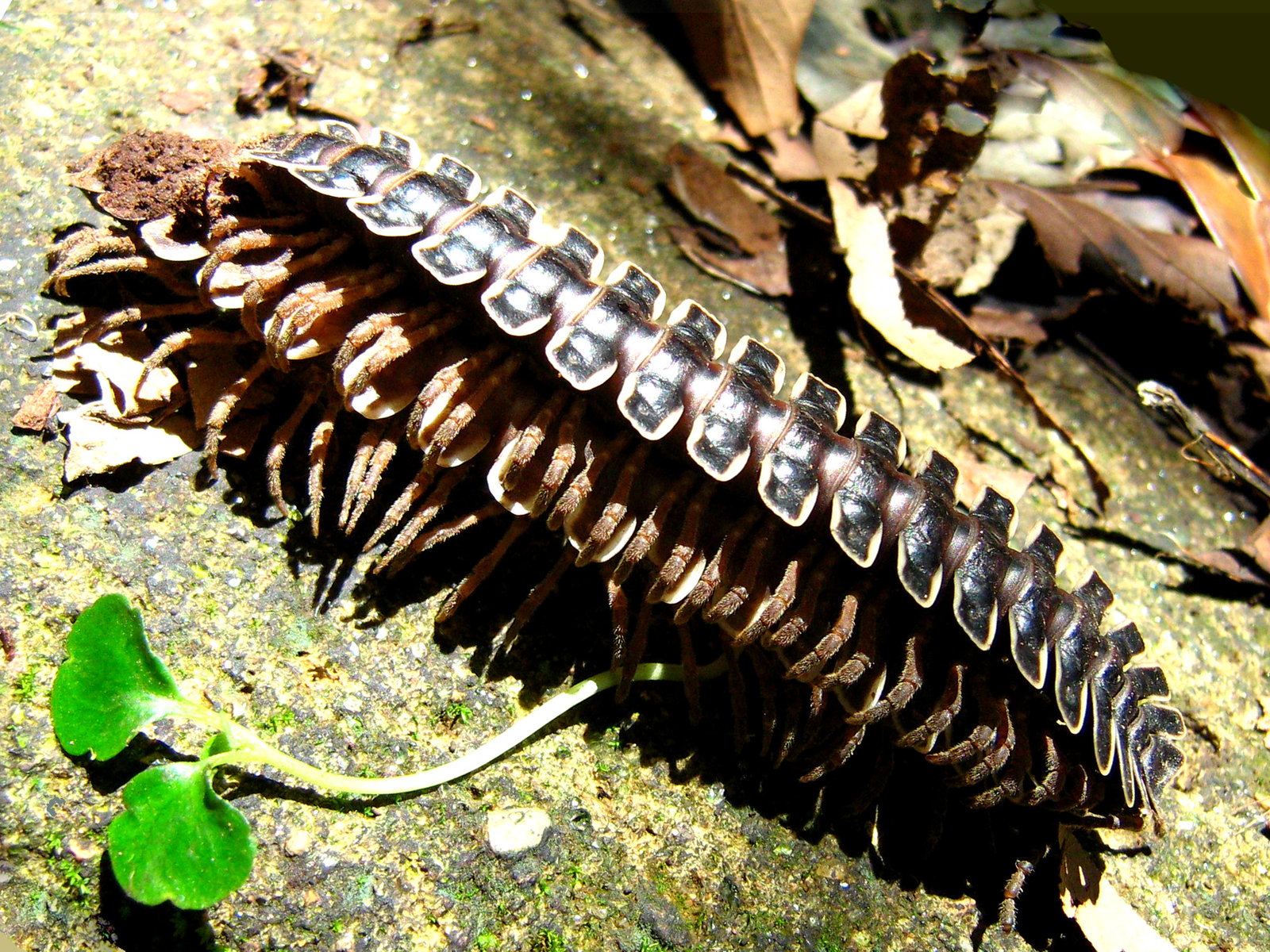
The record on this site said centipede. That was a mistake at the level of class, not species — centipedes and millipedes are separate classes of arthropod, about as closely related to each other as a spider is to a crab.
The photographer's own close-up settles it, and it is worth looking at:
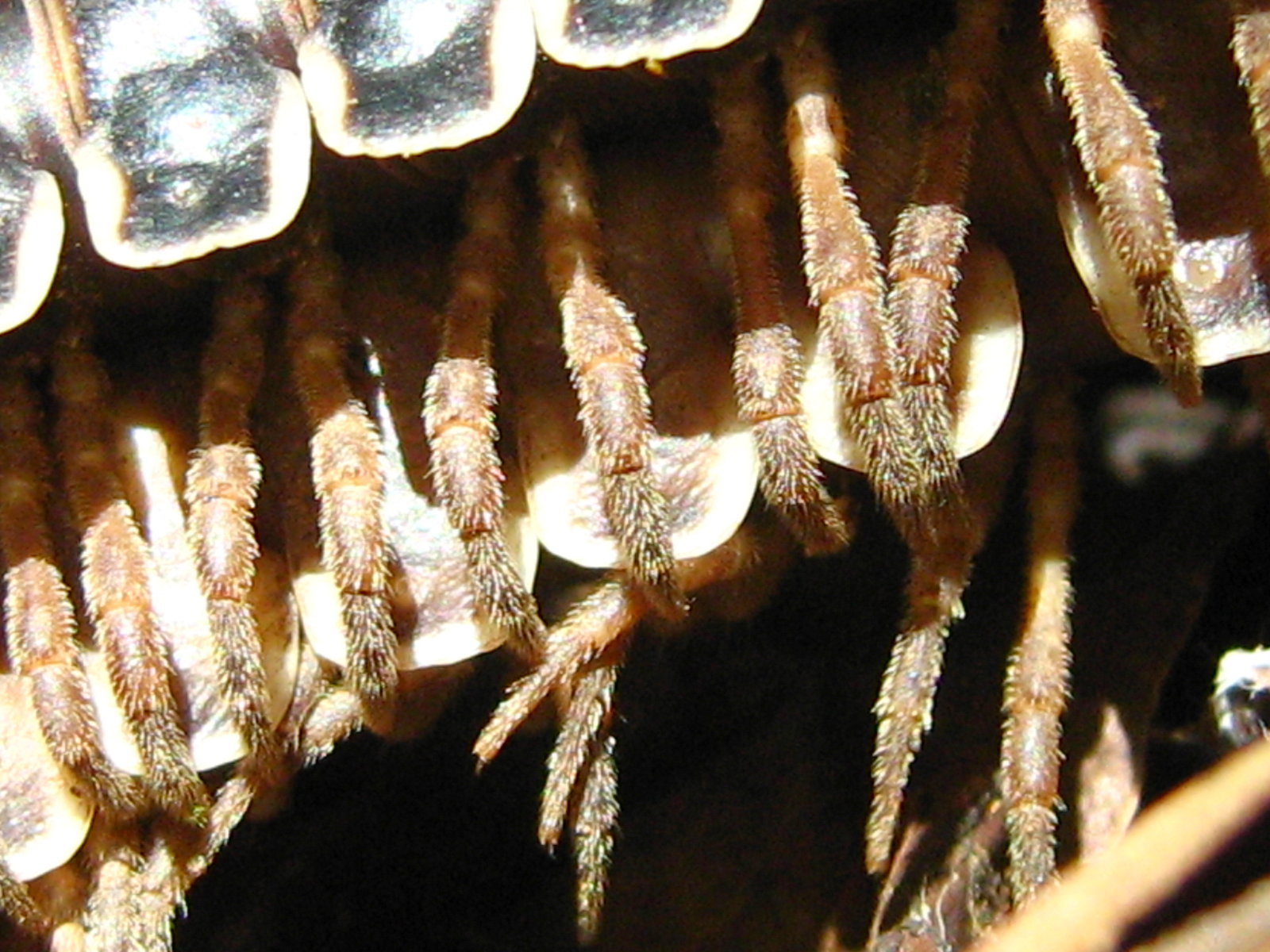
Under each plate along the back there are two pairs of legs, and the legs attach underneath the body. In a centipede there is one pair per segment, attached out to the sides. That single character separates the two classes, and it is legible in the photograph above.
The doubling is not an accident of counting. A millipede's trunk is built of diplosegments — double segments formed by the fusion of two embryonic segments, each carrying two leg pairs. What looks like one ring is two.
Established beyond that: the order Polydesmida, the flat-backed millipedes. The flattened back with a wide keel — a paranotum — projecting sideways from every ring is the character of the order, and it is unmistakable in the second photograph. Polydesmida is the largest order of millipedes, with more than 5,000 species; adults usually have 20 rings and range from 1.4 to 134 mm. At about 70 mm these are middling-large.
Not established: family, genus, species. That will not come from a photograph. Identification in this order rests on the gonopods — in a male, the eighth leg pair, the first pair on the seventh ring, modified into a copulatory organ — and those are hidden here between two pressed-together bodies.
Polydesmids have no eyes. Not reduced eyes; none. The whole order is blind.
Two blind animals 70 mm long found each other on a forest floor, and by the time the camera arrived were locked together and still. They did it on touch and chemistry — that much follows from having no eyes, though nothing in these photographs shows the mechanism, and it is stated here as inference rather than observation.
In millipedes generally, the male transfers sperm with his gonopods, positioning his seventh segment against the female's third, the two animals facing one another. Which of the two animals here is which is not determined, and the photographs do not show enough to say.
This was the photographer's reason for making the record, and it is the point of the page.
Flat-backed millipedes are very common on the forest floor at Bukit Gemok and in most other parks in Sabah, and walkers step on them constantly without noticing. It is worth not doing, and the reason is that almost everything people assume about the animal underfoot is wrong:
There is one good reason to keep hands off, and it has nothing to do with biting.
Polydesmida includes all the millipedes reported to produce hydrogen cyanide. The secretion is released through pores along the sides of the body when the animal is handled or attacked, and among the larger species bright warning colouration for exactly this reason is common. It is a chemical defence against predators, not against people, and a millipede is generally harmless to humans — but it is a sound argument for photographing one and leaving it alone, which is the practice followed everywhere on this site.
Bukit Gemok Recreational Forest Park is a forested hill close to Tawau, reached in under half an hour from town, and it is the nearest place to the town where an ordinary walk puts a visitor on genuine forest floor. Millipedes of this kind are one of the things it reliably has.
The photographer's assessment of its condition, from his own visits, is blunt and is recorded here because a visitor is better off knowing: the canopy walkway is rundown, the park is poorly managed, and it is badly mosquito-infested — the water containers kept at the staff quarters breed them. Go, but go covered up.
A millipede is not an insect. Insects are class Insecta, six legs, three body regions; millipedes
are class Diplopoda, in the subphylum Myriapoda. So this record sits in
Fauna/ under its class, alongside the
Kundasang flatworm in
RHABDITOPHORA, rather than in the insect section.
The same correction is owed elsewhere on this site: the centipede index currently sits inside the wingless-insect folder. Centipedes are not insects either, and it is misfiled for the same reason this page was. It has been left where it is for now so that no existing link breaks, and it is on the list.
Page reviewed: 6 September 2026.