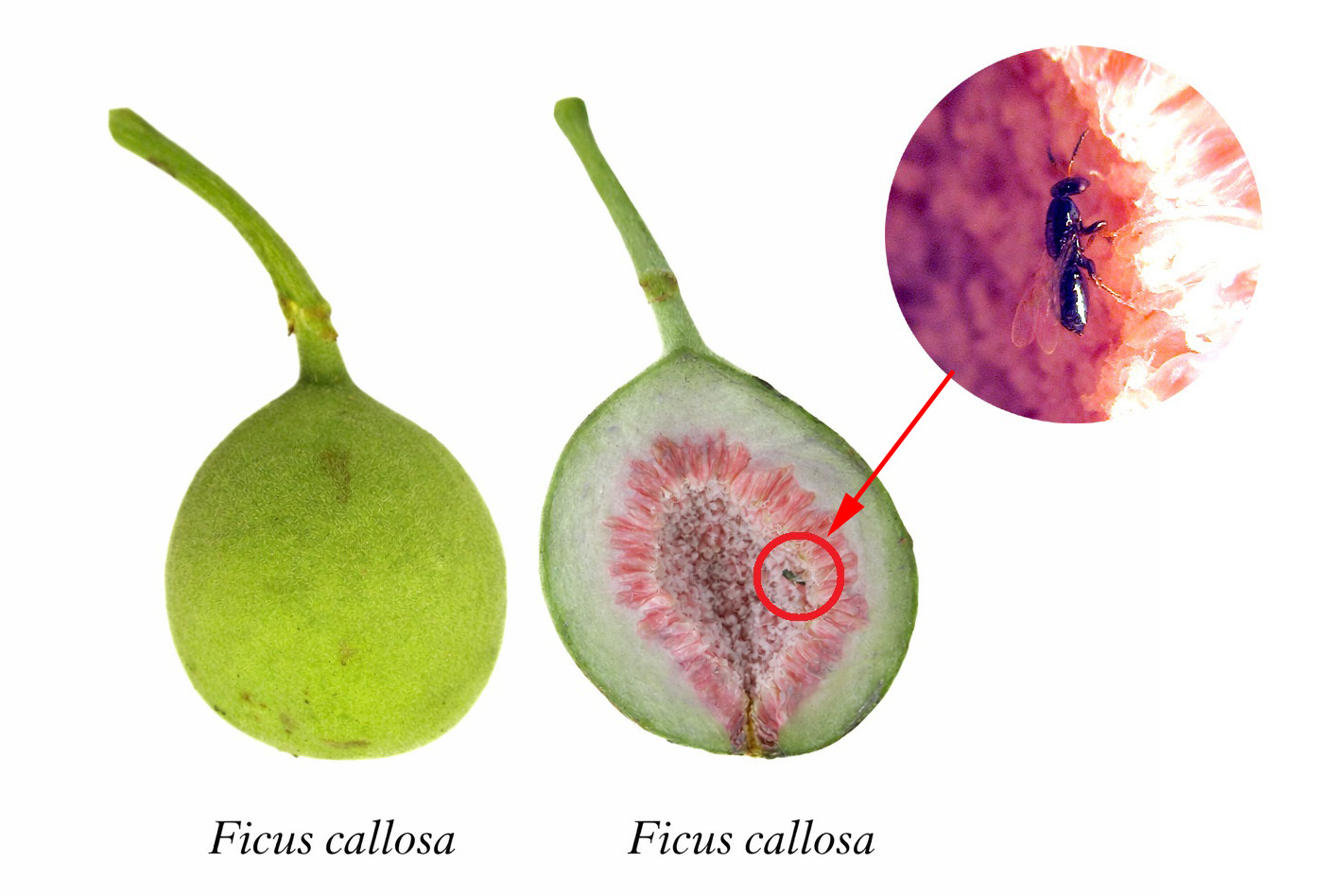
The picture show a female Pollinator (Fig Wasp) laying eggs inside a receptive green figs (syconia) collected from the Ficus callosa tree at Masjid Babul Khair, Kampung Titingan in Match 2026.
Female POLLINATOR of Ficus callosa
The picture show a female Pollinator (Fig Wasp) laying eggs inside a receptive
green figs (syconia) collected from the Ficus callosa tree at Masjid Babul Khair,
Kampung Titingan in Match 2026.
The above image is an newly discovered evident of female wasp of Ficus callosa wasp's wings and antenna are typically broken off or torn away during the struggle to get inside through the narrow ostiole
In the know observation knowledge of Fig wasps inside a Fig fruit
(technically called a syconium), female fig wasps, which are already very small,
must squeeze through a microscopic passage known as the ostiole to enter the
young fig (technically called a syconium) to lay their eggs and pollinate the
flowers.
Because the passage is so narrow, the wasp's wings and antenna are typically
broken off or torn away during the struggle to get inside.
But this image captured above is a first observed document that there is an
exception for Fig wasps of Ficus callosa.
This discovery need further scientific documenting.
Author: F.Y. Wong
Location: Masjid Babul Khair, Kampung Titingan, Tawau, Sabah,
Malaysia
Date of Observation: 28th March 2026
Species: Ficus callosa (Moraceae)
Subject: Female fig wasp pollinator
During examination of receptive green syconia collected from Ficus callosa, a female pollinator wasp was observed laying eggs inside the fig. Photographic evidence shows the wasp with wings and antennae intact after entry through the ostiole.
In fig–wasp mutualism, female wasps typically lose their wings and antennae when forcing entry through the narrow ostiole of a syconium. This loss has been widely reported as a consistent feature of the pollination process.
The present observation provides the first documented evidence of an exception in Ficus callosa. The photographed female wasp successfully entered the syconium without damage to wings or antennae.
This finding challenges the prevailing assumption that appendage loss is universal among fig wasps. It suggests possible morphological variation in the ostiole of Ficus callosa or adaptive differences in the pollinator species. Such variation may have implications for dispersal, reproductive success, and coevolutionary dynamics.
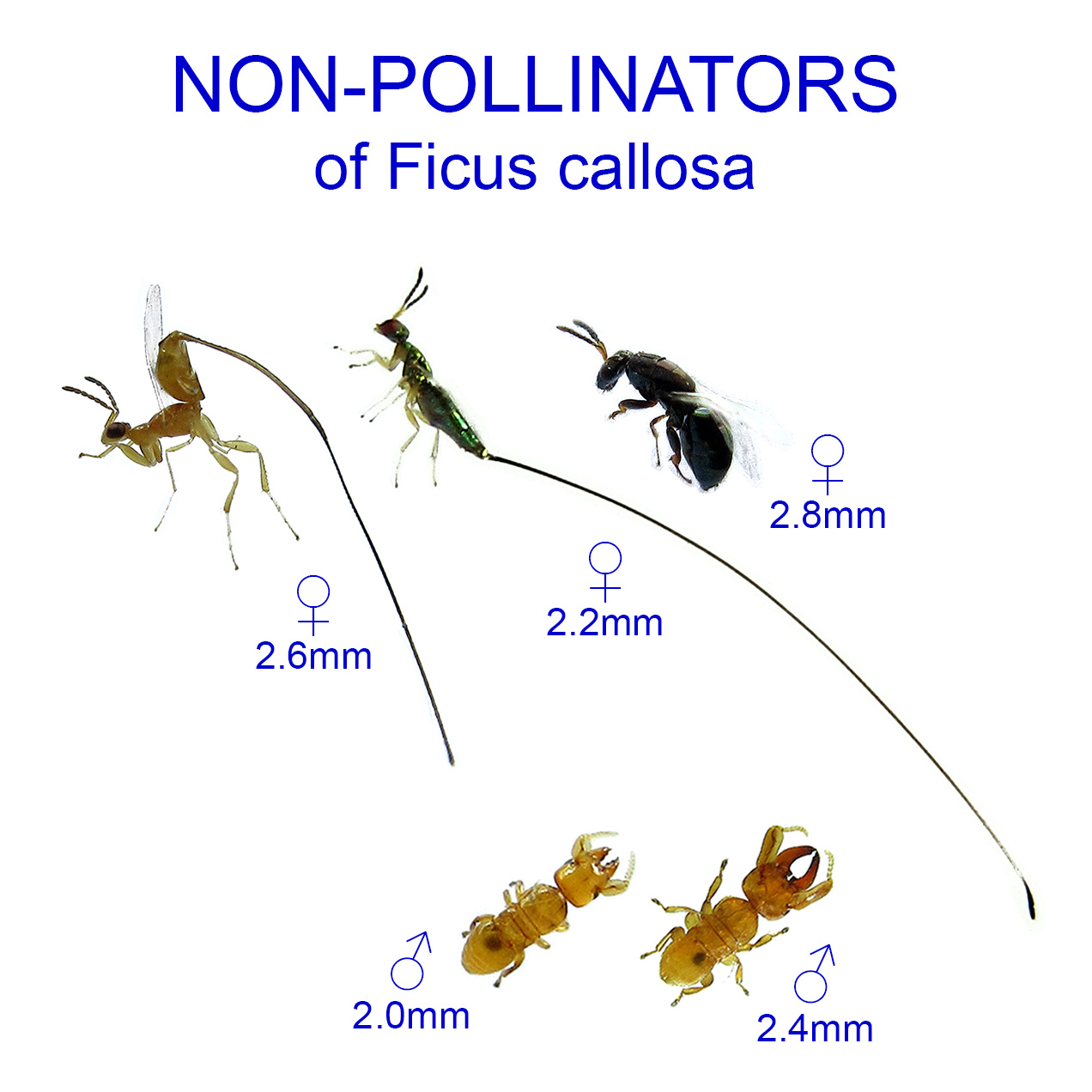
NON-POLLINATORS of Ficus callosa
♂ 2.0mm
♂ 2.4mm
♀2.6mm
♀2.2mm
♀2.8mm
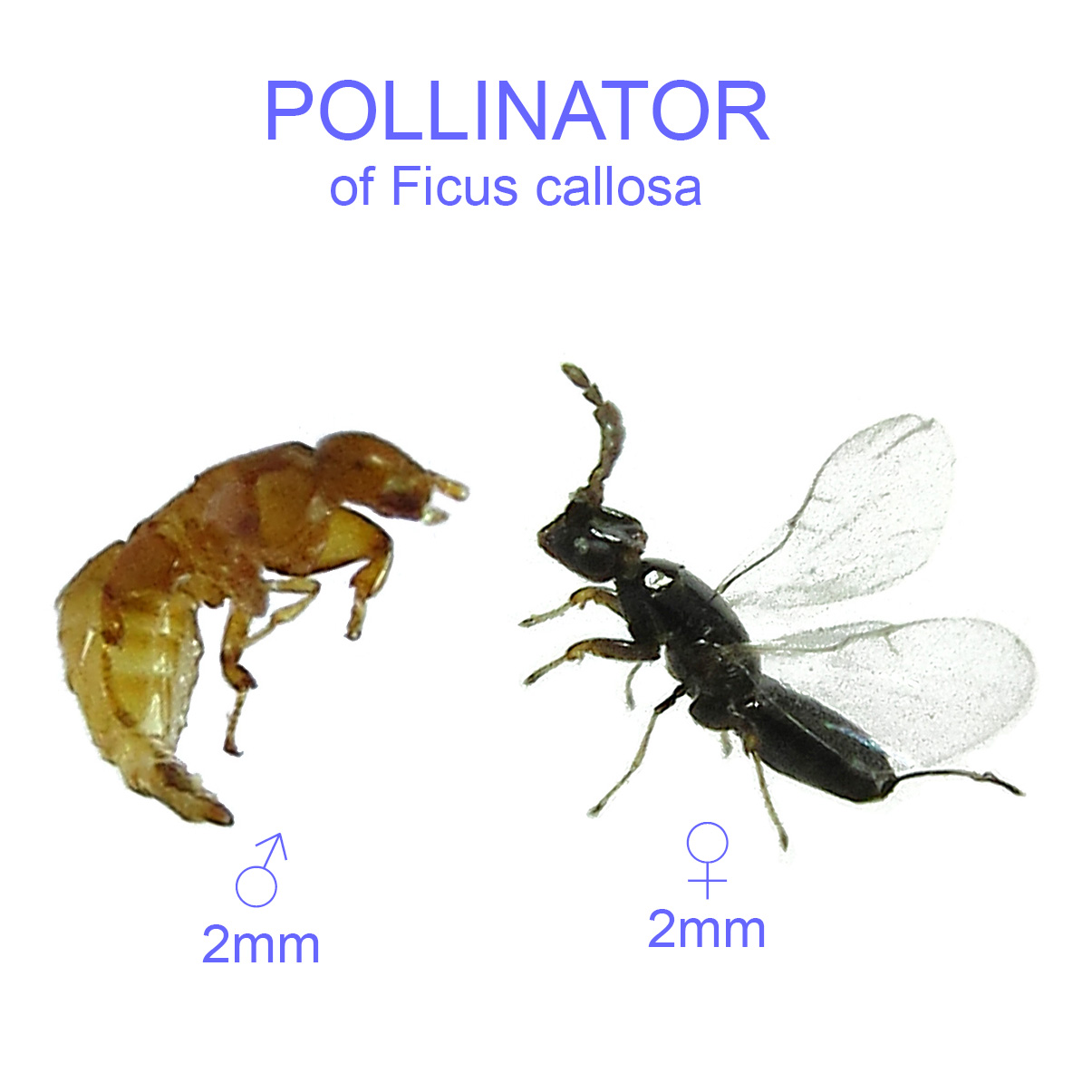
POLLINATOR of Ficus callosa
♂2mm
♀2mm

Ficus callosa 硬皮榕
Tall Tree - Monoecious 雌雄同株
Mono. 27.2mm
Ficus parietalis磚脈榕
Stranglers with Many Roots - Dioecious雌雄異株
♀18.9mm
Ficus drupacea 枕果榕
Strangler with Many Roots - Monoecious 雌雄同株
Mono. 14.3mm
Ficus tinctoria 斜葉榕
Stranglers with Many Roots - Dioecious 雌雄異株
♀10.0mm
Ficus cumingii 糙毛榕
Shrub - Dioecious雌雄異株
♀6.8mm

Leave of a Ficus callosa at Ice Box (Kampung Titingan), Tawau

Ficus callosa 硬皮榕
Tall Tree
Monoecious 雌雄同株
25.7mm
Masjid Babul Khair, Kampung Titingan
2021-06-15
