Thursday, 27 June, 2019 09:33:10 PM


吉隆坡國際機場 | 斗湖機場  | KKIA TERMINAL 1

KKIA TERMINAL 1  |  KKIA TERMINAL 2  | HISTORY OF KK AIR PORT  |

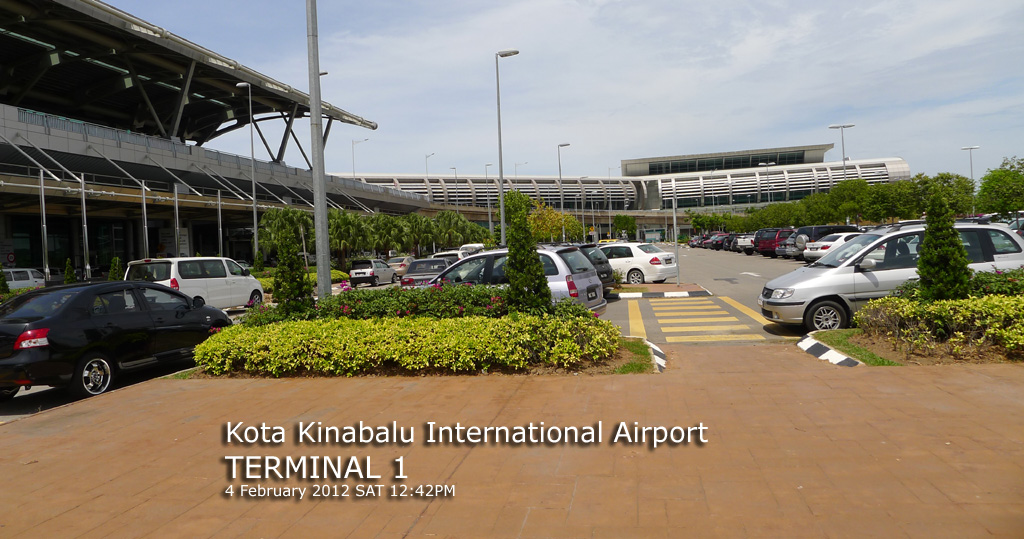
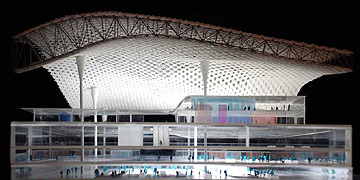
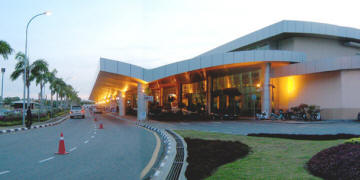
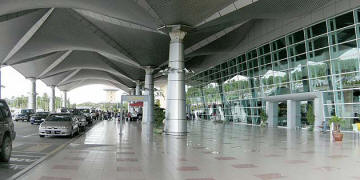
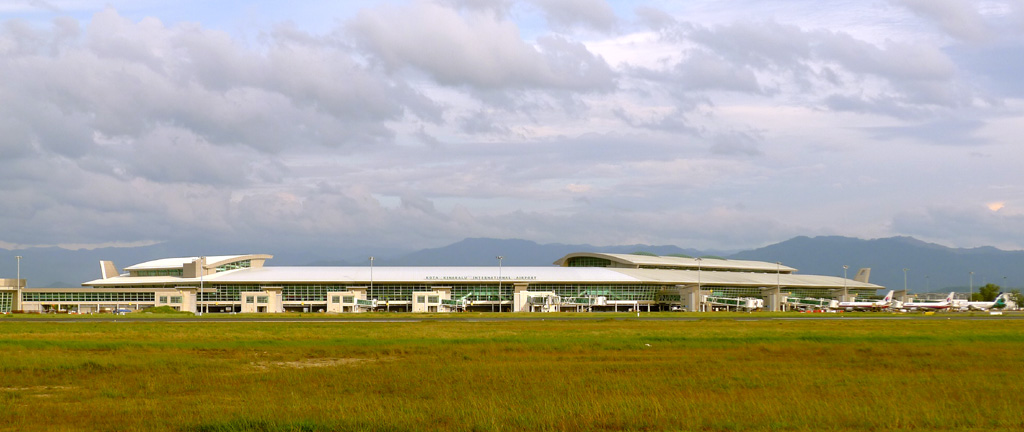
Kota Kinabalu International Airport (KKIA) TERMINAL 1
Photo above :  Kota Kinabalu International Airport (KKIA) TERMINAL 1


Kota Kinabalu International Airport
KKIA TERMINAL 1

see also : Terminal 2 of Kota Kinabalu International Airport

Photo Gallery of KKIA TERMINAL 1


Taxi from KKIA Terminal 1 to the City center such as Suria Sabah is Rm 30.00

Buy the Taxi ticket at airport counter before approaching the Taxi.


WARNING
WARNING
PLEASE BE ADVISED THAT IT IS AN OFFENCE UNDER WILDLIFE CONSERVATION ENACTMENT, 1997 TO BRING INTO OR TO TAKE OUT OF STATE, ANY PROTECTED ANIMALS/PLANTS OR THEIR PRODUCTS WITHOUT PERMIT.

PENALTY FOR THE OFFENCES IS AN IMPRISONMENT FOR FIVE(5) YEARS OR A FINE OF FIFTY THOUSAND RINGGIT (RM50,000) OR BOTH.

1 - SWIFTLET BIRD'S NEST
2 - TURTLE EGGS
3 - WILDLIFE MEATS
4 - BUTTERFLIES
5 - ORCHIDS

Kota Kinabalu International Airport  TERMINAL 1

Kota Kinabalu International Airport  TERMINAL 1

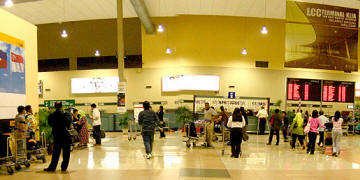
Second Floor of KKIA T1.  T1 has 3 floor level

(Ground floor: Arrival Hall,
First Floor: Office and Airline company,
Second Floor: Check-in counter and departure hall)

Kota Kinabalu International Airport  TERMINAL 1Kota Kinabalu International Airport  TERMINAL 1

Terminal 1 Car Park.
1,400 car park and dedicated parking area

Kota Kinabalu International Airport  TERMINAL 1Kota Kinabalu International Airport  TERMINAL 1

Terminal 1
Terminal 1 is the main terminal of KKIA located at Kepayan area. It can be accessed via Jalan Kepayan, Jalan Lintas and Jalan Putatan.

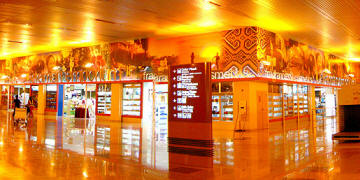
It also features duty-free shops, other shops, lounges, travel agents, restaurants, and many others.

Terminal 1 opened for commercial use on August 19, 2008. but the whole project was completed only in May 2010.

It will also have a place for small aircraft passengers. After the whole terminal was completed, the first wing will be accommodating international flights while the second wing will be for domestic flights. After completion, Terminal 1 would be equipped with:
·64 check-in counters for international and domestic flights
·2 baggage x-ray check-in machines and 5 hand luggage x-ray machines
·36 Immigration counters (16 for departures and 20 for arrivals)
·6 baggage carousels
·3 floor level
·9 aerobridges
·17 aircraft parking bays capable of accommodating both the wide and narrow body aircraft
·1,400 car park and dedicated parking area

international flights from Asian Countries including Osaka, Seoul, Hong Kong, Manila, Jakarta, Kuala Lumpur, and Singapore

Kota Kinabalu City with its many hotels and resorts house many tourists before they venture to islands and mountains of Sabah.


Kuala Lumpur
Kuala Lumpur, the capital city of Malaysia, has the most flights to Kota Kinabalu daily, this flight will take 2 hours and 30 minutes.

Malaysia Airlines has 14 non-stop or indirect daily flights to Kota Kinabalu and  Air Asia has 10 daily flights to and return from Kuala Lumpur.


Penang

Air Asia has one daily flight to and from Penang.


Singapore
3 daily flights from Singapore with Malaysia Airlines and Silk Air operating this route, Flight from Singapore to Kota Kinabalu is 2 hours and 30 minutes. Malaysia Airlines has 2 flights from Singapore to Kota Kinabalu daily, one with a stop over at Kuching International Airport.

AirAsia has two daily flights from Singapore to Kota Kinabalu.
Jetstar, Silk Air & Tiger Airway have one flight to and from Singapore daily.


Hong Kong

The flight time from Hong Kong to Kota Kinabalu is 3 hours.

Tuesday to Saturday 2 flights from Hong Kong and return, one by Malaysia Airlines and one by Dragon Air. Sunday one flight to and from Hong Kong by Dragon Air, and Monday one flight to and from Hong Kong by Malaysia Airlines.


Macau

One daily flight from Macau to Kota Kinabalu, by Air Asia.


Manila

Malaysia Airlines has daily flights from Manila to Kota Kinabalu, and Air Asia through Clark (2 hours drive from Manila) has one daily flight to Kota Kinabalu.


Seoul

Korea Air and Malaysia Airline have twice weekly services from Seoul to Kota Kinabalu, on Wednesday and Sunday. Asiana Airlines have daily flight to and from Seoul.


Shenzhen (China)

Air Asia has one daily flight from Shenzhen to Kota Kinabalu.
Shenzhen Airline has 4 weekly flights to Kota Kinabalu.


Jakarta

Air Asia has one flight to and from Jakarta on every Monday, Wednesday, Friday and Sunday.


Japan

Malaysia Airline has weekly flights from Osaka and Tokyo.

Other parts of the world

From Europe fly to Kuala Lumpur, Brunei and Singapore, these cities has good connecting flights to Kota Kinabalu. Airlines to look out for Malaysia Airline, Singapore Airline (with Silk Air), and Royal Brunei Airlines.

From North American fly to Hong Kong or Seoul, these two cities has good connecting flights to Kota Kinabalu. Korean Air and Cathay Pacific (with Dragon Air) are the main ones here.

From Australia and New Zealand fly to Kuala Lumpur, Brunei and Singapore, these cities has good connecting flights to Kota Kinabalu. Air Asia, Malaysia Airline, Singapore Airline (with Silk Air), and Royal Brunei Airlines have good flights service to Kota Kinabalu.
 

Kota Kinabalu International Airport  TERMINAL 1


Kota Kinabalu International Airport (KKIA)  is located 8 km southwest of Kota Kinabalu City.

The second busiest airport in Malaysia after Kuala Lumpur International Airport with 4 million passenger movements in 2006.

In 2007, 2.5 million unique tourists visited Sabah through KKIA.

The airport first began as Jesselton Airfield, a Japanese military airfield built during World-War II.

Towards the end of the war, the airfield suffered severe bombings by Allied Forces until the surrender of the Japanese army in 1945.

After the war, the Department of Civil Aviation (DCA) of North Borneo took over the operations and maintenance of the airport.

In 1957 a new terminal was built and the runway been extended to 1,593 meters long to enable the operation of Malaysia Airways Viscount aircraft. In 1963,  further expansion of the runway to 1,921 meters long to cater for Comet 4 operations. Commercial flights and passenger arrivals gradually increased and a larger terminal building was needed to accommodate this increase.

In 1969 a British consultancy firm was appointed to formulate a Master Plan for a phased and organized development of KKIA from 1970 until 2000 and years beyond. The master plan was submitted to the government with the following recommendations:

To reinforce and expand the runway distance to 2,987 meters long to cater for Boeing Jet 707 and 747 operations.
To build a new terminal complex and parallel taxiway which connects to the runway.
To provide navigation equipments, communication facilities and a modern light system for the runway.

In the 1980s, a newer and larger terminal building was built on the Western side of the runway for all commercial flights.

Since then KK has two airport terminal, the New Airport Terminal (West end now Terminal 1) and the Old Airport (the original terminal at the East end now Terminal 2)

In 1992, Malaysia Airports Holdings Berhad took over management and operations of the airport. Further expansion project began in 2006 for both terminals, and in January 2007 the first original terminal was named Terminal 2, and the other newer secondary but main terminal was known as Terminal 1.

In mid 2005, Malaysian federal government approved a  major renovation and extension project  of KKIA worth RM1.4 billion. The new airport terminal building will be able to accommodate four Boeing 747s, one Airbus A330, seven Boeing 737s, three Fokker 50s and three Dorniers at any one time. It will also have 12 jet ways for passenger use.

The airport also accommodate the Airbus A380, the world's largest passenger aircraft.

KKIA became the second largest airport in Malaysia with an annual capacity of 12 million passengers — 9 million from Terminal 1 and 3 million from Terminal 2.

AirAsia is expected to start flying to Guilin, Xiamen, Hong Kong and Vietnam in 2009. Sabah Government is optimistic in targeting more visitors from Hong Kong, Taiwan, China, South Korea, Japan and Russia.

AirAsia plans to make Kota Kinabalu the main hub for flights from China to Malaysia due to Kota Kinabalu being the nearest Malaysian hub to China.

The RM1.4bil makeover of the Kota Kinabalu International Airport started operational on August 19, 2008

The new Terminal 1 is capable of handling up to 3,200 passengers per hour during peak periods as it has 64 check-in counters for international and domestic flights as well as 17 aircraft parking bays.

Ethnic patterns of the Rungus and Bajau communities have also been incorporated into the way the floor tiles were laid out.

The old terminal that had been used since the 1980s would be demolished and rebuilt by mid-2009. It will be integrated with the new building, doubling the floor space to more than 100,000 sq m and be used mainly for domestic arrivals and departures.

4.3 million passengers used the airport in 2007 making it one of the busiest after KL International Airport. In comparison, the number of passengers passing through the Kuching and Penang airports last year was about three million.

KKIA fiasco : http://www.freemalaysiatoday.com/category/nation/2012/10/31/kkia-fiasco-raises-more-questions/


Johore Bahru Senai International Airport

Shenzhen Bao'an Airport


Terminal One Kota Kinabalu International Airport

Terminal Two Kota Kinabalu International Airport


Miri International Airport

LCCT of Kuala Lumpur International Airport 


Kuching International Airport

Tawau International Airport

|   Kuala Lumpur International Airport  |  Chieng Mai Airport in North Thailand |


Air Port

Web
Analytics