Guardians of the Canopy

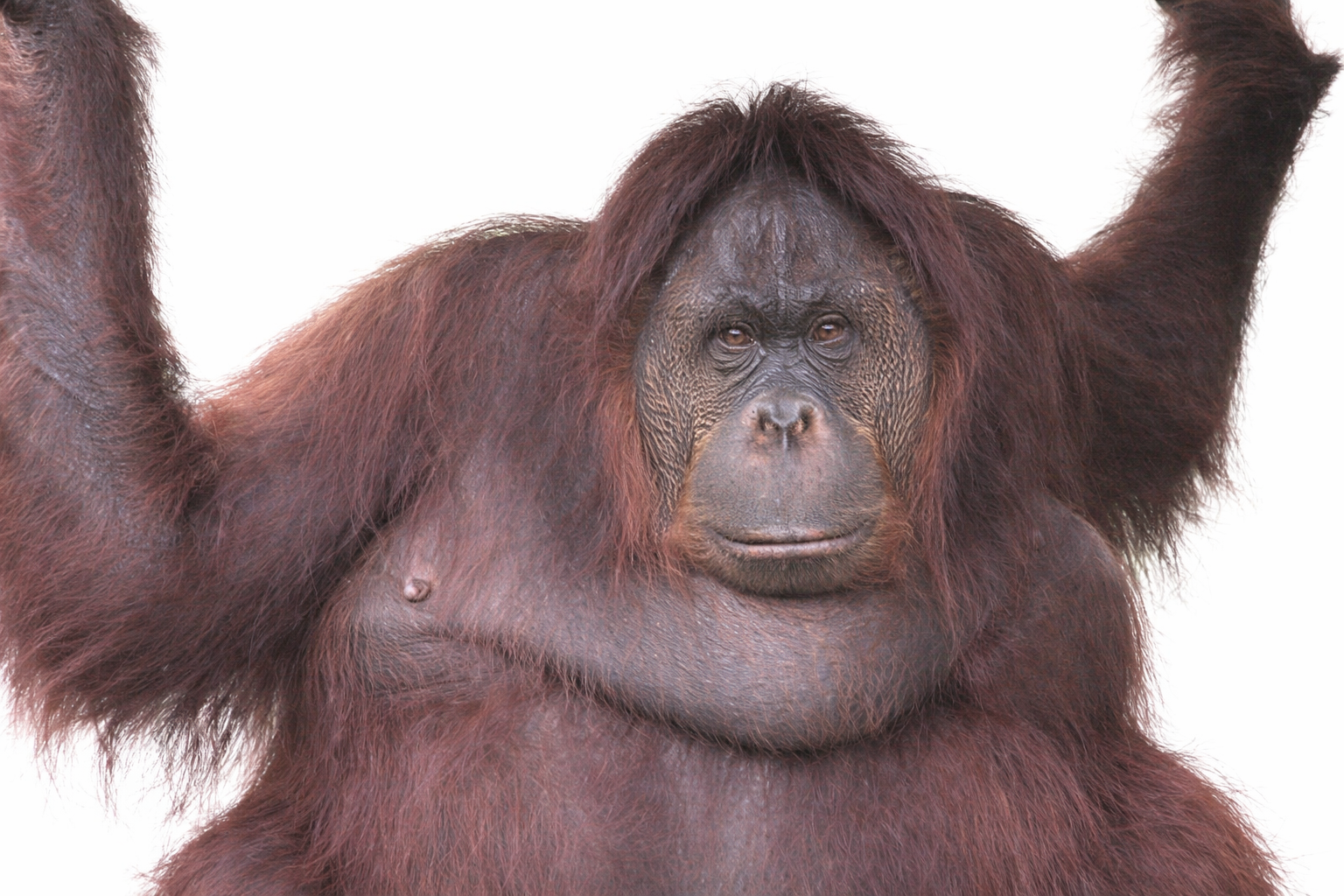
In the emerald forests of Borneo, where sunlight filters through ancient leaves, lives a gentle giant with eyes that mirror wisdom and solitude. The orangutan - "person of the forest" - moves with quiet grace, weaving nests among branches, carrying the memory of the wild.

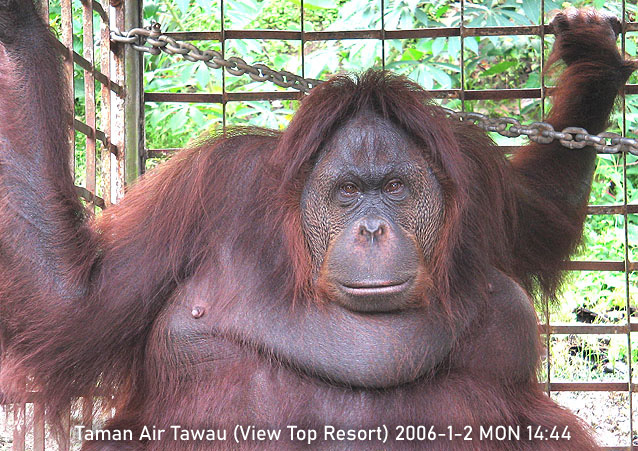
Orangutan in captivity

In the emerald forests of Borneo, lives a gentle giant with eyes that mirror wisdom and solitude.

Introduction

The Bornean orangutan is one of the world's most intelligent great apes and a powerful symbol of Borneo's ancient rainforests. In eastern Sabah, including forest landscapes connected to Tawau, orangutans rely on large, healthy, and connected forests to survive.

CRITICALLY ENDANGERED (IUCN Red List)

Did You Know?

Orangutans share about 97% of their DNA with humans. The name "orangutan" comes from Malay words orang hutan, meaning "human of the forest."

Species Overview

Quick Facts

  • Common Name: Bornean Orangutan
  • Scientific Name: Pongo pygmaeus
  • Family: Hominidae (Great Apes)
  • Lifespan: Up to 45 years in the wild
  • Habitat: Lowland tropical rainforest, riverine forest, peat swamp forest

Orangutans are easily recognised by their long reddish-brown hair and extremely long arms. Adult males may develop large cheek pads known as flanges.

Orangutan vs. Monkey: Key Differences

Orangutans are often mistakenly called "monkeys," but they are great apes. Here's how they stand apart:

Feature:
Bornean Orangutan (Great Ape)
Monkeys (General Mammals)
Classification:
Family Hominidae (same as humans, gorillas, chimpanzees)
Family Cercopithecidae and others
Tail:
No tail
- apes never have tails
Most have tails used for balance and movement
Size:
Larger, up to 100 kg and 1.5 m tall
Generally smaller, lighter
Lifestyle:
Mostly solitary, building nightly nests
Often social, living in troops
Intelligence:
Highly intelligent, tool use, close DNA link to humans
Intelligent but less advanced in tool use and problem-solving

Stories of Orangutans in Tawau

Orangutan in captivity

From Captivity to Freedom #1

In 2010, Tawau bid farewell to its last captive orangutan - a gentle soul who had spent her youth confined within the animal display corner of Taman Air Tawau (View Top Resort), just 5 km from Tawau town along TV Station Road.

That year, the Sabah Wildlife Department stepped in, transferring her to Kota Kinabalu where proper facilities awaited, offering care, space, and dignity. The photograph taken in 2010, just before her release, stands as a poignant reminder: of a life once limited, and of the hope that comes when compassion restores freedom.

Her story is not only about rescue, but about the responsibility we share in ensuring orangutans live where they belong - in the embrace of the rainforest.

Learn more about Taman Air Tawau →

Orangutan at Yuk Chin School

From Captivity to Freedom #2: A School Zoo's Rise and Farewell

In the early 1990s, Yuk Chin Primary School of Tawau Town proudly built its miniature zoo, a project that helped the school win the 1992 National Most Beautiful Environment Award.

Among its residents was a young orangutan. She was not locked in a cage but placed on a small man-made island, encircled by a wide drain to keep her from wandering away. Her presence brought joy and curiosity, yet her life was far from the rainforest she belonged to.

By 2004, the zoo reached its peak, housing orangutans and even a pygmy elephant. Sadly, the two orangutans struggled to adapt, fell ill, and were eventually confiscated by the authorities.

In 2015, the government ordered its closure. Many felt regret, but others quietly believed it was for the best - for the animals deserved better than confinement in a schoolyard.

Learn more about Yuk Chin School Zoo →

Threats to Survival

Despite their importance, orangutans face many serious threats across Borneo:

  • Deforestation and land conversion for palm oil and agriculture
  • Forest fragmentation isolating populations
  • Illegal hunting and pet trade
  • Human-wildlife conflict
  • Climate change affecting forest ecosystems

Habitat loss remains the greatest threat to orangutan survival, with populations reduced by more than 50% in the past 60 years.

Protect the Forest Gardeners

Orangutans are more than wildlife - they are guardians of Borneo's forests and indicators of ecosystem health. Protecting orangutans means protecting forests, rivers, climate stability, and future generations.

Learn About Conservation Efforts