Overview
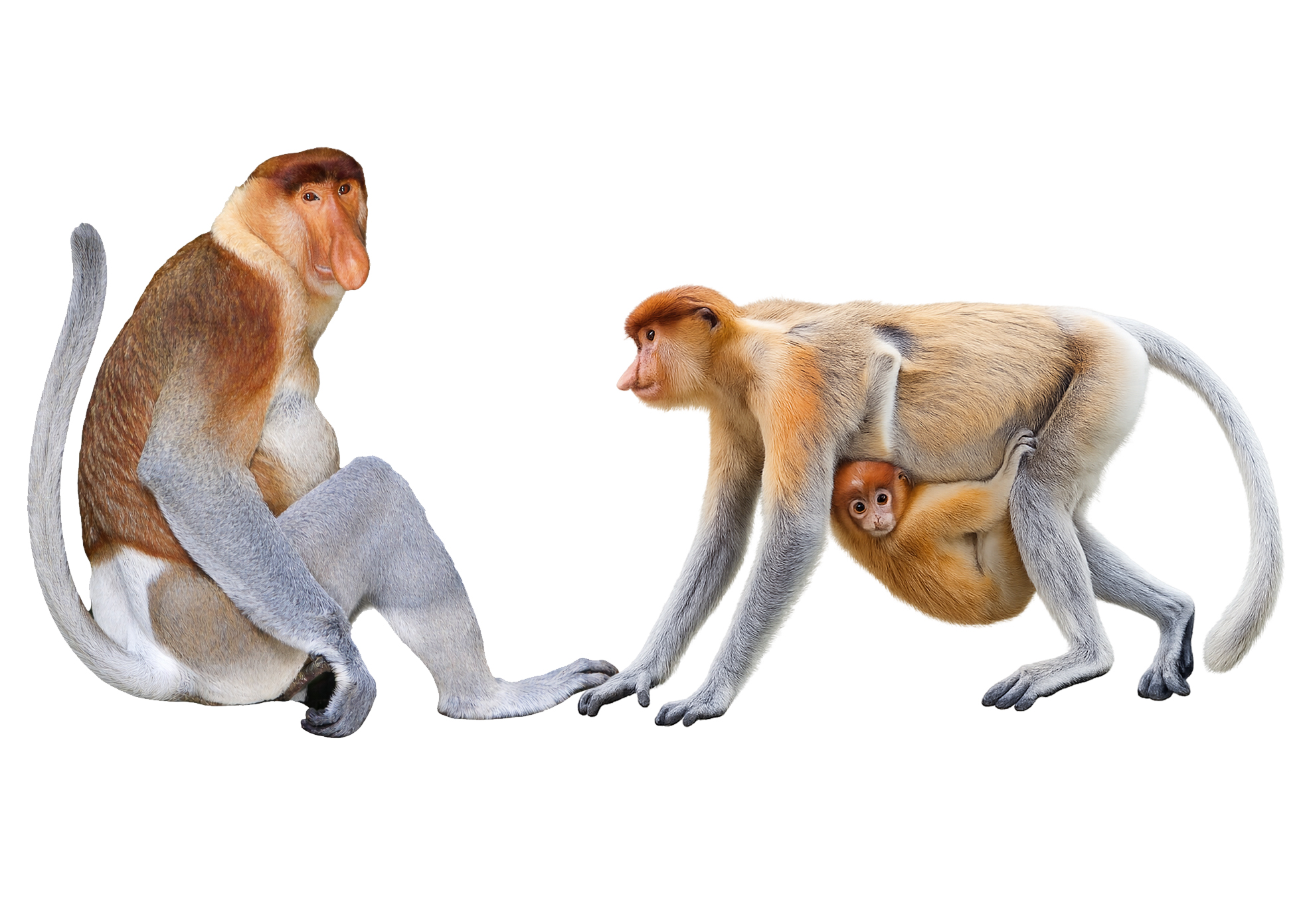
Proboscis Monkey (Nasalis larvatus) mother and infant in Tawau mangroves
The Proboscis Monkey is a Bornean endemic primate, easily recognizable by its large, pendulous nose and reddish-brown fur. It is primarily found in coastal mangroves and riverine forests, including areas around Tawau.
These unique primates are classified as Endangered due to habitat loss and mangrove deforestation. They play a vital role in their ecosystem as seed dispersers and indicators of mangrove forest health.
Habitat & Ecology
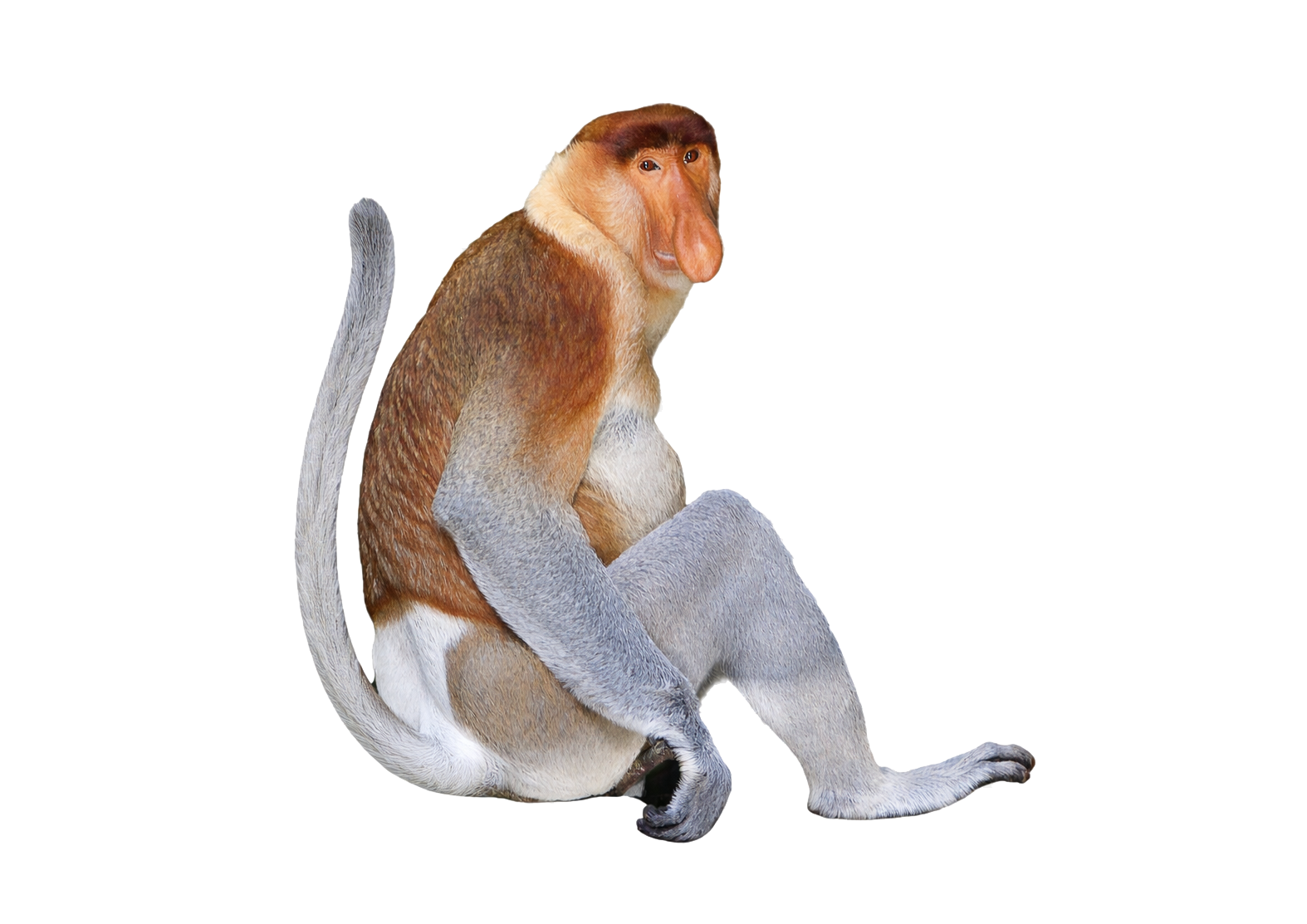
Male Proboscis Monkey showcasing its distinctive nose
Proboscis Monkeys are highly adapted to riverine and mangrove ecosystems. They are excellent swimmers and can often be seen crossing rivers. Mangrove roots provide shelter and abundant food sources, including leaves, fruits, and seeds.
- Preferred areas: lowland rivers, estuaries, and mangrove forests.
- Social structure: live in groups of 10 - 20 individuals, led by a dominant male.
- Activity: mostly active during the day, resting at night in tall mangrove trees.
- Adaptations: webbed feet for swimming, large stomachs for digesting fibrous leaves.
Behavior & Diet
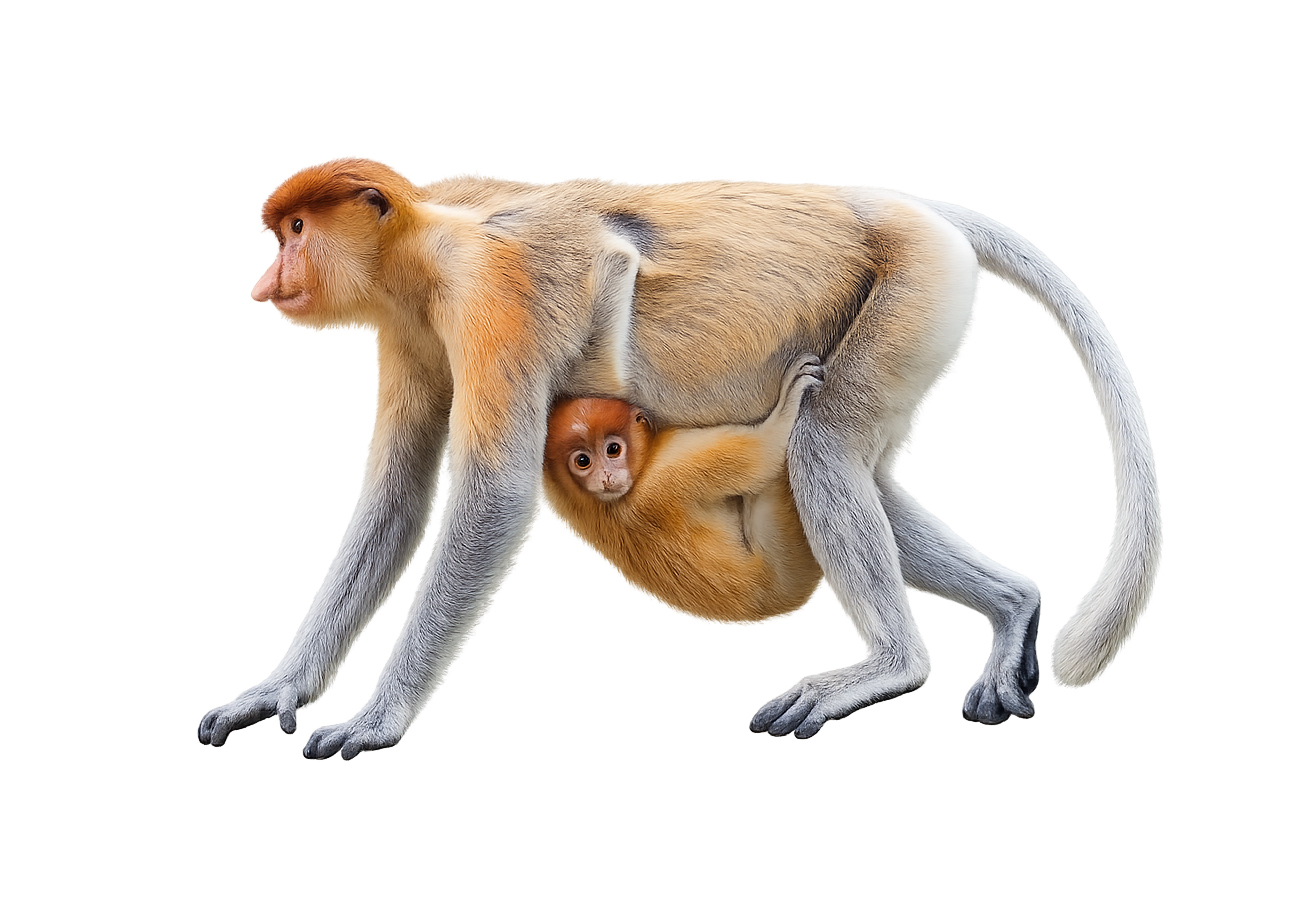
Female Proboscis Monkey foraging for food
These monkeys are folivorous, feeding mainly on leaves, fruits, and seeds. Their large stomachs allow them to digest fibrous leaves efficiently. They are often seen jumping between mangrove branches or swimming across rivers to forage.
Proboscis Monkeys have a specialized digestive system with a multi-chambered stomach that ferments plant material, similar to that of cows. This adaptation allows them to extract maximum nutrients from their leafy diet.
Distinguishing Uniqueness: Proboscis vs. Red Leaf Monkey
| Proboscis Monkey | Red Leaf Monkey |
|---|---|
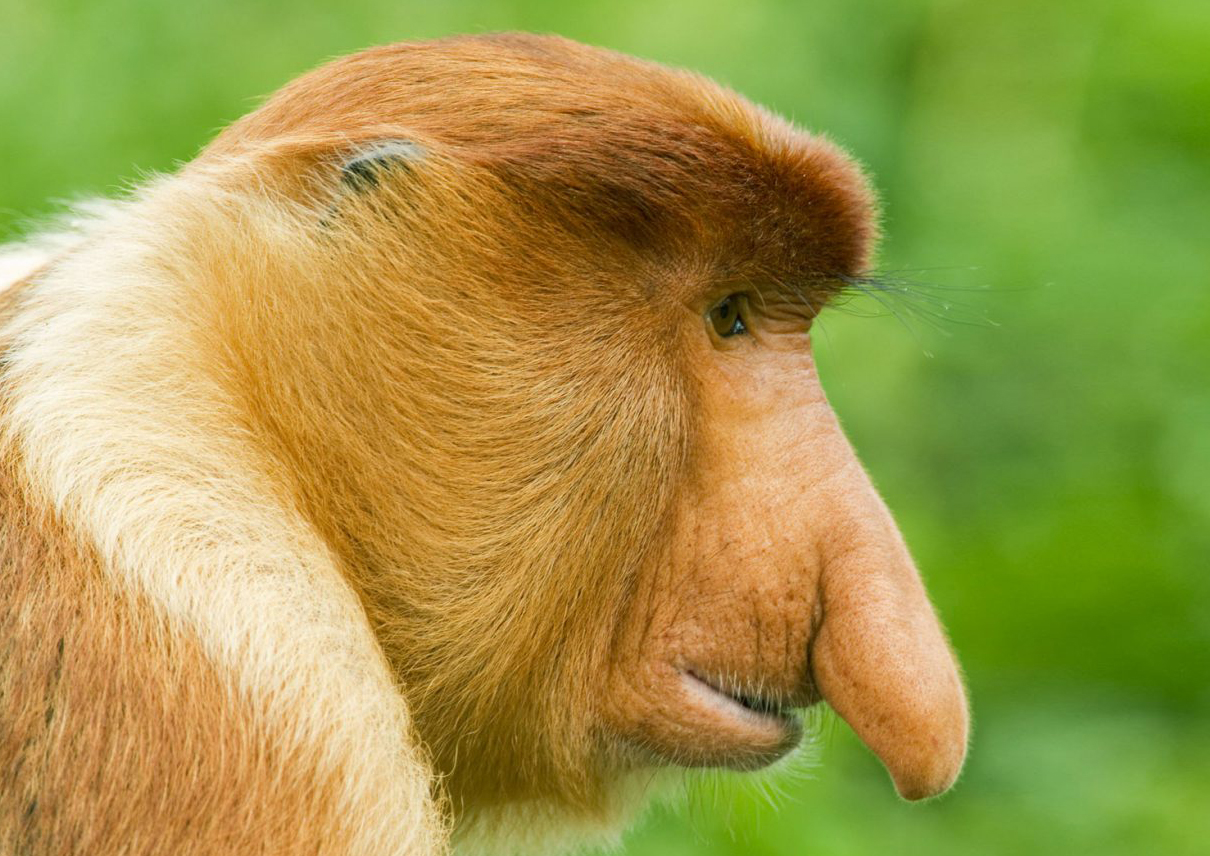 Nose:
Nose:Large, pendulous nose (especially in males) |
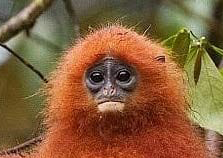 Small, flat nose
|
| Habitat: Mangroves, rivers, estuaries |
Hill & dipterocarp forests |
| Body: Pot-bellied, webbed feet, strong swimmers |
Slim, agile climbers |
| Diet: Leaves, fruits, seeds (fibrous digestion) |
Tender young leaves, shoots |
| Social Calls: Loud honks & nasal sounds |
Softer calls, less resonant |
Where to See Proboscis Monkey in Tawau & East Coast
If you're hoping to catch a glimpse of these remarkable primates in their natural habitat, here are the best locations in the Tawau region:
- Kuala Tawau mangroves - Frequent encounters along tidal waterways during early morning or late afternoon.
- Pulau Sebatik mangroves - Occasional river-crossing groups can be observed from boat tours.
- Kinabatangan River (Sandakan region) - Larger populations along riverbanks, especially near Sukau.
- Tawau Hills Park - While less common, occasional sightings have been reported in riverine areas of the park.
For the best viewing experience, consider joining guided wildlife tours led by local ecotourism operators who follow ethical wildlife viewing practices.
In the lush forests of Tawau, a remarkable community of mammals thrives, each uniquely adapted to its environment. The gentle Borneo pygmy elephant, Sabah's largest land mammal, roams widely, depending on vast, connected forests for its survival. High in the canopy, orangutans swing gracefully from tree to tree, their intelligence and role as seed dispersers ensuring the rainforest's renewal. Along the mangroves and riverbanks, the endemic proboscis monkey, with its distinctive pendulous nose and reddish-brown coat, adds character to Tawau's waterways. Hidden deeper in the forest, the elusive Malayan sun bear - the smallest bear in the world - searches for food and shelter, relying on continuous stretches of healthy woodland. Together with clouded leopards, civets, deer, and countless smaller mammals, these creatures form a living tapestry that makes Tawau's forests one of Borneo's most vibrant sanctuaries.
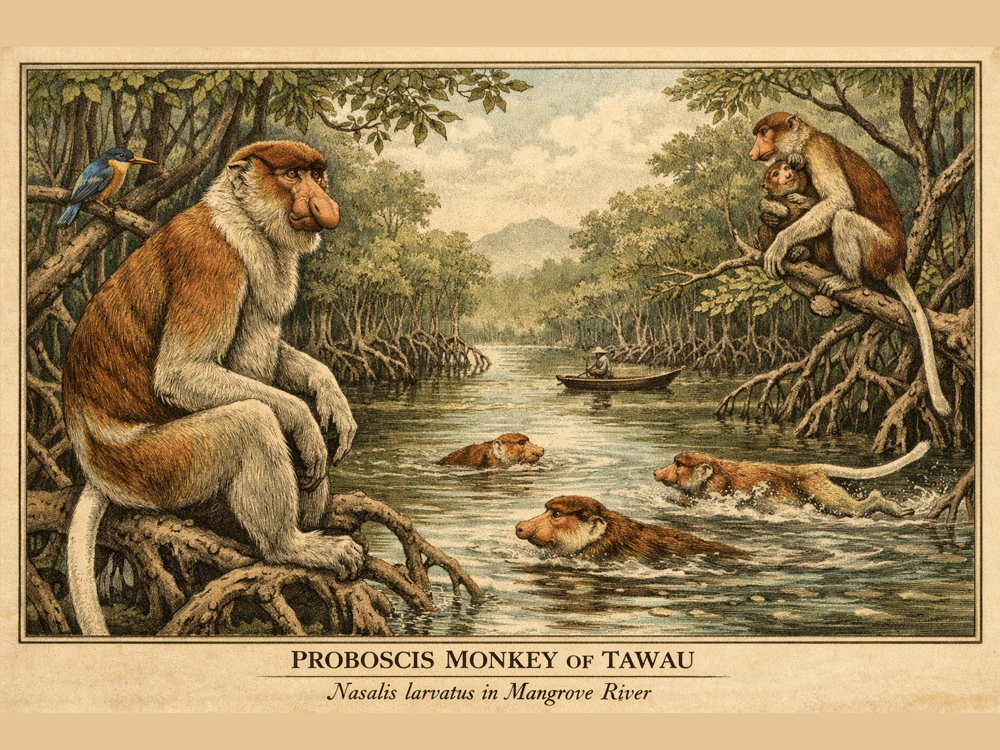
Proboscis Monkeys in their natural mangrove habitat
Conservation Efforts & NGOs
The conservation of Proboscis Monkeys in Sabah thrives through the synergy of research, academia, and grassroots action. Multiple organizations and individuals are working together to protect this endangered species.

Henry Bernard & John Sha
Researchers documenting Proboscis population status and threats in East Sabah, ensuring conservation strategies are grounded in evidence.

Joseph Tangah & Team
Universiti Malaysia Sabah researchers studying isolated Proboscis populations and mangrove degradation impacts, highlighting ecological consequences of habitat fragmentation.
The Proboscis Monkey is listed as Endangered due to habitat loss and mangrove deforestation. Local initiatives in Tawau include:
- Sabah Wildlife Department - Leads the Proboscis Monkey Action Plan 2019 - 2028, supported by Danau Girang Field Centre and Yayasan Sime Darby.
- 1StopBorneo Conservation - Active in Tawau, focusing on mangrove protection and community awareness.
- Wildlife Sanctuary Sabah - Mangrove restoration and replanting projects.
- Community-based groups - Local fishermen and youth groups replant mangroves along Tawau River estuary.
Tawau's local volunteers bring conservation to life through mangrove replanting and awareness campaigns. Their work fosters respect for the monkeys as neighbors rather than tourist commodities, embedding conservation within community values.
Did You Know?
The unique Proboscis Monkey (Nasalis larvatus) is one of Borneo's most fascinating and bizarre inhabitants. Here are some remarkable facts about this iconic primate:
- Champion Swimmers: They are exceptional swimmers and the most aquatic Old World monkey. They use partially webbed hands and feet to cross rivers with ease, often plunging from trees into the water.
- Underwater Explorers: While they are highly adept at navigating water, specific claims about diving depth should be verified with scientific sources. Their swimming abilities are well-documented and impressive.
- The Nose Knows: The exaggerated, pendulous nose of the adult male can grow over 10 cm (nearly 4 inches) long. This prominent feature serves two main purposes:
- Attracting Mates: Females prefer males with larger noses, which may indicate genetic fitness.
- Sound Amplifier: The nose acts as a resonating chamber, amplifying their loud honks and calls to communicate effectively across their mangrove and riverine habitats.
- Habitat Harmony: Proboscis monkeys share their environment with other primates, such as the Red Leaf Monkey (Presbytis rubicunda). However, they avoid competition by occupying different ecological niches - Proboscis monkeys prefer river edges and mangroves, while Red Leaf Monkeys typically stick to the forest canopy.
- Diverse Communication: They use a variety of unique vocalizations, including loud honks, coughs, and distinctive splashing sounds when moving through the water, to interact within their social groups.
- Specialized Digestion: Their pot-bellied appearance comes from a large, multi-chambered stomach that ferments leaves, similar to ruminant animals. This allows them to thrive on a diet that other monkeys cannot digest efficiently.