
eTawau > Sabah > West Coast Division > Kota Belud District > Kampung Sayap
A village on the northern flank of Mount Kinabalu — and the quiet back door into a World Heritage forest
Most visitors to Kinabalu Park arrive at the headquarters on the Ranau road, at the main gate, with the car park full. Kampung Sayap is the other way in. It lies on the northern side of the massif, in the Kota Belud district, reached from Kota Belud town rather than from Kundasang — and the Sayap Substation of Kinabalu Park sits here, at roughly a thousand metres, a good deal lower than the headquarters and a great deal quieter.
About three kilometres before the village centre you come to Eco-Edu Tourism Tinuman, a village-run place for camping, walking and swimming. Its board tells you most of what there is to do here, and it is honest about the scale of the offer.
There are village home stays in Sayap and on the Sayap–Nahaba road, and the Sayap Substation itself is the way into the park's northern forest. This is not a resort. It is a village that has decided to look after its own hill and let people come and see it.
I spent part of the Christmas holiday of 2022 here with my family, and car-camped one night at Tinuman on my own. I was not surveying anything. I was carrying a camera, as I always am. Three records came out of those few days, and putting them on one page is the reason this page exists.
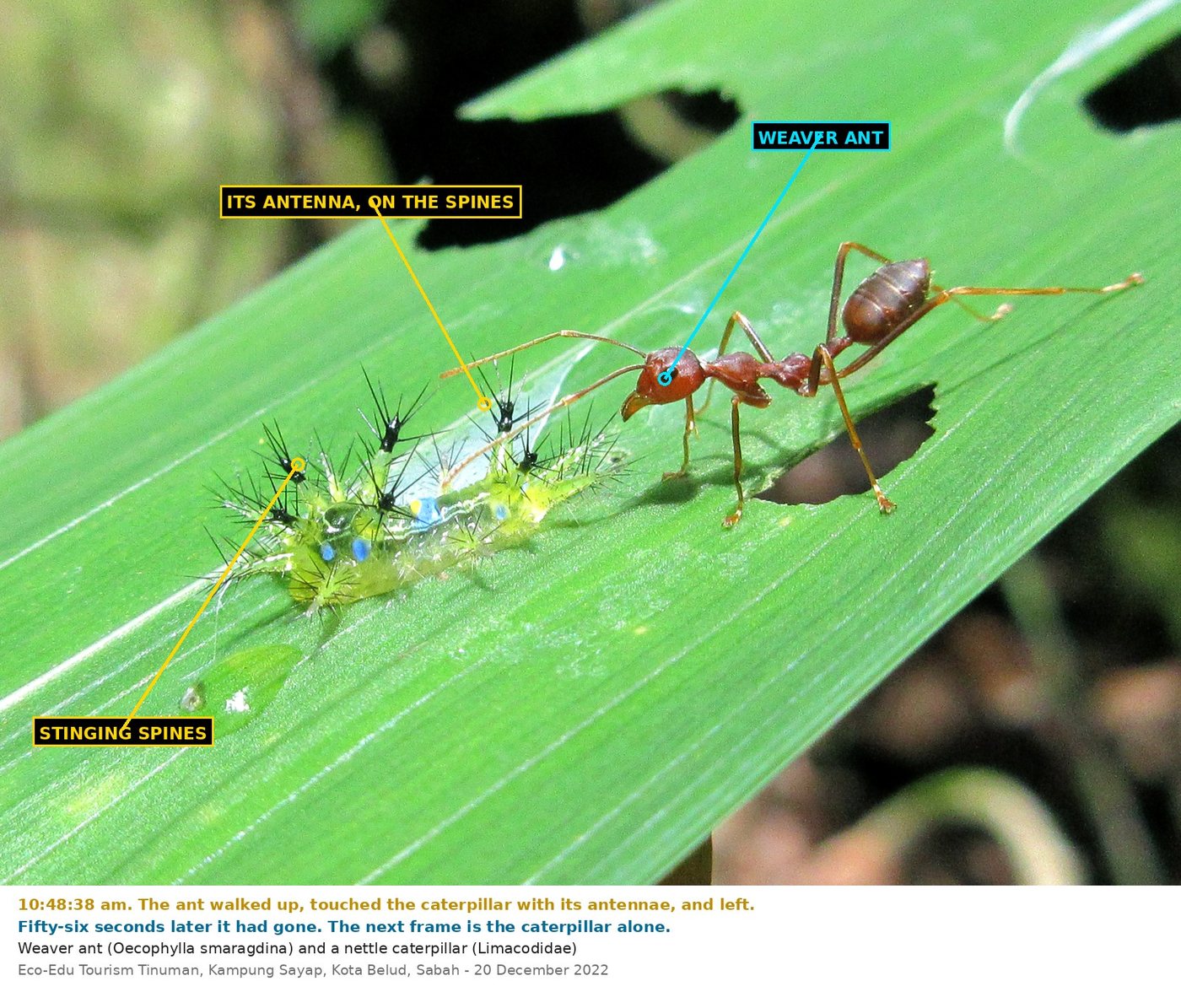
On a blade of long grass, a weaver ant (Oecophylla smaragdina) walked up to
a small green nettle caterpillar (family Limacodidae), stopped, touched it with its
antennae, and left it alone. Everyone expects the ant to win that meeting. It did not even try.
The caterpillar's black spines are hollow and drain a poison gland, and they break off on contact —
so there is nowhere on that animal for an ant's jaws to take hold, and the ant found that out by
touch without ever being stung. My two frames are 56 seconds apart: the ant is in
the first and gone from the second.
— When a
weaver ant met a nettle caterpillar
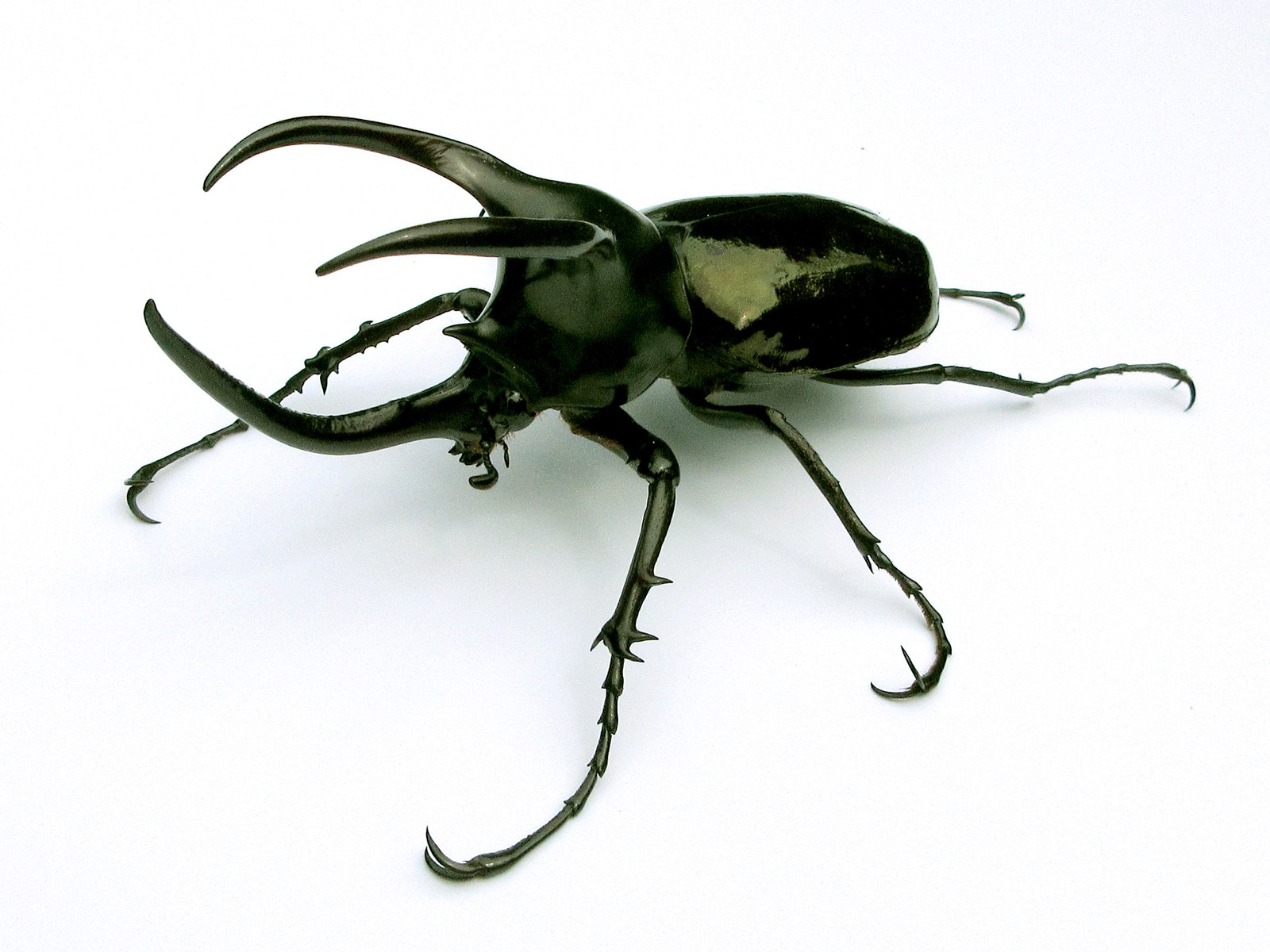
A big male Chalcosoma lay motionless on the cement floor of the home stay's
public hall all morning. People walked past it and took it for dead. It was not: when I picked it up
it made a soft rasping squeak — beetles of this group stridulate when handled — and I photographed it
and let it go on natural ground nearby.
— The
Three-horned Rhinoceros Beetle
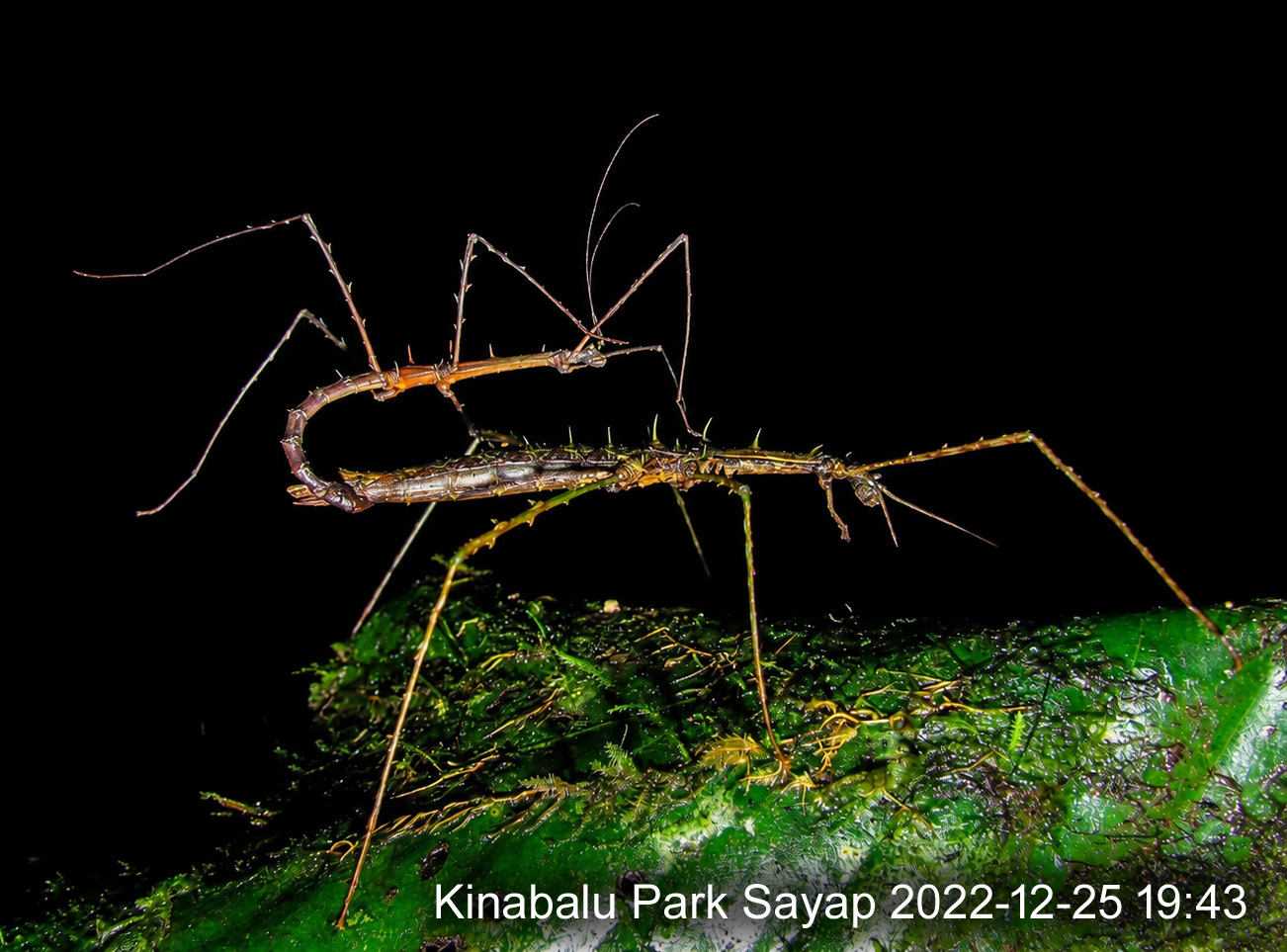
The same evening, up at the substation, a pair of wingless stick insects
(Phasmatodea, probably Lonchodinae) sat motionless in copula on a mossy leaf. The female is about
125 mm long; the male is a fraction of her size. Their colouring matched the moss so
exactly that they were effectively invisible — they were found only with a strong torch, and they
never moved while I photographed them. It was the first time I had seen the animal.
— Wingless stick insects mating
at night
Because a place with dated records in it is a different thing from a place with a description in it. Sayap now has three, made four days apart, in three different situations — a campsite, a building, and forest at night. That is the beginning of a local list. If I go back, or if you send me yours, this page grows.
And because the northern side of Kinabalu is genuinely under-visited. Sabah has been planning for years to spread the load on the park — the proposed Kinabalu Park second hub at Kota Belud is that argument in official form, with its entry point at Kg. Melangkap. Sayap sits in the same quiet band of country: lower, wetter, greener, and almost empty of visitors compared with the Ranau side.
About this page. All photographs by Wong Fook Yee, taken at Kampung Sayap in
December 2022 — the signboard with a Canon PowerShot SX510 HS, the insects with a Canon IXUS 285 HS.
Dates and times throughout are from the photographs' own EXIF data. The elevation given for the Sayap
Substation is the photographer's own figure. Contact details for Eco-Edu Tourism Tinuman are on its
own signboard and on its Facebook page; they are deliberately not reproduced here.
This page replaces a one-line stub that had stood since 2023. Written 13 September 2026, and added to
as further records are made.