Ficus dubia
深紅果榕 - The Scrambling Strangler Fig of Southeast Asia (Monoecious 雌雄同株)
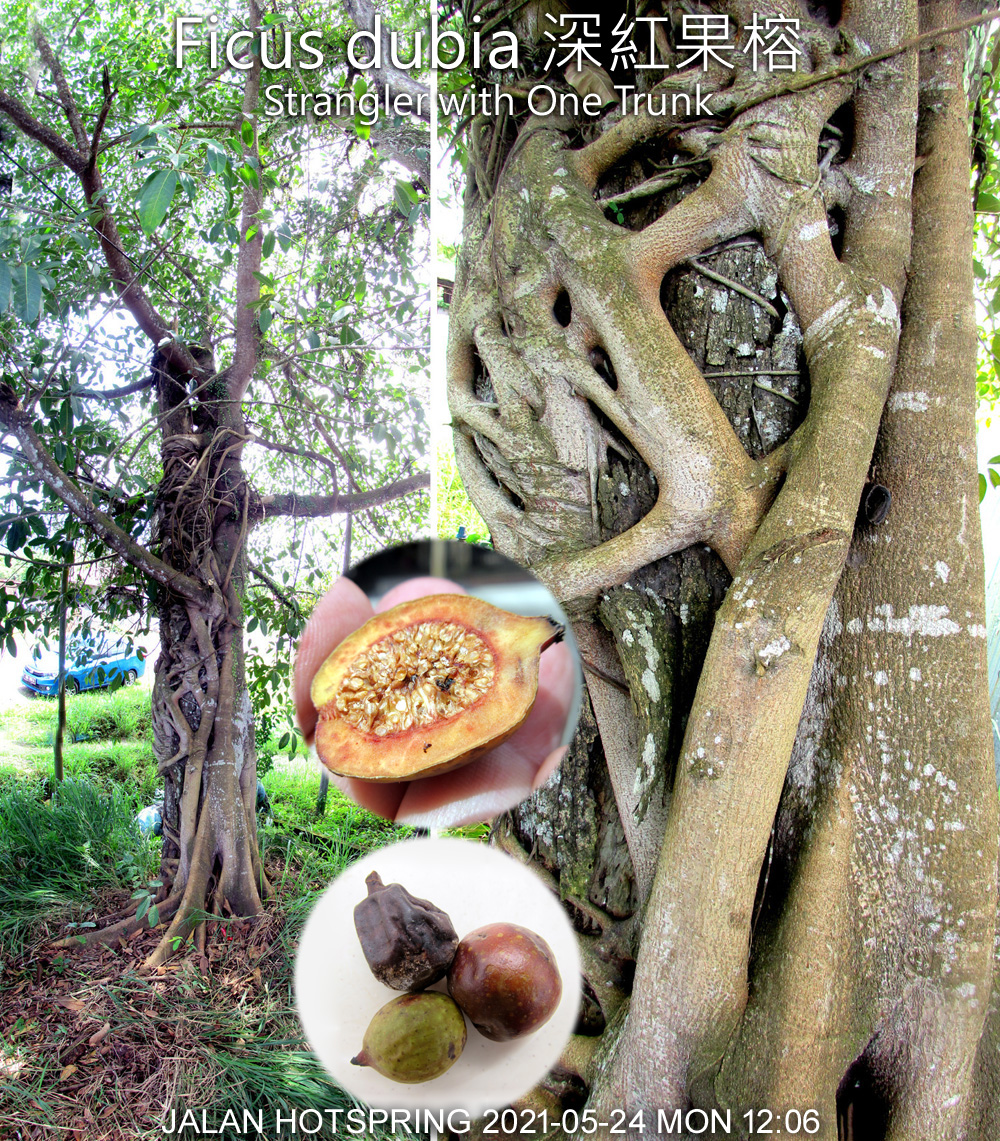
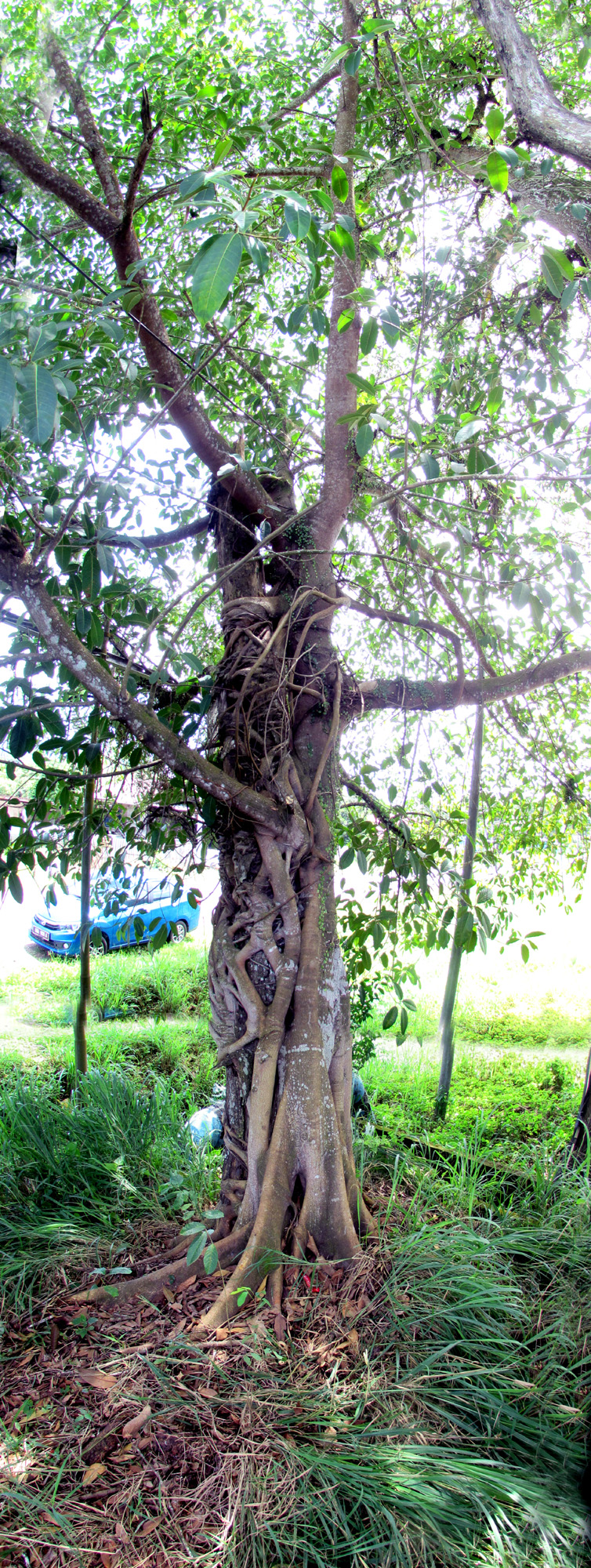
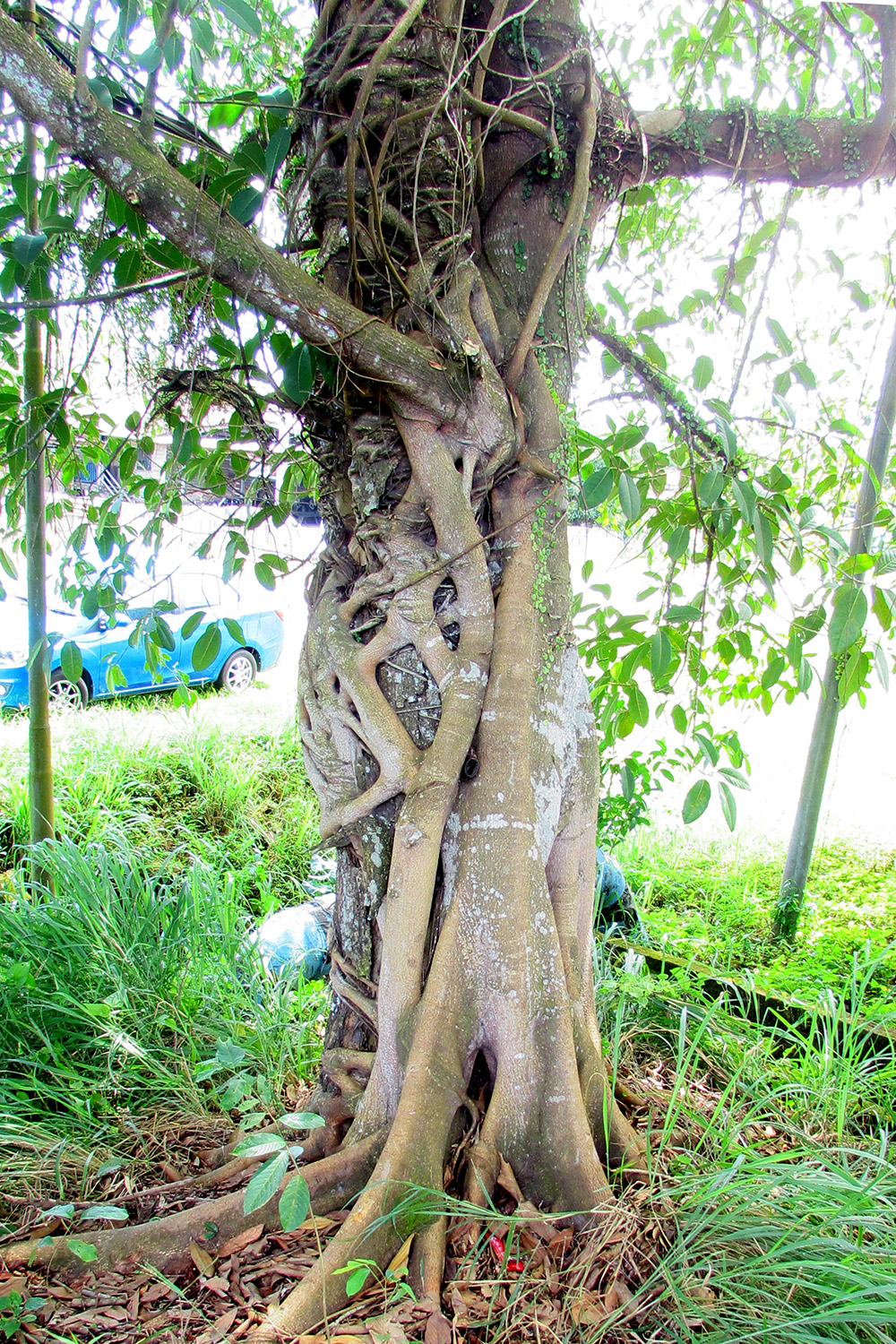
Mature Ficus dubia strangler fig at Jalan Air Panas, showing the remains of the host tree within the fig's trunk
Introduction
Ficus dubia is a remarkable scrambling strangler fig native to the tropical forests of Southeast Asia, particularly Malaysia, Singapore, Sumatra, and northern Borneo. This species employs one of nature's most fascinating survival strategies - beginning life as an epiphyte high in the forest canopy before gradually enveloping and ultimately replacing its host tree.
As a monoecious species (雌雄同株), both male and female flowers are produced on the same tree, facilitating its specialized pollination system with fig wasps. The tree plays a vital ecological role as a keystone species, supporting diverse wildlife through its year-round fruit production and creating unique microhabitats within its structure.
Botanical Description
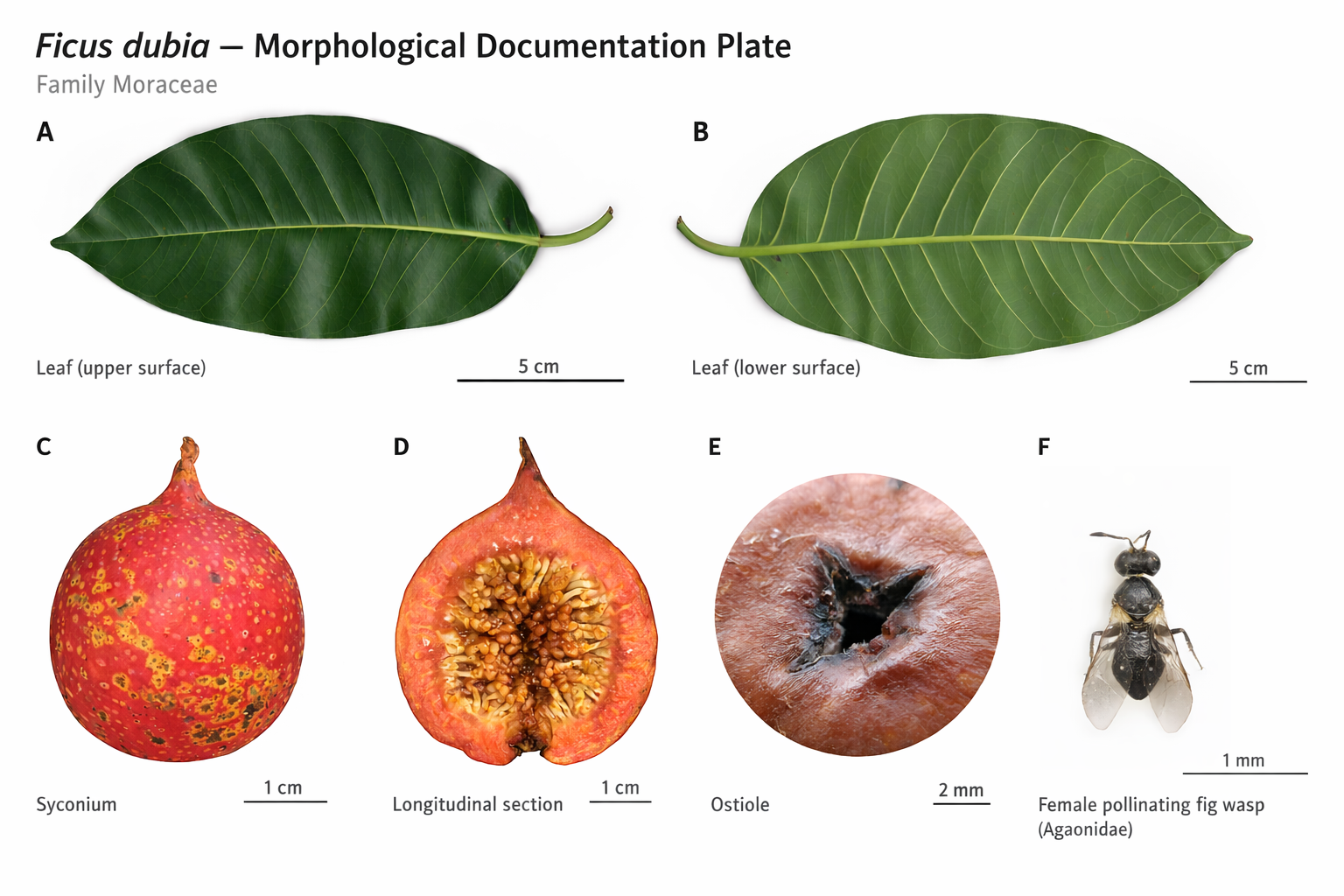
Morphological Features
Growth Habit
Scrambling strangler - begins as epiphyte, becomes independent tree up to 30m tall.
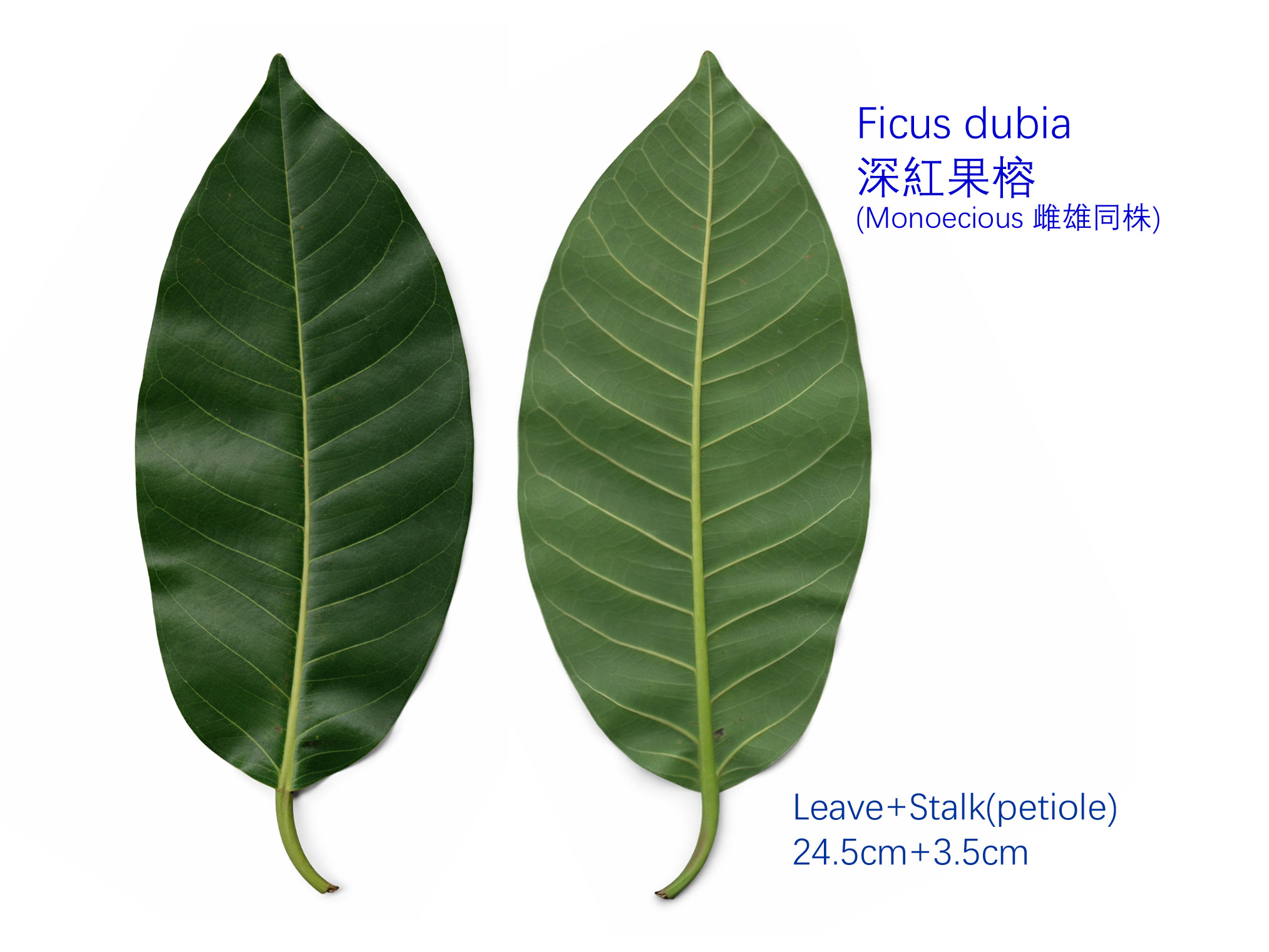
Leaves of Ficus dubia
Broad, leathery, dark green leaves adapted for shaded forest conditions, 20-25 cm long.
Fruits (Figs)
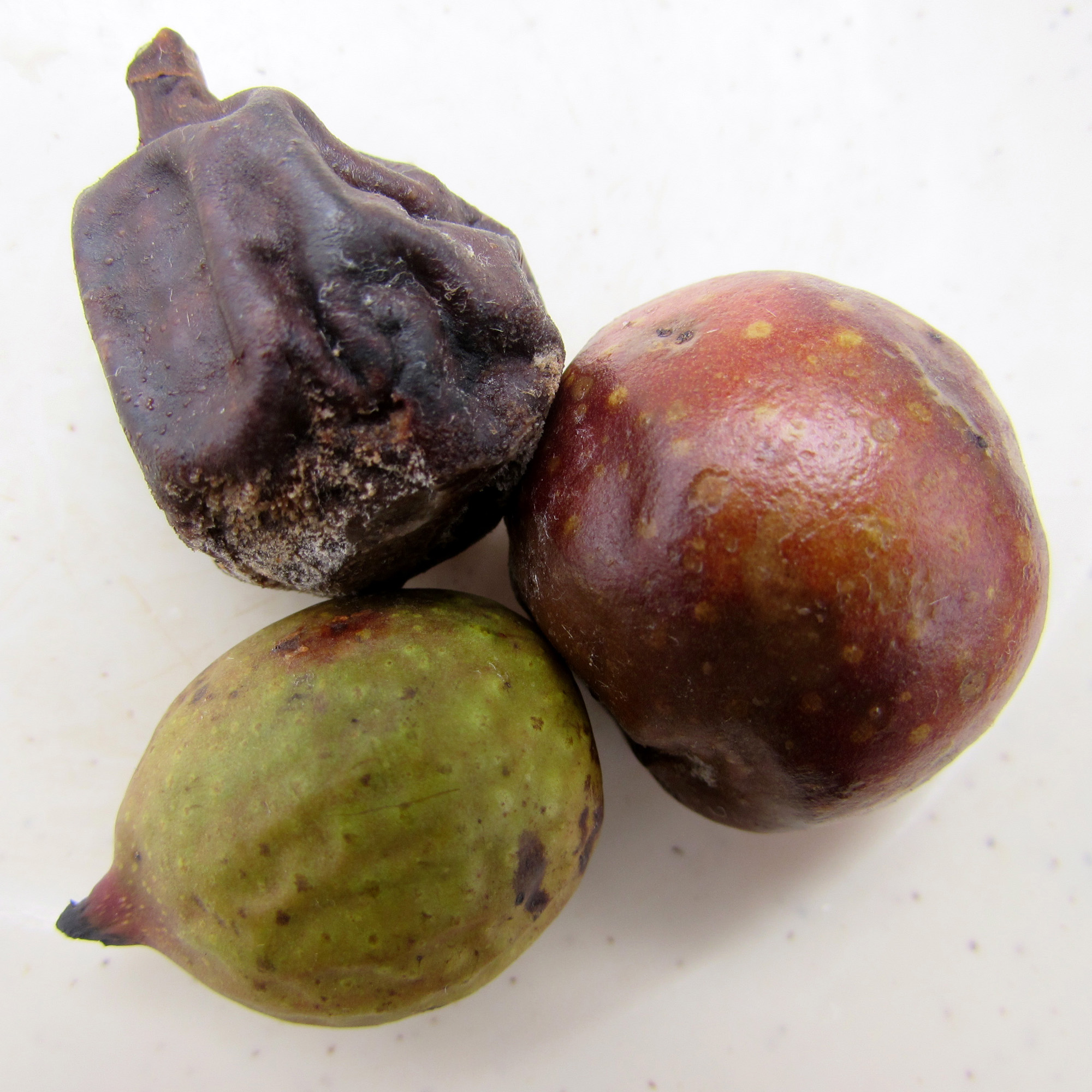
Small, rounded syconia, deep red when ripe, 1-2 cm diameter, produced year-round.
Bark & Trunk
Smooth, pale grey-beige bark forming characteristic lattice structure around host.
Reproductive Biology
Monoecious: Both male and female flowers produced on the same tree within enclosed syconia.
Pollination: Specialized mutualism with specific fig wasp species (yet to be formally identified for F. dubia).
Strangler Life Cycle: Begins as bird-dispersed seed germinating in canopy, sends aerial roots downward that eventually ground and envelop host.
The Strangler Process
Seed Germination
Seed deposited by birds in host tree canopy
Aerial Roots
Roots descend toward ground
Encasement
Roots fuse around host trunk
Independence
Fig becomes self-supporting tree
Distribution and Habitat
Ficus dubia is distributed across Southeast Asian tropical forests with specific habitat requirements for its unique life strategy.
Geographic Range
- Peninsular Malaysia: Lowland forests
- Singapore: Remaining forest patches
- Indonesia: Sumatra and northern Borneo
- Malaysian Borneo: Sabah and Sarawak
Preferred Habitats
- Primary lowland tropical rainforests
- Undisturbed forest ecosystems
- Areas with mature host trees for establishment
- Elevation: 0-800 meters above sea level
- Indicator species of healthy forest ecosystems
Ecological Role & Wildlife Interactions
As a keystone species, Ficus dubia supports extensive food webs and contributes significantly to forest regeneration.
Pollination System
The tree maintains an obligate mutualism with specific fig wasps. While the exact species for F. dubia requires further study, this relationship follows the classic fig-wasp co-evolution pattern where wasps pollinate flowers while laying eggs in some ovaries.
Fruit Consumers
- Birds: Hornbills, pigeons, barbets, bulbuls
- Mammals: Flying foxes, macaques, squirrels, civets
- Importance: Provides critical food during lean seasons when other fruits are scarce
Ecosystem Services
- Forest regeneration: Animals disperse seeds to new locations
- Habitat creation: Complex trunk structure hosts epiphytes, insects, and nesting sites
- Soil stabilization: Extensive root systems prevent erosion
- Carbon sequestration: Large mature trees store significant carbon
- Indicator species: Presence indicates healthy, undisturbed forest
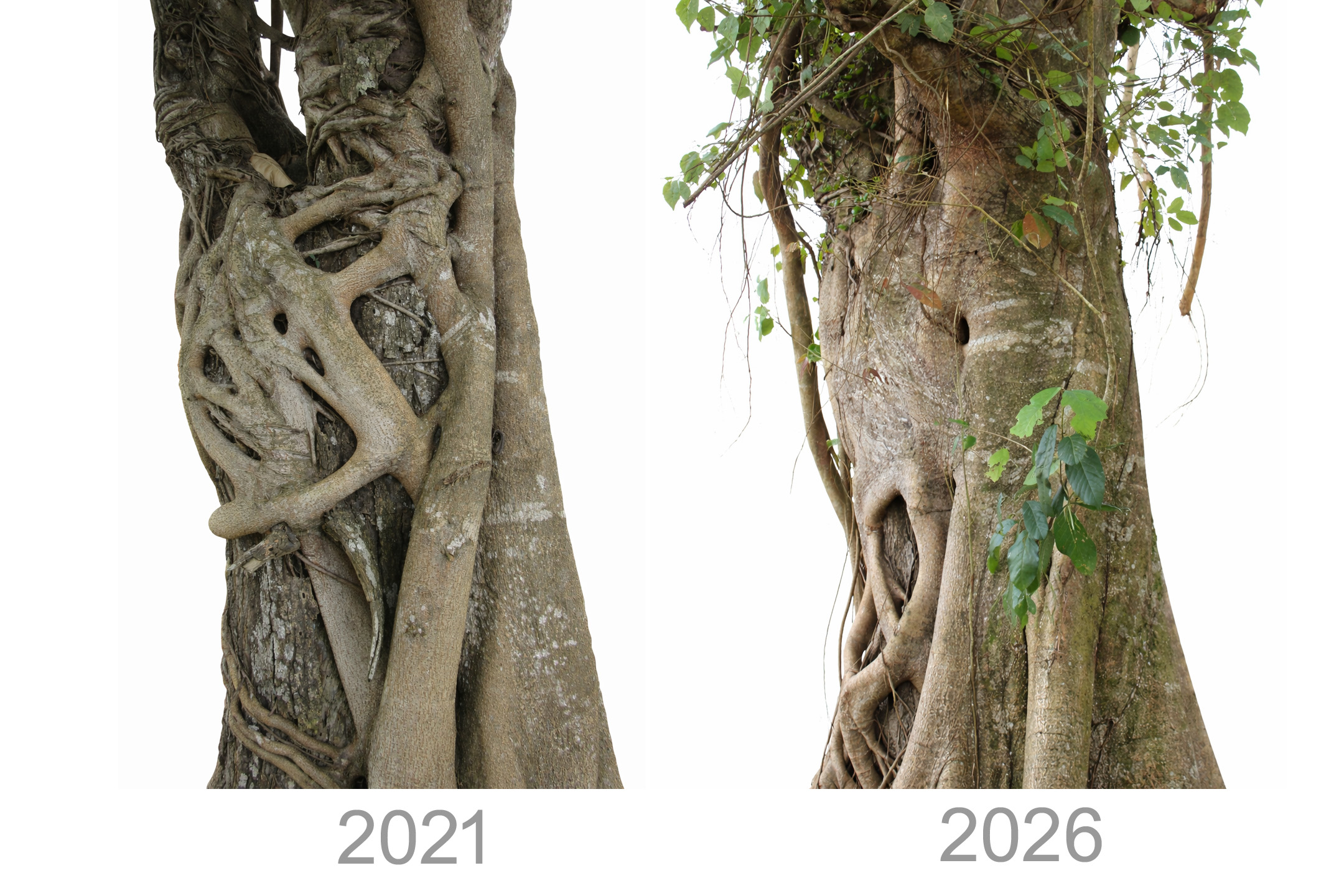
Remarkable comparison shows the dramatic progression of a strangler fig over just five years.
The Silent Takeover: 5-Year Transformation
This remarkable comparison shows the dramatic progression of a strangler fig over just five years.
2021
Initial Establishment
Young Ficus dubia with aerial roots descending. Approximately 50% of host tree visible.
2023
Root Fusion Begins
Aerial roots thicken and start fusing. Host tree 70% covered.
2026
Near Complete Encasement
Fig roots form solid trunk. Host tree 90% covered, only fragments visible.
2031 (Projected)
Complete Replacement
Host tree completely decomposed. Fig appears as original, self-standing tree.
Comparison with Related Strangler Figs
Ficus dubia belongs to the "Stranglers with One Trunk" group. Here's how it compares to related species:
| Species | Common Name | Key Distinguishing Features | Sexual System |
|---|---|---|---|
| Ficus dubia | Deep Red Fruit Fig | Scrambling habit, smooth pale bark, deep red fruits | Monoecious |
| Ficus callophylla | 美葉榕 | Beautiful leaves, less aggressive strangling | Monoecious |
| Ficus cucurbitina | 南瓜榕 | Gourd-shaped fruits, prominent basal bracts | Monoecious |
| Ficus subcordata | 近心葉榕 | Heart-shaped leaf bases, smaller fruits | Monoecious |
| Ficus subgelderi | 淡金榕/金葉榕 | Golden leaf undersides, dioecious system | Dioecious |
Identification Tip: Look for the combination of scrambling growth habit, smooth pale bark forming lattice around host tree, deep red fruits, and monoecious flowering system to identify Ficus dubia.
Image Gallery
Did You Know?
Slow Conquest
The strangling process can take 10-50 years to complete, with the fig gradually constricting the host tree's vascular system.
Year-round Restaurant
Like many figs, F. dubia produces fruit year-round, making it a critical food source when other trees aren't fruiting.
Micro-habitat Creator
The lattice-like trunk structure creates ideal conditions for orchids, ferns, insects, and even small mammals to inhabit.
Silent Recycler
As the host tree decomposes within the fig, nutrients are recycled directly to the strangler, creating a self-fertilizing system.
Test Your Knowledge
Conservation Status
Data Deficient / Near Threatened
Ficus dubia faces increasing threats from habitat loss across its range. While not formally assessed on the IUCN Red List, its dependence on primary lowland forests makes it vulnerable to deforestation and land conversion.
Conservation Importance: As a keystone species, protecting F. dubia is crucial for maintaining overall forest biodiversity and ecosystem function. Conservation efforts should focus on preserving primary forest habitats and the specialized pollinator wasp populations.
Threats and Conservation Actions
Primary Threats
- Deforestation for palm oil and agriculture
- Habitat fragmentation disrupting pollinator networks
- Climate change affecting forest ecosystems
- Loss of mature host trees needed for establishment
Conservation Actions
- Protection of remaining primary lowland forests
- Corridor creation between fragmented habitats
- Research on specific pollinator requirements
- Education about strangler fig ecological importance
- Inclusion in reforestation of degraded areas
Educational Takeaway
Ficus dubia provides powerful lessons in ecological interconnectedness. Its complex life cycle demonstrates:
Mutualism
The intricate fig-wasp pollination relationship shows specialized co-evolution.
Keystone Species
How one species can support entire food webs and ecosystem functions.
Ecological Time
Forest dynamics operate on timescales of years to centuries, not days.
Studying strangler figs like F. dubia helps students appreciate biodiversity, species interactions, and the importance of conservation in tropical ecosystems.