Fig Trees of Borneo

婆罗洲榕树:热带雨林的生命线
Keystone Species of the World's Oldest Rainforests
English 中文 Bahasa Melayu

Fig Trees of Borneo

The Rainforest's Lifeline
Last Updated: January 28, 2026

Borneo's lush rainforests, among the oldest and most biodiverse on Earth, are home to over 150 species of fig trees (Genus Ficus). These remarkable trees are considered keystone species - essential components that hold together the complex rainforest ecosystem.

From the towering Ficus stupenda reaching heights of 50 meters to the tiny epiphytic Ficus deltoidea (Mistletoe Fig), each species plays a unique role in sustaining Borneo's extraordinary biodiversity, indigenous cultures, and regional climate regulation.

Figs provide a continuous food source when other fruits are scarce, supporting over 1,200 animal species including orangutans, hornbills, and the highly specialized fig wasps that have co-evolved with these trees for millions of years.
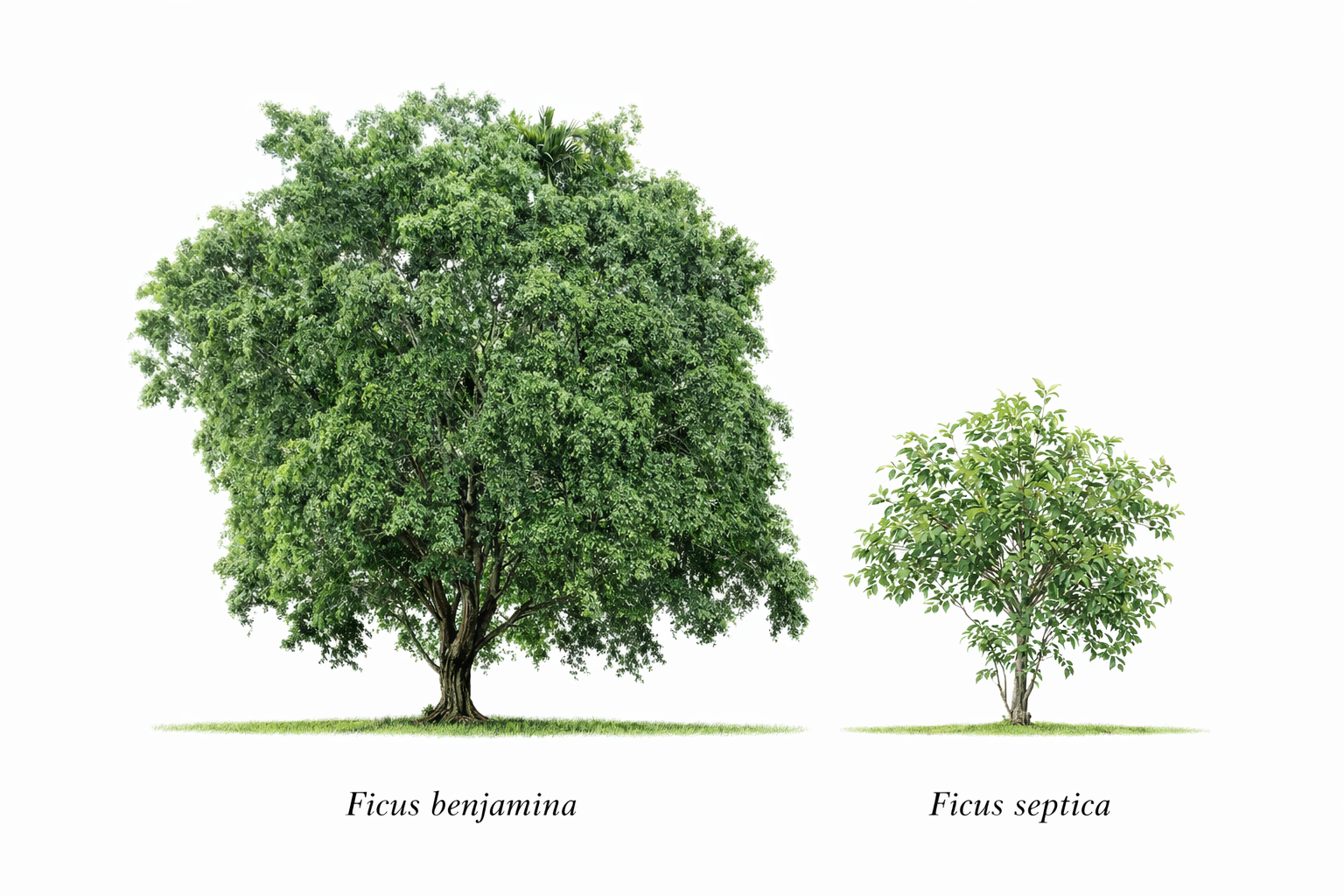
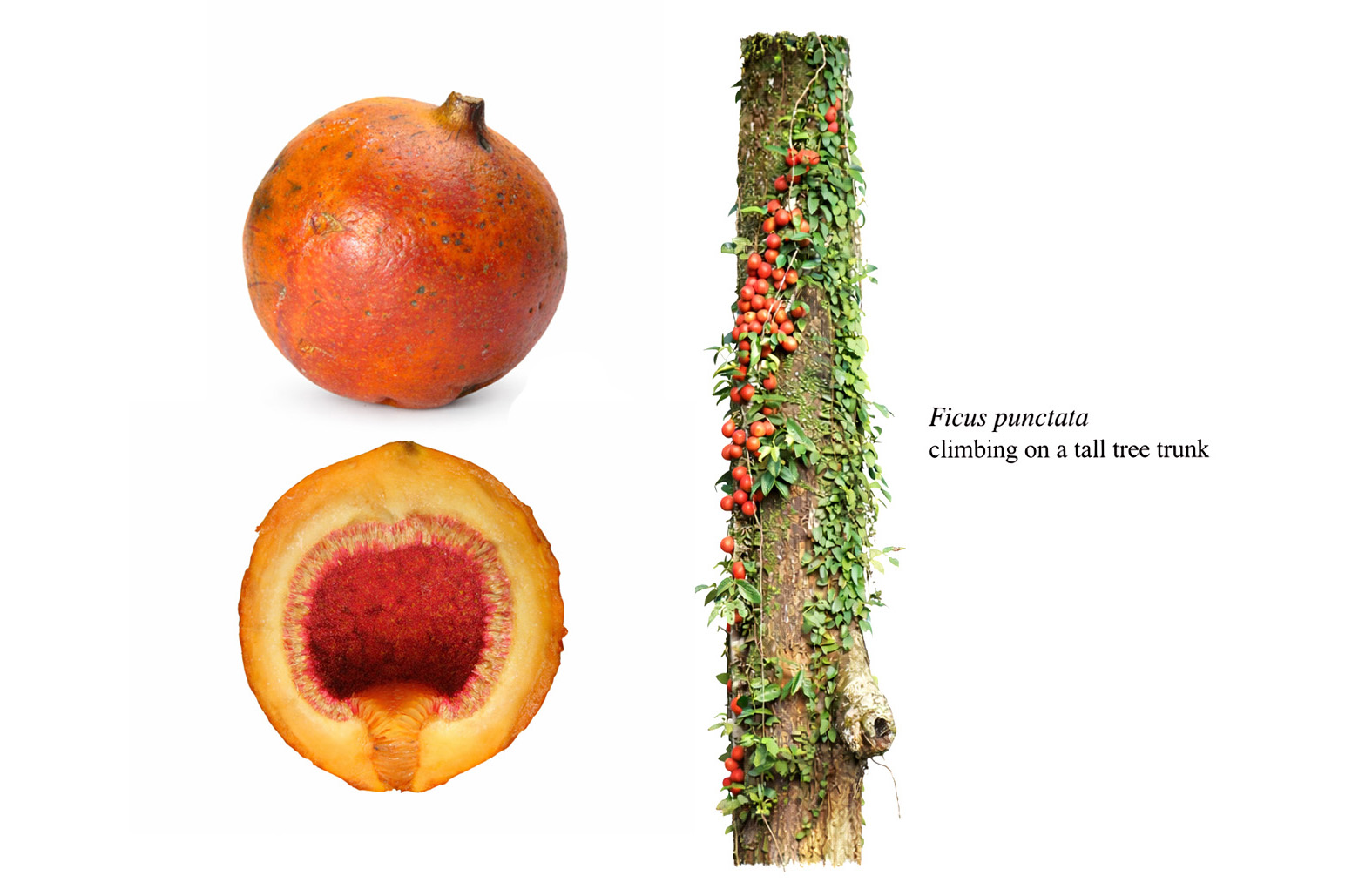
Fig tree in Borneo rainforest

A mature strangler fig (Ficus benjamina) in the Bornean rainforest

Explore the Six Fig Diversities

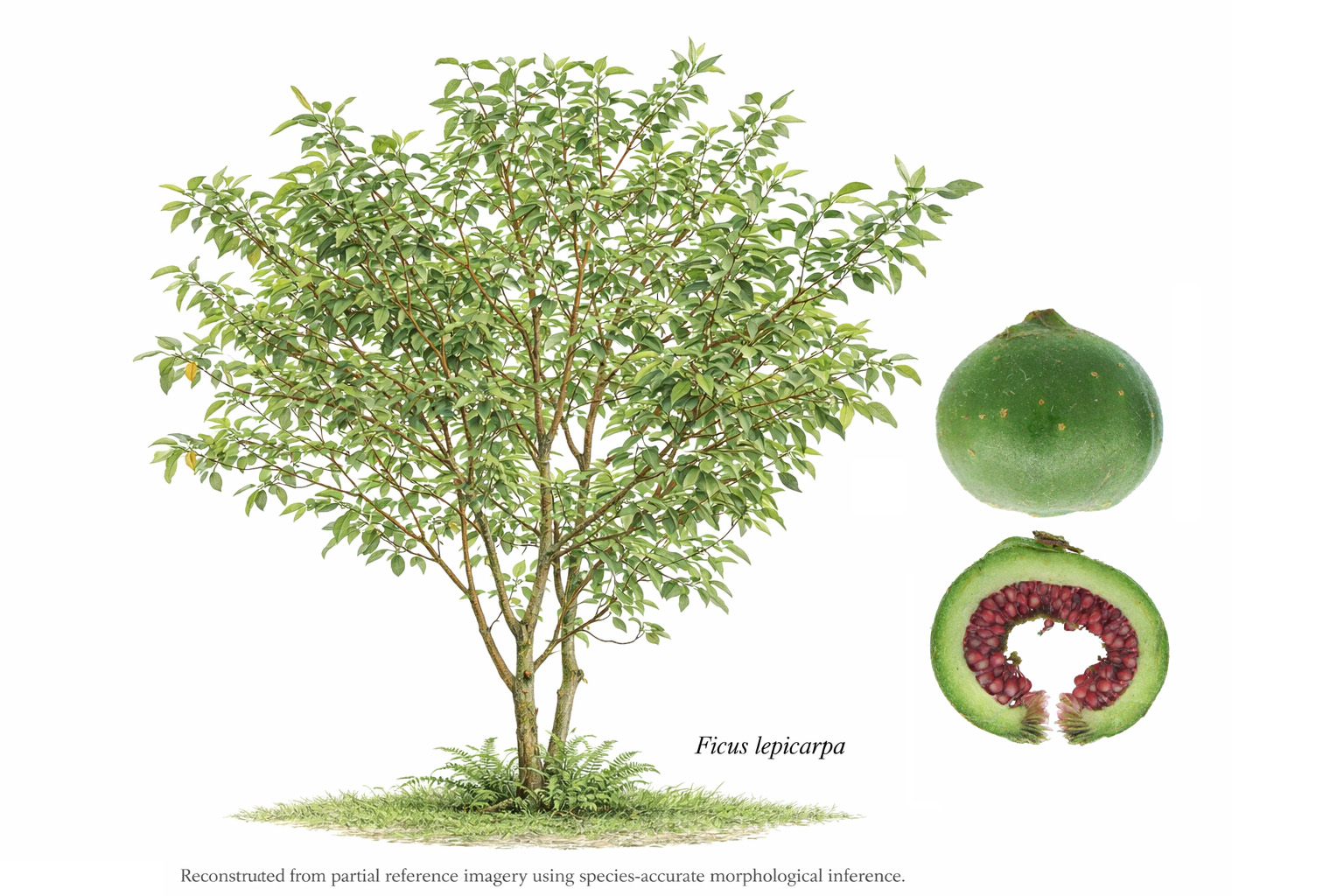
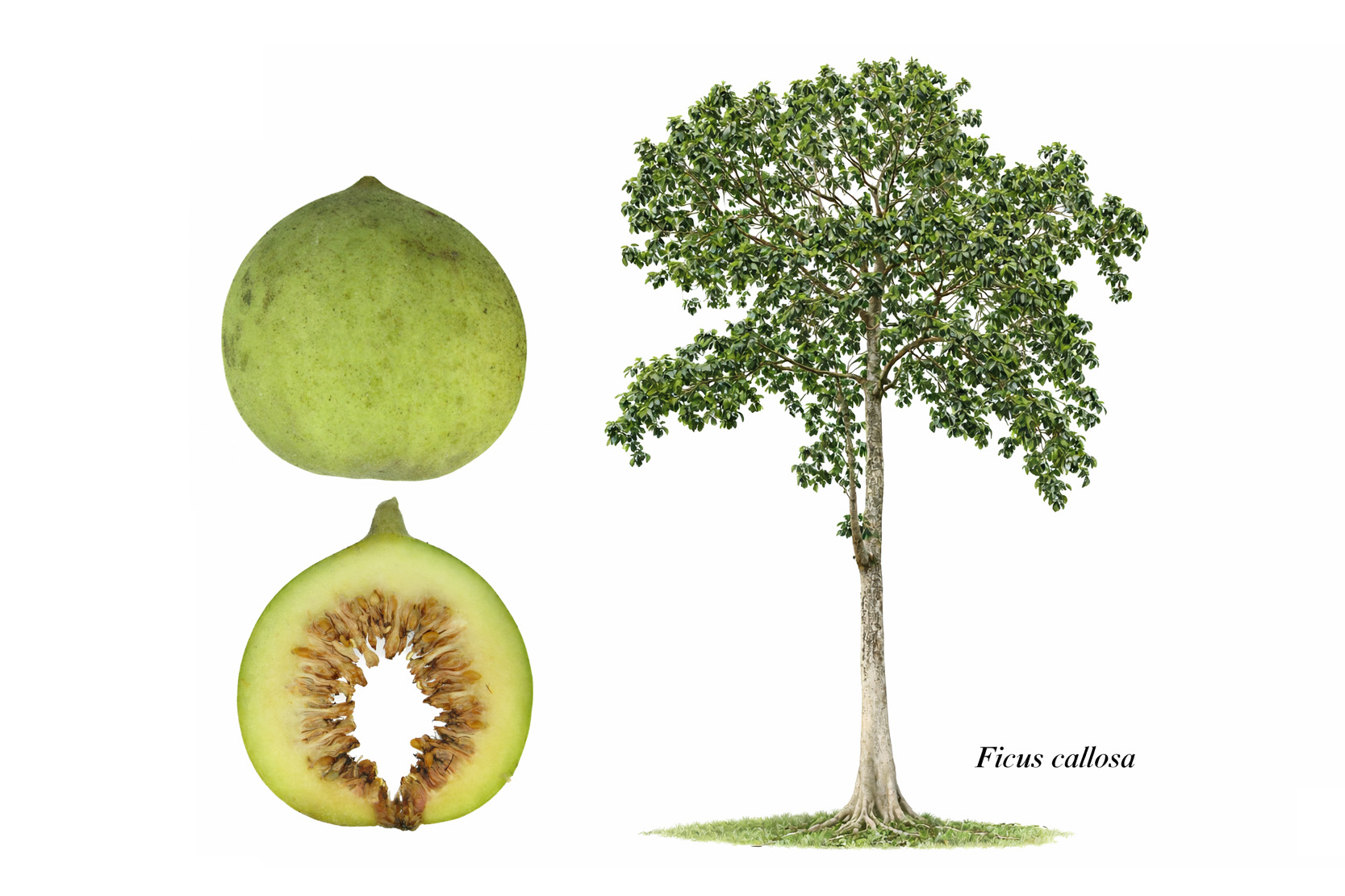
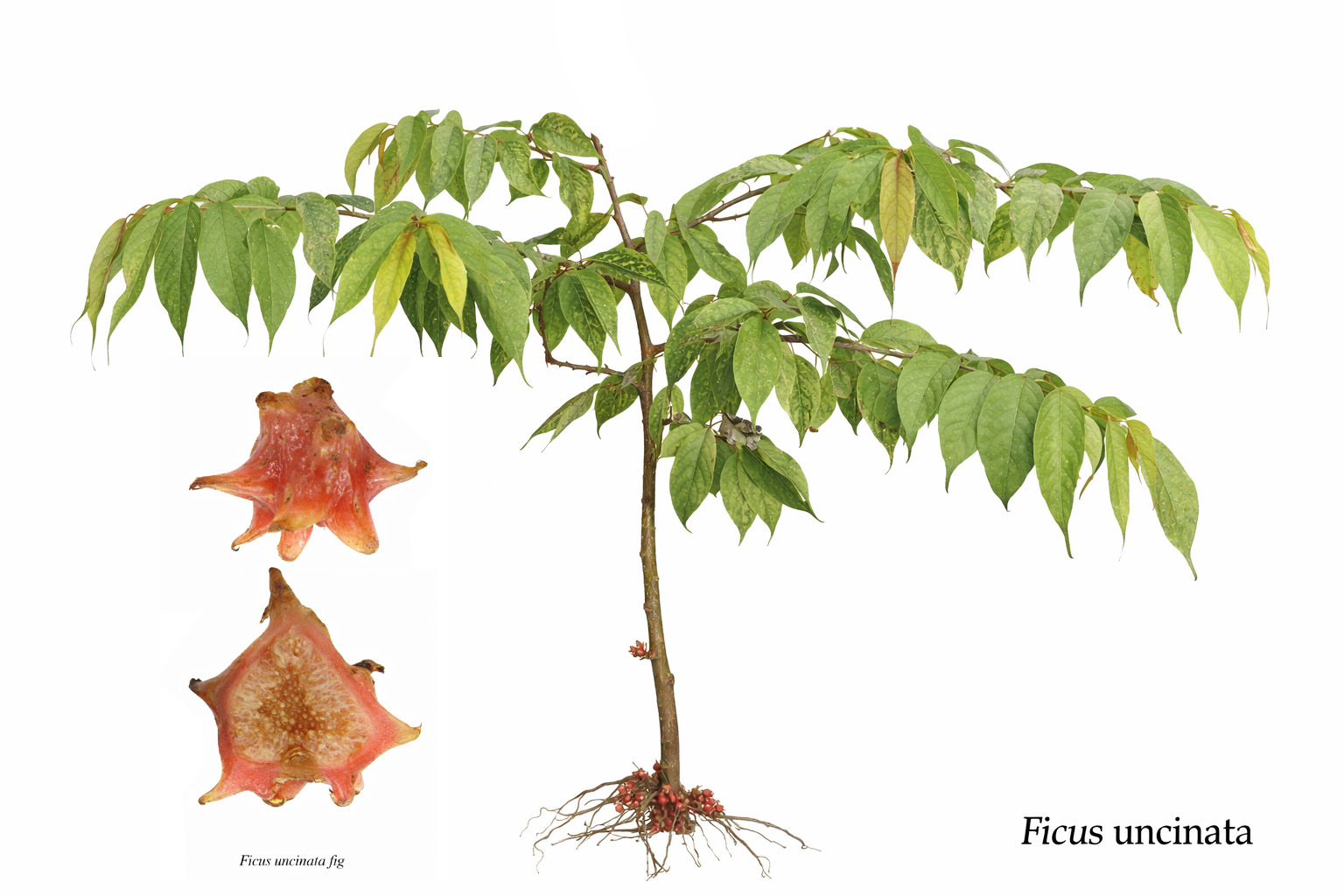
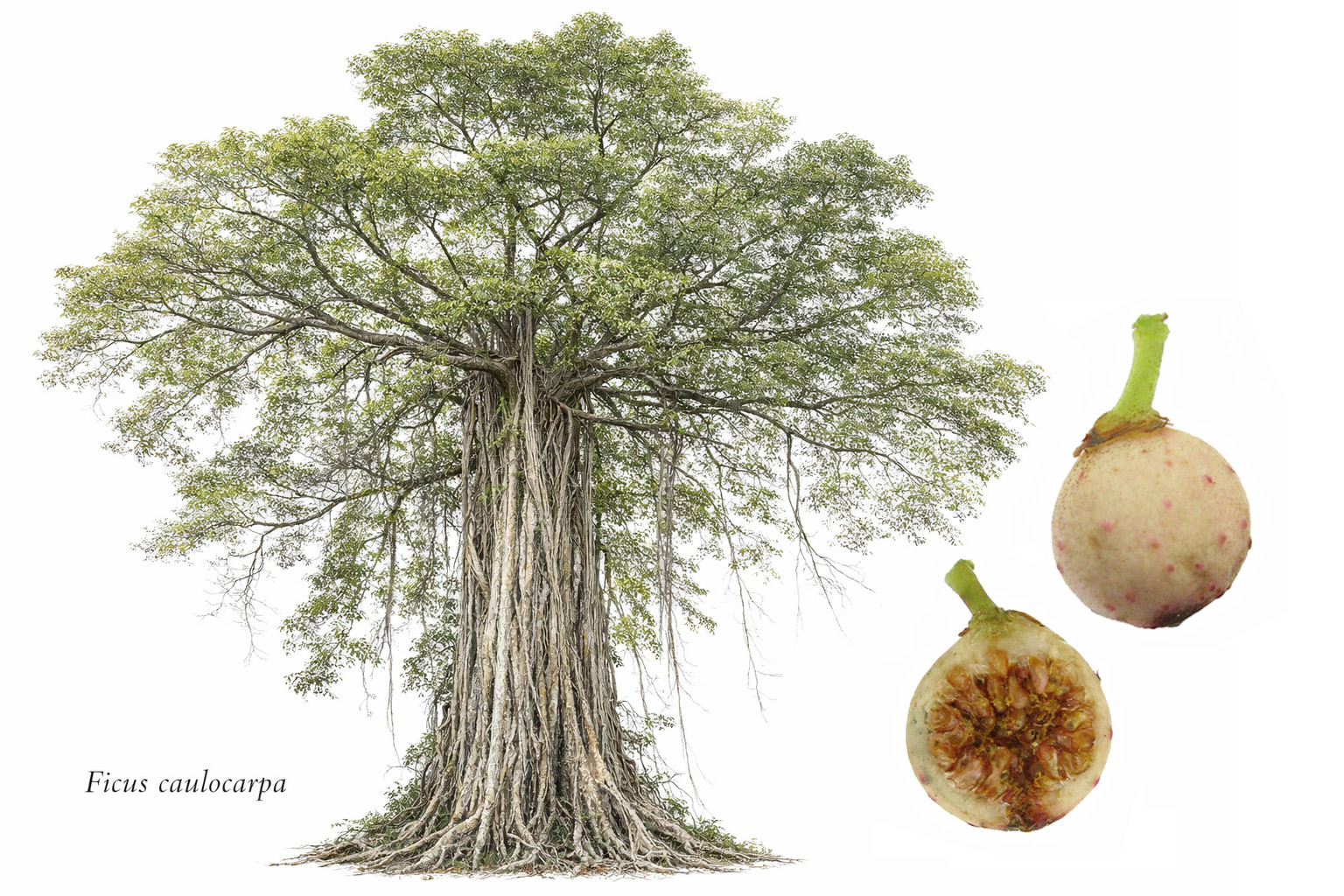
Discover the remarkable variety of growth forms among Borneo's fig trees:

Taxonomic Classification

Fig trees belong to the mulberry family (Moraceae) and represent one of the most diverse and ecologically important genera in tropical forests worldwide.

The genus Ficus is characterized by its unique inflorescence called a syconium - a specialized structure that houses hundreds of tiny flowers internally, accessible only through a small opening called the ostiole.

Botanical Description

Bornean fig trees exhibit extraordinary morphological diversity adapted to various ecological niches within the rainforest:

Growth Forms

From massive canopy trees reaching 50m to diminutive shrubs, climbers, and epiphytes. Strangler figs begin life as epiphytes before developing roots that envelop host trees.

Foliage

Leaves are typically simple, alternate, and often with prominent stipules. Some species exhibit heterophylly (different leaf forms on the same plant).

Fruit Structure

The fig is actually an inverted inflorescence (syconium) containing hundreds of tiny flowers. Fruits vary from 5mm to 6cm in diameter and ripen to various colors.

Pollination System

Each fig species has a specific mutualistic relationship with tiny agaonid wasps (1-3mm) that enter the syconium to pollinate flowers and lay eggs.

Key Adaptations:

  • Aerial roots in strangler figs that provide structural support and nutrient absorption
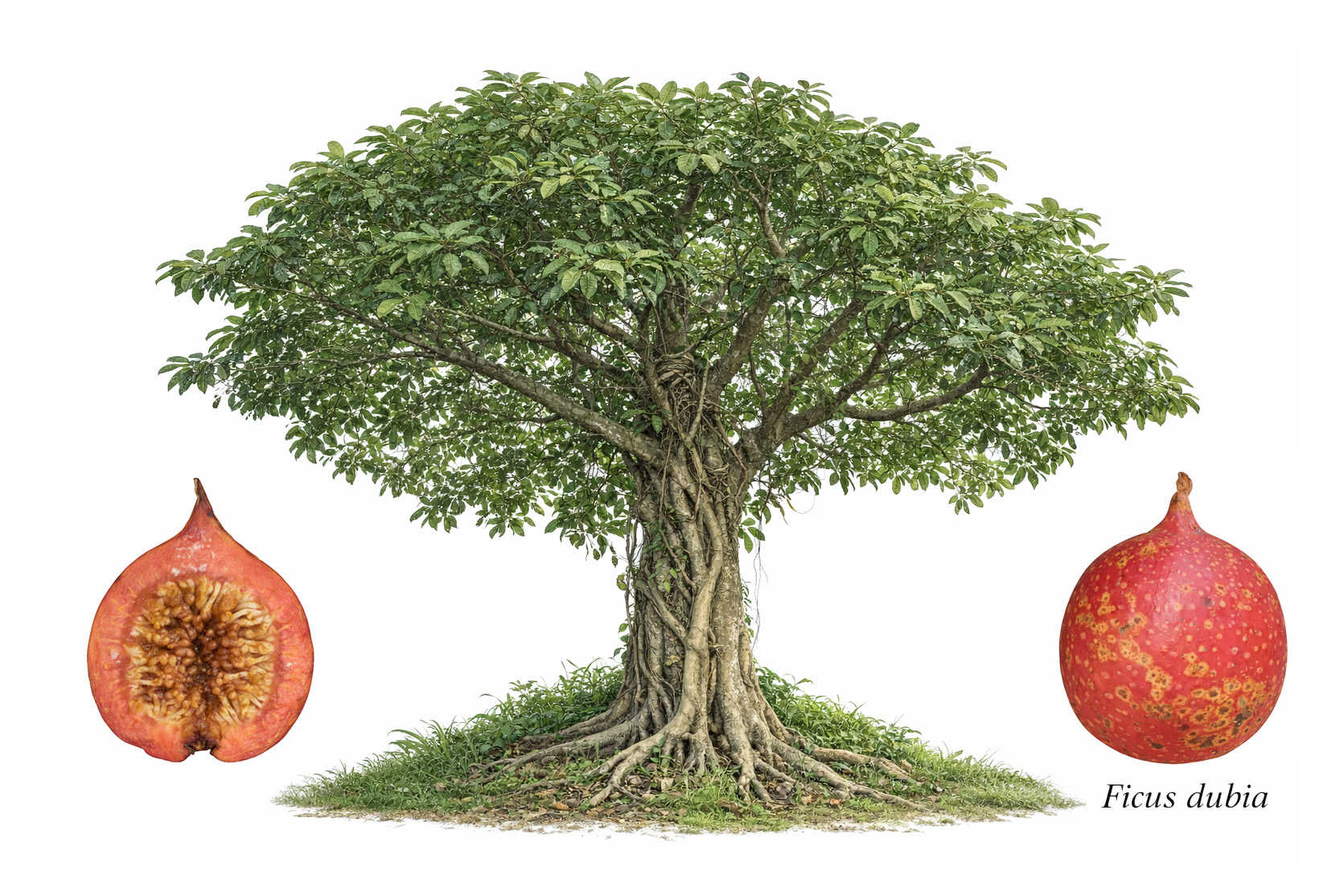
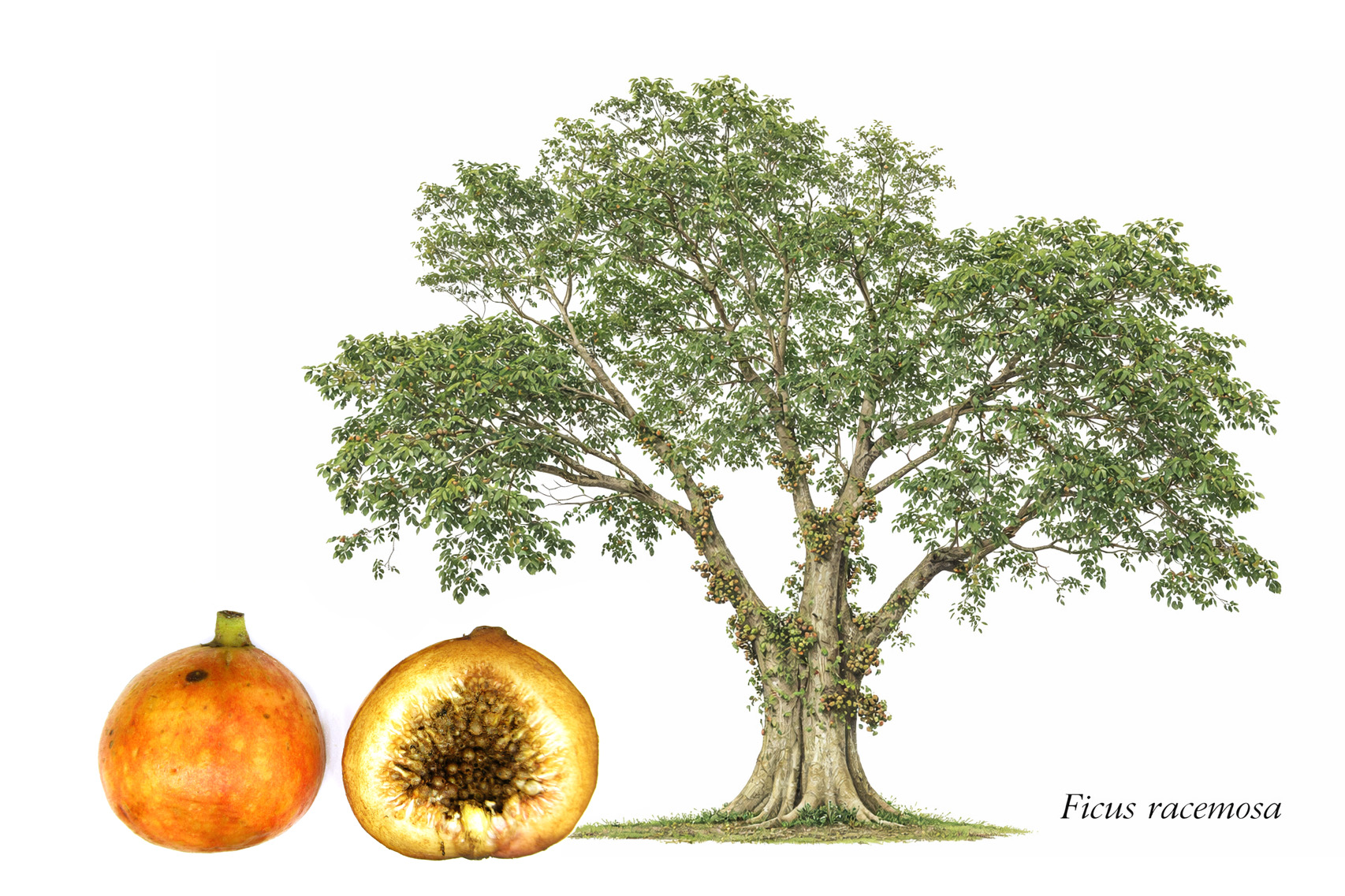
  • Cauliflory (flowers and fruits growing directly from the trunk) in species like Ficus racemosa
  • Buttress roots in large canopy species for stability in shallow tropical soils
  • Hemiepiphytic growth - beginning life on other trees before establishing independent root systems

Distribution and Habitat

Fig trees are distributed throughout Borneo's diverse ecosystems, with specific species adapted to particular environmental conditions:

Lowland Rainforests

Highest diversity with species like Ficus stupenda and Ficus altissima forming emergent canopy layers.

Montane Forests

Above 1000m, adapted species like Ficus ribes and Ficus fistulosa dominate.

Riparian Zones

Riverbanks host specialized species like Ficus grossularioides tolerant of periodic flooding.

Disturbed Areas

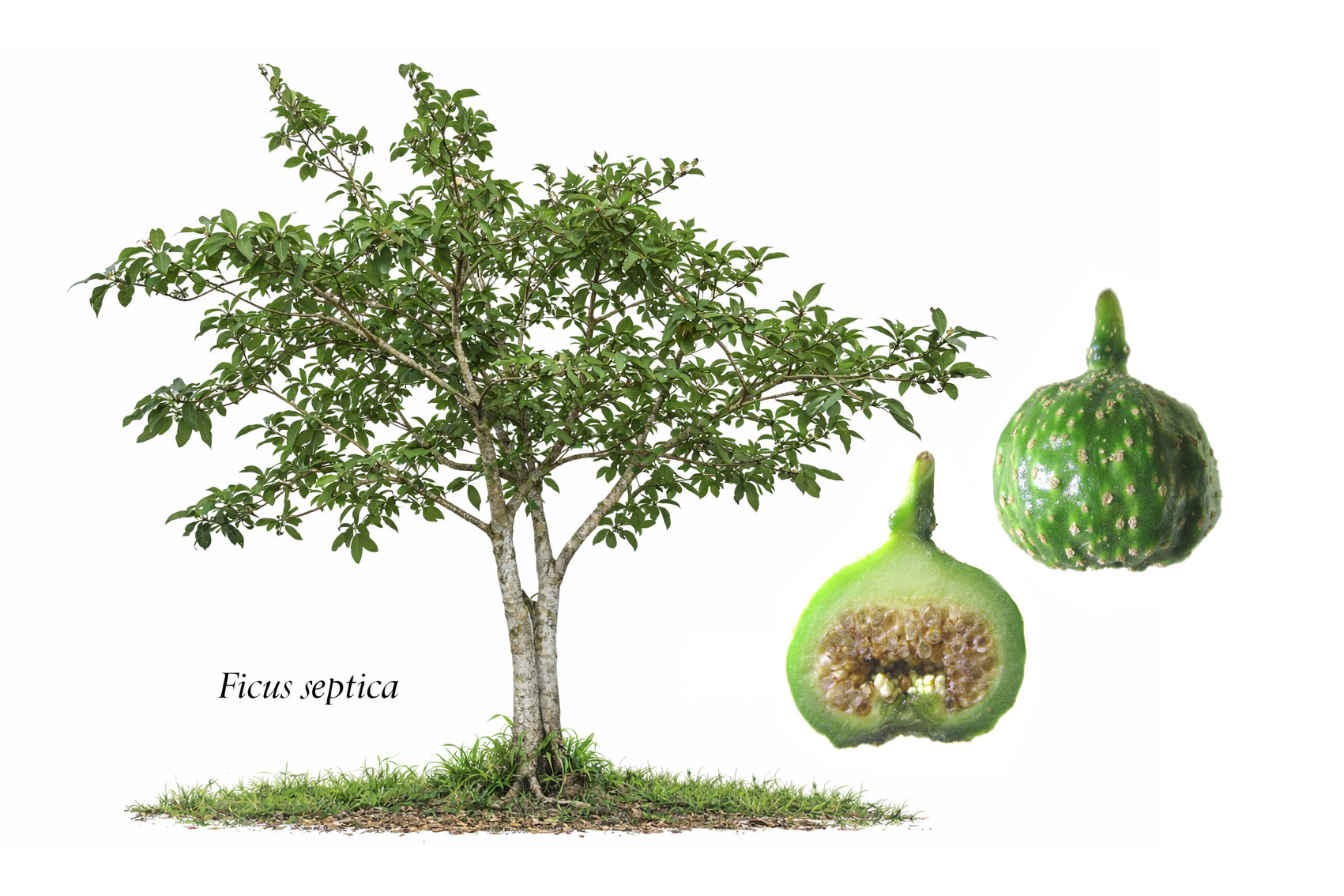
Pioneer species like Ficus septica quickly colonize forest gaps and cleared lands.

Geographic Range:

Fig species distribution varies across Borneo's political regions:

  • Sabah (Malaysia): 112 recorded species, with hotspots in Danum Valley and Kinabalu Park
  • Sarawak (Malaysia): 98 recorded species, abundant in Gunung Mulu National Park
  • Kalimantan (Indonesia): Estimated 130+ species across Indonesian Borneo
  • Brunei: 86 recorded species in its protected rainforest reserves

The center of fig diversity in Borneo is the Heart of Borneo conservation area, spanning 220,000 square km of contiguous rainforest across the island's interior.

Historical & Cultural Significance

For millennia, Borneo's indigenous communities have developed deep cultural connections with fig trees, integrating them into daily life, spirituality, and traditional knowledge systems.

Traditional Uses:

  • Dayak Tribes: Use fibrous bark of Ficus virens for traditional clothing, ropes, and baskets. The latex of strangler figs serves as natural glue for blowpipe repairs.
  • Penan Nomads: Conserve fig trees as biological markers indicating fertile hunting grounds rich in wildlife.
  • Kadazan-Dusun: Utilize leaves of Ficus deltoidea in traditional medicine for wound healing and postpartum care.
  • Iban Communities: Consider ancient fig trees as dwelling places for protective spirits (antu), with rituals performed before harvesting.

Folklore and Spirituality:

Across Borneo, fig trees feature prominently in creation myths and spiritual beliefs:

  • Some tribes believe the first humans descended from a giant fig tree connecting earth to the spirit world
  • Strangler figs are often seen as physical manifestations of forest spirits or guardians
  • The continuous fruiting of figs symbolizes abundance, fertility, and the cyclical nature of life
  • Traditional taboos (pantang) often protect ancient fig trees from cutting or damage

Proverb of the Iban people: "Aja kita ninggal kayu, aja kayu ninggal kita."
("We do not abandon the forest; the forest does not abandon us.")

Uses & Economic Importance

Beyond their ecological significance, fig trees provide numerous direct and indirect benefits to human communities:

Traditional and Modern Uses:

Food Source

Edible fruits of species like Ficus racemosa are consumed fresh or made into preserves. Young leaves of some species are eaten as vegetables.

Medicinal Applications

Latex, bark, leaves, and roots used in traditional medicine for treating wounds, diabetes, hypertension, and digestive disorders.

Material Resources

Timber from large species used in construction. Bark fibers for textiles and paper. Latex as natural adhesive and rubber substitute.

Ecotourism Value

Iconic strangler figs and canopy walks in fig trees are major attractions in Borneo's ecotourism industry, generating significant revenue.

Economic Significance:

  • Ecosystem Services: Figs support pollination networks worth an estimated $150 million annually to Borneo's agriculture
  • Wildlife Tourism: Fig trees attract wildlife viewing opportunities, contributing to a $500M+ ecotourism industry
  • Carbon Sequestration: Large fig trees store substantial carbon, with potential value in carbon credit markets
  • Research Value: Unique fig-wasp mutualisms provide insights for ecological and evolutionary studies

Emerging Opportunity: Sustainable harvesting of Ficus deltoidea for herbal supplements has created new income streams for rural communities while promoting forest conservation.

Comparison with Related Species

While all figs share the characteristic syconium, Bornean species exhibit remarkable diversity in growth form, ecology, and adaptations:

Unique Bornean Endemics:

Borneo hosts several fig species found nowhere else on Earth:

  • Ficus borneensis - A montane specialist with distinctive red figs
  • Ficus kerkhovenii - Known only from a few locations in Sarawak
  • Ficus masonii - A rare epiphyte restricted to ultramafic soils
  • Ficus puberula - Endemic to limestone karst formations

Conservation Priority: Endemic species with restricted ranges are particularly vulnerable to habitat loss and climate change, requiring targeted protection efforts.

Did You Know? Fascinating Fig Facts

Ancient Partnership

The fig-wasp mutualism dates back approximately 60-80 million years, making it one of the oldest known plant-pollinator relationships.

Year-Round Supermarket

Different fig species fruit at different times, collectively providing continuous food for wildlife throughout the year, especially during "fruit famines."

Size Extremes

Borneo's figs range from the tiny Ficus deltoidea (leaves 2-3cm) to the massive Ficus stupenda with crowns spanning 40m+.

Ecosystem Engineers

Hollow trunks of strangler figs provide critical roosting sites for bats, bees, and other animals, creating "vertical habitats" within the forest.

Remarkable Biological Features:

  • Precision Timing: Each fig species has precisely synchronized development with its specific pollinator wasp's life cycle
  • Seed Dispersal Champions: Fig seeds can remain viable after passing through animal digestive systems and may be dispersed over 10km from parent trees
  • Rainforest Architects: Strangler figs can shape forest structure by creating gaps when host trees die, allowing light to reach the understory
  • Climate Indicators: Some fig species serve as biological indicators of forest health and microclimate conditions

Research Insight: A single large fig tree can produce up to 1 million fruits per year, supporting entire communities of frugivores and contributing significantly to rainforest seed dispersal networks.

Conservation Status & Threats

Conservation Alert

Despite their ecological importance, Borneo's fig trees face escalating threats from human activities and climate change.

Primary Threats:

Deforestation

Over 30% of Borneo's rainforests lost since 1970 to logging, palm oil plantations, and mining. Strangler figs are particularly vulnerable as host trees disappear.

Climate Change

Erratic weather patterns disrupt synchronized fig-wasp lifecycles, risking pollination collapse. Drought stress increases tree mortality.

Habitat Fragmentation

Isolated fig trees struggle to reproduce as their specific pollinator wasps cannot travel far between trees (typically <1km).

Altered Fire Regimes

Increased forest fires in degraded areas destroy fig trees that lack fire adaptations, with slow recovery rates.

Conservation Initiatives:

  • Reforestation Projects: Organizations like Sabah's Innoprise-FACE Foundation plant fig trees to restore degraded forests and connectivity
  • Protected Areas: Danum Valley (Sabah) and Gunung Mulu (Sarawak) safeguard critical fig habitats and their associated biodiversity
  • Community-Based Conservation: Indigenous communities establish traditional protected forests (pulong) conserving fig-rich areas
  • Citizen Science: Platforms like iNaturalist engage students and volunteers in documenting fig species and monitoring populations
  • Research & Monitoring: Long-term studies track phenology, pollination success, and climate change impacts on fig populations

How You Can Help:

Support Sustainable Products

Choose certified sustainable palm oil and timber products to reduce deforestation pressure on Borneo's forests.

Contribute to Conservation

Support organizations working on Borneo rainforest conservation and reforestation.

Educate & Advocate

Raise awareness about the importance of fig trees and tropical rainforest conservation.

Plant Native Figs

In appropriate climates, plant native fig species to support local wildlife and raise awareness.

The Future: Protecting Borneo's fig trees is not just about saving individual species - it's about preserving the intricate ecological networks that sustain one of Earth's most biodiverse ecosystems. As keystone species, their survival is intertwined with the health of the entire rainforest.