Stranglers with One Trunk
Discover 5 remarkable Ficus species that begin as epiphytes but consolidate multiple aerial roots into single massive trunks, creating monumental forest giants that dominate Borneo's canopy.
What Are One-Trunk Stranglers?
One-trunk stranglers are unique Ficus species that begin life as epiphytes in tree canopies but develop a specialized growth strategy where descending aerial roots fuse together into a single massive trunk. Unlike multi-root stranglers, these species consolidate into monolithic columns that eventually replace their host trees and stand as independent forest giants.
Where to Find Them
These impressive trees are found throughout Borneo's primary and secondary rainforests, often dominating forest gaps, river edges, and areas with canopy disturbance. Their monumental presence makes them conspicuous landmarks in both remote forests and areas near human settlements, particularly in Sabah and Sarawak.
Ecological Significance
One-trunk stranglers play a keystone role in forest ecosystems. Their year-round fruit production sustains diverse wildlife including birds, bats, primates, and other mammals. Their massive trunks create unique microhabitats for epiphytes, mosses, and invertebrates, contributing significantly to forest biodiversity and structure.
Five One-Trunk Strangler Species
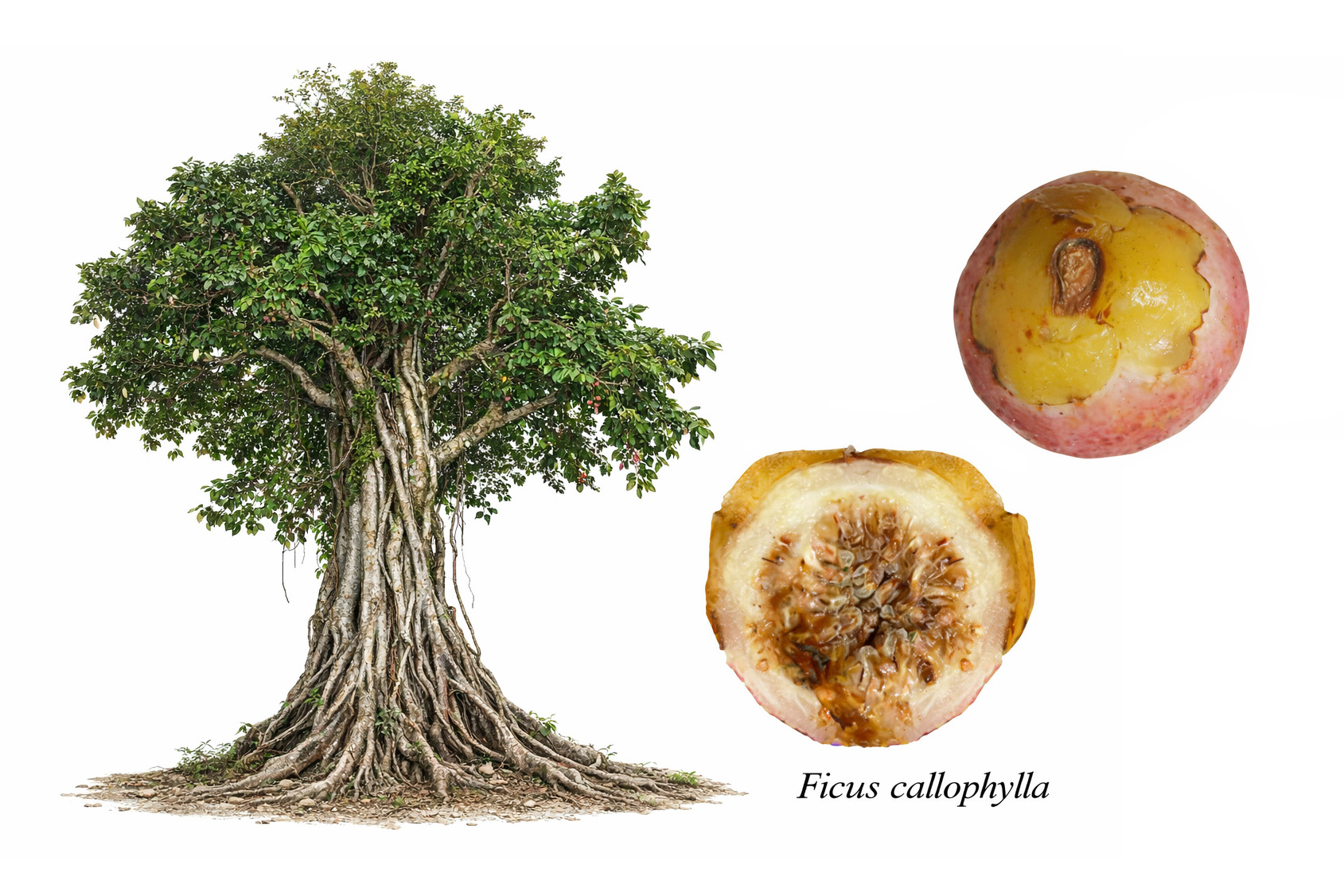
Ficus callophylla
美叶榕
Characterized by attractive glossy leaves with prominent venation. Forms massive single trunk through fusion of aerial roots.
View Details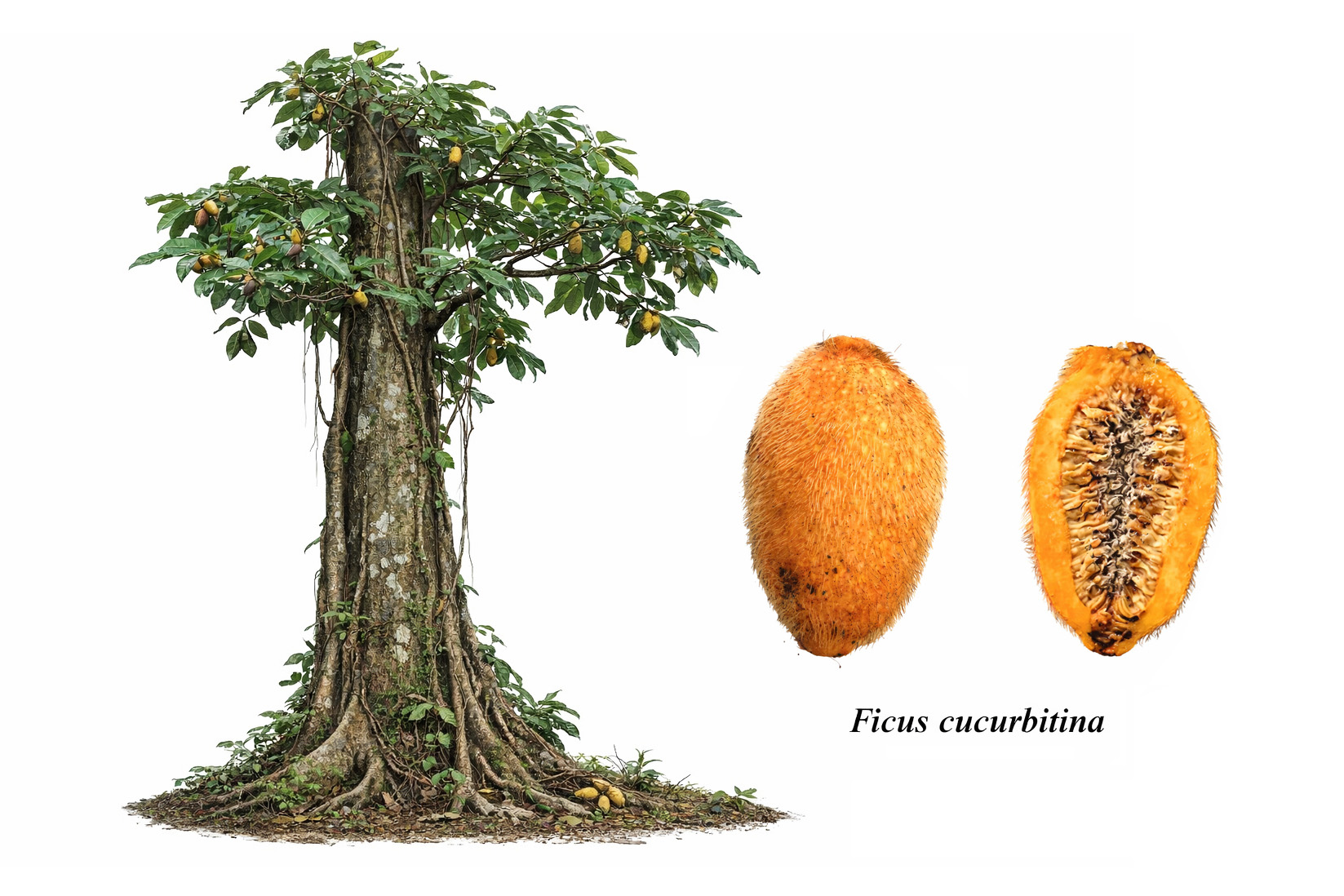
Ficus cucurbitina
南瓜榕
Named for its gourd-like syconia. Often found along riverbanks and in forest gaps. Develops solid, columnar trunk that can reach impressive dimensions in mature specimens.
View Details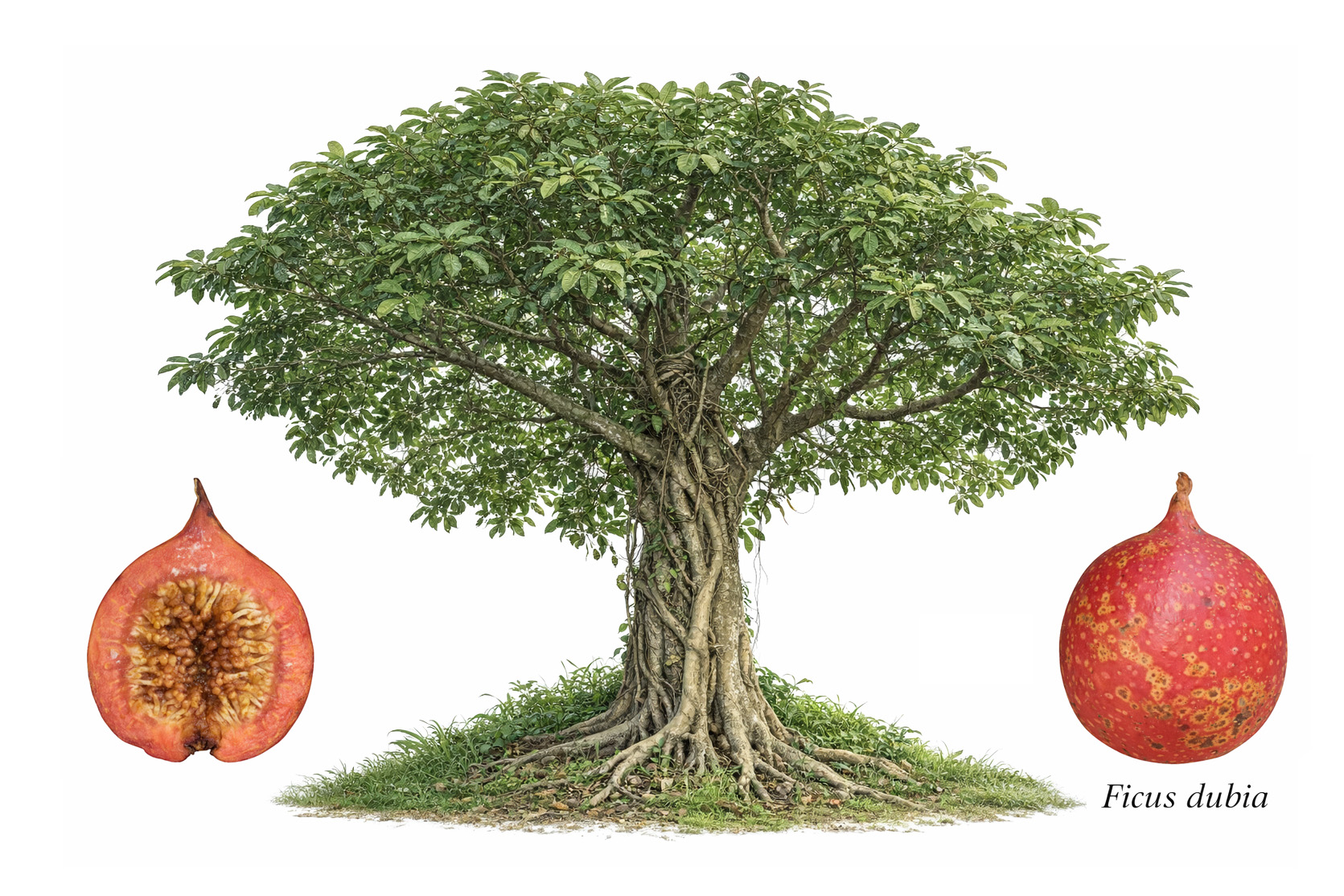
Ficus dubia
深红果榕
Notable for deep red syconia that provide important food for wildlife. Forms sturdy single trunk with distinctive bark texture. Often found in disturbed forest areas.
View Details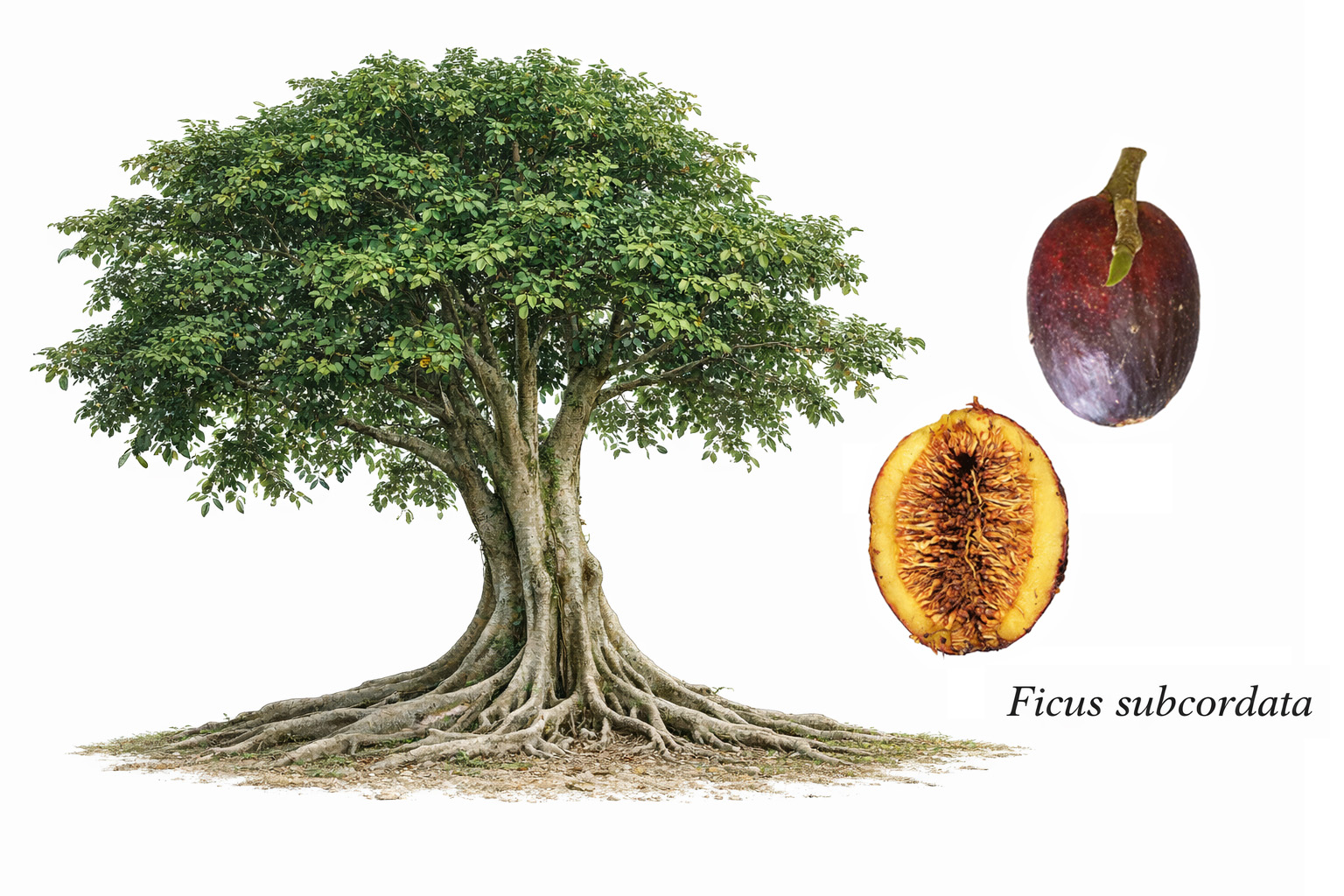
Ficus subcordata
近心叶榕
Distinguished by nearly heart-shaped leaves with distinctive venation. Produces abundant syconia that attract diverse frugivores. Forms impressive monolithic trunks.
View Details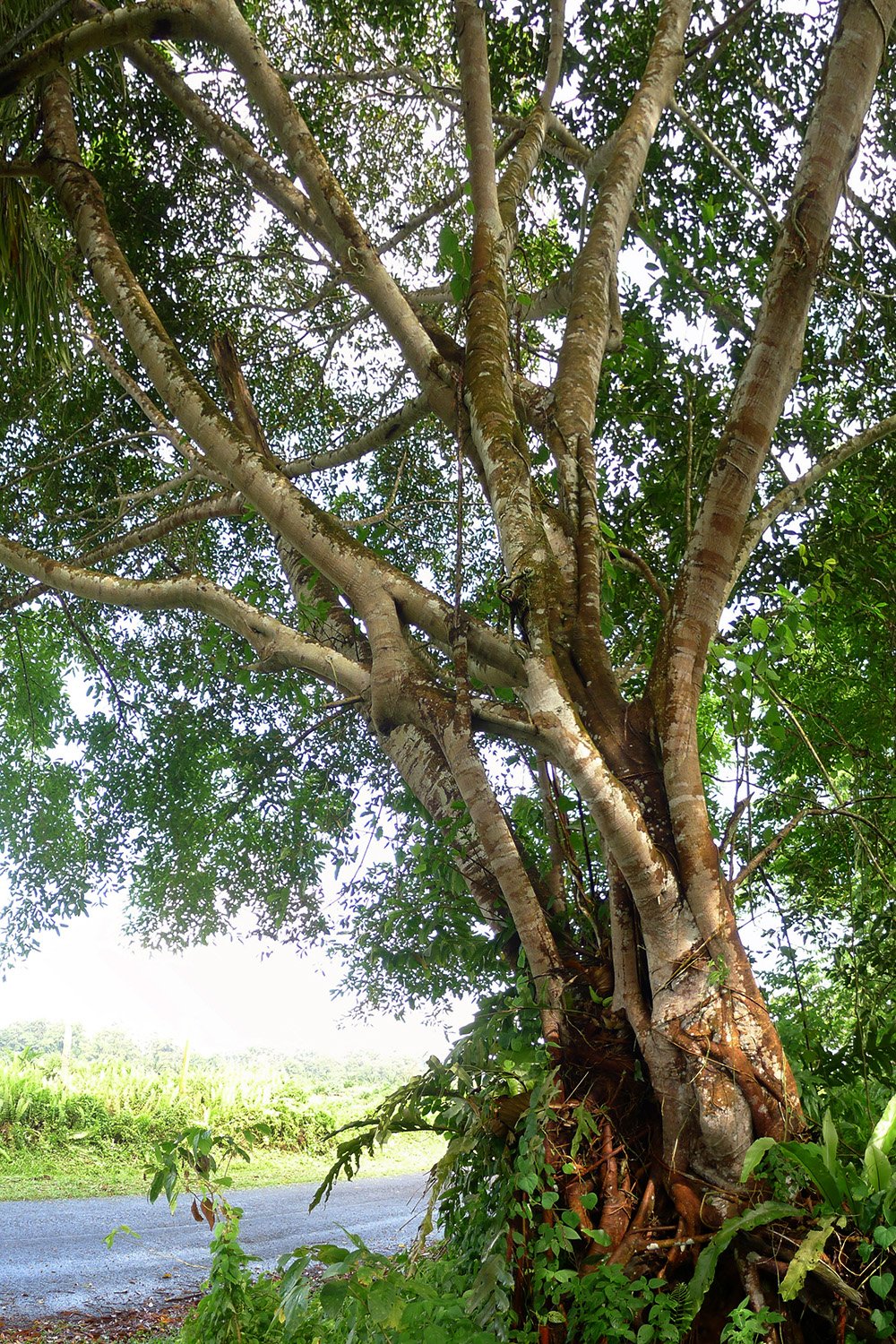
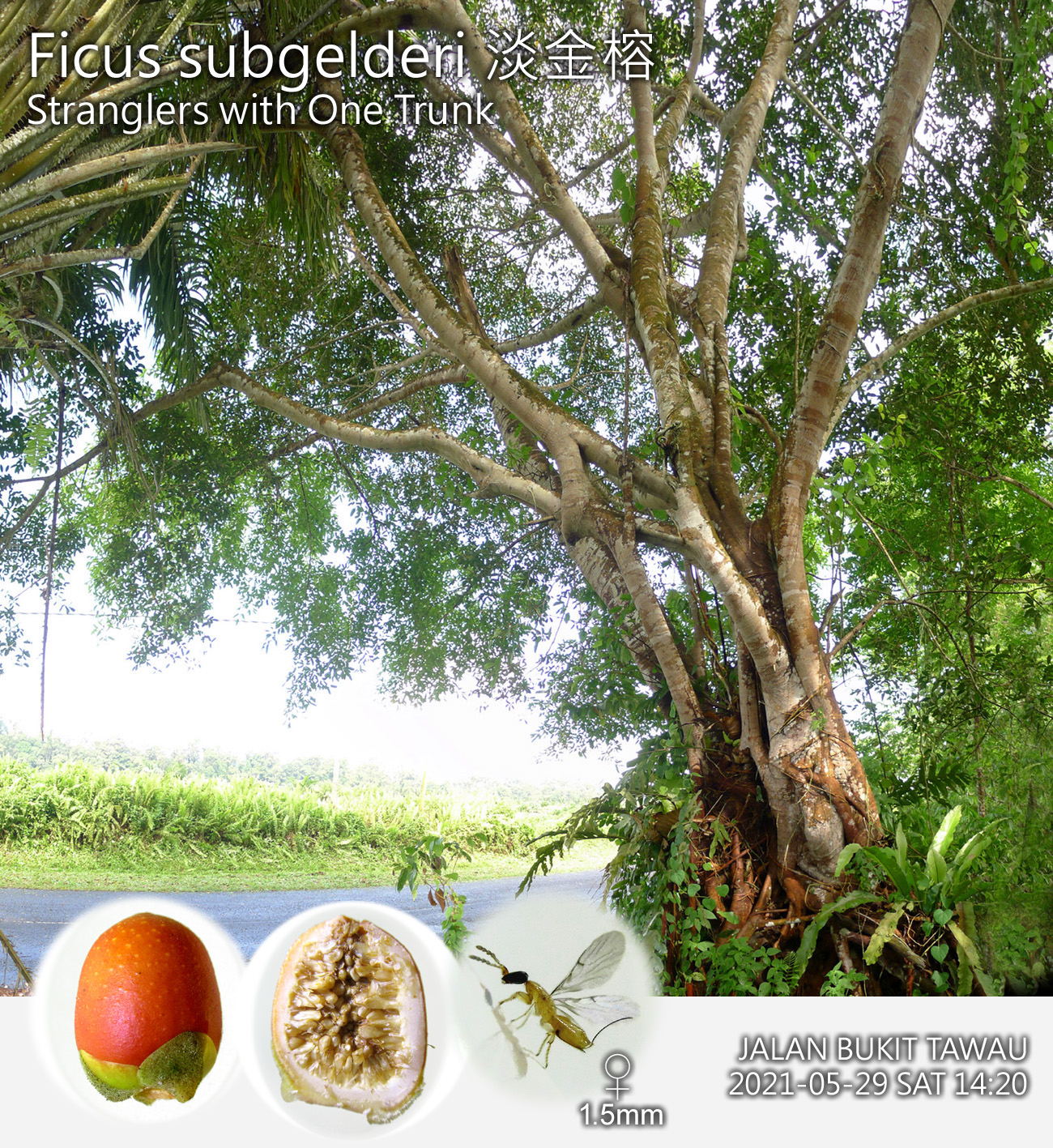
Ficus subgelderi
淡金榕 / 金叶榕
The only dioecious species in this group, requiring separate male and female trees. Named for golden-hued leaves. Forms particularly massive trunks dominating forest canopy.
View DetailsFig Wasp Pollinators
Each Ficus species has specific mutualistic relationships with tiny agaonid wasps. Research on one-trunk strangler pollinators remains limited:
| Ficus Species | Pollinator Wasps | Non-Pollinator Wasps | Reproductive System |
|---|---|---|---|
| Ficus callophylla | No record | No record | Monoecious |
| Ficus cucurbitina | No record | No record | Monoecious |
| Ficus dubia | No record | No record | Monoecious |
| Ficus subcordata | No record |  6 species recorded |
Monoecious |
| Ficus subgelderi | No record | 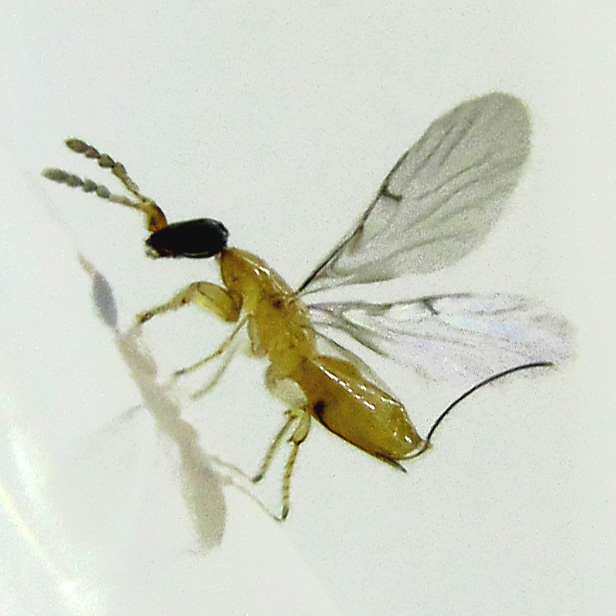 Non-pollinator wasp |
Dioecious |
Understanding Fig-Wasp Mutualism
One-trunk stranglers follow the intricate pollination system common to all Ficus. Female wasps enter the fig (syconium), pollinate flowers, and lay eggs. Their offspring develop inside, with males emerging first to mate before all escape to find new figs. This 60+ million-year partnership remains poorly documented for most one-trunk stranglers, representing an important research gap.
Featured One-Trunk Stranglers
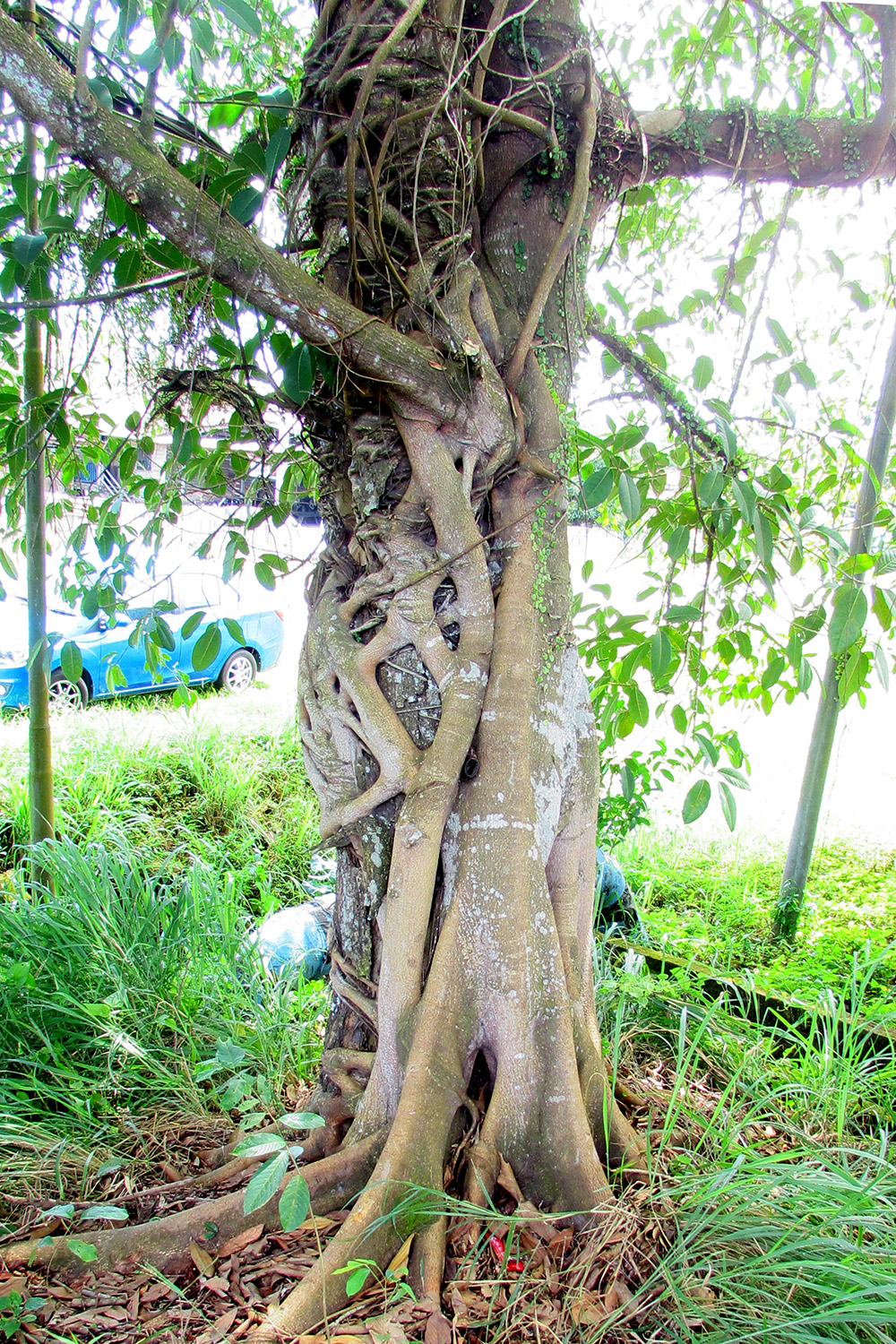
Ficus dubia
Monolithic trunk structure at Jalan Hot Spring Road, Tawau.
Ficus subgelderi
Impressive golden-leaved strangler with single trunk formation
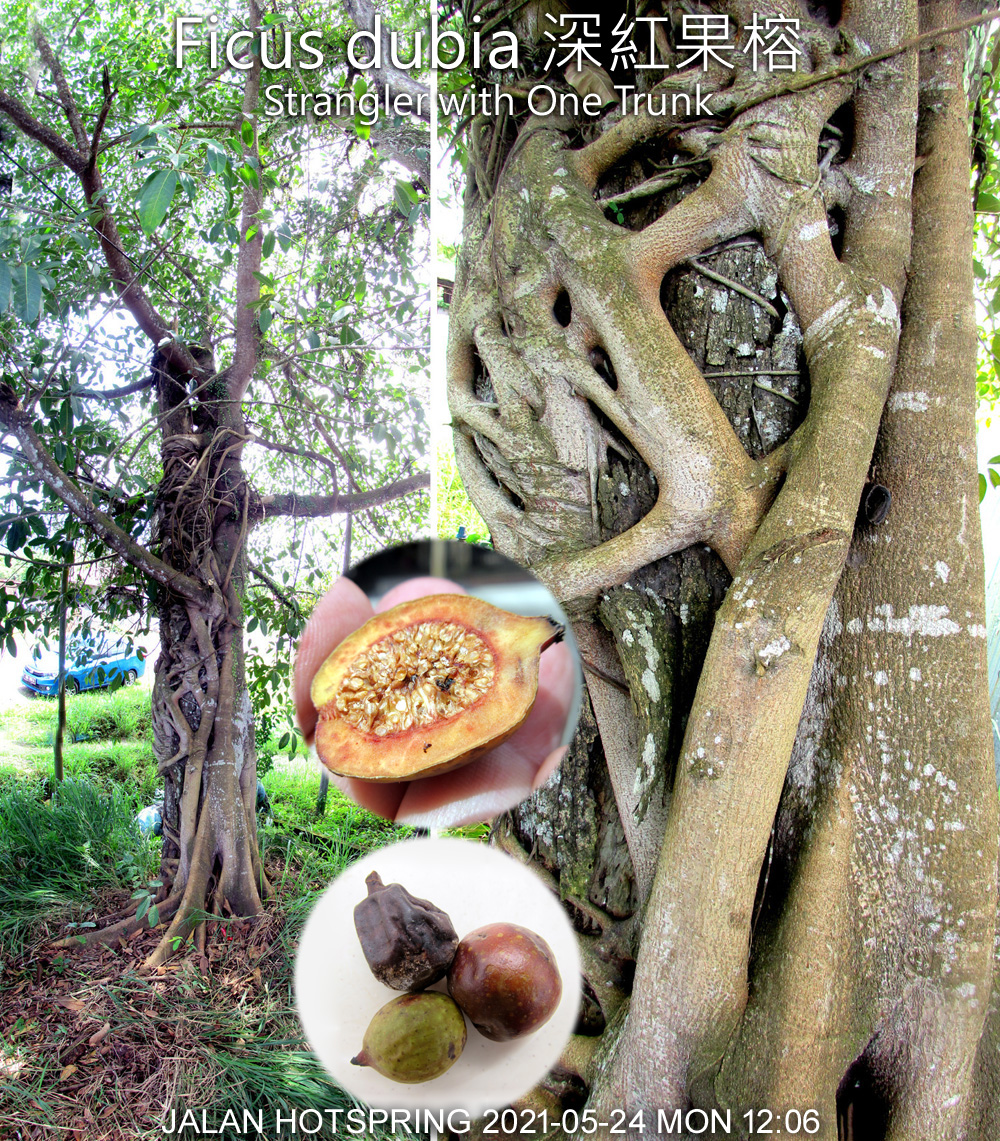
Ficus dubia Trunk
Detailed view of the fused aerial roots forming single trunk
Ficus subgelderi Bark
Characteristic bark texture of mature one-trunk strangler
The Science of Monolithic Growth
What is Monolithic Growth?
Monolithic growth refers to the unique adaptation where multiple aerial roots fuse together into a single massive trunk. This distinguishes one-trunk stranglers from their multi-root counterparts which maintain separate root structures.
Evolutionary Advantages:
- Structural Stability: Single trunk provides superior wind resistance
- Resource Efficiency: Consolidated vascular system transports water/nutrients more efficiently
- Longevity: Massive trunks can support tree for centuries
- Competitive Dominance: Allows trees to become true canopy emergents
Growth Process
One-trunk stranglers develop through distinct phases:
Germination occurs in canopy → Aerial roots descend to ground → Multiple roots fuse together → Host tree dies → Fig stands as independent giant. This process can take 50-100 years to complete.
Unique Characteristics
Root Fusion
Multiple descending aerial roots fuse together through anastomosis, creating a single massive trunk rather than maintaining separate root structures.
Monolithic Form
Mature trees develop columnar, monolithic trunks that can reach 2-3 meters in diameter, creating true forest giants that dominate the canopy.
Host Replacement
Begin as epiphytes on host trees, then gradually replace them through root constriction and canopy competition, eventually standing independently.
Microhabitat Creation
Massive trunks provide niches for diverse epiphytes, mosses, ferns, and invertebrates, creating vertical ecosystems within the forest.
Fascinating Facts
Rarity of Dioecy
Ficus subgelderi is the only dioecious species among Borneo's one-trunk stranglers. The other four species are monoecious. This 4:1 ratio is unusual since approximately 90% of all Ficus species worldwide are dioecious.
Cultural Significance
Due to their impressive size and longevity, one-trunk stranglers often become landmarks in local communities. Some villages in Sabah have named settlements after particularly large specimens of Ficus subgelderi that provide shade and gathering places.
Water Management
The fused root systems of one-trunk stranglers create highly efficient water transport systems. Some mature specimens can transport over 1,000 liters of water daily from roots to canopy, influencing local microclimates.
Carbon Storage
Due to their massive biomass, one-trunk stranglers are significant carbon sinks. A single mature Ficus dubia or Ficus subgelderi can store as much carbon as 20-30 smaller trees, making them important for climate regulation.
Reproductive Systems: Monoecious vs Dioecious
Monoecious Figs (雌雄同株)
Have both male and female reproductive organs in the same individual tree. Represent 4 of the 5 one-trunk strangler species.
- Ficus callophylla - Monoecious
- Ficus cucurbitina - Monoecious
- Ficus dubia - Monoecious
- Ficus subcordata - Monoecious
Dioecious Figs (雌雄异株)
Have male and female reproductive organs on separate individual trees. Only 1 of the 5 one-trunk stranglers follows this pattern.
- Ficus subgelderi - Dioecious (only one)
- Male trees: Produce pollen and wasp offspring
- Female trees: Produce seeds only
- More complex pollination ecology
Note: The predominance of monoecy (4 out of 5 species) among Borneo's one-trunk stranglers is unusual and may represent an evolutionary adaptation specific to this growth form. Further research is needed to understand why monoecy is favored in these massive, long-lived stranglers.