
Ficus racemosa 聚果榕
Ficus racemosa is a medium-sized fig tree belonging to the Moraceae family. Known as the cluster fig or 聚果榕 in Chinese, it is remarkable for its cauliflorous fruiting habit—bearing figs in dense clusters directly on its trunk and large branches. This tree is not only a botanical curiosity but also a keystone species in tropical ecosystems and a plant of cultural and medicinal importance across Asia.
📌 Key Concept: Cauliflory – the adaptation of bearing flowers and fruits directly on the trunk, making them accessible to animals and insects.
Studying Ficus racemosa teaches:
Ficus racemosa (聚果榕) is more than a tree—it is a living classroom. Its clustered figs, ecological importance, and cultural symbolism make it a vital species for understanding the connections between nature, medicine, and tradition.
FIG WASPS
that breed in fruits of
Ficus racemosa 聚果榕
A - POLLINATOR
Male ♂3.5mm
Female ♀
Antenna 0.5mm
Body 2.3mm
Ovipositor 1.0mm

NON POLLINATORS of Ficus racemosa
Male ♂3.0mm
Male ♂3.4mm
Female ♀0.7+2.2+9mm
Female ♀0.8+2.4+3.5mm
Female ♀0.7+2.5+5.5mm
All wasps species in this chart were found from 20 fruits collected from a tree in Tanjung Aru on 2021-08-11
Tree Trunk Figs
聚果榕 Ficus racemosa
Monoecious 雌雄同株
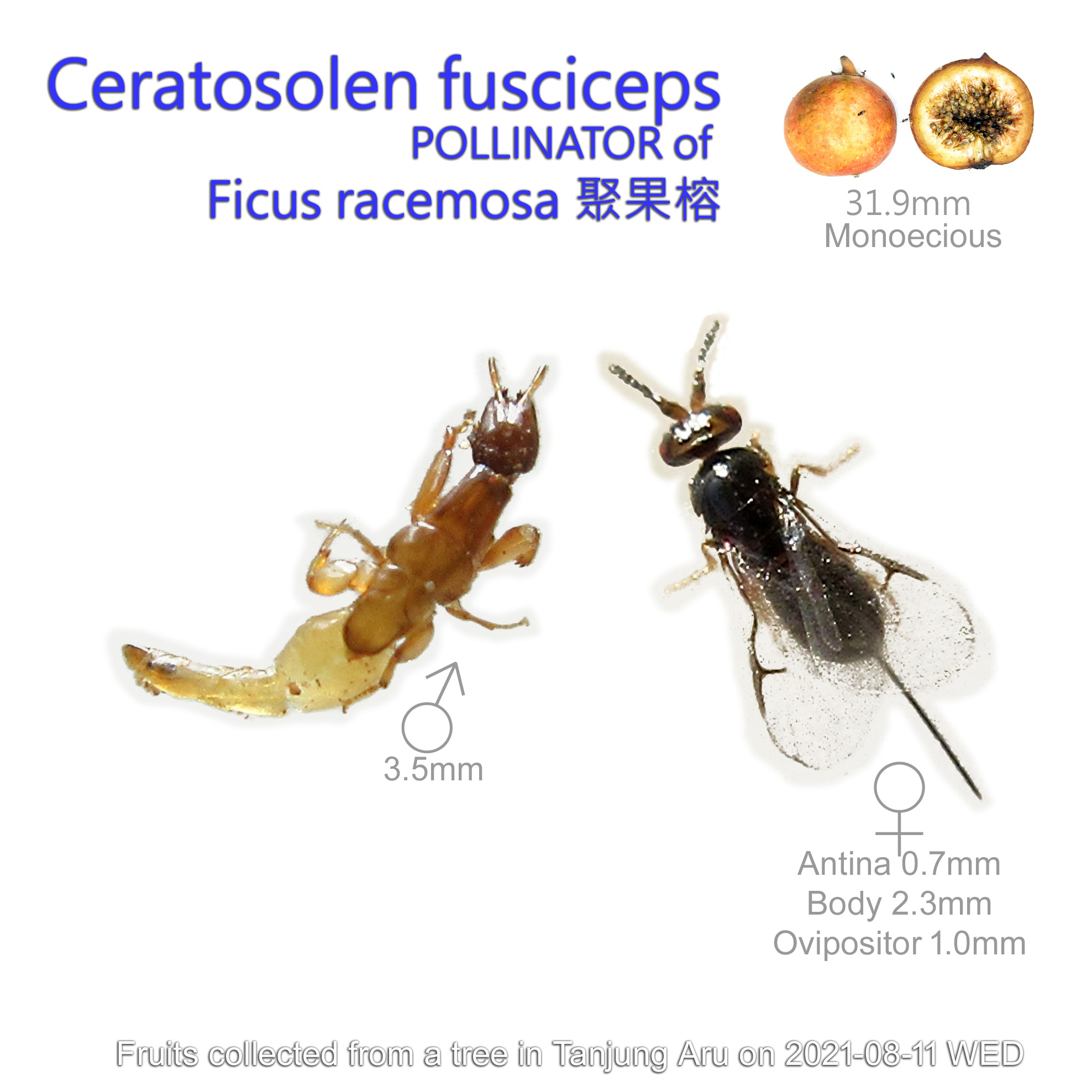
Male ♂3.5mm
Female ♀Antina 0.7mm
Body 2.3mm
Ovipositor 1.0mm
The Fruit is 31.9mm
Ceratosolen fusciceps, the fig wasp pollinating Ficus racemosa,
Ceratosolen fusciceps
POLLINATOR of
Ficus racemosa 聚果榕
Ficus racemosa is pollinated by a single population of a single agaonid wasp species all over continental South-East Asia.
This fig tree species widely distributed from India to Australia.
聚果榕 Ficus racemosa
Shangri-la Tg Aru Resort 2021-04-10 SAT
An unidentified NON-POLLINATING fig wasp
that also breed in the fig, but which play no role in the pollination process.
♀2.25mm+4mm
Non-pollinators fig wasp lay eggs through the fig skin early in fruit
development.
Wednesday, 04 February, 2026 11:00:36 PM