Tree Trunk Ficus of Borneo
Discover 8 extraordinary cauliflorous fig species that bear fruit directly on their trunks and major branches, a unique adaptation that provides easy access for ground-dwelling wildlife.
What Are Tree Trunk Figs?
Tree trunk figs (cauliflorous figs) are Ficus species that produce flowers and fruits directly on their main trunks and thick branches, rather than at the ends of twigs. This unique growth habit, called cauliflory, makes the fruits easily accessible to ground-dwelling animals like pigs, deer, and primates that cannot climb to the canopy.
Where to Find Them
Tree trunk figs in Borneo are primarily found in lowland rainforests, riverbanks, and forest edges. Species like Ficus racemosa (Cluster Fig) commonly grow along rivers, while Ficus variegata prefers forest margins. They're particularly important in riparian ecosystems where their ground-level fruits support diverse wildlife communities.
Ecological Significance
These figs provide critical food resources for animals that cannot access canopy fruits. Their trunk-fruiting habit supports terrestrial frugivores including bearded pigs, mouse deer, ground birds, and primates. This makes them keystone species in maintaining terrestrial seed dispersal networks in Borneo's forests.
8 Tree Trunk Ficus Species
Ficus cereicarpa
(无名)
Little-known cauliflorous fig species with waxy fruits. Limited distribution in Bornean forests, requires further botanical study.
View DetailsFicus fistulosa
黄葛榕/水同木
Common riparian fig with hollow branches (fistulous) that often collect water. Important food source for fish and aquatic life when fruits fall in water.
View DetailsFicus francisi
(无名)
Medium-sized cauliflorous tree named after early botanical collector. Produces clusters of small figs directly on trunk and major branches.
View Details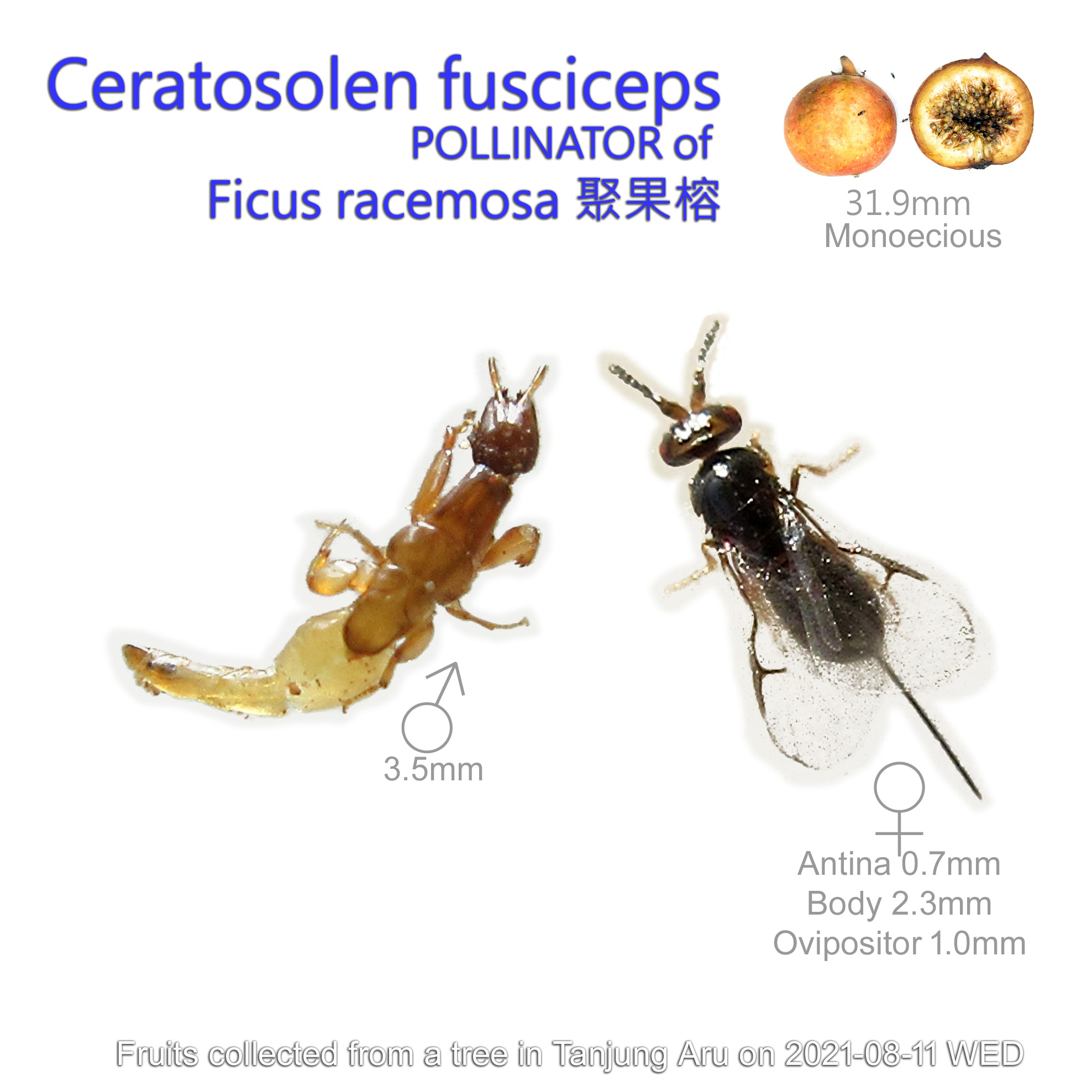
Ficus racemosa
聚果榕
Cluster Fig - one of few monoecious Ficus. Produces dense clusters of red figs on trunk. Culturally significant across South and Southeast Asia.
View Details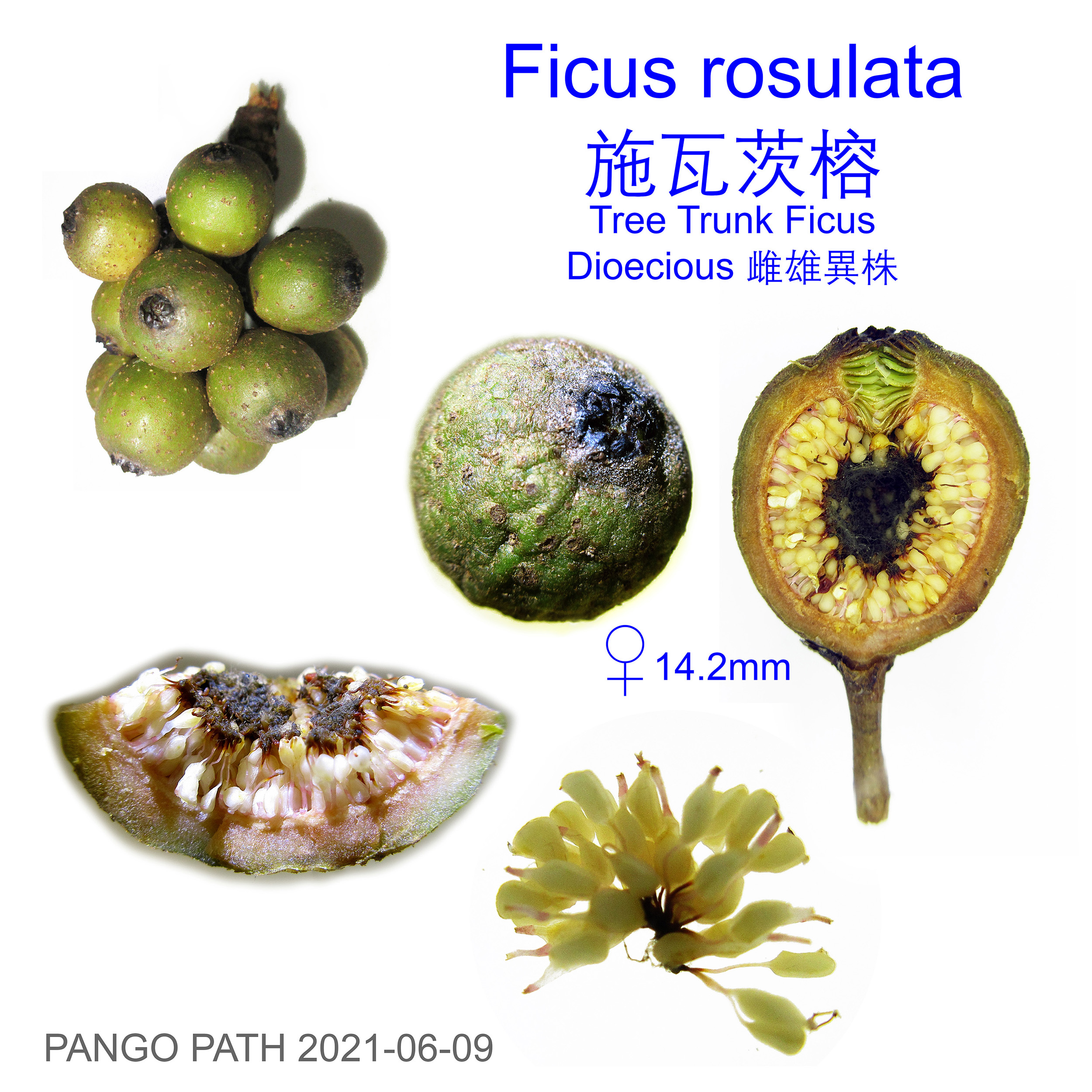
Ficus rosulata
施瓦草榕
Distinctive species with leaves arranged in rosettes. Smaller cauliflorous tree often found in forest understory with fruits on lower trunk.
View DetailsFicus satterthwaitei
(无名)
Large cauliflorous tree with extensive trunk fruiting. Named after botanist Elmer Drew Satterthwaite. Important for large terrestrial mammals.
View Details
Ficus variegata
杂色榕
Common variegated fig with green and yellowish leaves. Produces large clusters of red to purple figs directly on trunk. Highly adaptable species.
View Details
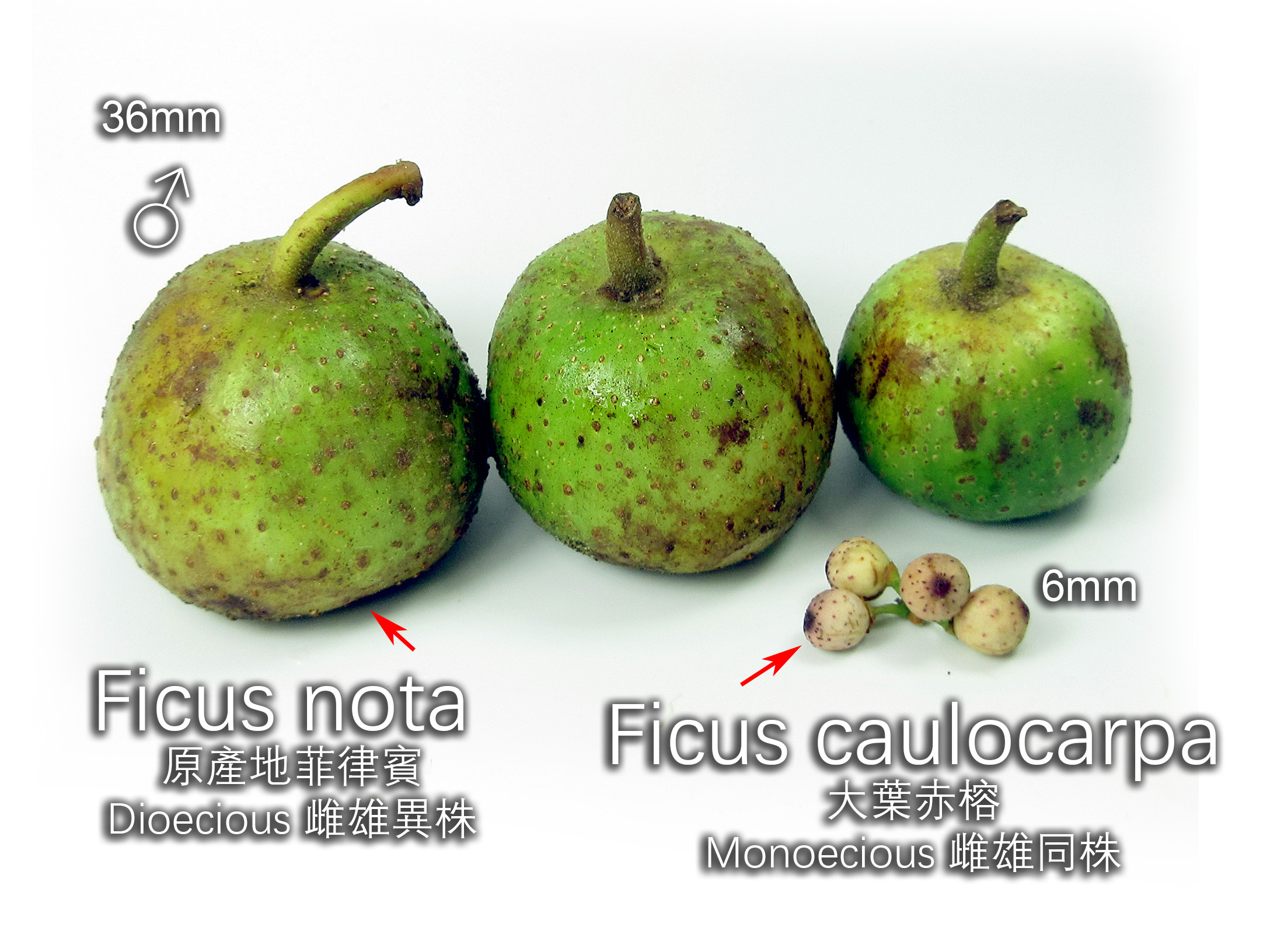
Ficus nota
原产地菲律宾榕
Originally from Philippines, now naturalized in Borneo. Dioecious with separate male and female trees. Important for studying fig-wasp coevolution.
View DetailsFig Wasp Pollinators
Each Ficus species has a specific mutualistic relationship with tiny agaonid wasps (1-3mm) that pollinate their flowers. Here's what we know about tree trunk fig pollinators:
| Ficus Species | Pollinator Wasps | Non-Pollinator Wasps | Pollination System |
|---|---|---|---|
| Ficus cereicarpa | Unknown | Unknown | Presumably dioecious |
| Ficus fistulosa | Eupristina sp. | Several genera | Dioecious |
| Ficus francisi | Unknown | Unknown | Dioecious |
| Ficus nota | Platyscapa sp. | Sycoscapter sp. | Dioecious |
| Ficus racemosa | Ceratosolen fusciceps |
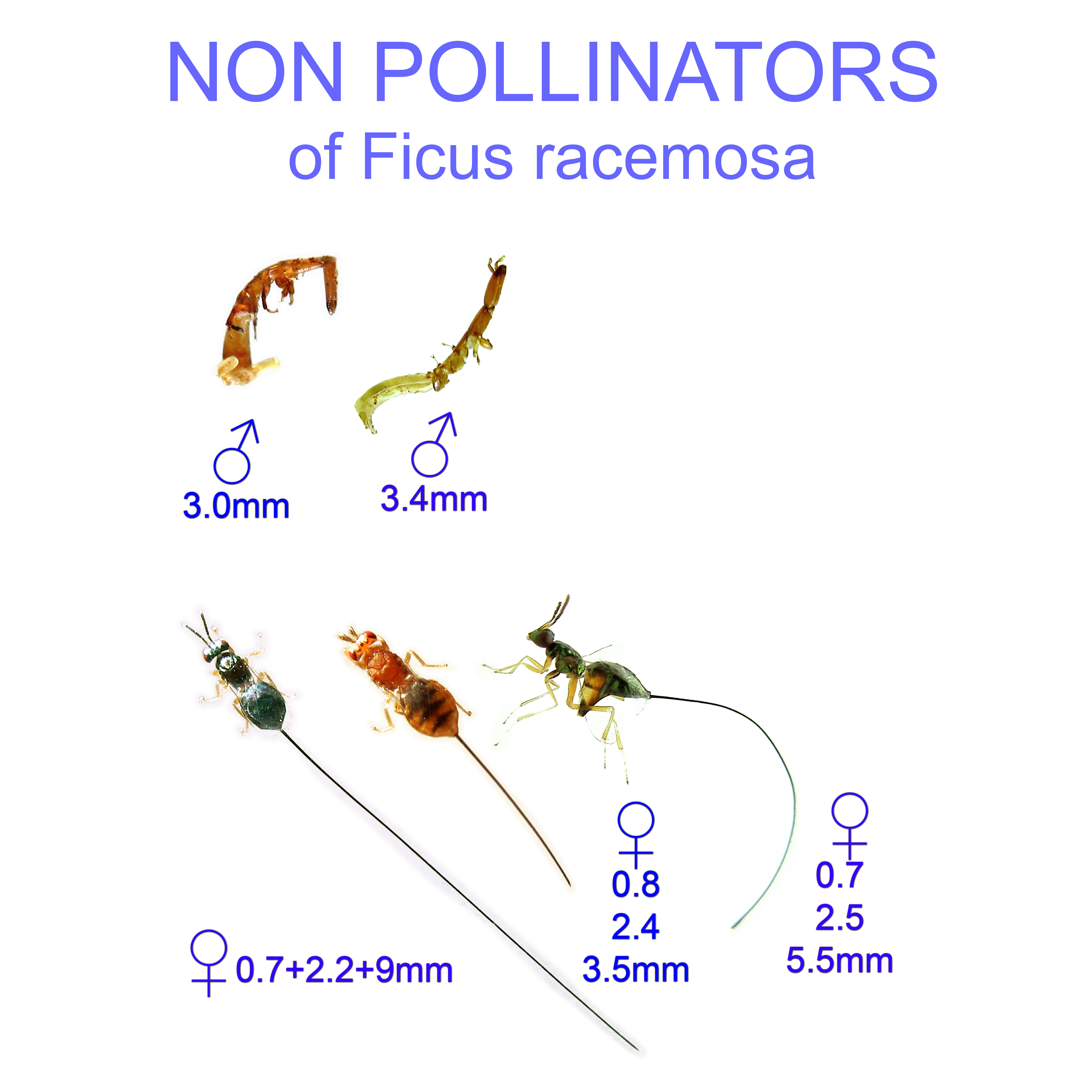 Several species |
Monoecious (rare in Ficus) |
| Ficus rosulata | Unknown | Unknown | Dioecious |
| Ficus satterthwaitei | Unknown | Unknown | Dioecious |
| Ficus variegata | Ceratosolen appendiculatus | Philocaenus sp. | Dioecious |
Understanding Fig-Wasp Mutualism
Tree trunk figs follow the same intricate pollination system as other Ficus. Female wasps enter the fig (syconium) through a tiny opening, pollinate the flowers inside, and lay eggs in some flowers. Their offspring develop inside the fig, with males emerging first to mate with females before all escape to find new figs. This partnership has evolved over 60+ million years.
Featured Tree Trunk Figs

Ficus nota
Male tree in Sukau, Borneo showing characteristic trunk fruiting

Ficus racemosa
Dense cluster of figs growing directly on the trunk

Ficus variegata
Thriving in varied environments including hot spring areas
Ficus nota Habitat
Male tree in its natural forest habitat in Greenview, Sukau
The Science of Cauliflory
What is Cauliflory?
Cauliflory (from Latin caulis = stem, flos = flower) is the botanical term for plants that flower and fruit directly from their trunks and woody branches, rather than from new growth. This adaptation is relatively rare globally but common in tropical figs.
Evolutionary Advantages:
- Accessibility: Fruits at ground level for terrestrial animals
- Structural Support: Thick trunks can support heavy fruit loads
- Predator Avoidance: Fruits less visible to canopy predators
- Temperature Regulation: Trunk fruits may maintain more stable temperatures
Wildlife Connections
Tree trunk figs have co-evolved with specific animal dispersers:
Ficus racemosa fruits are particularly favored by macaques, langurs, and hornbills. Ficus variegata supports diverse frugivore communities including fruit pigeons and barbets.
Unique Characteristics
Trunk Fruiting
Flowers and fruits emerge directly from main trunk and thick branches, not from twig ends. This allows fruits to develop on older, stronger wood.
Ground Accessibility
Fruits are within reach of terrestrial animals that cannot climb trees. This expands the disperser community beyond arboreal species.
Heavy Fruit Loads
Trunks can support massive fruit clusters that would break smaller branches. Some species produce over 1,000 figs per fruiting episode.
Synchronous Fruiting
Many tree trunk figs fruit synchronously within populations, ensuring wasp pollinators can find mates and new host trees.
Fascinating Facts
Rarity of Monoecy
Ficus racemosa is one of only about 10% of Ficus species that are monoecious (having both male and female flowers on the same tree). Most figs, including other tree trunk species, are dioecious with separate male and female trees.
Ancient Cultural Ties
Tree trunk figs feature prominently in Southeast Asian cultures. Ficus racemosa is considered sacred in parts of India, while Ficus nota fruits are traditionally eaten in the Philippines. Bark and leaves have medicinal uses across the region.
Riparian Specialists
Many tree trunk figs are riparian specialists. Their fruits often fall into water, feeding fish and aquatic life. Seeds dispersed by water can travel long distances, aiding colonization of new riverbank areas.
Conservation Indicators
Tree trunk figs serve as indicators of forest health. Their presence and fruiting success reflect ecosystem integrity. Declines in these species often signal broader ecological problems affecting terrestrial wildlife communities.
Understanding Fig Reproduction: Monoecious vs Dioecious
Monoecious Figs (雌雄同株)
Have both male and female reproductive organs in the same individual plant. Represent about 10% of Ficus species. Example: Ficus racemosa.
- Both pollen and seeds produced in same syconium
- Simpler pollination system
- Less common evolutionary strategy
Dioecious Figs (雌雄异株)
Have male and female reproductive organs on separate individual plants. Represent about 90% of Ficus species. Example: Ficus variegata, Ficus nota.
- Male trees produce pollen and wasp offspring
- Female trees produce seeds only
- More complex coevolution with wasps
Note: Of the 8 tree trunk fig species in Borneo, 7 are dioecious and only 1 (Ficus racemosa) is monoecious. This reflects the overall pattern in the genus Ficus where dioecy is the dominant reproductive strategy.