Ficus variegata (Common Red-stem Fig)
杂色榕 - A keystone species in Southeast Asian tropical forests

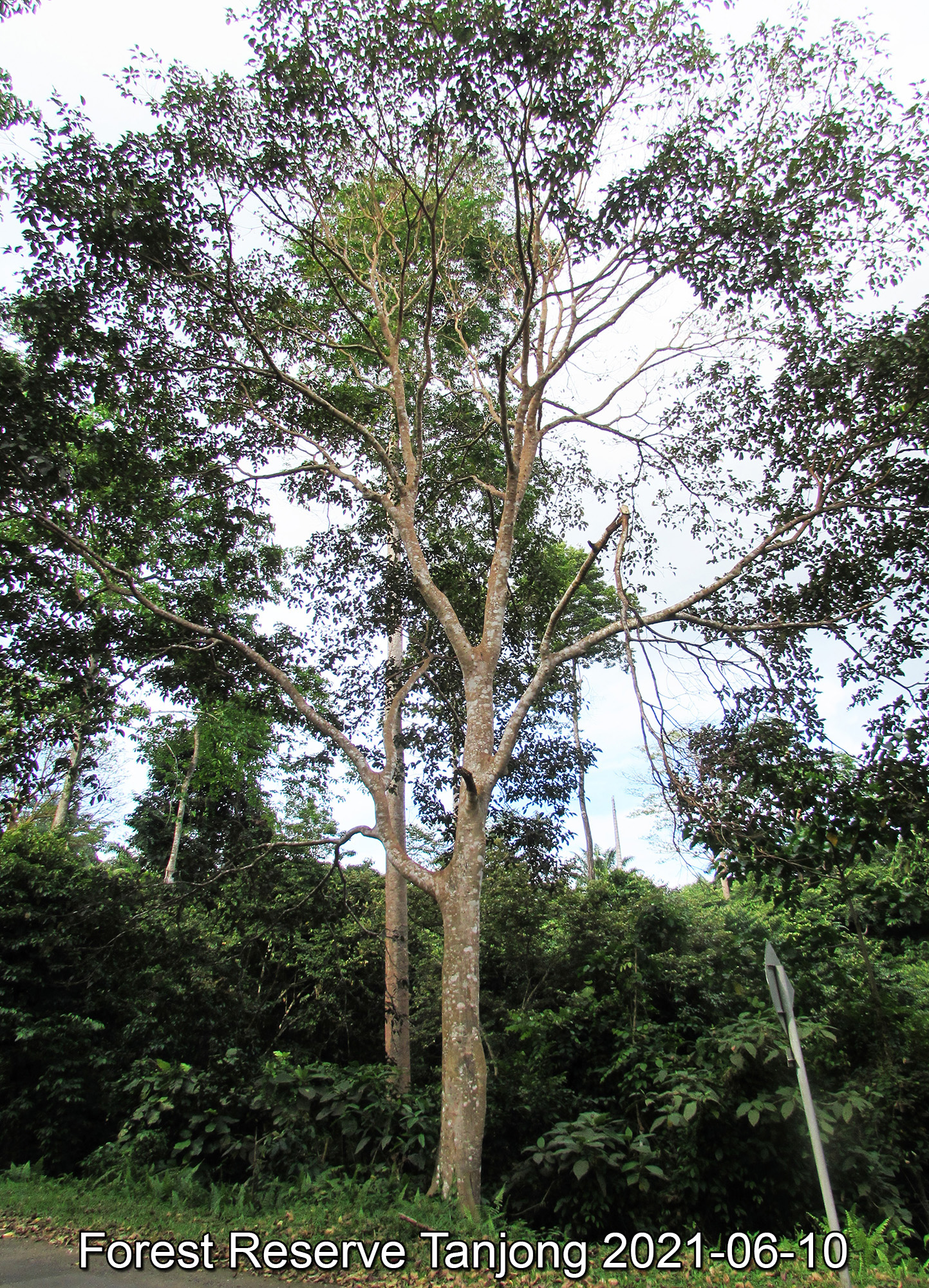
Ficus variegata tree at TV Station area, September 2021
Introduction
Ficus variegata Blume, commonly known as the Common Red-stem Fig, is a tall deciduous tree belonging to the Moraceae family. This species is a classic example of a keystone species in tropical ecosystems, playing a critical role in maintaining biodiversity by providing food and habitat for numerous animals throughout the year.
As a dioecious species, male and female flowers are produced on separate trees, which is an important characteristic for its specialized pollination system. The tree is easily recognizable by its reddish stems and clustered pink to red figs that grow directly on branches and trunk.
Botanical Description
Morphological Features
Height
Can grow up to 40 meters tall, with a broad canopy spread.
Leaves
Elliptic, leathery, simple leaves with entire margins, 10-20 cm long.
Fruits (Figs)
Pink to red syconia, 2-3 cm in diameter, borne in clusters on branches and trunk (cauliflory).
Stems
Distinctive reddish-brown bark, giving the common name "Red-stem Fig".
Reproductive Biology
Dioecious: Male and female flowers are produced on separate trees.
Pollination: Exclusively pollinated by the fig wasp Ceratosolen appendiculatus in a highly specialized mutualistic relationship.
Fruiting Pattern: Produces fruit year-round, with peak seasons varying by location. Fruits mature from green to pink/red.
Image Gallery
Distribution and Habitat
Ficus variegata is widely distributed across Southeast Asia and northern Australia, thriving in various tropical habitats.
Geographic Range
- Peninsular Malaysia
- Singapore
- Indonesia (Sumatra, Java, Borneo, Sulawesi)
- Philippines
- Papua New Guinea
- Northern Australia (Queensland)
Preferred Habitats
- Lowland tropical rainforests
- Secondary forests
- Forest edges and riverbanks
- Roadside plantings in rural areas
- Elevation: 0-1,200 meters above sea level
Ecological Role & Wildlife Interactions
As a keystone species, Ficus variegata supports a wide array of wildlife through its year-round fruit production.
Pollinators
The tree has an obligate mutualism with the fig wasp Ceratosolen appendiculatus, which is its sole pollinator. This relationship is a classic example of co-evolution.
Frugivores
- Birds: Hornbills, pigeons, bulbuls, barbets
- Mammals: Squirrels, macaques, civets, fruit bats
- Importance: Provides critical food during lean seasons when other fruits are scarce
Host Plant
Serves as a host plant for several insect species, including:
- Butterflies: Mecodina lanceola
- Other insects: Various moths and beetles
Ecosystem Services
- Soil stabilization with extensive root system
- Carbon sequestration
- Providing shade and microhabitats
- Supporting seed dispersal networks
Cultural & Educational Significance
Cultural Importance
In traditional landscapes of Malaysia and neighboring countries, Ficus variegata has been valued for generations:
- Sometimes planted near villages as a shade tree
- Featured in local folklore and cultural narratives
- Used as a boundary marker in some traditional land systems
- Young leaves occasionally used in traditional medicine
Educational Value
This species serves as an excellent teaching tool for various ecological concepts:
- Mutualism: Fig-wasp pollination relationship
- Keystone species: Importance in ecosystem stability
- Phenology: Year-round fruiting patterns
- Dioecy: Separate male and female plants
Comparison with Related Ficus Species
Ficus variegata belongs to the "Tree Trunk Figs" group, which bear fruits directly on the trunk and main branches (cauliflory). Here's how it compares to related species:
| Species | Common Name | Key Distinguishing Features | Habitat |
|---|---|---|---|
| Ficus variegata | Common Red-stem Fig | Reddish stems, pink-red fruits in clusters, dioecious | Lowland forests across SE Asia |
| Ficus racemosa | Cluster Fig | Large orange-red fruits directly on trunk, fast-growing | Riverbanks, moist areas |
| Ficus nota | 原产地菲律宾榕 | Smaller leaves, fruits in leaf axils, monoecious | Philippines, secondary forests |
| Ficus rosulata | 施瓦草榕 | Rosette leaves at branch tips, small figs | Borneo, hill forests |
Identification Tip: Look for the combination of reddish stems, clustered pink-red fruits on trunk and branches, and dioecious flowering system to identify Ficus variegata.
Did You Know?
Ancient Relationship
The mutualism between figs and fig wasps is estimated to be over 60 million years old, making it one of the most ancient plant-insect relationships.
Year-round Food Source
Unlike most tropical trees that fruit seasonally, many fig species including F. variegata produce fruit year-round, making them critical "keystone resources."
Impressive Dimensions
Mature trees can reach 40 meters in height with a trunk diameter of up to 1.5 meters, creating an extensive canopy that provides habitat for epiphytes and animals.
Propagation Challenge
Due to its specialized pollination system, propagating F. variegata from seeds requires the presence of its specific pollinator wasp, making cultivation challenging.
Test Your Knowledge
Conservation Status
Least Concern (IUCN Red List)
Ficus variegata is currently not considered threatened due to its wide distribution across Southeast Asia. However, like many forest trees, it faces habitat loss from deforestation and land conversion.
Conservation Importance: As a keystone species, protecting F. variegata is crucial for maintaining overall forest biodiversity. Conservation efforts should focus on preserving its habitat and the specialized pollinator wasp populations.
Threats and Challenges
Primary Threats
- Deforestation for agriculture and development
- Habitat fragmentation
- Climate change affecting pollinator relationships
- Over-collection of wild specimens
Conservation Actions
- Protection of existing forest habitats
- Inclusion in reforestation programs
- Research on pollinator conservation
- Education about keystone species importance