Root-Climbing Ficus of Borneo
Discover 5 extraordinary climbing fig species that ascend tree trunks, cliffs, and rocky surfaces using specialized adventitious roots, creating vertical ecosystems in Borneo's rainforests.
What Are Root-Climbing Figs?
Root-climbing figs are Ficus species that begin as epiphytes and send down adventitious roots that cling tightly to bark or rock surfaces, enabling vertical growth. Unlike stranglers that eventually kill their hosts, root climbers maintain a climbing habit throughout their lifespan, creating "living curtains" on tree trunks and rock faces.
Where to Find Them
Root climbers in Borneo thrive in both primary and secondary forests, particularly on large tree trunks in humid areas, limestone cliffs, and rocky outcrops. They're especially common in riverine forests and areas with high humidity where their roots can maintain moisture. Some species like Ficus recurva are specialists on limestone formations.
Ecological Significance
These climbing figs create "vertical habitats" on tree trunks and rocks, supporting diverse micro-ecosystems. Their dense root mats trap moisture and organic matter, allowing mosses, ferns, orchids, and invertebrates to colonize. They provide year-round fruits for canopy animals and create climbing pathways for arboreal mammals.
Six Root-Climbing Ficus Species
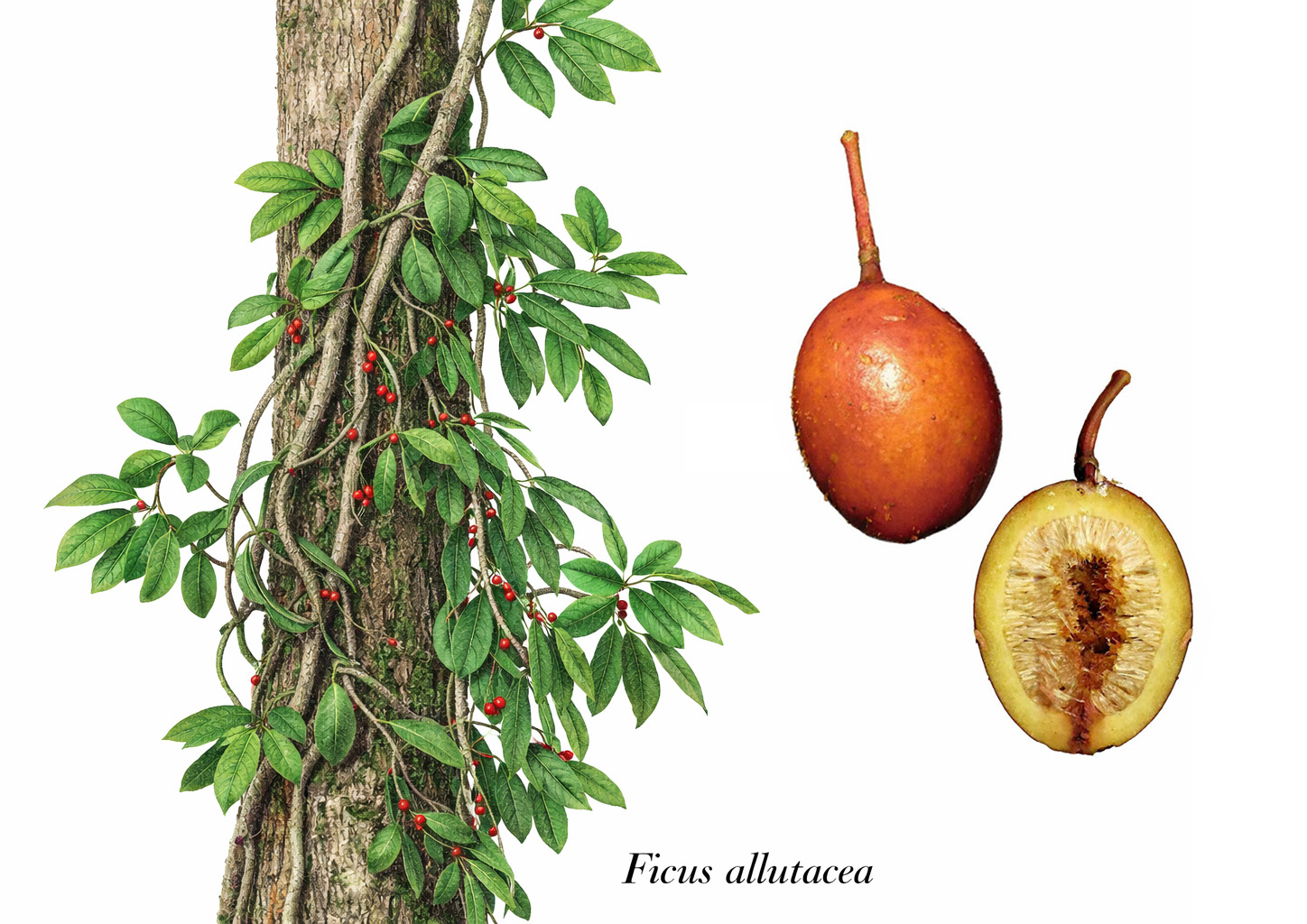
Ficus allutacea
淡榄叶榕
Common root climber with distinctive pale olive-green leaves. Forms extensive root mats on tree trunks. Produces small yellow figs favored by birds and bats.
View Details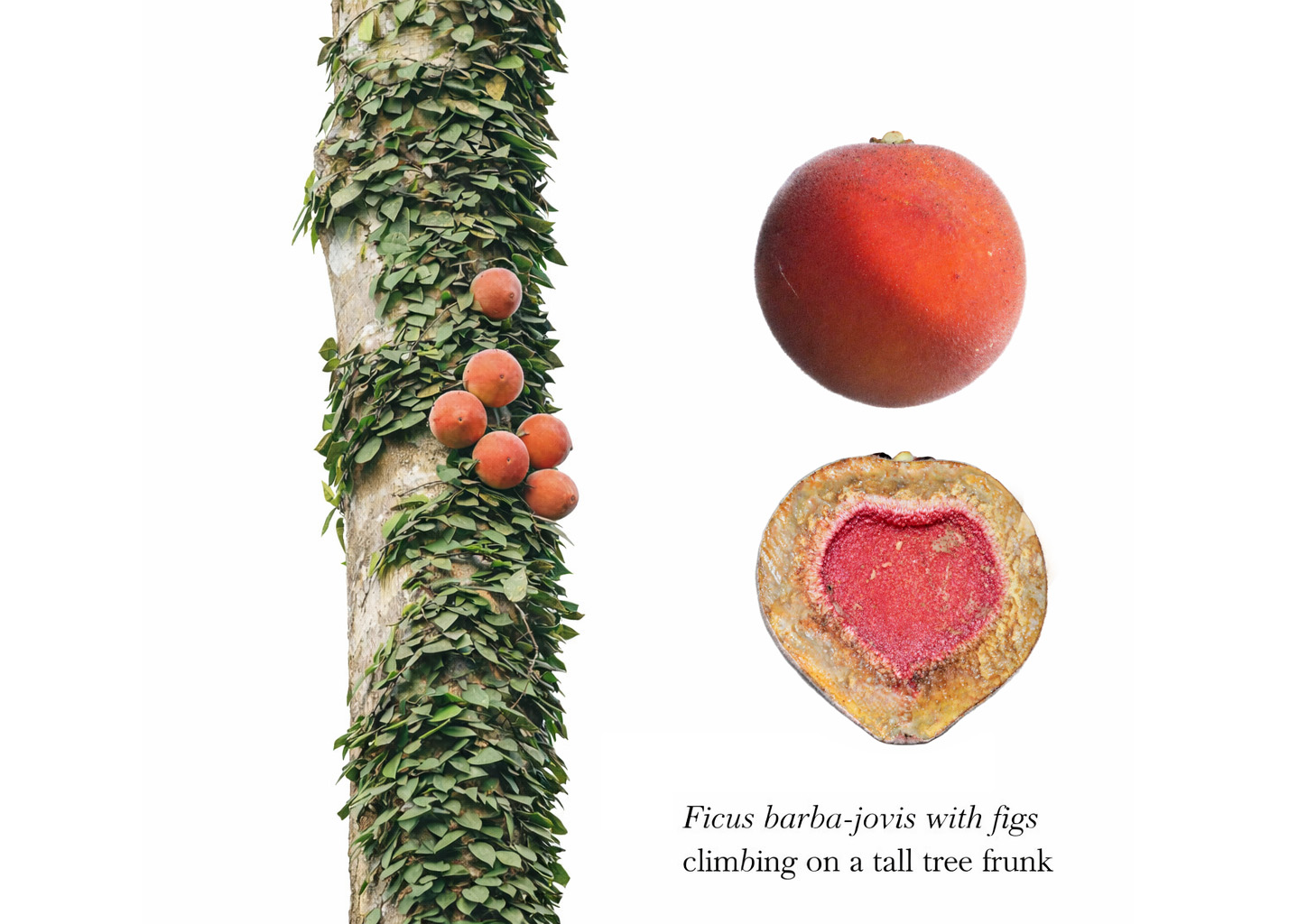
Ficus barba-jovis
朱巴榕
Rare climbing fig often found on limestone formations. Named for its "Jupiter's beard" appearance with dense aerial roots. Limited distribution in Borneo (Endemic of North Sabah).
View Details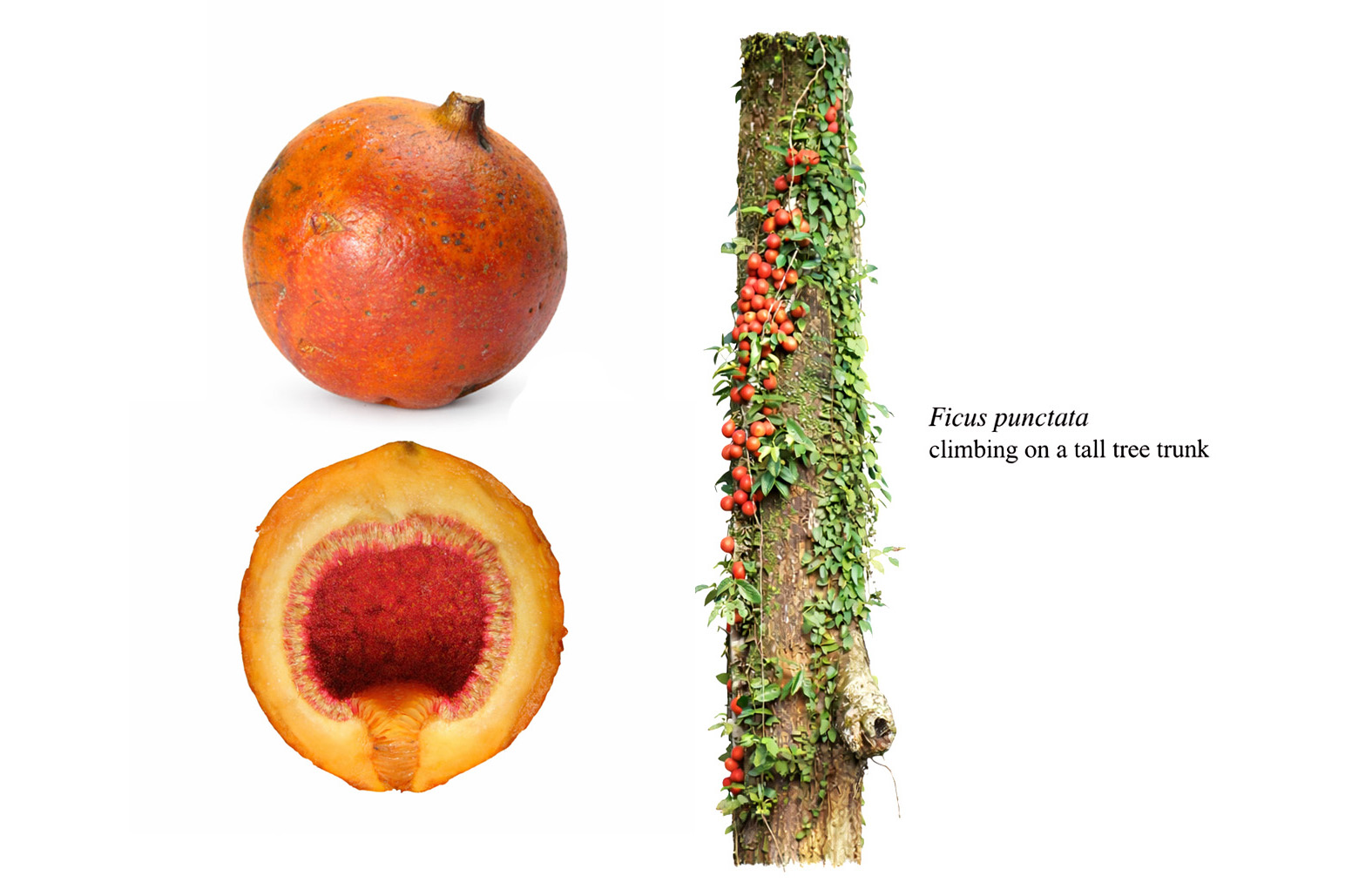
Ficus punctata
橙黄榕
Named for its dotted leaves, this common climber produces orange-yellow figs. Important food source for frugivorous birds throughout the year.
View Details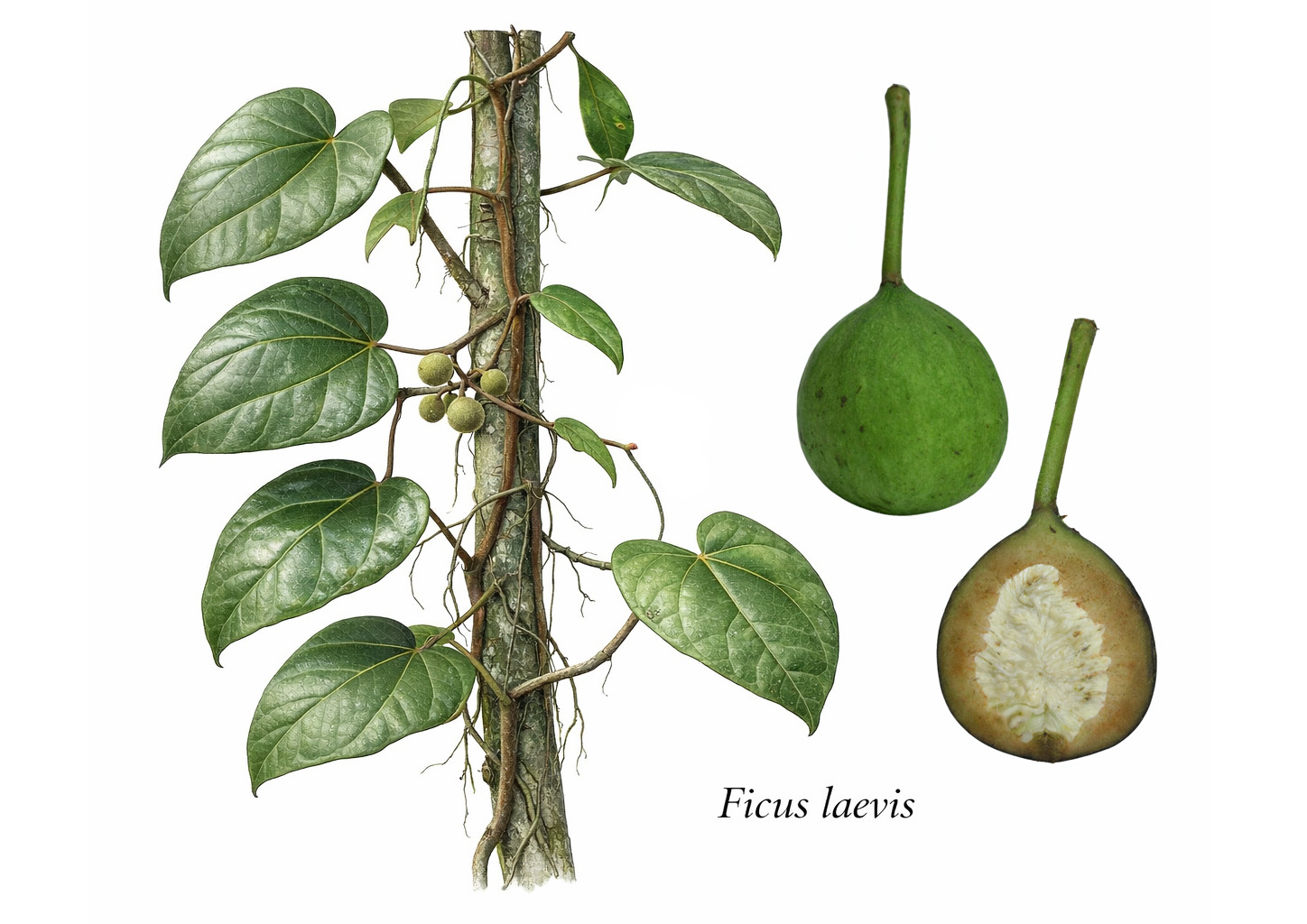
Ficus laevis
光叶榕
Distinctive climbing fig with smooth, glossy leaves and prominent venation. Forms thick root mats on tree trunks. Common in lowland and hill forests.
View Details
Ficus recurva
土蜜树/雅榄榕/曲榕
Limestone specialist with distinctively recurved leaves. Forms dense vertical root systems on rock faces. Pollinator wasps well-documented.
View Details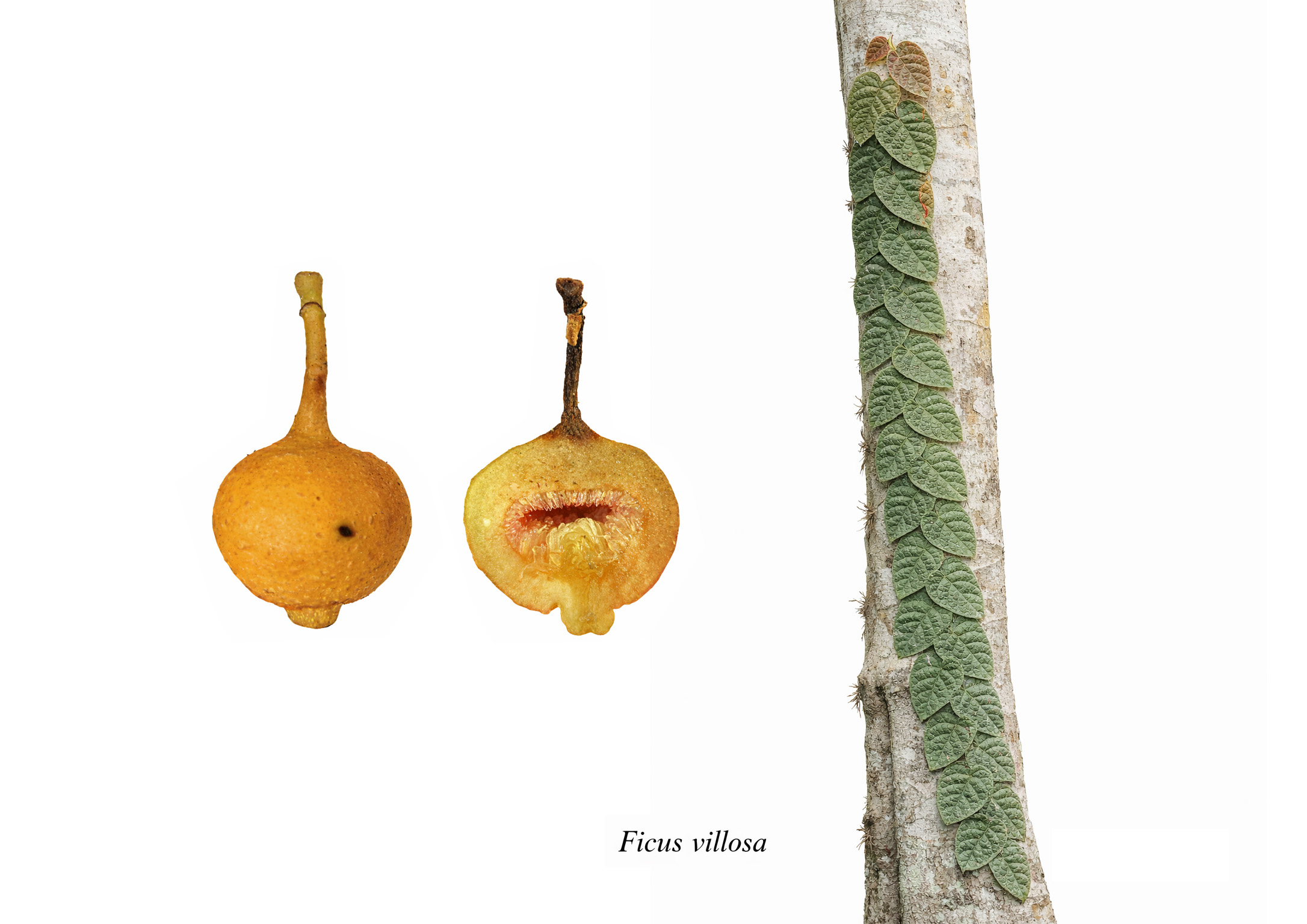
Ficus villosa
毛榕
Characterized by its villous (hairy) leaves and young shoots. Forms loose climbing networks rather than dense mats. Prefers humid, shaded locations.
View DetailsFig Wasp Pollinators of Root Climbers
Root-climbing figs maintain the same intricate fig-wasp mutualism as other Ficus. Here's what we know about their specific pollinators:
| Ficus Species | Pollinator Wasps | Non-Pollinator Wasps | Pollination System |
|---|---|---|---|
| Ficus allutacea | Unknown species | Unknown | Dioecious |
| Ficus barba-jovis | Data needed | Data needed | Dioecious |
| Ficus laevis | Platyscapa sp. (probable) | Several genera | Dioecious |
| Ficus punctata | Unknown species | Unknown | Dioecious |
| Ficus recurva | 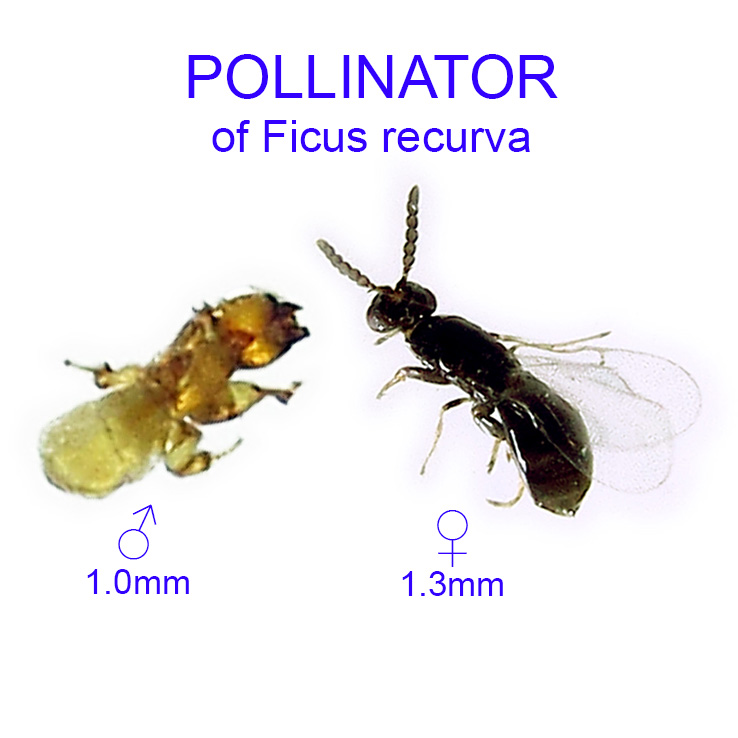 Identified species |
No non-pollinators found | Dioecious |
| Ficus villosa | Data needed | Data needed | Dioecious |
Climbing Fig Pollination Challenges
Root-climbing figs face unique pollination challenges due to their vertical growth habit. Their syconia (figs) are often scattered along climbing stems rather than clustered. Fig wasps must navigate complex three-dimensional spaces to find receptive figs. Some species like Ficus recurva have developed specialized wasp relationships adapted to their limestone cliff habitats.
Root Climber Adaptations
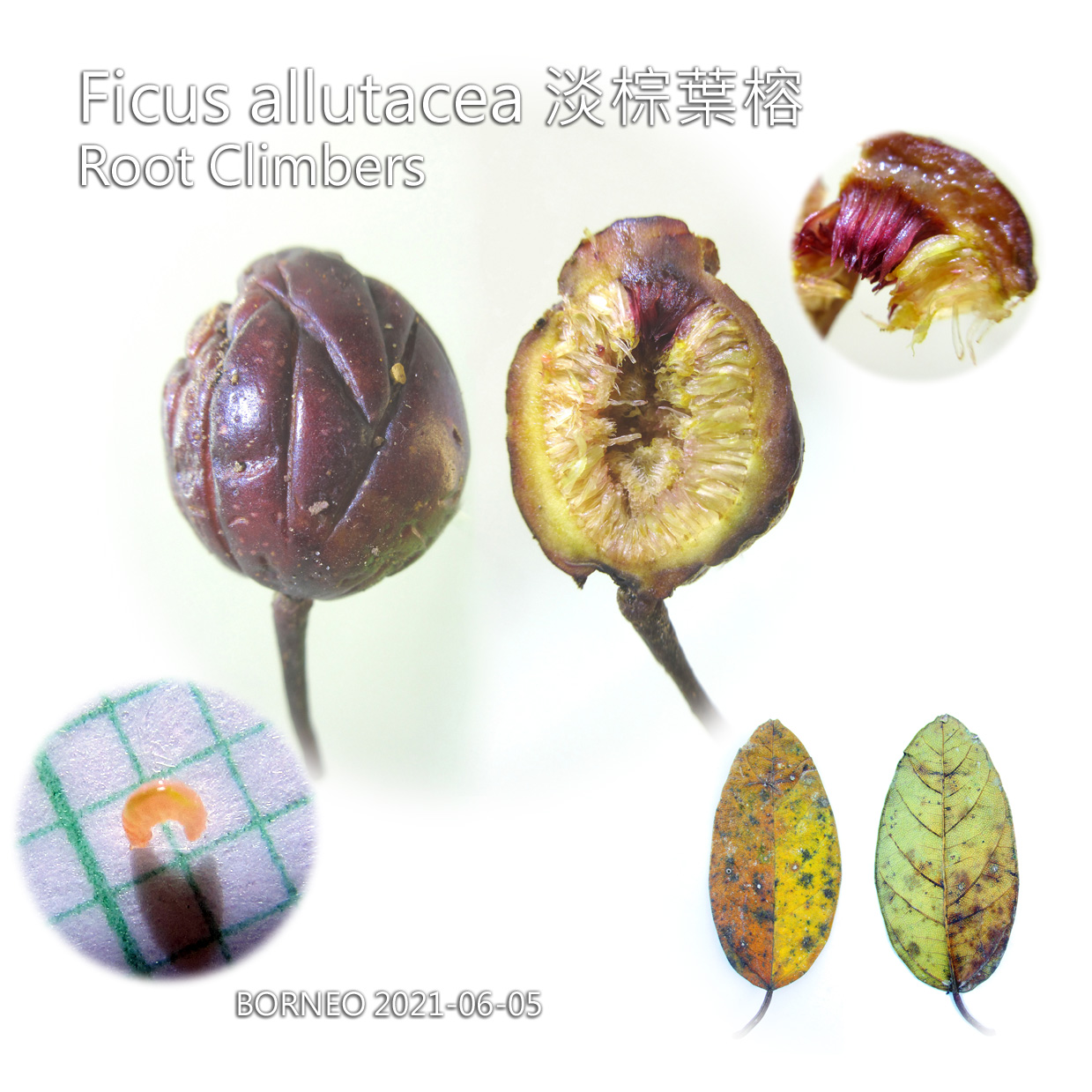
Ficus allutacea
Close-up showing leaf structure and climbing habit
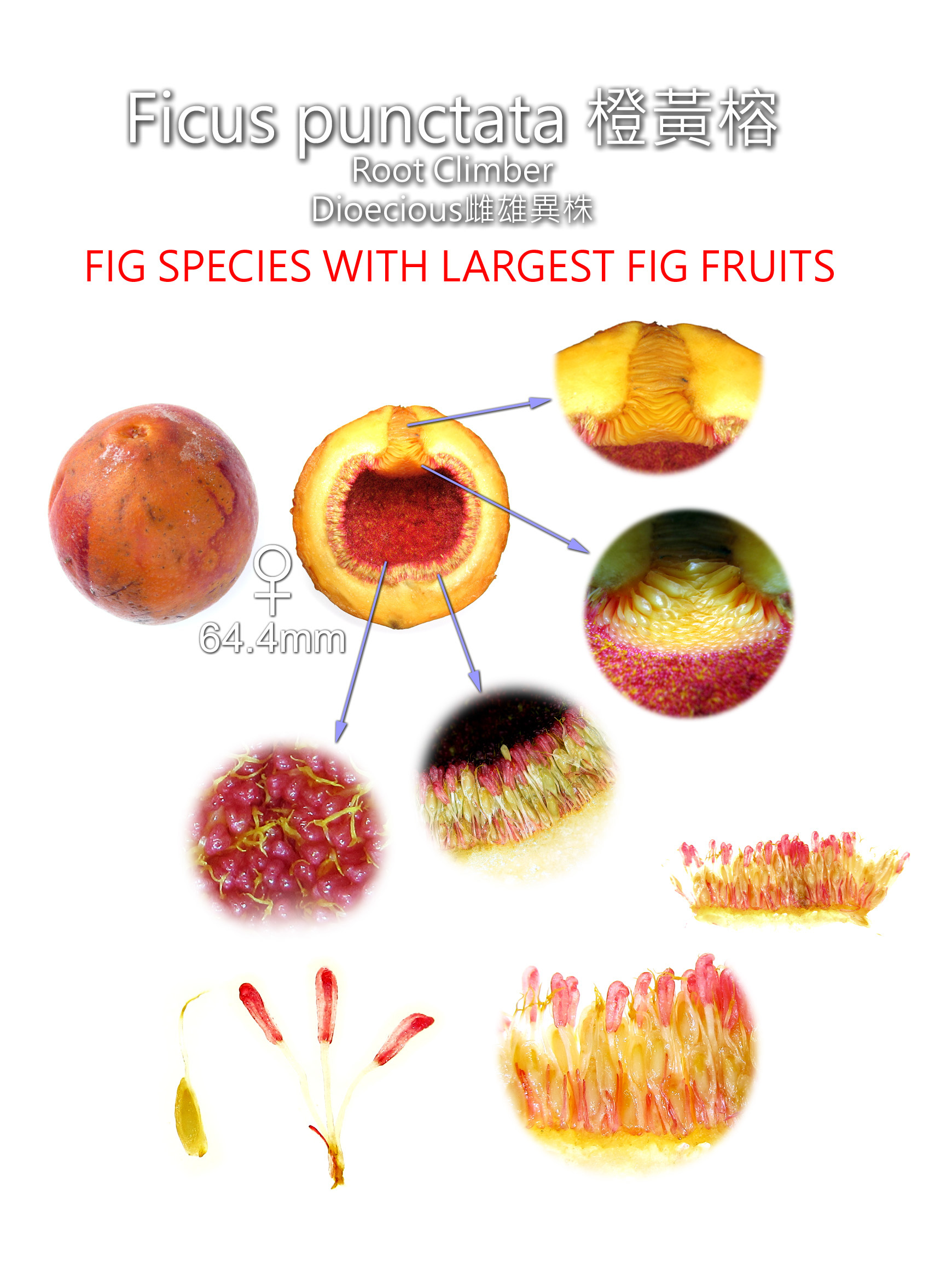
Ficus punctata
Identification chart showing leaf and fruit characteristics
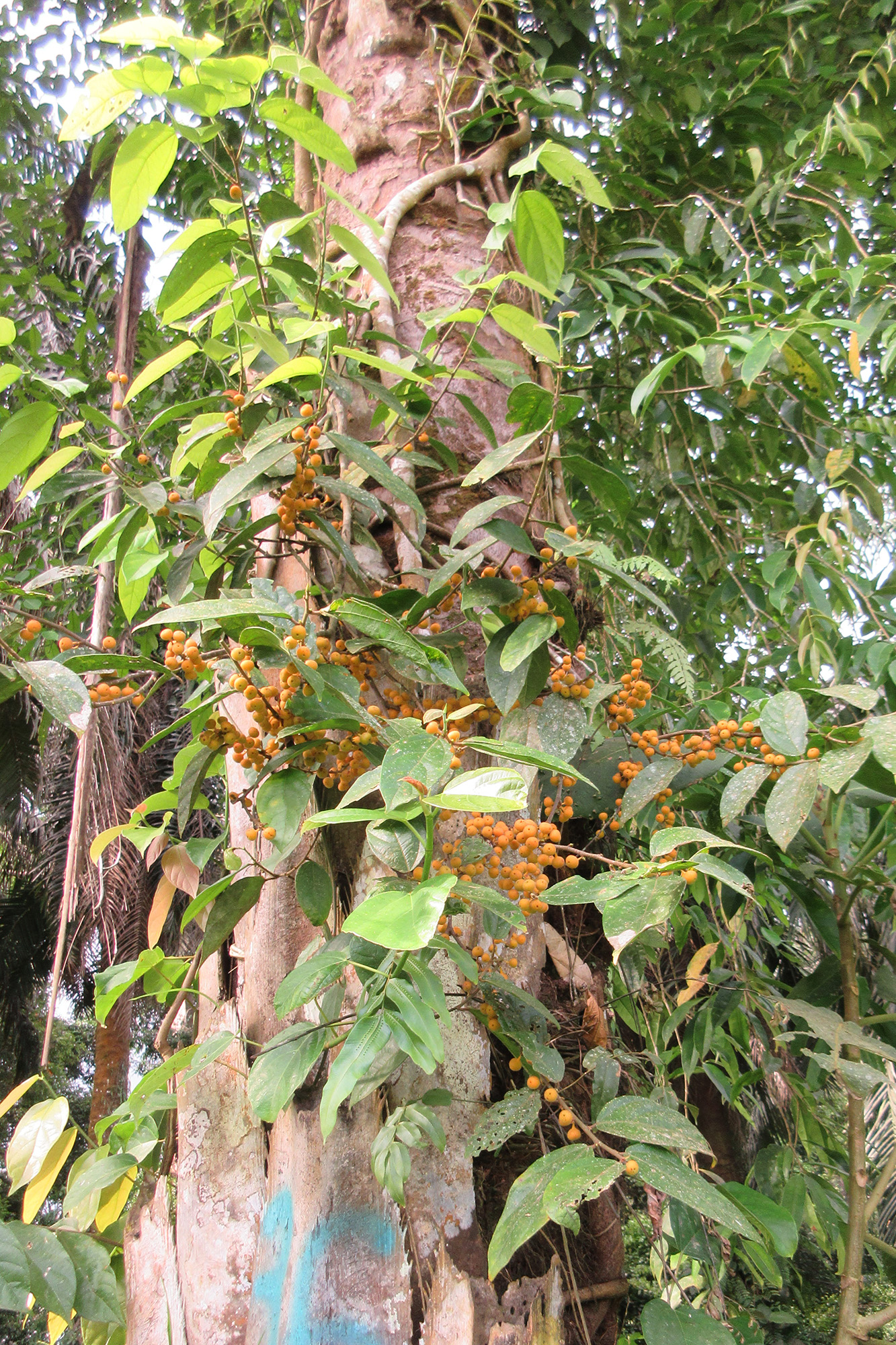
Ficus recurva Habitat
Climbing pattern on tree trunk in natural habitat

Identification Guide
Comparative chart for root climber identification
The Science of Root Climbing
Root Adaptations
Adventitious roots are the key to climbing success. These specialized roots:
- Adhesive pads: Secrete mucilaginous substances that bond to surfaces
- Aerial absorption: Can absorb moisture and nutrients from air and runoff
- Phototropism: Grow toward dark surfaces (negative phototropism)
- Thigmotropism: Respond to touch by clinging more tightly
Growth Pattern:
Root climbers typically begin as epiphytes in tree canopies, then send roots downward. Unlike stranglers, they maintain a climbing habit rather than developing a full trunk around the host.
Ecological Engineering
Root climbers are "ecosystem engineers" that create vertical habitats:
Vertical Ecosystems: A single mature climbing fig can support:
- 5-15 epiphyte species (ferns, orchids, mosses)
- 20+ invertebrate species (insects, spiders)
- Multiple microhabitats (dry zones, moist pockets)
- Nesting sites for birds and small mammals
Unique Climbing Characteristics
Vertical Growth
Can climb over 30 meters on suitable surfaces. Growth rate varies from 0.5-2 meters per year depending on conditions and species.
Hydraulic Architecture
Specialized root and stem anatomy allows water transport against gravity over long distances. Some species can survive months without soil contact.
Layered Root Mats
Create complex multi-layered root systems that can be 10-30 cm thick. These mats regulate temperature and humidity, creating stable microhabitats.
Asynchronous Fruiting
Unlike many stranglers, root climbers often fruit asynchronously, providing continuous food resources for frugivores throughout the year.
Fascinating Root Climber Facts
Not True Stranglers
Despite their climbing habit, root climbers rarely kill their host trees. They maintain a commensal relationship, using the host for support without significantly harming it. This distinguishes them from strangler figs that eventually form independent trunks.
Ancient Adaptation
The climbing habit evolved independently in multiple Ficus lineages. Fossil evidence suggests climbing figs existed in Southeast Asian forests over 20 million years ago, co-evolving with their specific pollinator wasps.
Rainwater Harvesting
Root mats act as efficient rainwater harvesters. Studies show a mature climbing fig can intercept and store 50-100 liters of water during heavy rains, releasing it slowly to create moist microhabitats that support other species.
Climate Resilience
Root climbers show remarkable resilience to climate fluctuations. Their ability to absorb atmospheric moisture allows survival during droughts. This makes them important "climate refugia" species in changing environments.
Understanding Climbing Fig Reproduction
Seed Dispersal Strategy
Root climbers rely heavily on canopy animals for seed dispersal. Birds, bats, and primates consume fruits and deposit seeds in tree canopies where they germinate as epiphytes. This "canopy-to-canopy" dispersal differs from stranglers that often start from ground-level seeds.
- Primary dispersers: Fruit bats, barbets, hornbills
- Secondary dispersers: Squirrels, primates
- Germination sites: Tree forks, mossy branches, palm crowns
Dioecious Reproduction
All Bornean root-climbing figs are dioecious (separate male and female plants). This reproductive strategy:
- Enforces outcrossing and genetic diversity
- Requires precise fig-wasp coordination
- Creates male/female distribution patterns in forests
- Female trees produce seeds; male trees produce pollen and wasps
Research Note: Of the 5 root-climbing fig species in Borneo, all are dioecious. This matches the overall Ficus pattern where approximately 90% of species have separate male and female individuals. The climbing habit has evolved multiple times within dioecious lineages.
Conservation Status & Threats
Current Status
- Ficus allutacea: Least Concern (widespread)
- Ficus punctata: Least Concern (common)
- Ficus recurva: Near Threatened (limestone specialist)
- Ficus barba-jovis: Data Deficient (rare)
- Ficus villosa: Vulnerable (habitat specific)
Primary Threats
- Limestone quarrying (affects F. recurva specifically)
- Selective logging of large host trees
- Climate change altering humidity patterns
- Habitat fragmentation disrupting pollinator networks
Conservation Importance: Root climbers are excellent indicators of forest health and structural complexity. Their presence signals mature forest conditions with large trees and stable microclimates. Protecting climbing fig populations helps preserve vertical habitat diversity in Borneo's forests.