Short Tree Ficus of Borneo
Discover 7 compact understory fig species that play crucial ecological roles despite their modest stature, providing year-round food resources for forest wildlife.
What Are Short Tree Figs?
Short tree figs are Ficus species characterized by their compact growth form, typically reaching only 5-15 meters in height. Unlike towering stranglers or climbers, these species form single-trunked trees with spreading crowns, often thriving in forest understories, edges, and secondary growth habitats. Their manageable size makes them ideal for ecological studies and accessible for field research.
Where to Find Them
Short tree figs are widespread across Borneo's diverse ecosystems. They're commonly found in forest edges, riverbanks, limestone outcrops, and regenerating secondary forests. Species like Ficus grossularioides often establish in disturbed areas, while Ficus lepicarpa prefers well-drained forest understories. Their adaptability allows them to thrive in various light conditions from partial shade to full sun.
Ecological Significance
Despite their modest size, short tree figs serve as keystone species in Borneo's ecosystems. They provide consistent fruit production throughout the year, stabilizing food webs during lean seasons. Their accessible fruits support diverse wildlife including understory birds, small mammals, and insects. These species also contribute to forest regeneration by establishing quickly in disturbed areas.
7 Short Tree Ficus Species
Ficus uarata
(無名)
Little-known short tree fig with limited distribution in Borneo. Requires further botanical documentation and ecological study. Believed to be dioecious like most Ficus species.
View DetailsFicus brunneoaurata
褐黃榕
Named for its distinctive brown-gold young leaves. Small to medium tree reaching 5-12 meters. Produces small figs along branches. Found in mixed dipterocarp forests.
View DetailsFicus eumorpha
優形榕
Characterized by its well-formed, symmetrical growth habit. Typically 6-10 meters tall with dense foliage. Figs are produced on short stalks along younger branches.
View Details
Ficus fulva
黃褐榕
Small tree (4-8m) with tawny-yellow young leaves and stems. Adapts well to forest edges and disturbed habitats. Produces small, berry-like figs attractive to birds.
View Details
Ficus grossularioides
醋栗榕
Very short tree (3-7m) resembling a large shrub. Named for its gooseberry-like figs. Often found in secondary forests and disturbed areas. Important pioneer species.
View Details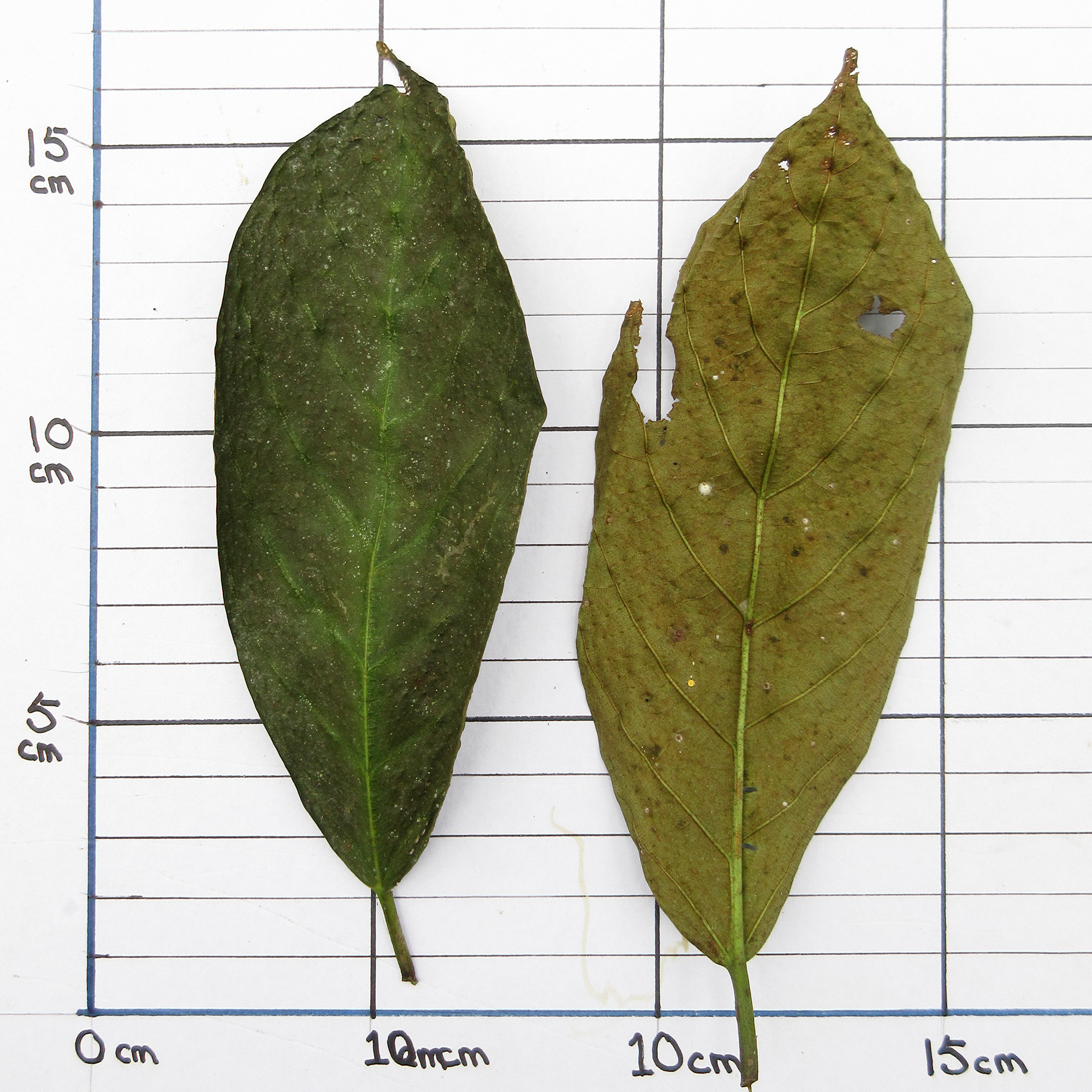
Ficus lepicarpa
鱗果榕
Medium-sized tree (8-12m) with distinctive scaly fruits. Leaves are elliptical with prominent venation. Important food source for understory birds and mammals.
View Details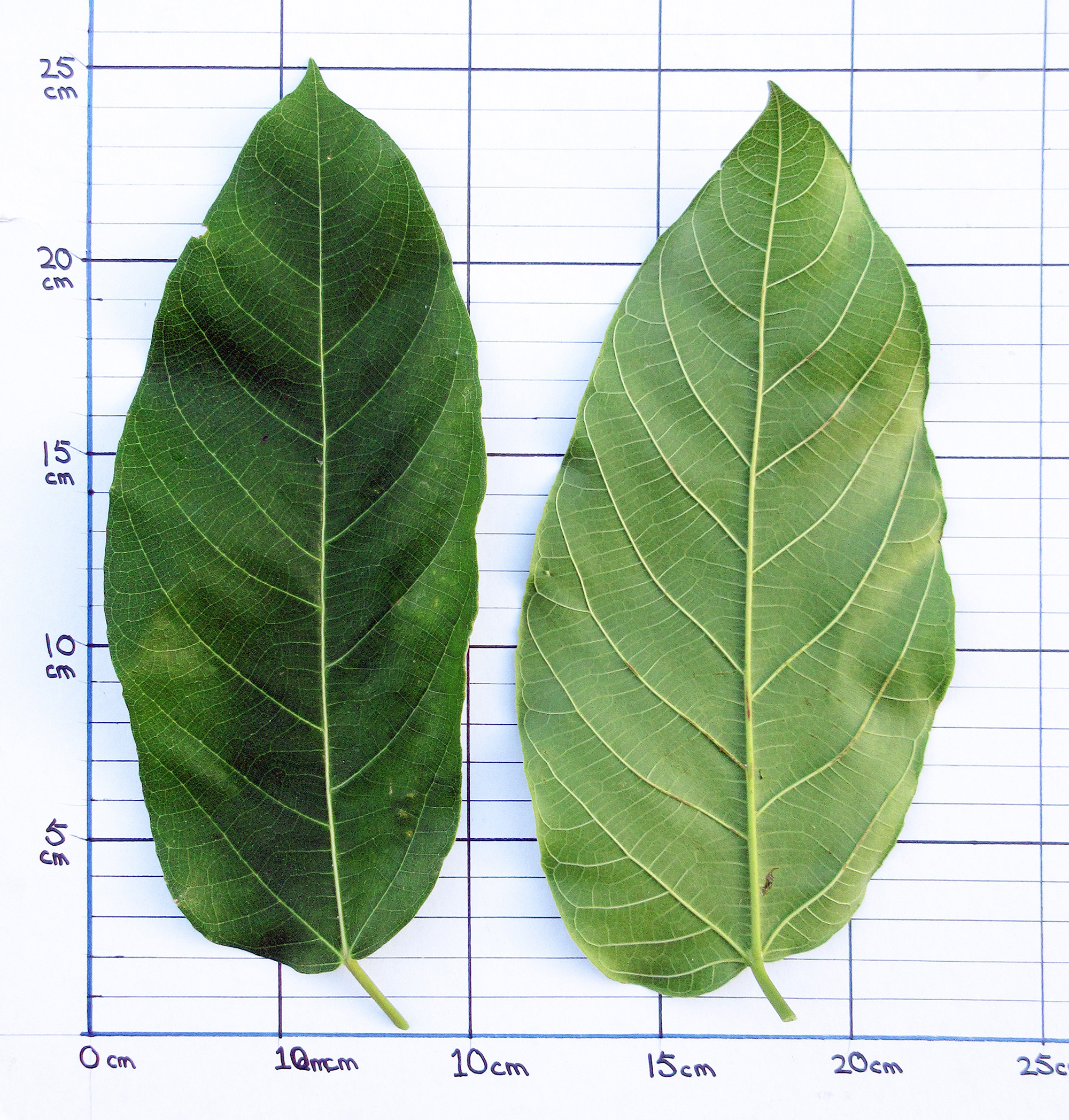
Ficus melinocarpa
太平洋島榕
Largest of the short tree figs (10-15m). Named for its honey-colored fruits. Often found in well-drained soils. Leaves are thick and leathery with waxy surface.
View DetailsFig Wasp Pollinators
All short tree fig species in Borneo are dioecious (separate male and female trees) and depend on specific agaonid wasps for pollination. Here's what we know about their pollinator relationships:
| Ficus Species | Pollinator Wasps | Non-Pollinator Wasps | Pollination Status |
|---|---|---|---|
| Ficus uarata | Unknown | Unknown | Research needed |
| Ficus brunneoaurata | Unknown | Unknown | Research needed |
| Ficus eumorpha | Unknown | Unknown | Research needed |
| Ficus fulva | Unknown | Unknown | Research needed |
| Ficus grossularioides | Unknown | Unknown | Research needed |
| Ficus lepicarpa | 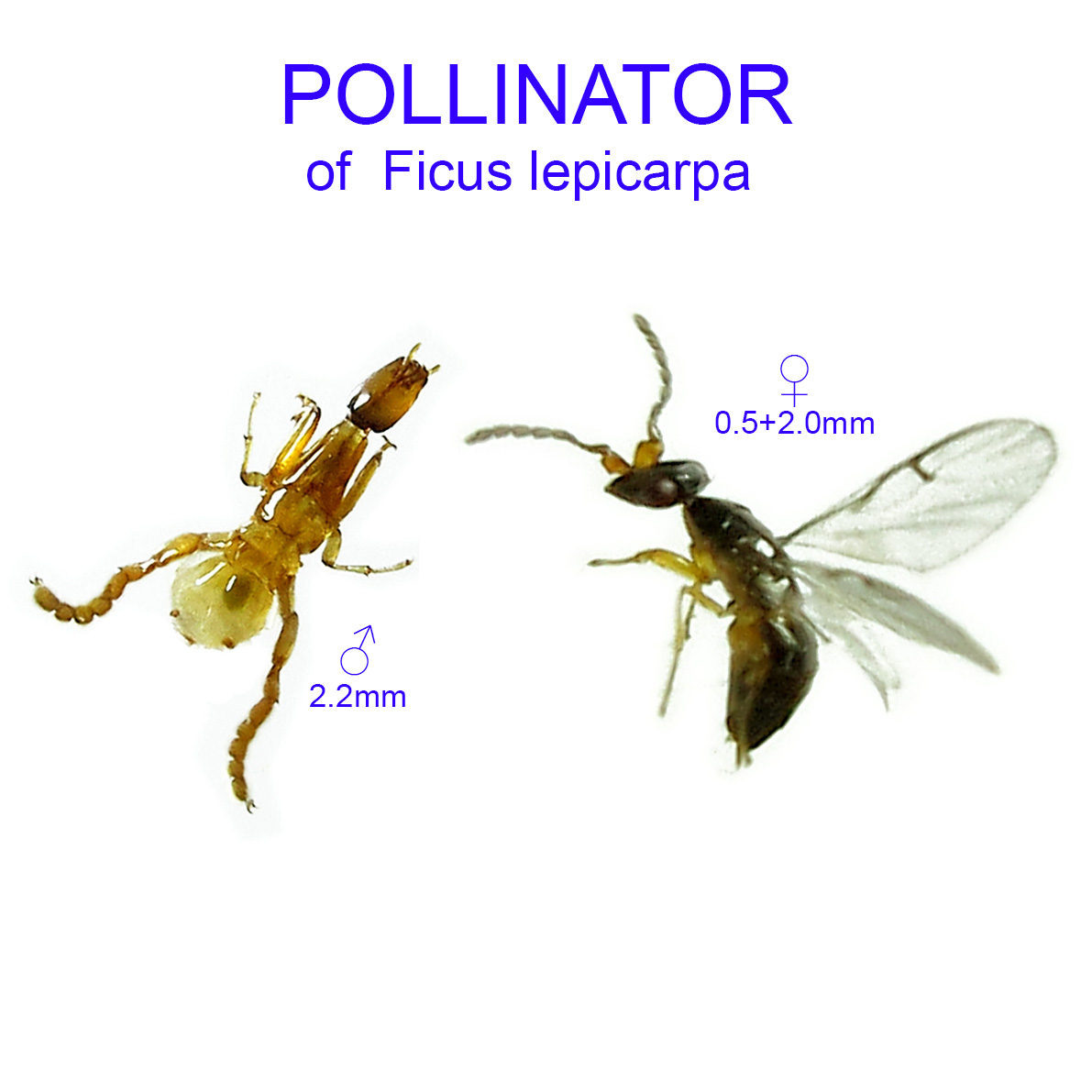 Platyscapa sp. |
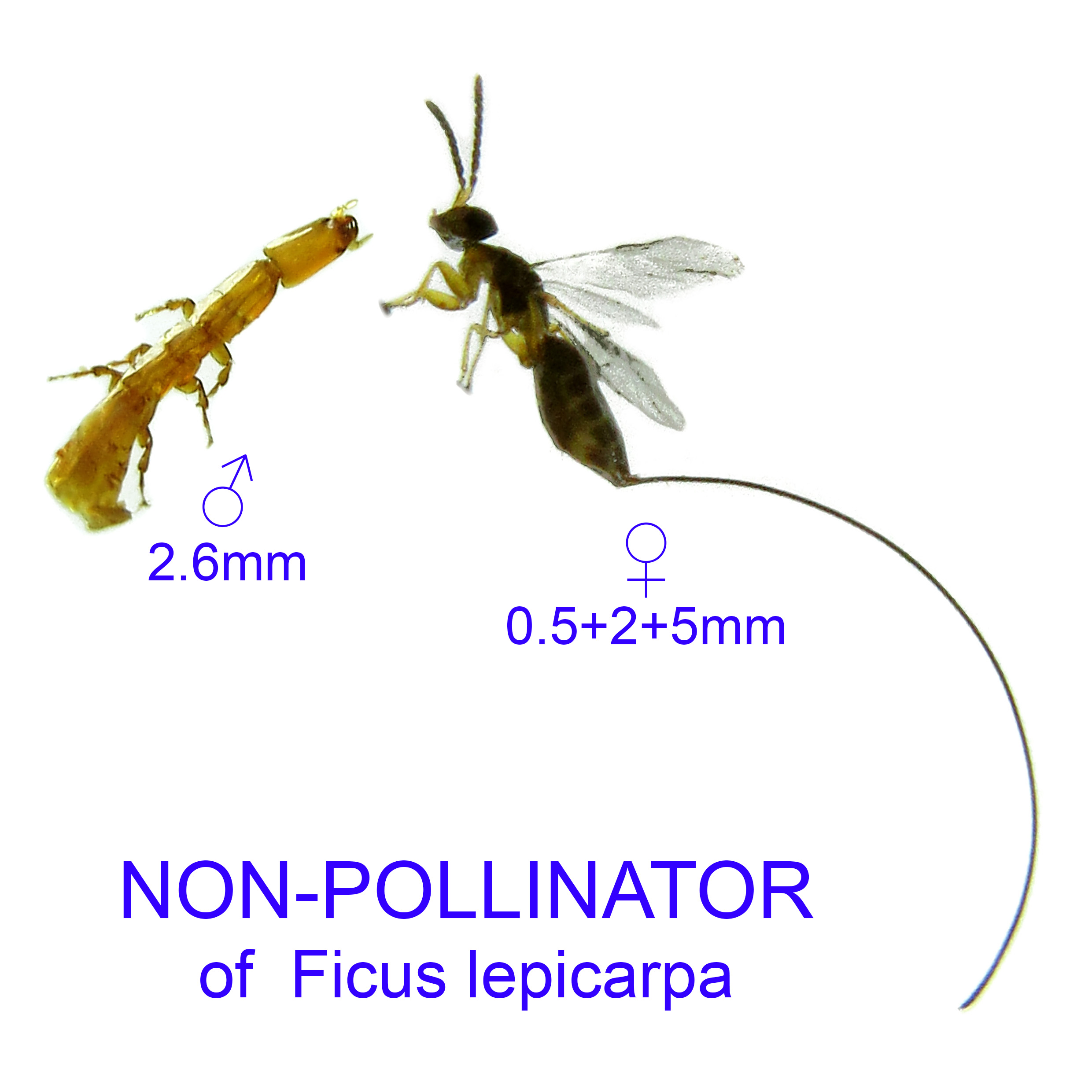 Sycoscapter sp. |
Documented |
| Ficus melinocarpa | No record | 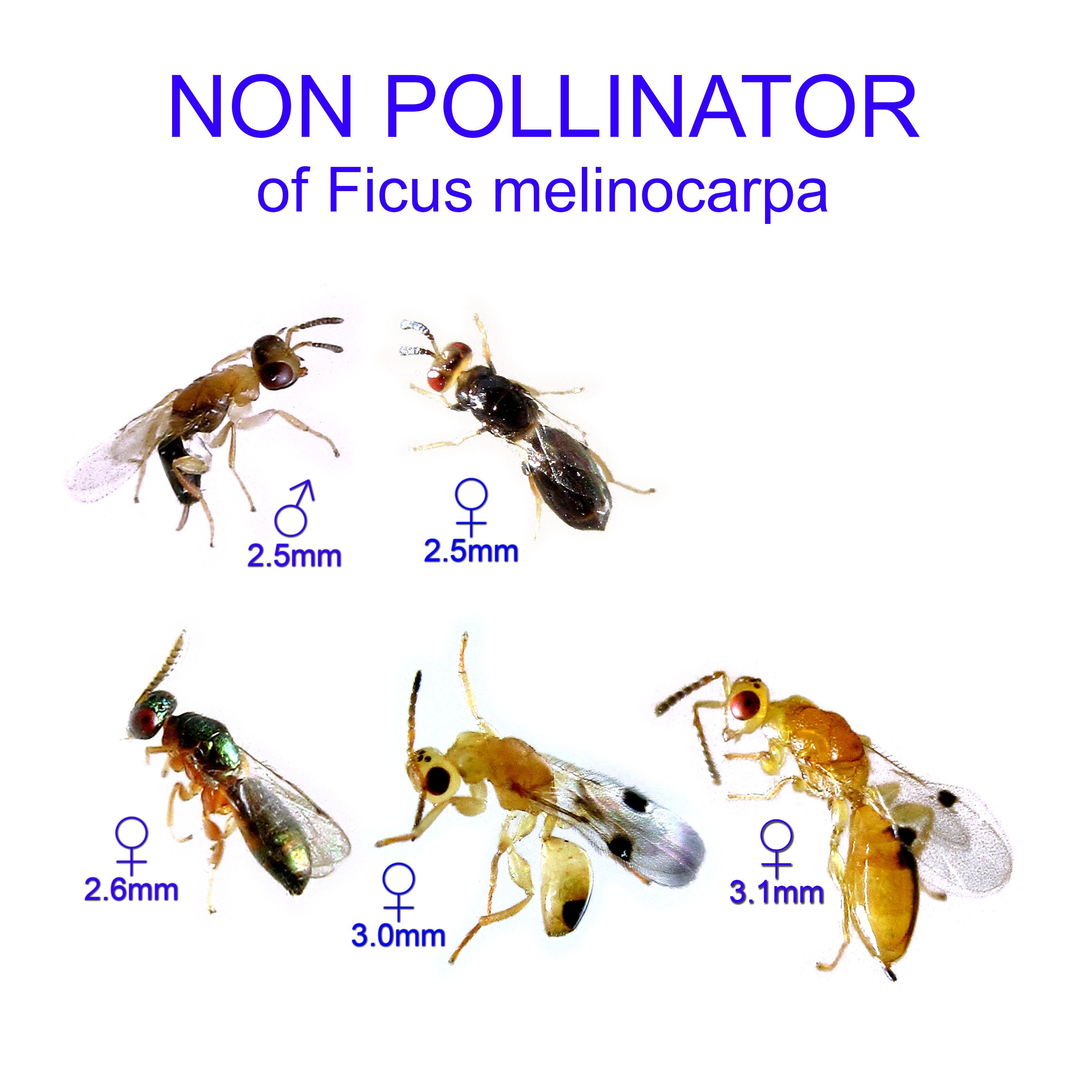 Multiple species |
Pollinator unknown |
Research Gap in Short Tree Fig Pollination
Unlike larger, more conspicuous fig species, short tree figs have received less scientific attention regarding their pollination biology. Only Ficus lepicarpa has documented pollinator relationships. This represents a significant research opportunity in tropical ecology, as these smaller figs likely support unique wasp communities adapted to their compact growth form and understory habitats.
Featured Short Tree Figs
Ficus lepicarpa
Characteristic elliptical leaves with prominent venation
Ficus melinocarpa
Thick, leathery leaves with waxy surface texture
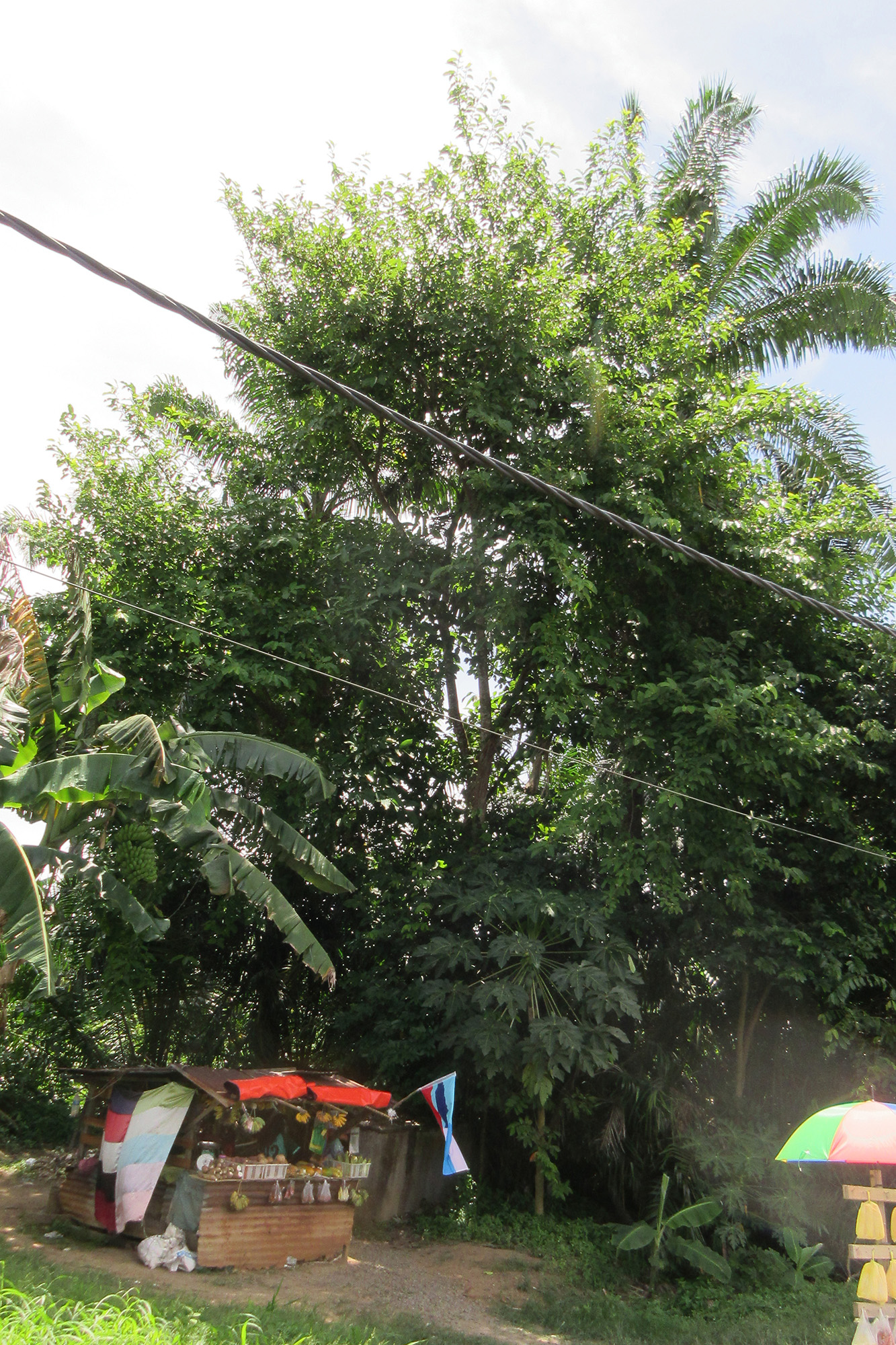
Ficus melinocarpa Habitat
Short tree growing in well-drained forest location
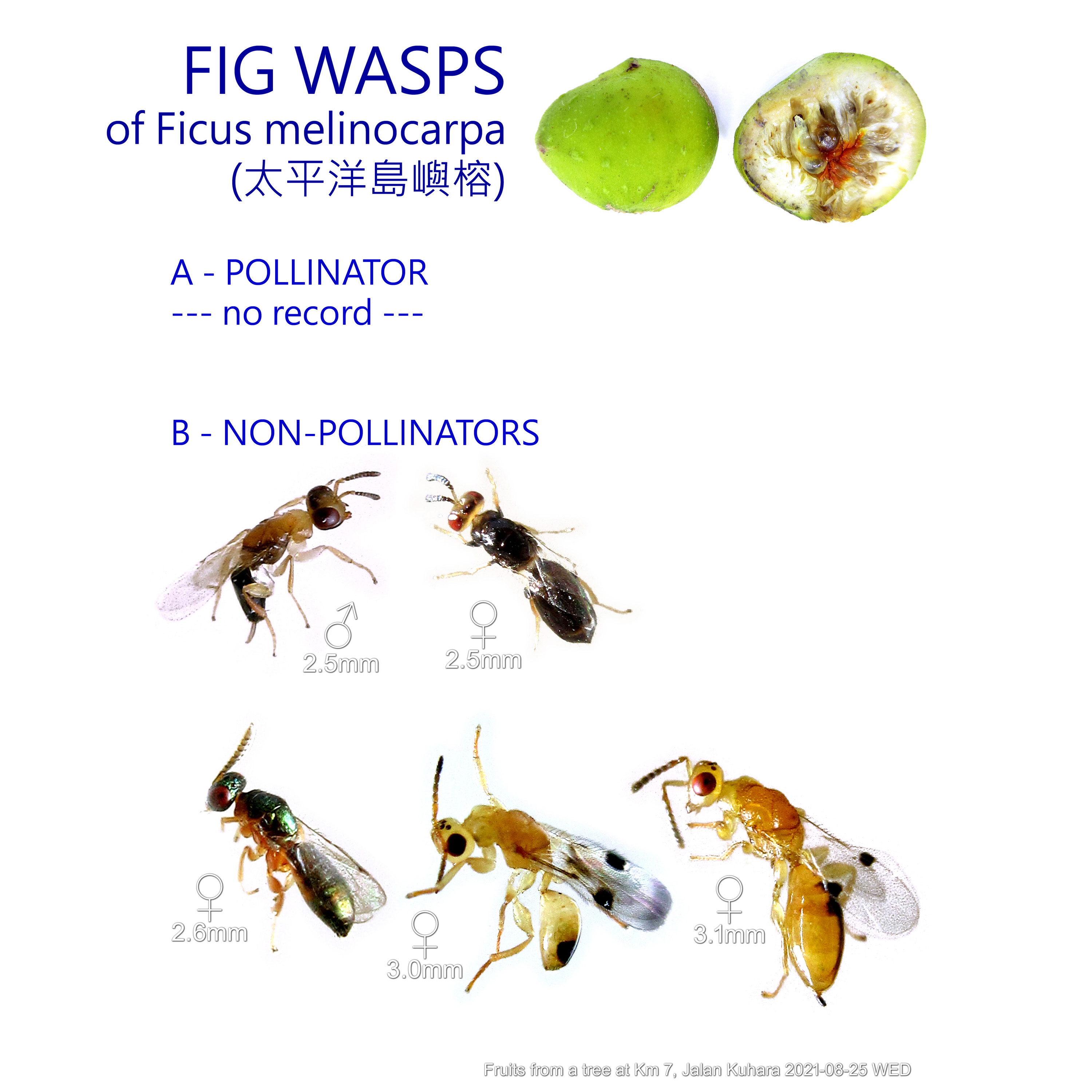
Fig Wasp Associate
Non-pollinator wasp associated with Ficus melinocarpa
Adaptations of Short Tree Figs
Why Stay Small?
Short tree figs have evolved compact growth forms as an ecological strategy. Unlike their giant relatives that compete for canopy space, these species occupy specialized niches in the forest understory and edges where light is limited but competition is reduced.
Evolutionary Advantages:
- Resource Efficiency: Require less energy for structural support
- Early Reproduction: Can flower and fruit at younger ages
- Niche Specialization: Occupy understory light gaps
- Disturbance Adaptation: Recover quickly from damage
- Accessibility: Fruits within reach of ground-foraging animals
Wildlife Relationships
Short tree figs have unique ecological relationships due to their accessible height:
Ficus grossularioides fruits are particularly favored by bulbuls and barbets. Ficus lepicarpa supports diverse insect communities that in turn attract insectivorous birds. These species provide critical food resources during periods when canopy fruits are scarce.
Unique Characteristics
Compact Stature
Typically 5-15 meters tall, allowing them to thrive in forest understories and edges where canopy competition is intense. Their modest height makes them accessible for research and observation.
Light Adaptation
Many species can grow in varying light conditions from deep shade to full sun. This adaptability allows them to colonize forest gaps and regenerating areas quickly.
Year-Round Fruiting
Like all figs, short tree species produce fruits asynchronously throughout the year, providing consistent food resources for wildlife during lean seasons.
Research Accessibility
Their manageable size makes short tree figs ideal for ecological studies. Researchers can easily measure growth, monitor fruiting, and study pollination without canopy access equipment.
Fascinating Facts
Understudied Diversity
Short tree figs represent some of the least-studied Ficus species in Borneo. Their modest size and understory habitat have made them less conspicuous to researchers compared to giant stranglers and canopy emergents.
Early Successional Role
Species like Ficus grossularioides are pioneer species that quickly colonize disturbed areas. They help initiate forest succession by attracting seed-dispersing animals that bring seeds of other tree species.
Riparian Specialists
Several short tree figs, including Ficus fulva and Ficus brunneoaurata, commonly grow along riverbanks where their fruits provide food for both terrestrial and aquatic wildlife when they fall into the water.
Conservation Importance
Despite their small size, short tree figs are ecologically disproportionate to their biomass. They support specialized insect communities and provide critical food resources that sustain understory animal populations year-round.
Morphological Characteristics of Short Tree Figs
Growth Habit
Small to medium trees (typically 5-15m) with single trunks and spreading crowns. Unlike shrubs, they maintain a distinct tree form with clear trunk development. Roots are typically non-climbing and anchor firmly in soil.
- Single trunk development
- Spreading, rounded crowns
- Non-climbing root systems
- Often multi-branched from low height
Reproductive Features
All Bornean short tree figs are dioecious with separate male and female trees. Fruits (syconia) are produced on twigs and branches, ranging from small berry-like structures to larger fleshy figs. Leaf morphology is highly variable and often diagnostic for species identification.
- Dioecious reproduction
- Twig/branch fruiting
- Variable leaf forms
- Specialized fig wasp pollinators
Identification Tip: When identifying short tree figs, look for the combination of tree form (not shrubby), relatively small size (under 15m), and figs produced along branches rather than on the main trunk. Leaf texture (glossy vs. leathery) and venation patterns are often key diagnostic features.