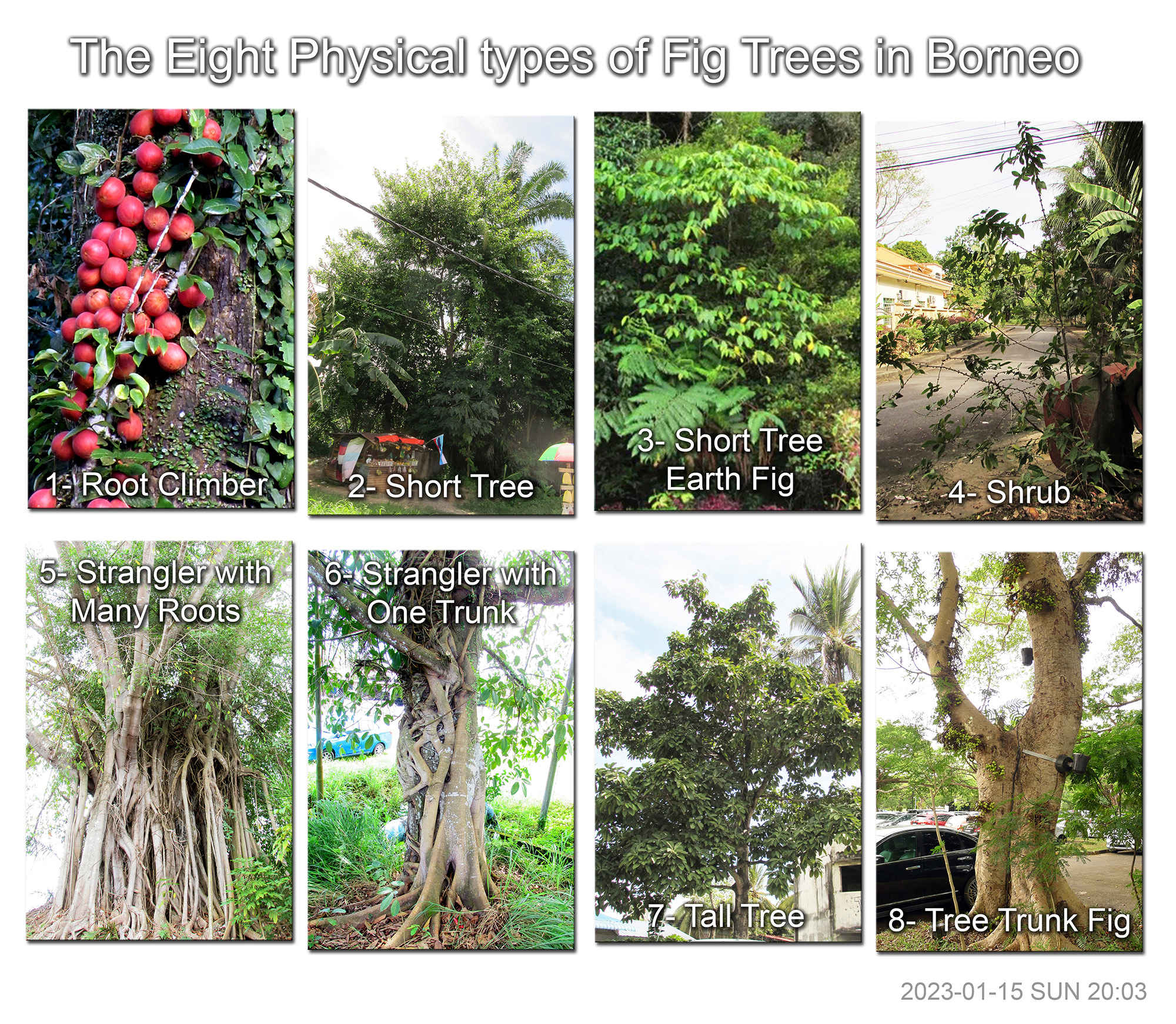
Stranglers with Many Roots
Discover 9 of Borneo's most iconic strangler fig species that develop extensive networks of aerial roots, creating dramatic architectural forms while playing crucial ecological roles as keystone species in tropical forests.
What Are Multi-Root Stranglers?
Multi-root stranglers are Ficus species that begin as epiphytes in the canopy of host trees and send down numerous aerial roots that eventually envelop and "strangle" their hosts. These roots fuse together to form a massive lattice-like structure that can completely surround the host trunk. This growth strategy allows them to outcompete hosts for light and nutrients, eventually becoming independent canopy trees.
Where to Find Them
Multi-root stranglers are found throughout Borneo's lowland and hill forests, particularly in areas with established tree canopies. They're common along riverbanks, in forest gaps, and at forest edges where birds and mammals deposit their seeds. Species like Ficus benjamina often dominate urban and suburban areas, while Ficus religiosa is commonly planted around temples and sacred sites.
Ecological Importance
These stranglers are keystone species that reshape forest dynamics. By replacing host trees, they create canopy gaps that influence forest succession. Their extensive root networks provide microhabitats for epiphytes, invertebrates, and small vertebrates. Year-round fruiting supports diverse wildlife including hornbills, monkeys, and fruit bats, making them crucial for maintaining tropical forest biodiversity.
9 Multi-Root Strangler Species
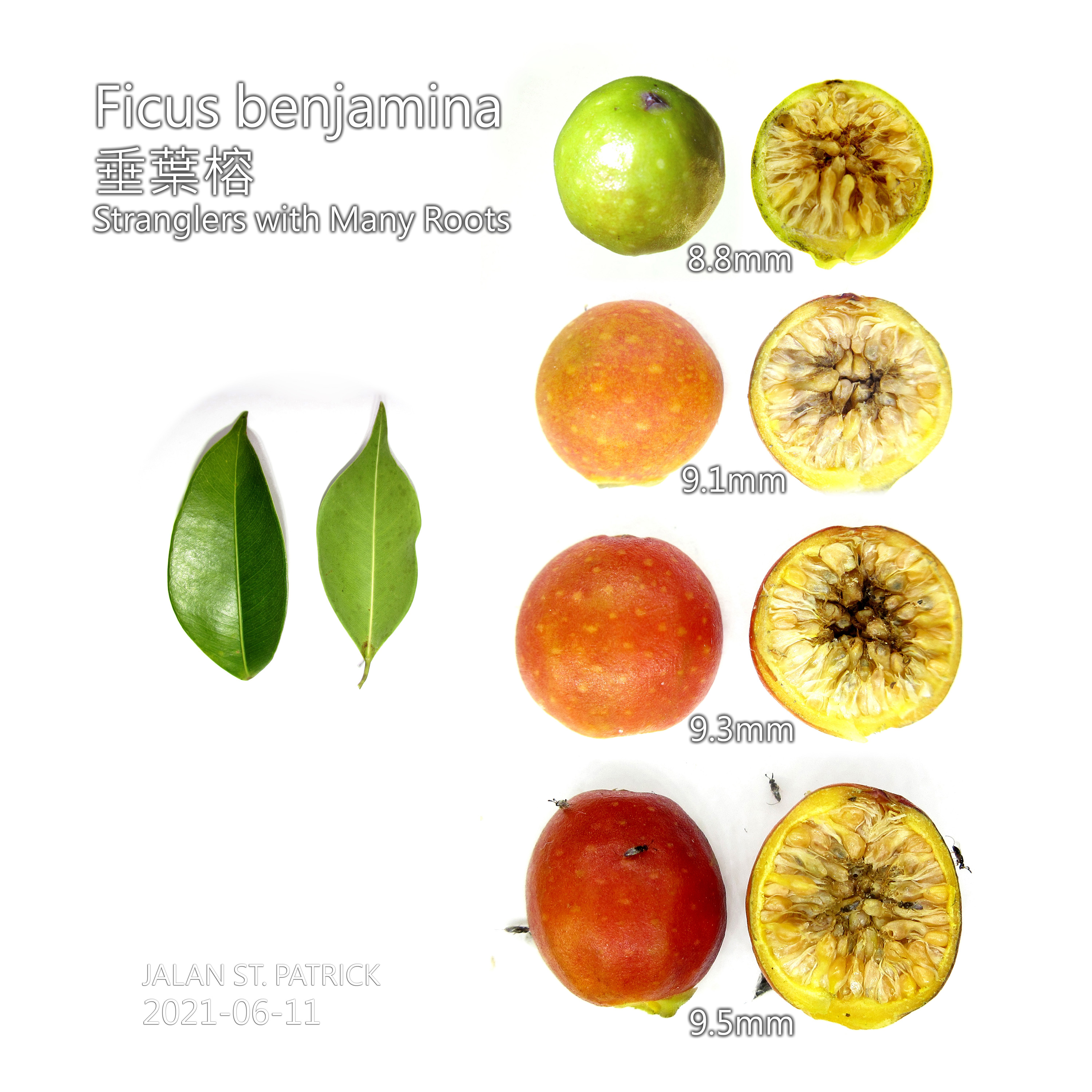
Ficus benjamina
垂葉榕
Weeping Fig - popular ornamental tree worldwide. Characterized by drooping branches and glossy leaves. Develops extensive aerial root systems. Important food source for urban wildlife.
View Details
Ficus caulocarpa
大葉赤榕
Large-leaved strangler often found along rivers. Produces cauliflorous fruits (on trunk and branches). Develops massive root systems that can completely envelop large host trees.
View Details
Ficus drupacea
棗果榕
Named for its drupe-like fruits. Variable leaf morphology with both hairy and smooth forms. Develops extensive aerial root networks. Important for frugivorous birds in forest habitats.
View Details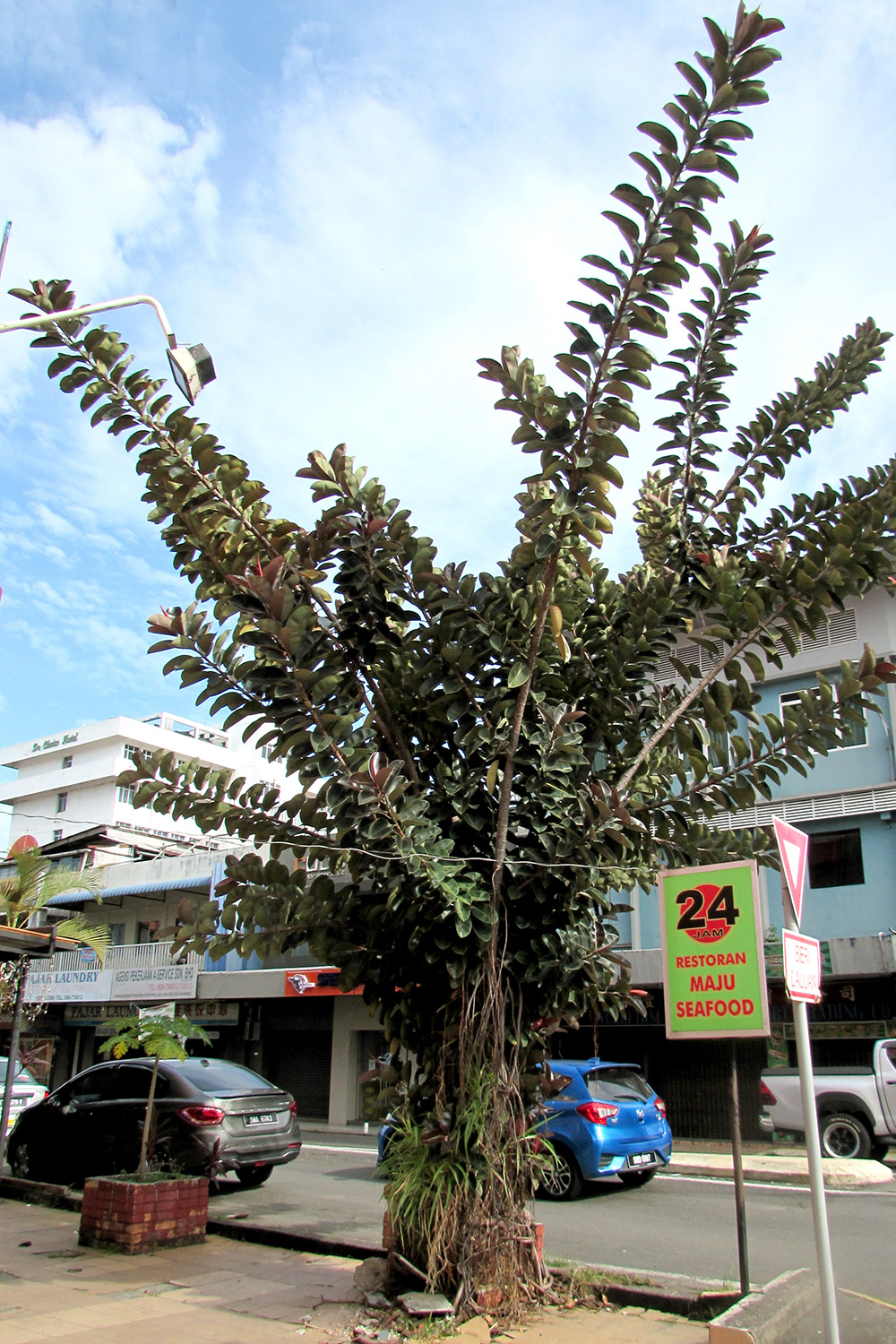
Ficus elastica
印度榕
Rubber Plant - widely cultivated as houseplant and ornamental. Native to northeast India and Indonesia. In Borneo, it's cultivated but not yet naturalized. Large, glossy leaves with prominent veins.
View Details
Ficus microcarpa
細葉榕
Chinese Banyan - aggressive strangler with small leaves. Forms extensive aerial root systems that can damage structures. Widely planted as ornamental but considered invasive in some areas.
View Details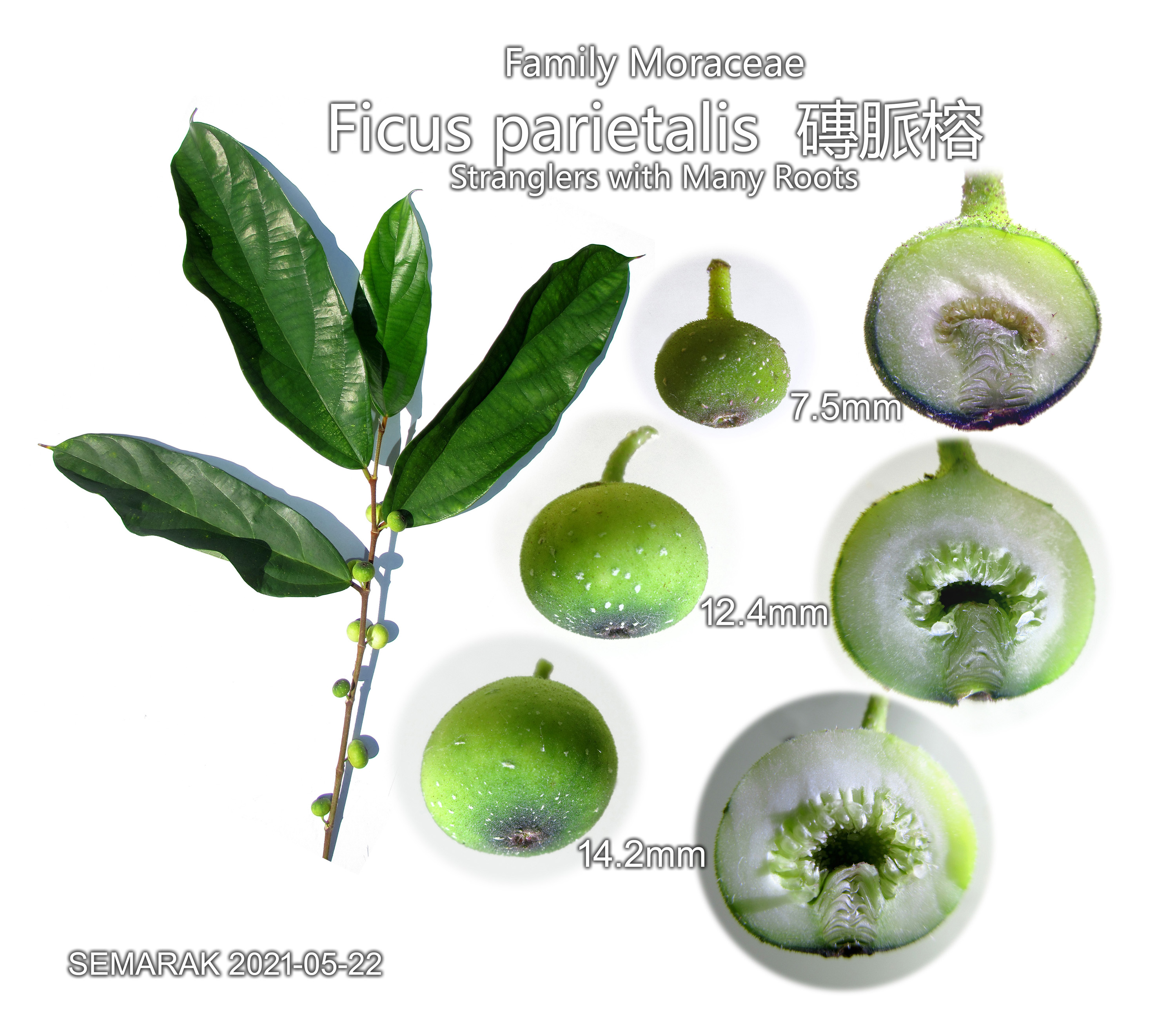
Ficus parietalis
顱壁榕
Named for its parietal (wall-like) root development. Dioecious species with separate male and female trees. Produces distinctive fruits and develops extensive multi-root systems on host trees.
View Details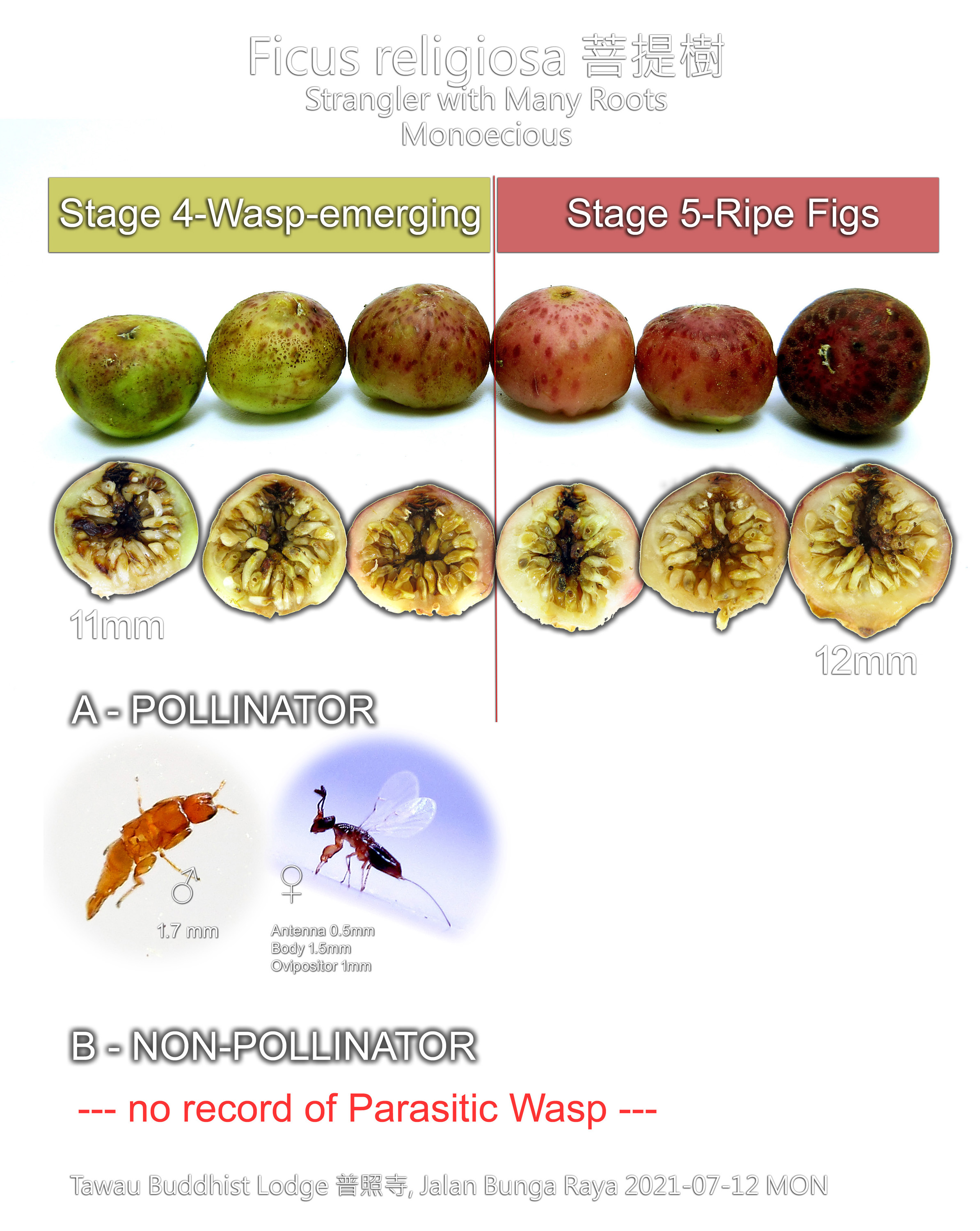
Ficus religiosa
菩提樹
Sacred Fig - revered in Buddhism as the Bodhi tree. Characteristic heart-shaped leaves with extended drip tips. Develops extensive aerial root systems. Planted worldwide around temples.
View Details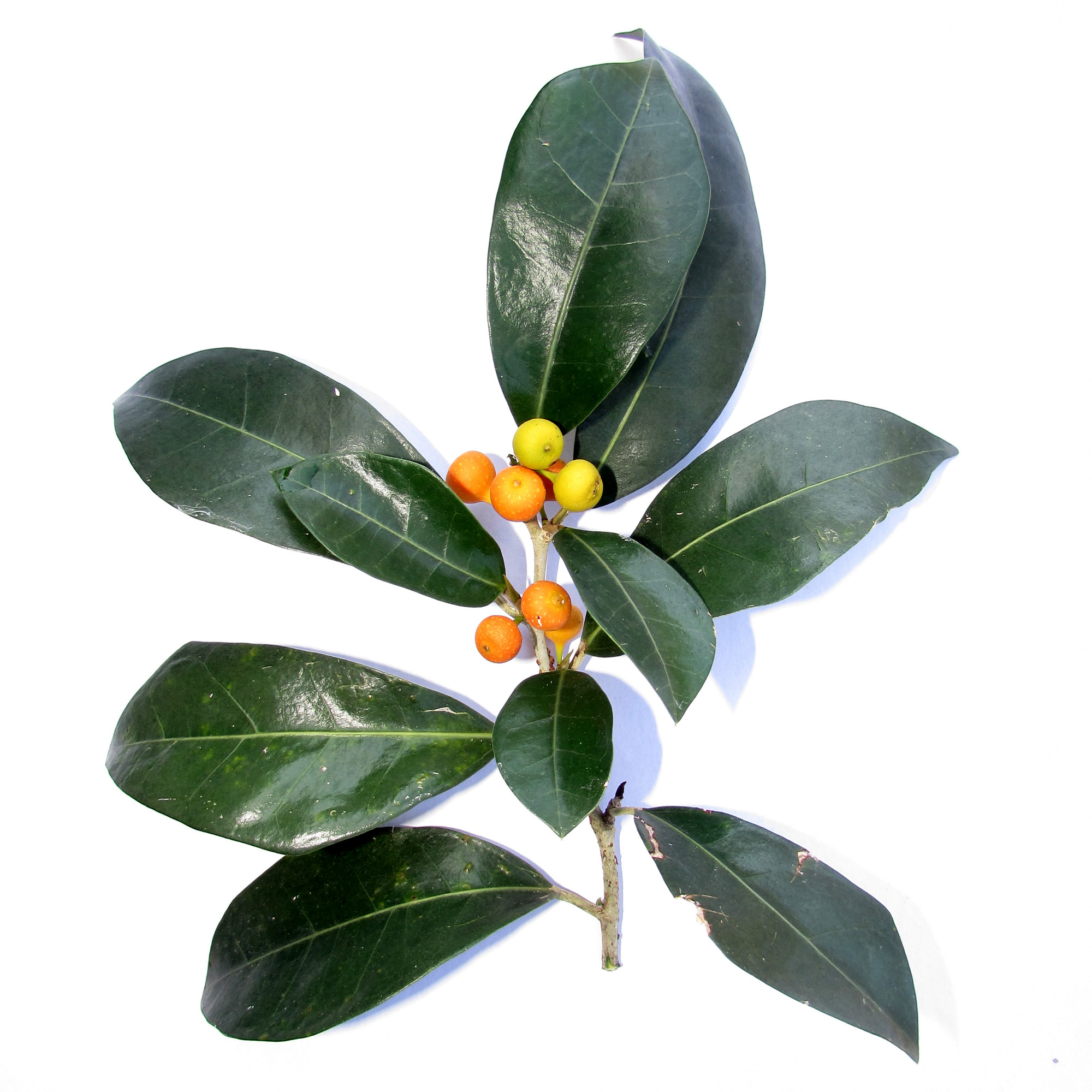
Ficus tinctoria
斜葉榕
Dye Fig - historically used for dye production. Characterized by asymmetrical (oblique) leaf bases. Dioecious with separate male and female trees. Develops extensive aerial root systems.
View Details
Ficus virens
黃葛榕 (大葉榕)
White Fig - large strangler with distinctive white fruits when ripe. Leaves change color before falling. Develops massive aerial root systems. Important food source for numerous bird species.
View DetailsFig Wasp Pollinators
Multi-root stranglers maintain complex relationships with fig wasps. Most species in this group are monoecious (7 of 9), which simplifies their pollination biology compared to dioecious species:
| Ficus Species | Pollinator Wasps | Non-Pollinator Wasps | Pollination System |
|---|---|---|---|
| Ficus benjamina | 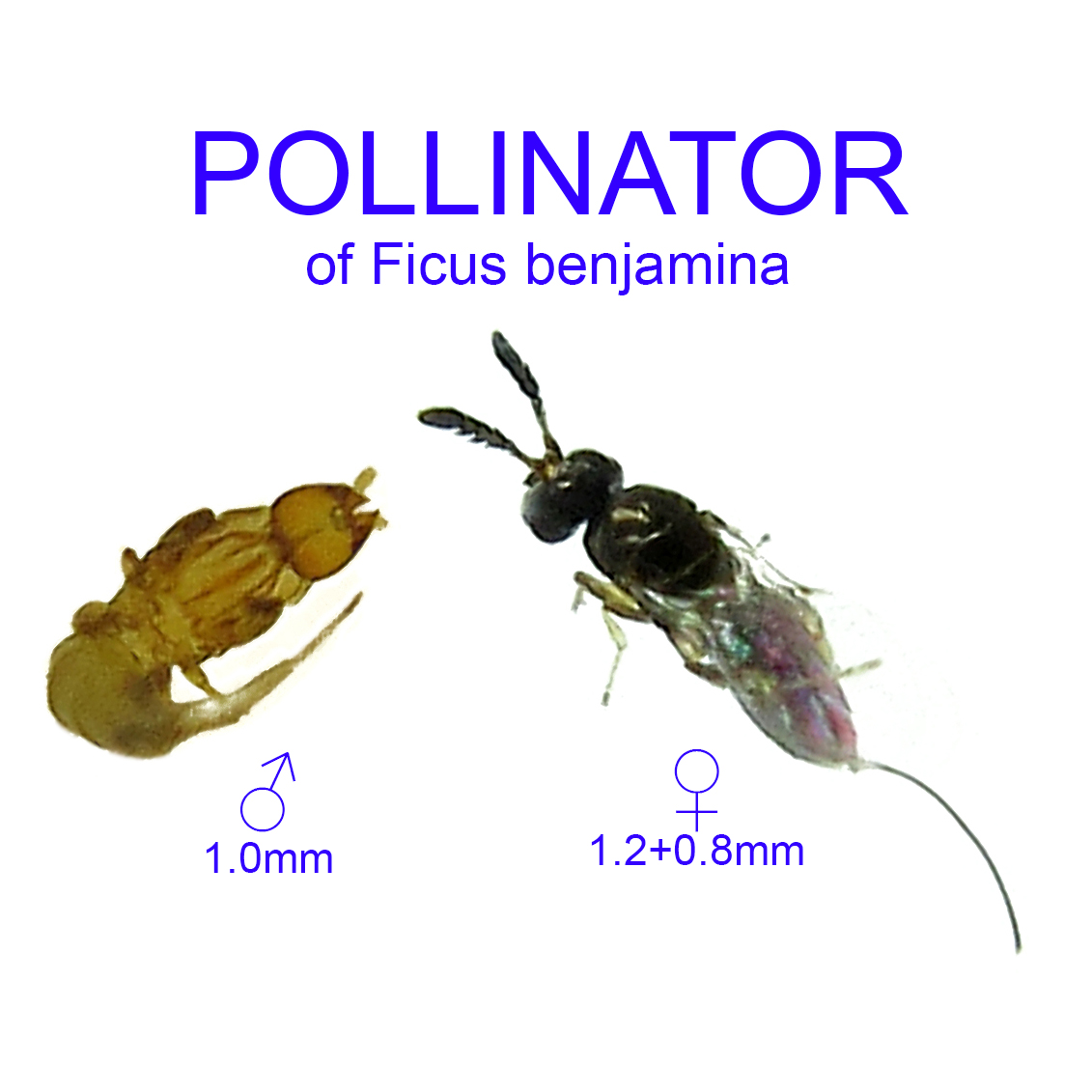 Eupristina koningsbergeri |
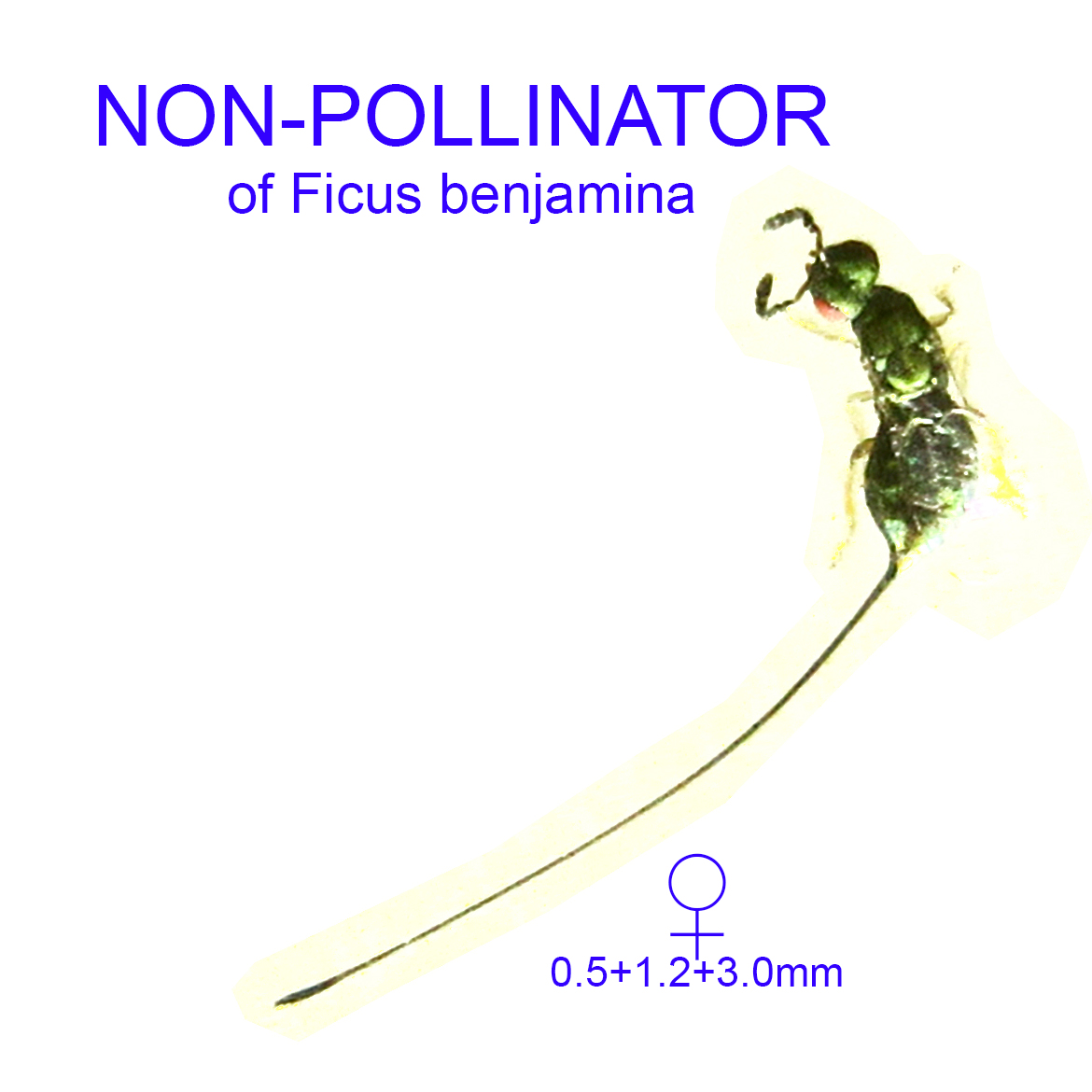 Several species |
Monoecious |
| Ficus caulocarpa | Unknown | Unknown | Monoecious |
| Ficus drupacea | 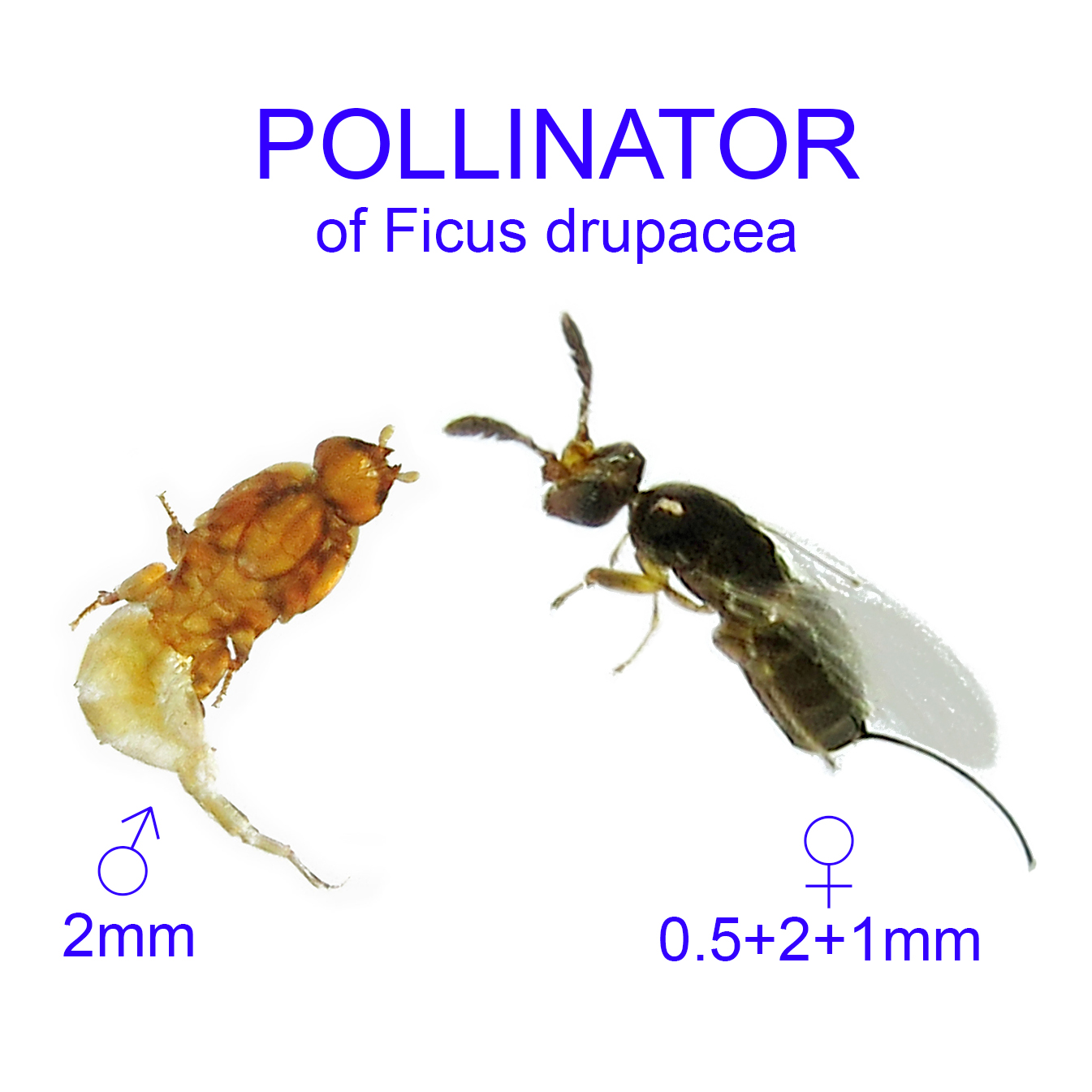 Eupristina sp. |
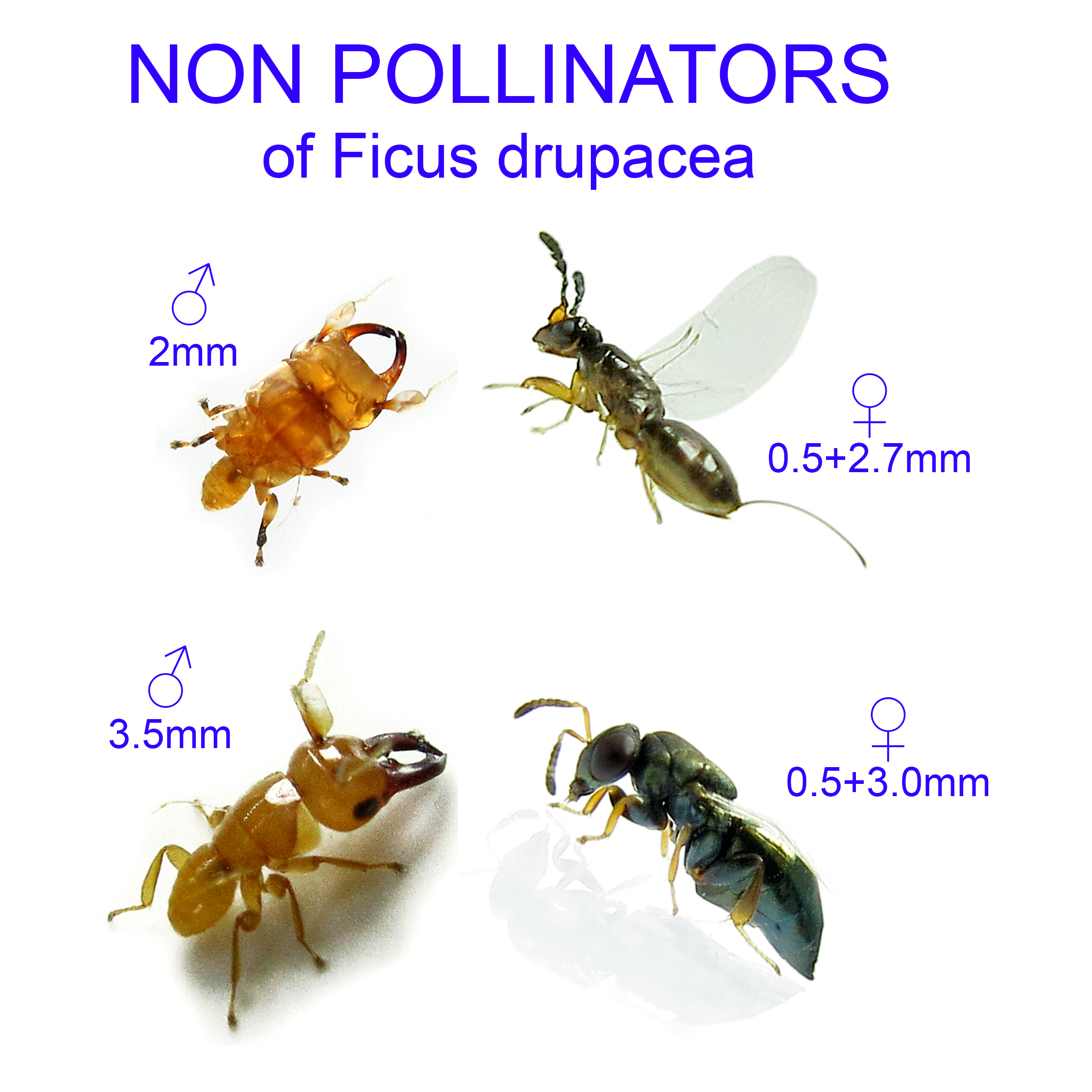 Multiple genera |
Monoecious |
| Ficus elastica | Unknown | Unknown | Monoecious |
| Ficus microcarpa |  Eupristina verticillata |
 Several species |
Monoecious |
| Ficus parietalis |  Ceratosolen sp. |
 Philocaenus sp. |
Dioecious |
| Ficus religiosa | 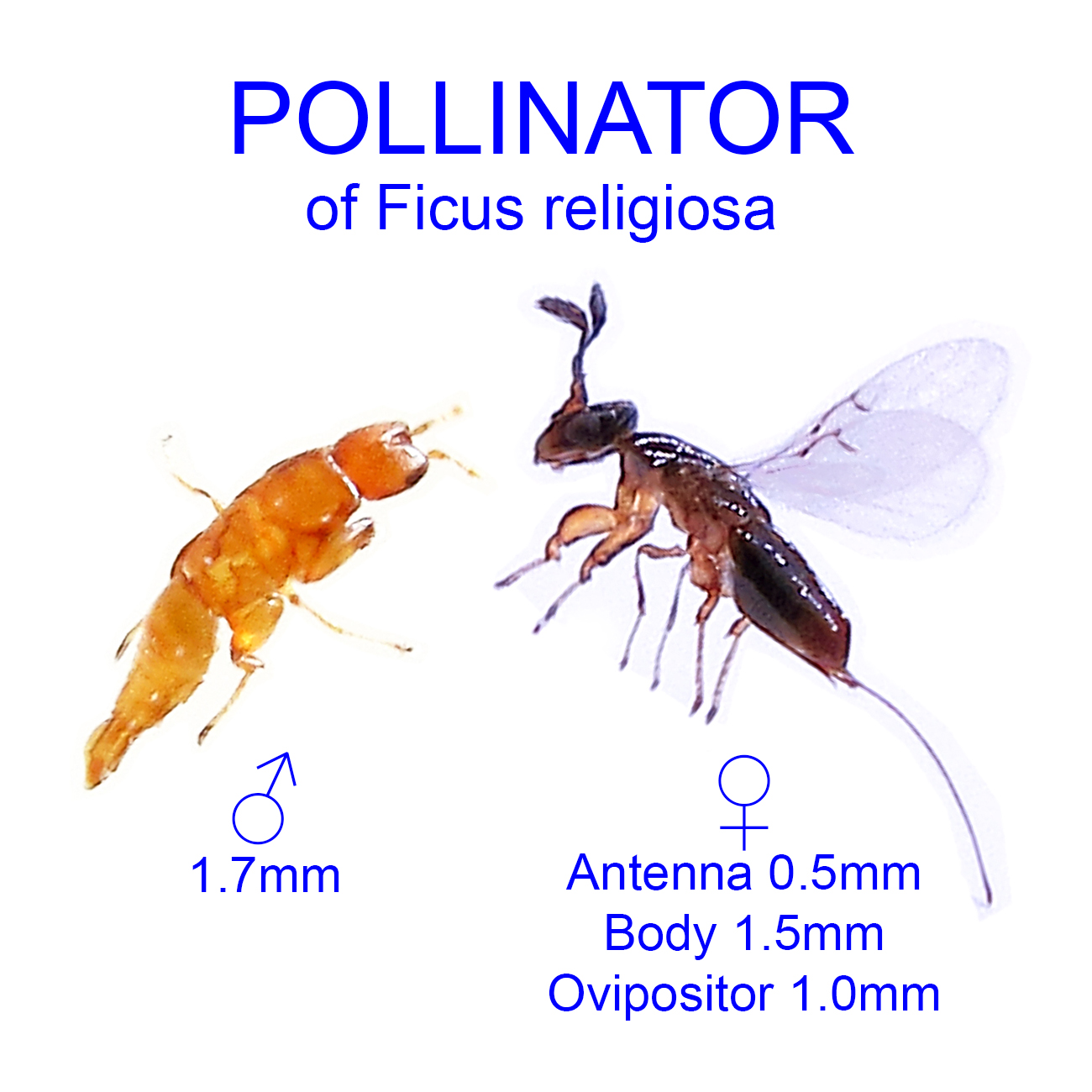 Platyscapa quadraticeps |
No record | Monoecious |
| Ficus tinctoria | 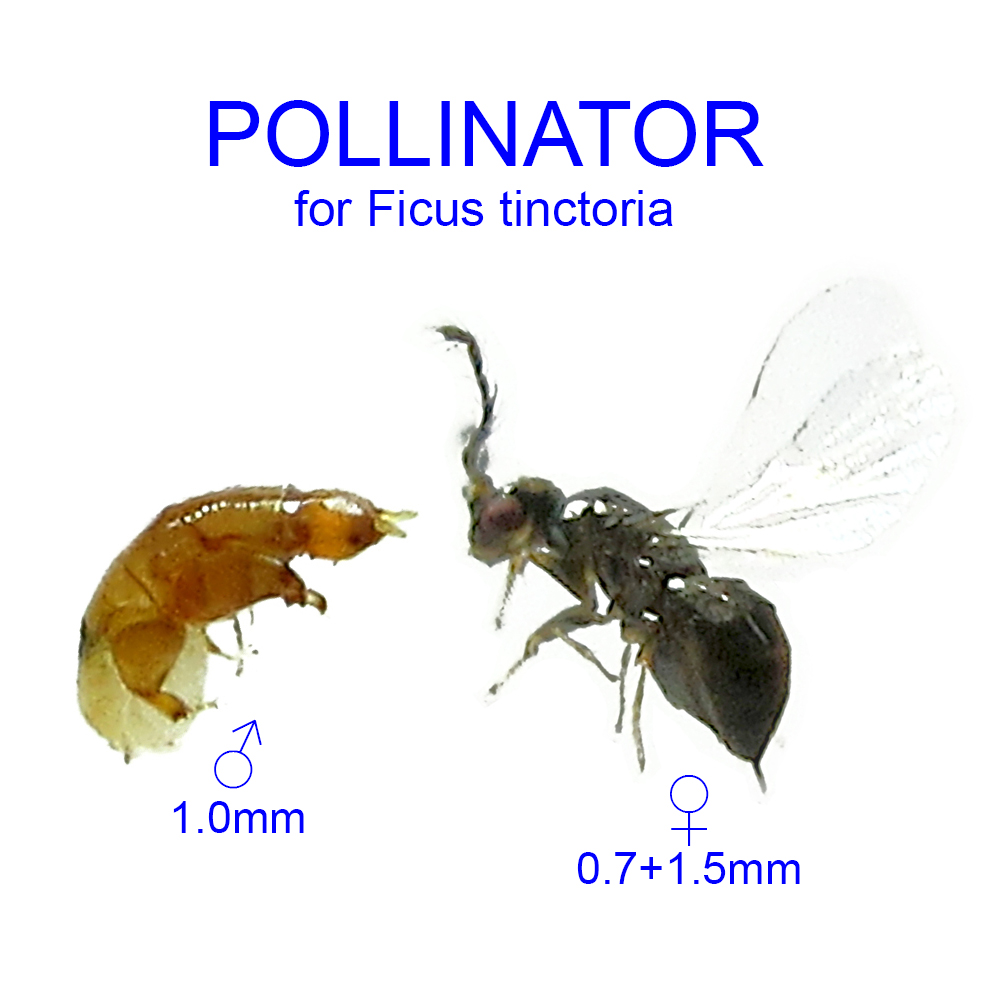 Ceratosolen sp. |
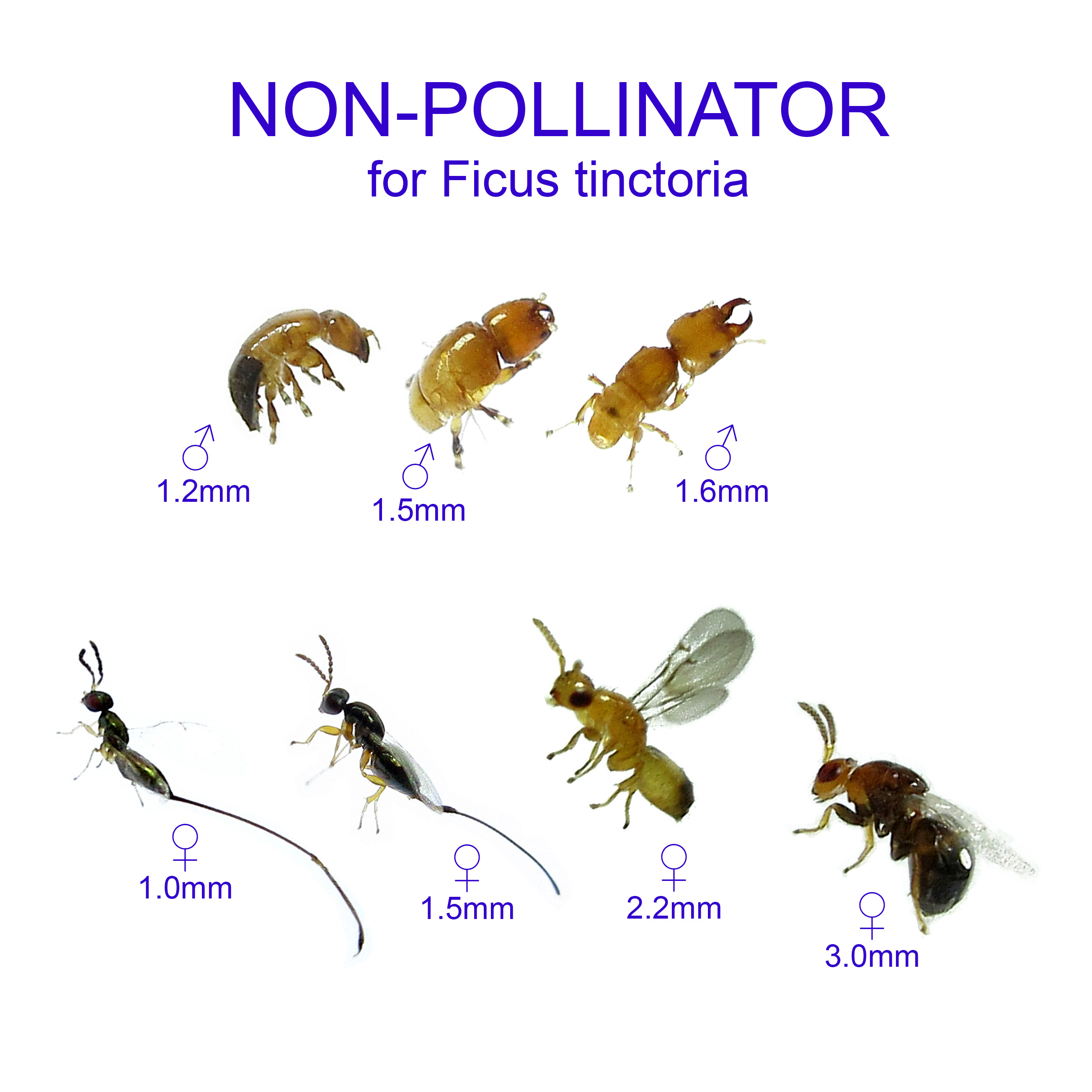 Sycoscapter sp. |
Dioecious |
| Ficus virens |  Platyscapa coronata |
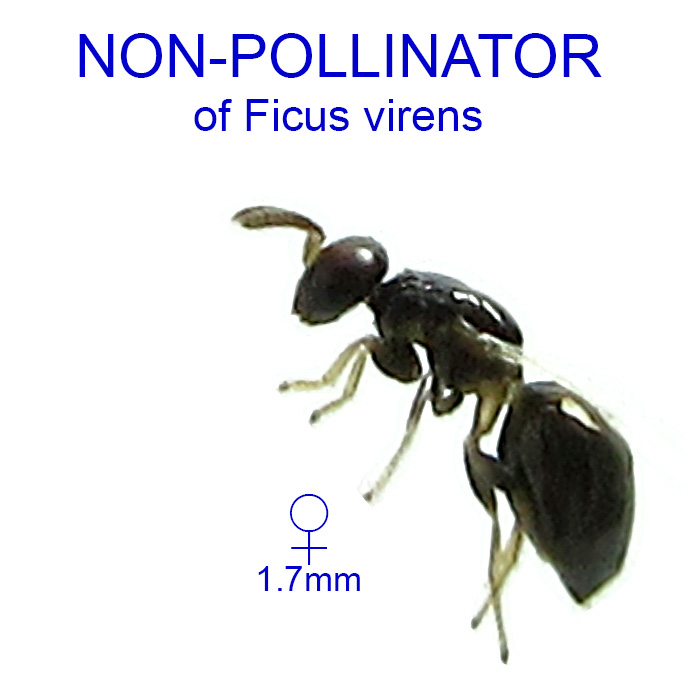 Philocaenus sp. |
Monoecious |
Monoecious Dominance in Multi-Root Stranglers
7 of the 9 multi-root strangler species in Borneo are monoecious (having both male and female flowers in the same syconium). This reproductive strategy simplifies pollination compared to dioecious species, as each tree can produce both pollen and seeds. The two dioecious exceptions (Ficus parietalis and Ficus tinctoria) have more complex pollination requirements with separate male and female trees.
Featured Multi-Root Stranglers
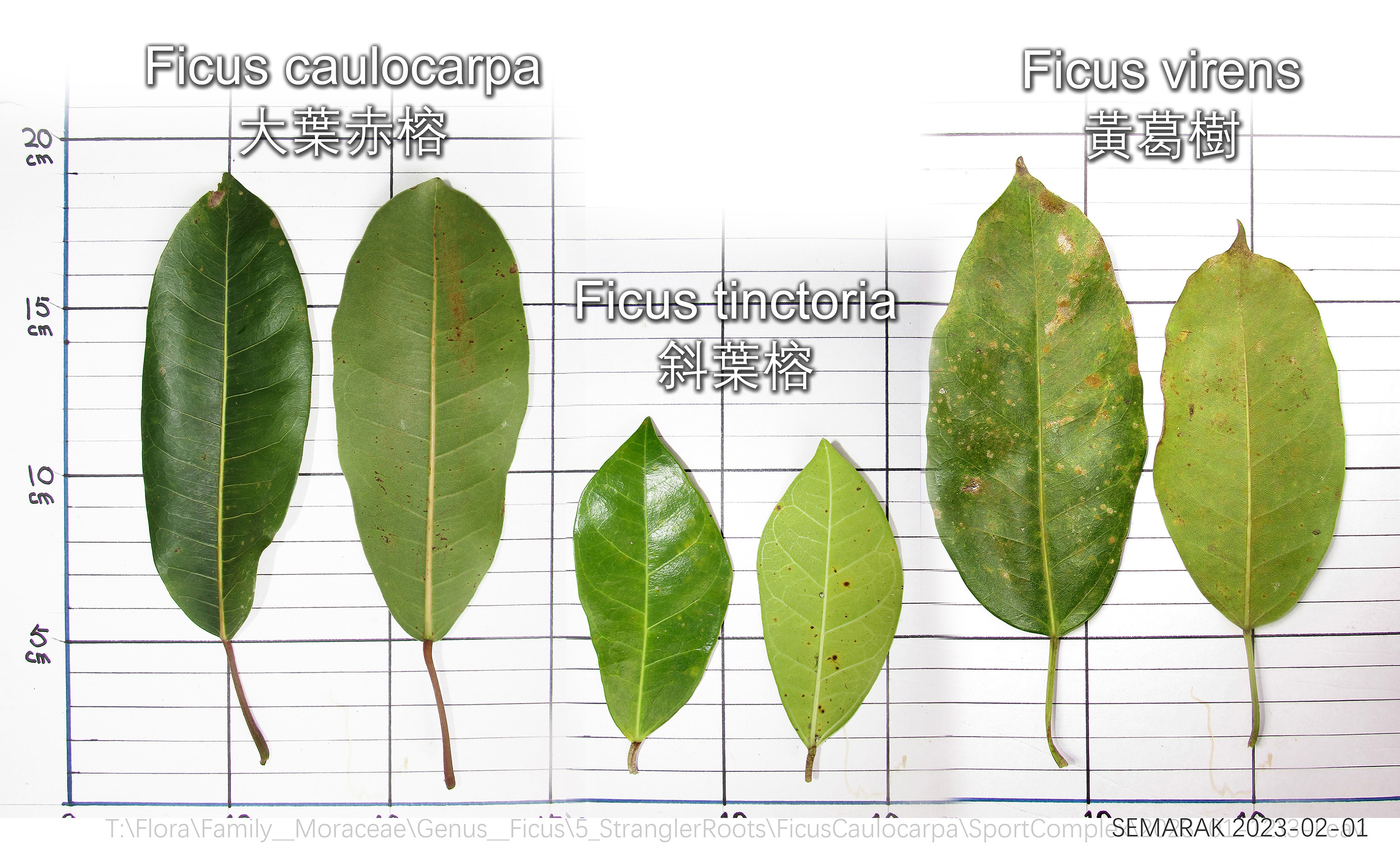
Ficus caulocarpa
Extensive aerial root system enveloping host tree at Sport Complex

Ficus benjamina
Characteristic glossy leaves with drooping growth habit

Ficus parietalis
Distinctive leaves showing venation patterns and shape

Ficus religiosa
Sacred Bodhi tree planted at Buddhist temple site
The Strangling Strategy
How Strangling Works
The multi-root strangling strategy is one of nature's most dramatic plant adaptations. It begins when birds or mammals deposit fig seeds in the canopy of a host tree. The seedling grows as an epiphyte, sending down numerous aerial roots that eventually reach the ground and establish in the soil.
Strangulation Process:
- Epiphytic Establishment: Seeds germinate in canopy crevices
- Aerial Root Development: Multiple roots descend toward soil
- Soil Connection: Roots establish nutrient and water uptake
- Host Encircling: Roots thicken and fuse around host trunk
- Canopy Competition: Strangler overtops host for light
- Host Decline: Girdling effect restricts host growth
Ecological Impacts
Multi-root stranglers dramatically transform their environments:
Ficus microcarpa is particularly aggressive and can strangle large trees within decades. Ficus virens creates complex root structures that provide habitats for orchids, ferns, and nesting sites for birds. These species drive forest succession by creating gaps when host trees die.
Unique Characteristics
Multi-Root Architecture
Develops numerous aerial roots that descend from branches, creating a lattice-like structure that eventually fuses into solid trunk-like columns surrounding the host tree.
Epiphytic Beginning
Starts life as an epiphyte in the canopy, depending on host tree for physical support while establishing its own root system that eventually reaches the ground.
Year-Round Fruiting
Produces fruits asynchronously throughout the year, providing consistent food resources for wildlife and making them keystone species in tropical ecosystems.
Monoecious Dominance
Most species (7 of 9) are monoecious with both male and female flowers in the same syconium, simplifying pollination compared to dioecious figs.
Fascinating Facts
Sacred and Cultural Significance
Ficus religiosa is revered in Buddhism as the tree under which Buddha attained enlightenment. Ficus benjamina is considered sacred in some Hindu traditions and is widely used in landscaping worldwide due to its attractive weeping form.
Structural Concerns
Multi-root stranglers like Ficus microcarpa can damage buildings, walls, and infrastructure with their aggressive root systems. Their ability to grow in small crevices allows them to establish on man-made structures, sometimes causing significant damage.
Riparian Dominance
Many multi-root stranglers thrive along riverbanks where their seeds are easily dispersed by water. Their extensive root systems help stabilize riverbanks while their canopy provides shade that regulates water temperature for aquatic ecosystems.
Keystone Species Status
These stranglers are considered keystone species because their year-round fruiting supports entire animal communities. In some tropical forests, up to 70% of frugivorous bird species depend on figs during certain times of the year.
Morphological Characteristics of Multi-Root Stranglers
Root Development
Multi-root stranglers develop extensive networks of aerial roots that descend from branches. These roots eventually reach the soil, establish nutrient uptake, and thicken to form massive trunk-like structures that can completely envelop host trees.
- Numerous aerial roots from branches
- Root fusion creating lattice structures
- Eventual host tree encirclement
- Independent structural support
Reproductive Features
Most multi-root stranglers (7 of 9 species) are monoecious with both male and female flowers in the same syconium. This contrasts with the general Ficus pattern where dioecy is more common. Fruits are typically produced in abundance along branches.
- Mostly monoecious (7 species)
- Two dioecious exceptions
- Abundant fruit production
- Year-round asynchronous fruiting
Identification Tip: When identifying multi-root stranglers, look for the combination of epiphytic establishment (growing on other trees), numerous aerial roots descending from branches, and eventually a lattice-like root structure surrounding a host tree. Leaf characteristics (size, shape, texture) and fruit location (branch vs. trunk) provide additional diagnostic features.
Relationship to Other Fig Types
Multi-root stranglers represent one of 8 distinct growth forms of Ficus in Borneo. They differ from:
- Single-trunk stranglers (develop one main aerial root)
- Root climbers (climb trees without strangling)
- Earth figs (grow directly in soil)
- Tree trunk figs (fruit directly on trunks)
This diversity of growth forms allows Ficus to occupy nearly every ecological niche in Borneo's forests.