Tall Tree Ficus of Borneo
Discover Borneo's canopy-dwelling fig trees that reach 25-40 meters in height, featuring the rare monoecious reproductive system where both male and female flowers occur on the same tree.
Unique Monoecious Feature
Both tall tree species on this page are monoecious - a rare trait in Ficus where only about 10% of species have both male and female reproductive organs on the same plant. This contrasts with the more common dioecious system (separate male and female trees) found in 90% of fig species.
What Are Tall Tree Figs?
Tall tree figs are Ficus species that grow as free-standing canopy trees reaching 25-40 meters in height. Unlike stranglers that start as epiphytes, these species germinate directly in soil and develop into dominant canopy trees. Both species on this page exhibit the rare monoecious reproductive system.
Where to Find Them
These tall figs are typically found in primary lowland rainforests and old secondary forests throughout Borneo. Ficus callosa prefers well-drained slopes and ridges, while Ficus nervosa often grows near streams and in valleys with higher soil moisture.
Ecological Significance
As canopy dominants, these trees provide critical food resources for canopy-dwelling animals including hornbills, primates, and flying foxes. Their large crowns create important microclimates and support diverse epiphyte communities. Being monoecious, they ensure seed production even from isolated individuals.
2 Tall Tree Ficus Species

Ficus callosa
硬皮榕
Large canopy tree with thick, leathery leaves and distinctive rough bark. Important food source for hornbills and primates. Named for its callous (hardened) texture.
View DetailsFicus nervosa
九丁榕
Medium to large tree with prominently veined leaves. Often found along streams and in moist valleys. The species name refers to its conspicuous leaf venation.
View DetailsFig Wasp Pollinators
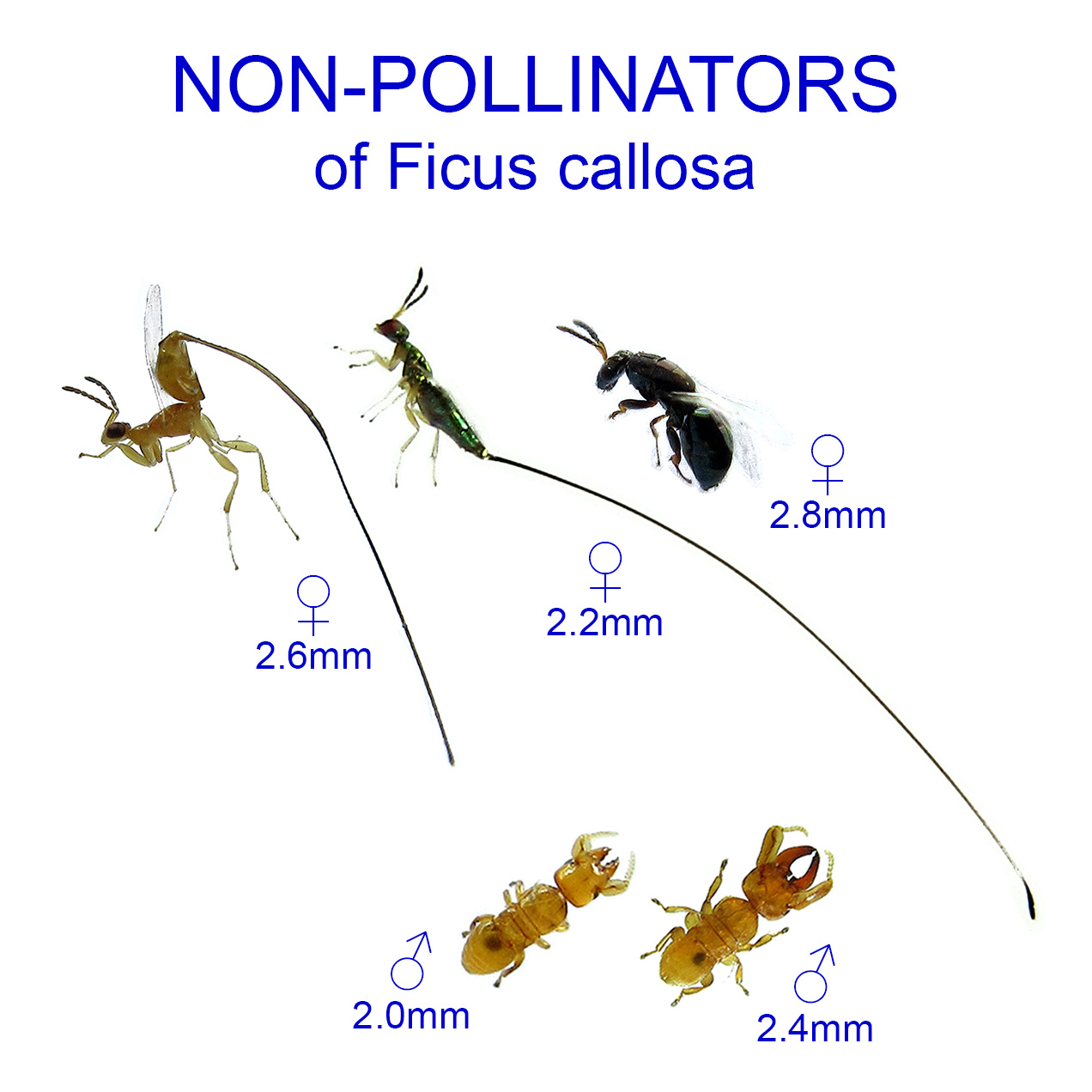
Monoecious figs like these tall trees have specialized pollinator relationships. Here's what we know about their fig wasps:
| Ficus Species | Pollinator Wasps | Non-Pollinator Wasps | Pollination System |
|---|---|---|---|
| Ficus callosa | 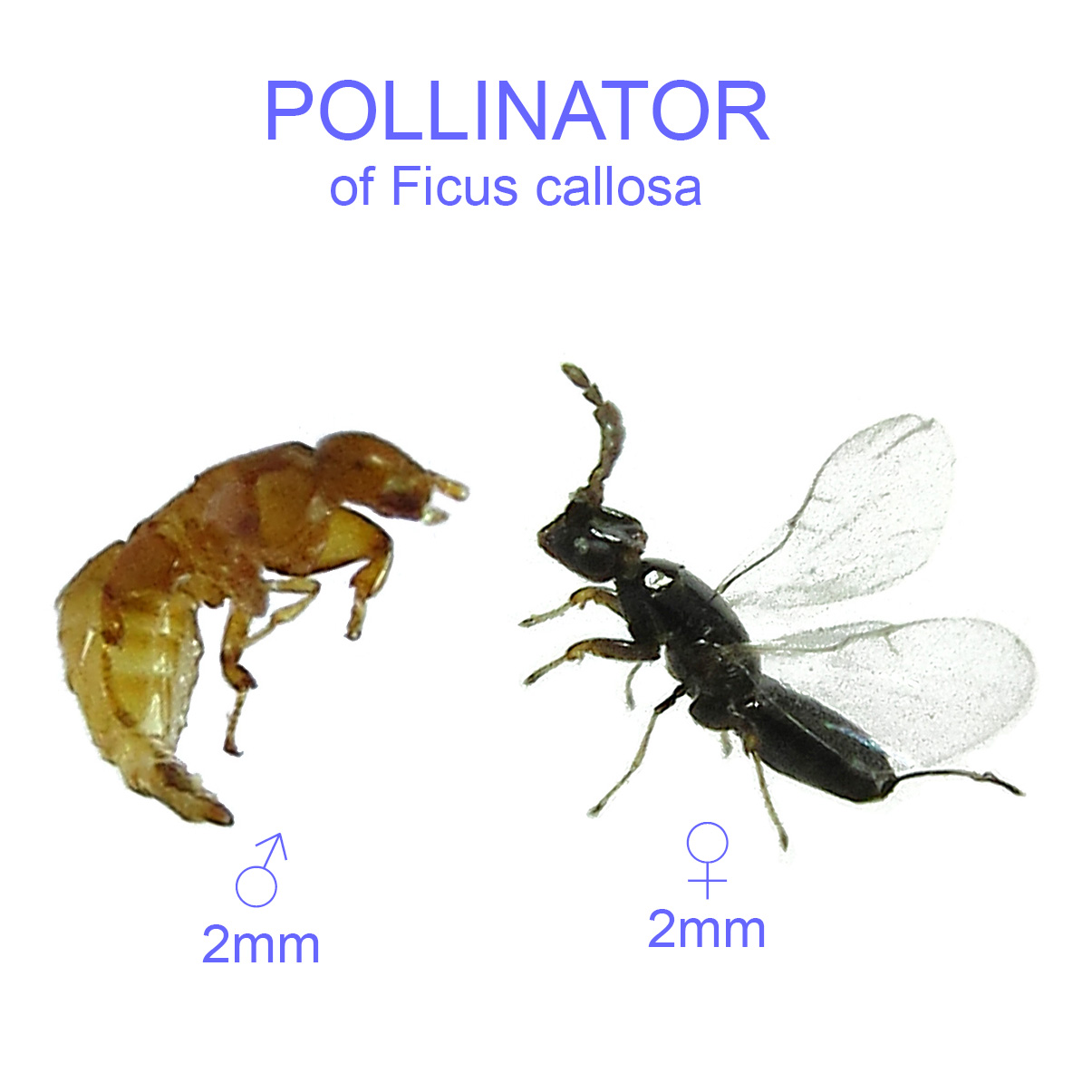 |
 |
Monoecious |
| Ficus nervosa | Data needed | Data needed | Monoecious |
Monoecious Pollination Dynamics
Unlike dioecious figs where wasps breed in male trees and pollinate female trees, monoecious figs have both functions occurring in the same syconium. Female wasps enter figs, pollinate female flowers, and lay eggs in some flowers. Their offspring develop inside, with males emerging first to mate with females before all escape. This system ensures seed production even from isolated trees.
Tall Tree Gallery

Ficus callosa
Mature tree showing characteristic canopy structure

Ficus callosa Habitat
Tree growing in its natural forest environment
Ficus callosa Close-up
Detail of leaves and bark texture
Ficus nervosa
Image needed for this species
Ficus nervosa
Prominently veined leaves characteristic of this species
Adaptations for Canopy Life
Structural Adaptations
Tall monoecious figs have evolved unique adaptations for canopy dominance:
- Strong trunks: Develop massive, straight trunks for height support
- Buttress roots: Flared roots provide stability in shallow soils
- Wide crowns: Extensive branching maximizes light capture
- Thick leaves: Leathery leaves resist desiccation in canopy
Growth Strategy:
These trees employ rapid vertical growth to reach the canopy quickly, then invest in extensive crown development to dominate light resources.
Monoecious Advantages
The monoecious system provides specific benefits for tall canopy trees:
Reproductive Security: In the canopy where tree density may be low, monoecy ensures:
- Seeds produced even from isolated individuals
- No need for separate male and female trees nearby
- More efficient pollination within single syconia
- Greater genetic diversity potential through selfing
Unique Characteristics
Monoecious System
Both species have male and female flowers on the same tree, a rare trait in figs. This allows isolated trees to reproduce successfully.
Canopy Dominance
Reach heights of 25-35 meters, forming important components of the rainforest canopy structure.
Soil Germination
Unlike stranglers, these species germinate directly in soil rather than starting as epiphytes.
Long Lifespan
Can live 150-200+ years, making them important structural components of old-growth forests.
Fascinating Tall Tree Facts
Rarity of Monoecy
Only about 10% of Ficus species worldwide are monoecious. Both tall tree species on this page belong to this rare reproductive category, making them unusual within the genus.
Evolutionary Significance
Monoecious figs like these are considered evolutionarily ancestral. The dioecious system (separate sexes) evolved later and became more common, making these monoecious species living representatives of earlier fig evolution.
Hydraulic Architecture
Tall figs have evolved exceptional water transport systems. They can move water over 30 meters against gravity, with specialized xylem vessels that prevent cavitation under tension.
Canopy Engineering
A single mature tall fig can create microclimates affecting up to 0.5 hectares of forest floor. Their crowns intercept rain, moderate temperatures, and create unique light environments.
Understanding Monoecious vs Dioecious Systems
Monoecious Figs (雌雄同株)
Have both male and female reproductive organs in the same individual tree. Represent about 10% of Ficus species. Examples: Ficus callosa, Ficus nervosa.
- Both pollen and seeds produced in same syconium
- Female wasps pollinate and lay eggs in same fig
- Wasp offspring and seeds develop together
- Can reproduce even when isolated
Dioecious Figs (雌雄异株)
Have male and female reproductive organs on separate individual trees. Represent about 90% of Ficus species. Examples: Most other Bornean figs.
- Male trees: Produce pollen and wasp offspring
- Female trees: Produce seeds only
- Requires both sexes in proximity
- More complex coevolution with wasps
Note: The tall tree figs on this page are exceptional in being monoecious. This reproductive strategy may be advantageous for canopy trees where finding mates might be challenging due to low density or isolation in the forest canopy.
Conservation Status & Research Needs
Conservation Status
- Ficus callosa: Least Concern (widespread in primary forests)
- Ficus nervosa: Data Deficient (more research needed)
Research Priorities
- Complete pollinator identification for F. nervosa
- Population distribution mapping
- Reproductive ecology studies
- Genetic diversity assessment
- Response to climate change
Conservation Importance: As monoecious canopy trees, these species represent an evolutionarily significant reproductive strategy. Their preservation is important for maintaining genetic diversity within the genus Ficus and for supporting canopy ecosystems in Borneo's rainforests.
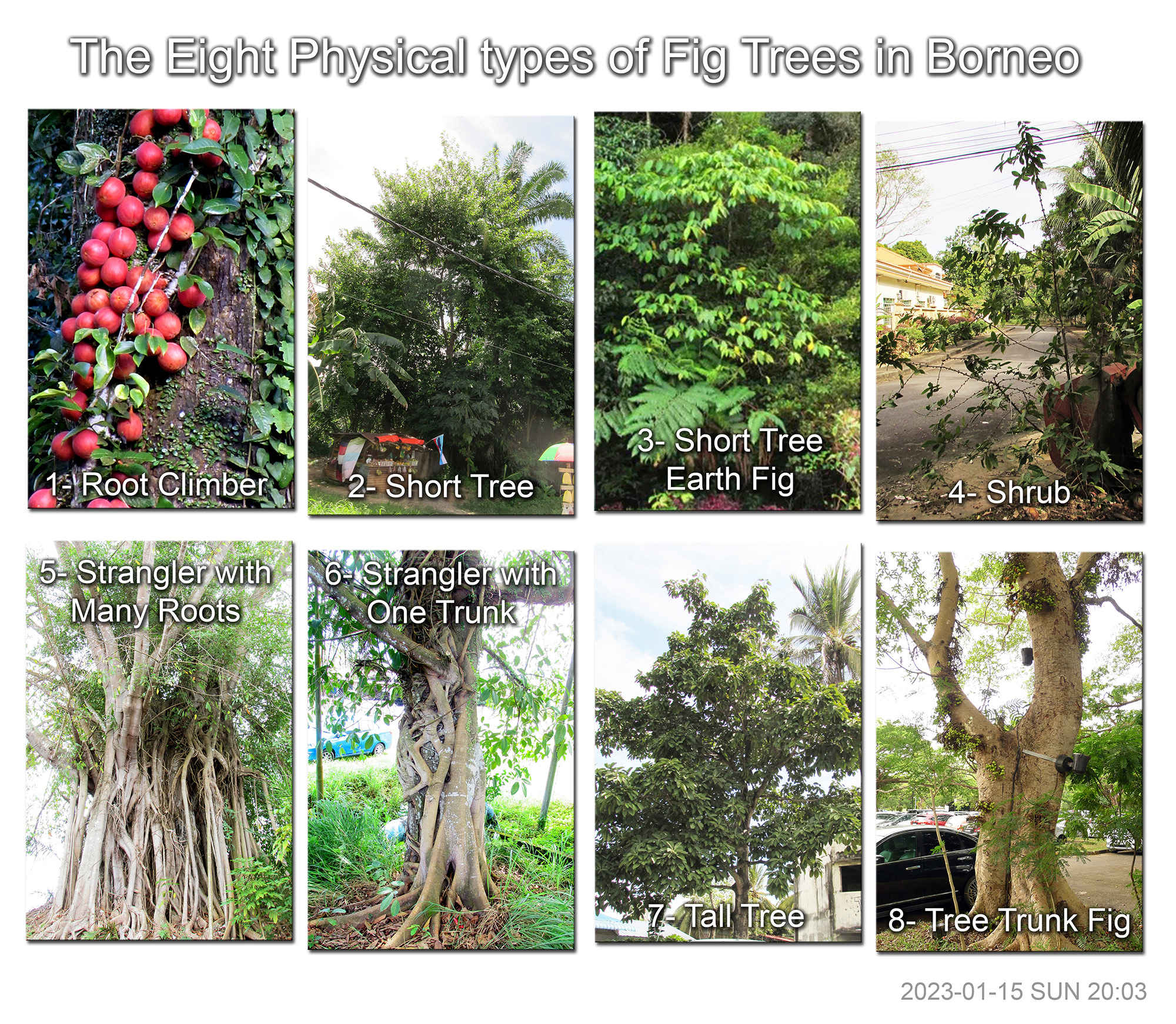
The Eight Physical Types of Fig Trees in Borneo